











Was this page helpful?

These place ratings give you a quick overview of how well a destination matches different types of trips.
‘Best for’ scores:
The specific interest scores show where this place really shines – whether it's ideal for hiking, food & drink experiences, museums or other activities. These highlights help you understand what makes the destination special at a glance.
‘Your personal’ scores:
This reflects how well a place matches your personal preferences. You can adjust the importances of travel topics or other personal requirements categories in your account settings.
‘Suited for’ badges:
These give you a quick overview of how well a destination suits specific types of travellers, to help you find the places that match your lifestyle, preferences or travel situation.
| Power Grid: |
230 V, 50 Hz Plug: Type C , Type F
Type C:
  Read about power adapters |
|---|---|
| Currency: |
Euro (EUR) £1 ≈ €1.19 |
| Cashless info: |
Rating 4/5
Cards are widely accepted, especially in urban areas, but small establishments may prefer cash. Be prepared for occasional cash-only situations.
Save with a travel credit card |
| eSIM providers: |
Best value: Saily Flexibility: Airalo Read our in-depth comparison |
| Tipping: | Tipping is common in restaurants, typically 5-10%. For taxis, it is customary to round up to the nearest euro. Tipping in cash is more common than adding it to card payments. |
|---|---|
| Public drinking: | Public drinking is allowed in most parts of Germany, especially in beer gardens and public events, but some local regulations may restrict it in specific areas. |
| Public smoking: | Smoking is prohibited indoors in public places such as restaurants, trains, and buses. Designated smoking areas are available outside many buildings. |
| Oktoberfest (September) |
Huge crowds in Munich. Expect high hotel rates and crowded transport. |
|---|---|
| Christmas (December) |
Christmas markets are popular, expect crowded cities and higher prices. |
| Labour Day (May) |
Many shops are closed, and there are celebrations throughout the country. |
| Emergency contact: | Police: 110, Emergency Number: 112 (Fire, Ambulance) |
|---|---|
| Taxi apps: | Uber, Free Now, myTaxi |
| Other: | Germany is well-equipped for tourists, with good public transport and high-quality facilities. However, be prepared for language barriers in some rural areas. |
The best times to travel section shows how the months compare for a visit, so you can find the time of year that fits what you want to do.
Background colours of the months:
The colour shows the typical temperature: yellow (hot), green (mild) and blue (cold). How strong the colour is shows the travel season: full colour means high season, soft colour means shoulder season and soft-striped means off season.
Weather symbols:
Each month has one symbol showing what the weather is typically like, such as hot and sunny, freezing or a rainy or snowy season. Use them to quickly spot months that match the weather you want, or to avoid the ones that don't.
Crowdedness:
The people icon shows how busy the place usually is. The more people, the more crowded it gets.
Additional notes:
The grey info boxes point out special things worth knowing, like recurring weather issues or seasonal events.
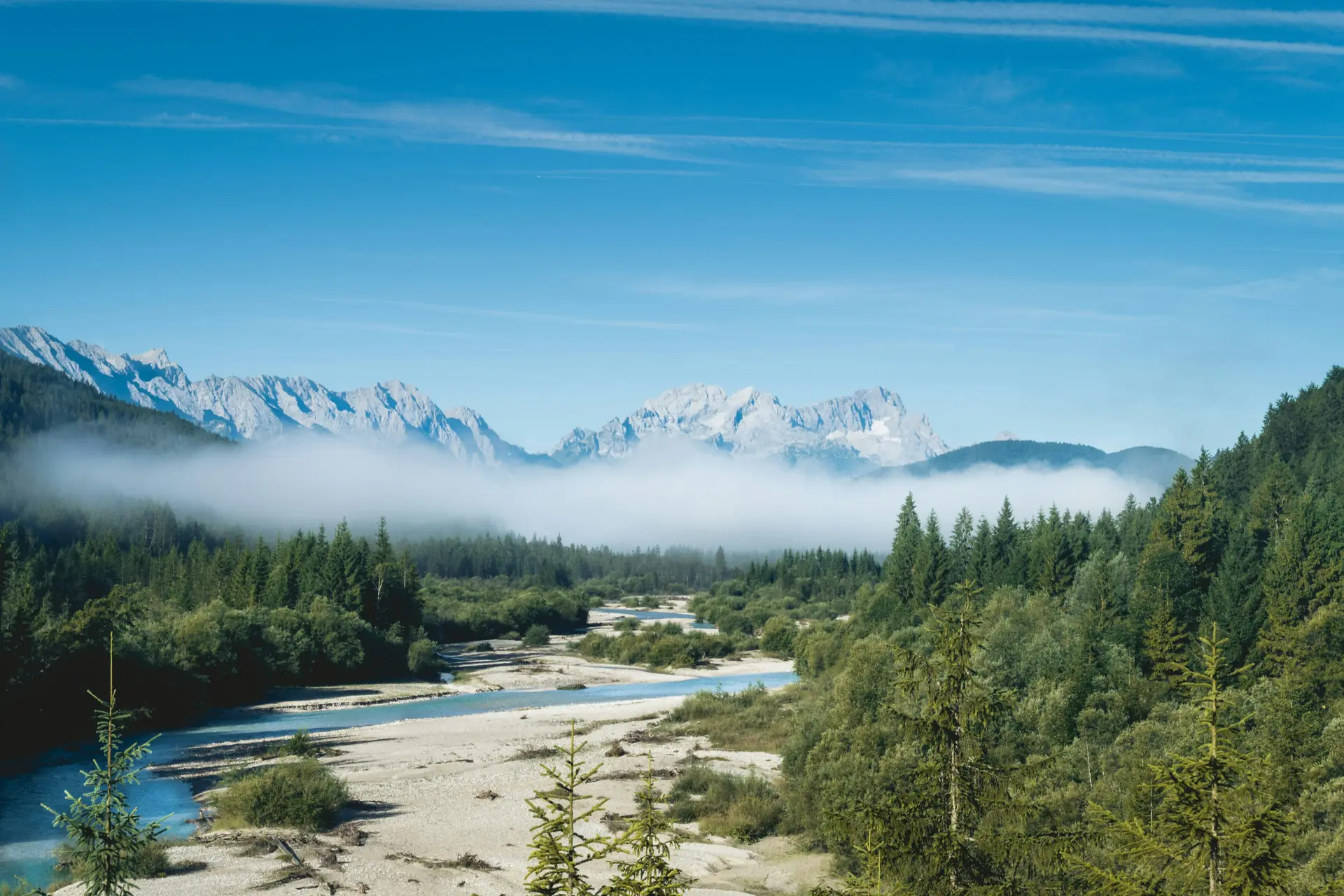
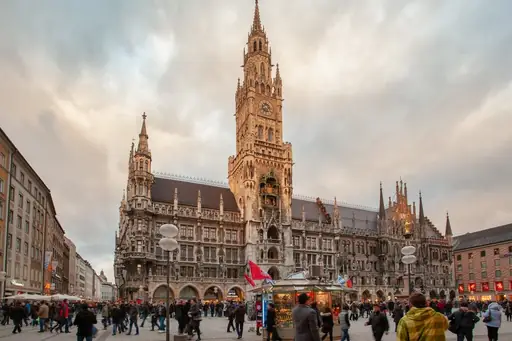
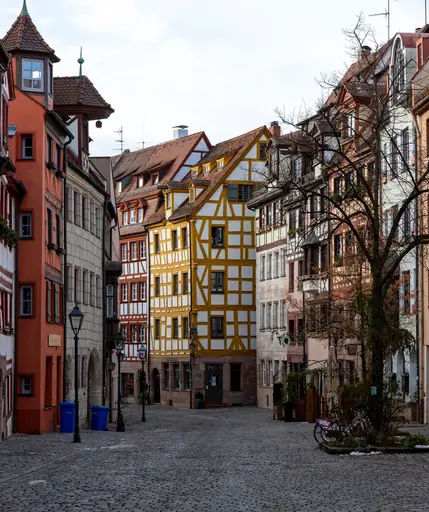
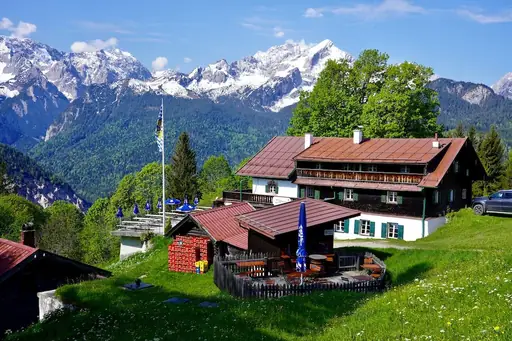
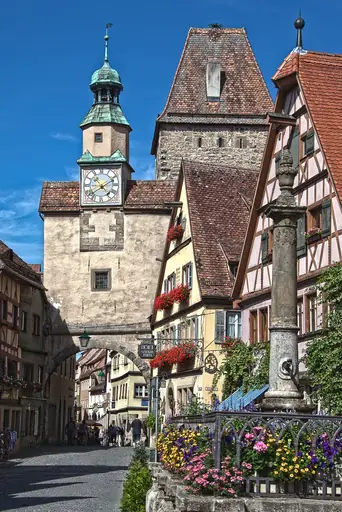
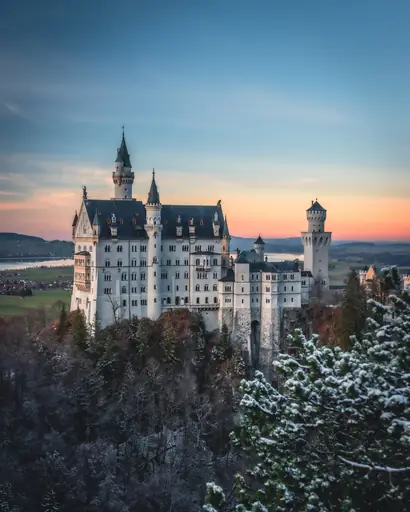
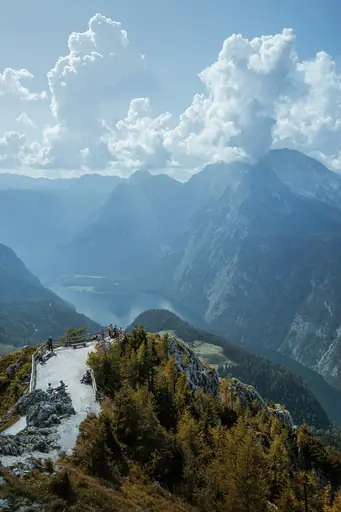
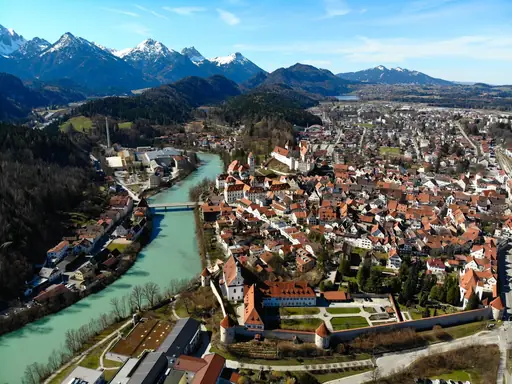
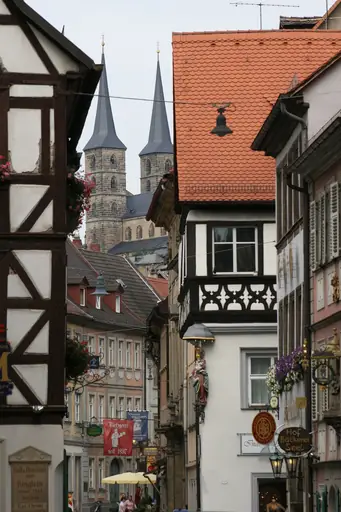
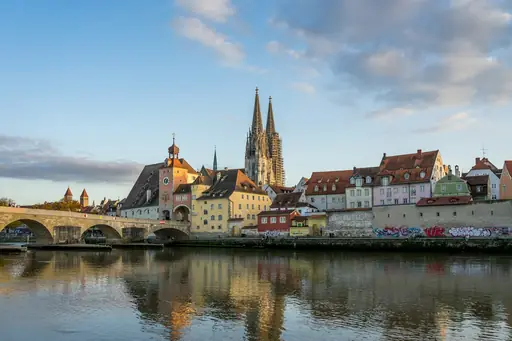
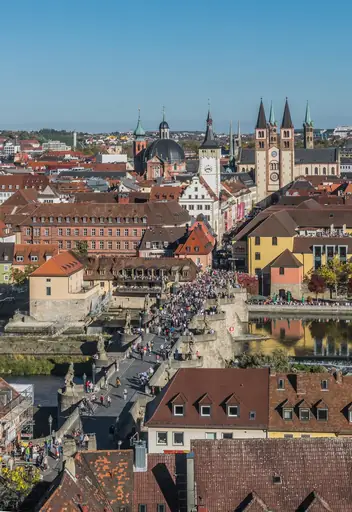
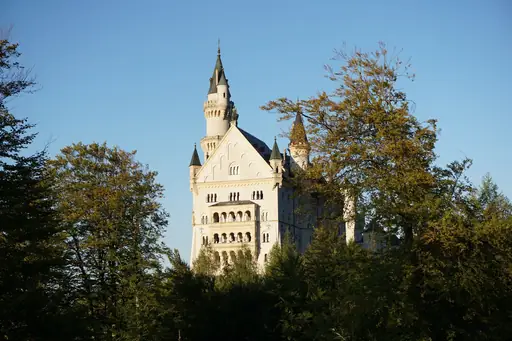
Bavaria has a lot of variety, so the best reason to go depends on the region. Munich has major museums, the Residenz palace and beer gardens. Oktoberfest runs for about two weeks from September into early October and fills the city with visitors. South of Munich the Alps begin. Neuschwanstein and Linderhof were built for King Ludwig II while his third palace, Herrenchiemsee, is on an island in Lake Chiemsee. The Zugspitze, Germany's highest mountain at 2,962 m, can be reached from Garmisch-Partenkirchen by cogwheel train and cable car. Berchtesgaden has the Königssee and the only Alpine national park in Germany. The rest of the state has quieter old towns and landscapes. Franconia has its own wine country and a UNESCO-listed Baroque residence in Würzburg. Regensburg has an old town on the UNESCO list and Passau is where the Danube, the Inn and the Ilz meet. The Bavarian Forest National Park was Germany's first national park. The Romantic Road, a route of towns and castles, goes from Würzburg to Füssen. One week fits Munich, a castle or two and a stretch of the Alps. Two weeks leave room for Franconia or the Danube towns. Distances are large and the Alps and Franconia are several hours apart by train, so it helps to pick two or three bases instead of trying to cover everything.
Munich Airport (MUC) is the main gateway, with flights from many European and long-distance cities. The S1 and S8 S-Bahn lines take about 40 minutes to Munich Hauptbahnhof. Nuremberg Airport (NUE) serves Franconia and Salzburg Airport (SZG) in Austria is close to Berchtesgaden. Frankfurt Airport (FRA) also works well for Würzburg and Nuremberg, with fast ICE trains from there. By train, Munich Hauptbahnhof is the main hub, with ICE connections from Frankfurt, Berlin, Hamburg and Cologne as well as from Zurich, Salzburg and Vienna. From Frankfurt the trip takes roughly three to four hours. Nuremberg and Würzburg are on the main north to south line. By car, the A3 comes in from Frankfurt, the A9 from Berlin through Nuremberg and the A8 from Stuttgart and from Salzburg. Driving from Frankfurt to Munich takes about four hours without traffic.
Most visitors base themselves in Munich for the city and day trips, then add a second base in the Alps or in Franconia. Munich has the widest choice, from large hotels near the Hauptbahnhof to guesthouses and apartments in neighbourhoods like Schwabing, Haidhausen or the Altstadt. In the Alps, villages like Garmisch-Partenkirchen, Füssen and Berchtesgaden have hotels, guesthouses, holiday apartments and farm stays (Urlaub auf dem Bauernhof). Many places give guests a card that covers local buses and some regional trains. Mountain huts offer simple rooms and shared dormitories on hiking routes and usually need to be booked ahead. Rooms in Munich are scarce and expensive during Oktoberfest and large trade fairs. Summer weekends and school holidays are busy in the Alps and the lakes. Staying in Augsburg, Regensburg or Nuremberg is often cheaper and still has good train links.
Bavaria is large, so getting around mostly means choosing a base and linking it by train. The cities and many Alpine towns have good rail connections while villages and mountain valleys are easier with a car.
Trains:
Deutsche Bahn ICE trains link Munich with Nuremberg, Augsburg and Würzburg while regional trains reach most towns. Munich has an S-Bahn, a U-Bahn and trams while the other large cities have trams or buses.
Bayern-Ticket:
The Bayern-Ticket is a day pass for up to five people for regional trains, S-Bahns, trams and most buses across Bavaria. On weekdays it's valid from 09:00. ICE and IC trains aren't included, so check the train type.
Buses:
Regional buses go to Alpine valleys, lakes and villages away from the rail lines. They run less often in the evening and on Sundays, so check timetables before a hike.
Car:
A car helps for the Alpine foothills, the Romantic Road and the Bavarian Forest. Autobahns connect the main cities and mountain roads can need winter tyres or snow chains from late autumn.
Bikes:
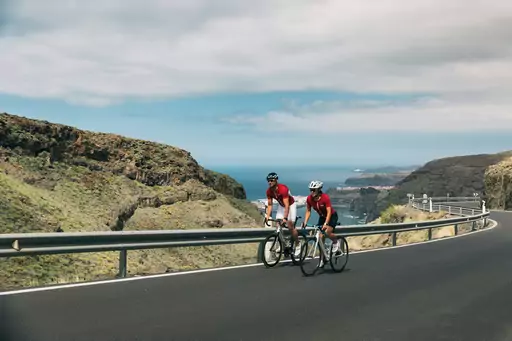
The Danube Cycle Path goes through Regensburg and Passau and the lakes and river valleys have signposted routes. E-bikes are hired in many towns.
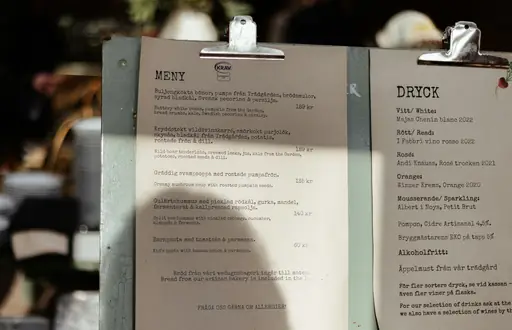
Food in Bavaria is hearty and meat based, with pork, dumplings, bread and beer on most menus. Traditional inns (Wirtshäuser) and beer gardens serve the classics while the cities also have a wide range of international restaurants. Bakeries and supermarkets make self-catering easy. Vegetarian dishes are common in cities and less so in village inns.
Weißwurst:
A pale veal sausage served with sweet mustard and a pretzel and traditionally eaten in the morning. It's a Munich specialty and is best known from beer halls and traditional taverns.
Schweinebraten:
Roast pork with crackling, served with dumplings and dark gravy. It's the standard Sunday meal at traditional inns across southern Bavaria.
Beer:
Helles is the light lager and Weißbier the cloudy wheat beer. Both are served in beer gardens by the litre (Maß) or in half-litre glasses.
Regional dishes:
Franconia has bratwurst and Schäufele (roast pork shoulder) and Silvaner wine from the Main valley. In the Allgäu, Käsespätzle (cheese noodles) is a mountain staple.
We calculate the average costs when travelling to destinations and compare those with the living costs at your home. With this you can get an estimate of how expensive or cheap the destination is for you.
To customise this, you can set up which location and price level are used for the calculations in your account settings.
The exchange rate price factor shows how expensive or cheap a currency currently is compared to its historical average. It's a quick way to see if a country is currently more or less affordable due to exchange rate changes.
To help you plan your trip, we provide estimated daily costs per person (when travelling as a pair) for different travel styles. These numbers give you an idea of what you might spend each day at this destination, including accommodation, food, transport and activities.
Additionally, we also provide average hotel costs for different travel styles to give you an estimate for the accommodation only.
Please note that these are only estimates. The real costs depend on booking times, season and other factors.
Travel style categories explained:
Backpacker:
Staying in hostels or budget hotels, cooking your own meals or eating cheap and choosing low-cost activities.
Mid-range:
Staying in mid-range hotels, eating at a mix of restaurants and casual spots and enjoying a variety of activities.
Luxury:
Staying in luxury hotels, dining out at high-end restaurants and enjoying premium experiences without worrying about the price.
| Backpacker | Mid-range | Luxury | |
|---|---|---|---|
| 💵 Total costs per day, including accommodation | |||
| 🏨 Accommodation per night, per person | |||
| 🍝 Food per day | |||
| 🚕 Transportation per day |
| 🍽️ Restaurant Dinner, per person | |
|---|---|
| 🍛 Lunch Set, per person | |
| 🍟 Fast food combo | |
| 🍝 Preparing your own food, per day | |
| ☕ Cappuccino | |
| 🍺 Beer in a restaurant, 0.5 l |
| 🚌 Public transport ticket | |
|---|---|
| 🚕 Taxi Ride, 10 km / 6 mi | |
| ⛽ Petrol, 1 l |
| 🎞️ Cinema ticket | |
|---|---|
| 👩⚕️ Doctor's consult | |
| 🤧 Cold medication | |
| 💇 Basic haircut |
Log in to add this place to a travel list and get a summary of all recommended items for your whole trip.
