













Was this page helpful?

| Public website: | iguazuargentina.com |
|---|
The best times to travel section shows how the months compare for a visit, so you can find the time of year that fits what you want to do.
Background colours of the months:
The colour shows the typical temperature: yellow (hot), green (mild) and blue (cold). How strong the colour is shows the travel season: full colour means high season, soft colour means shoulder season and soft-striped means off season.
Weather symbols:
Each month has one symbol showing what the weather is typically like, such as hot and sunny, freezing or a rainy or snowy season. Use them to quickly spot months that match the weather you want, or to avoid the ones that don't.
Crowdedness:
The people icon shows how busy the place usually is. The more people, the more crowded it gets.
Additional notes:
The grey info boxes point out special things worth knowing, like recurring weather issues or seasonal events.
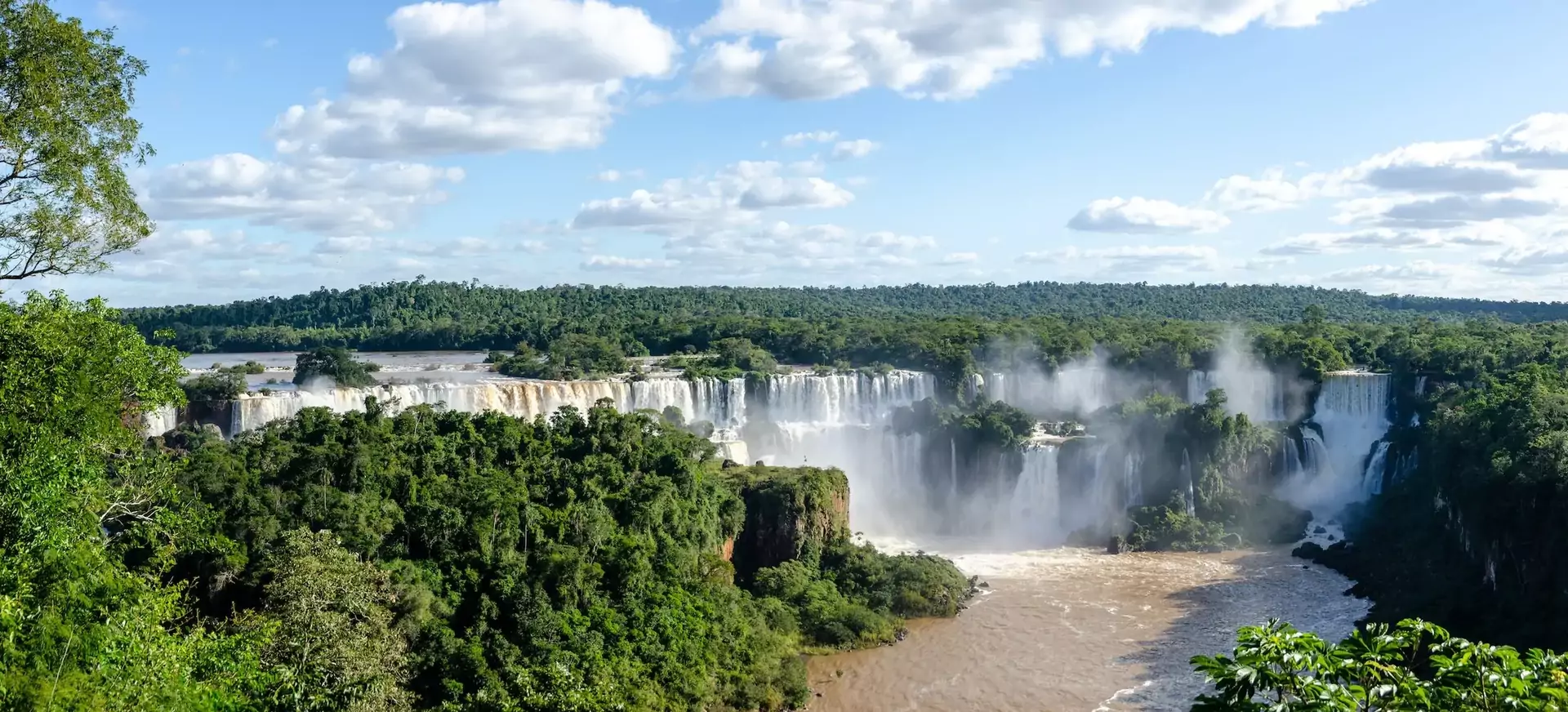
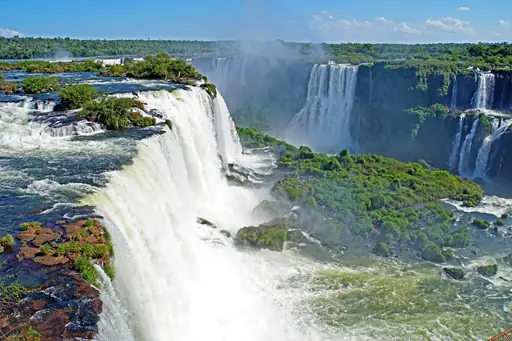
Iguaçu Falls is where nature flexes its muscles in the most spectacular way, with 275 individual waterfalls spanning nearly 3 kilometers along the border of Brazil and Argentina. The falls are the result of the Iguaçu River dramatically dropping over the edge of the Paraná Plateau, creating a visual and auditory experience that's simply overwhelming. While approximately 80% of the falls are on the Argentinian side, both countries offer unique and complementary perspectives that serious visitors should experience.
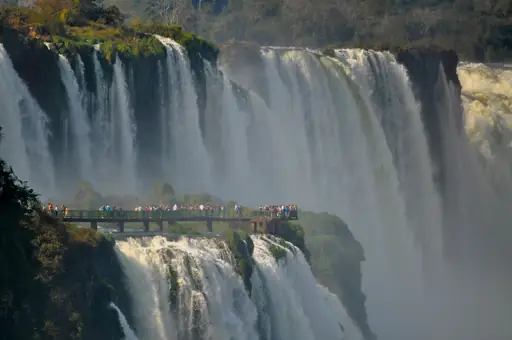
The Brazilian side provides panoramic views that showcase the magnitude of the falls, allowing you to appreciate the grand scale of this natural wonder. Meanwhile, the Argentinian side offers intimate encounters with the cascades through an extensive network of walkways that bring you incredibly close to numerous individual falls. The crown jewel of the system is Devil's Throat (Garganta del Diablo), a U-shaped chasm where half the river's flow plunges 82 meters down with such force that a permanent cloud of mist hovers above, often creating rainbows on sunny days.
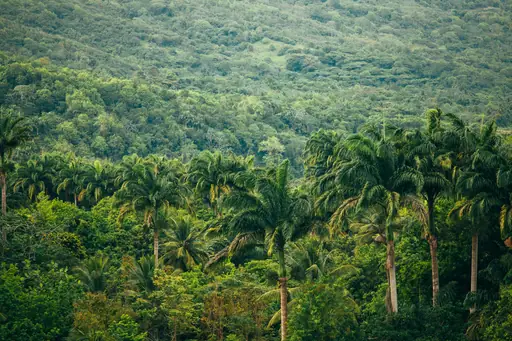
Beyond the falls themselves, the surrounding Atlantic Rainforest ecosystem is worth exploring, with well-maintained trails revealing the rich biodiversity of the region. Keep an eye out for coatis (raccoon-like creatures that have become quite bold around tourists), toucans, butterflies and if you're extremely lucky, perhaps even a glimpse of a jaguar. The falls and surrounding forests are protected by national parks in both countries, with the Brazilian side receiving nearly 2 million visitors annually and the combined total exceeding 3 million in recent years.
While Iguaçu Falls is undoubtedly a bucket-list destination, visitors should be prepared for certain realities. The site's popularity means crowds can be substantial, especially during peak hours (10 AM to 3 PM) and high season. Early morning arrivals (before 9 AM) are strongly recommended. The tropical climate brings high humidity and occasional heavy rainfall, which can affect visibility but also increases the falls' volume and power. Additionally, while the basic park entry allows access to the main viewpoints, some of the most memorable experiences – like boat rides that take you thrillingly close to the cascades or helicopter overflights – come with significant additional costs. Despite these considerations, few natural attractions in the world deliver such a profound sense of awe.
Iguaçu Falls can be accessed from either Brazil or Argentina. On the Brazilian side, visitors typically fly into Foz do Iguaçu International Airport, while on the Argentinian side, Cataratas del Iguazú International Airport serves Puerto Iguazú. Both airports receive flights from major cities in their respective countries, with the Brazilian side having more international connections. The two sides are connected by the Tancredo Neves International Bridge, making it possible to visit both perspectives of the falls in a single trip. Many visitors also arrive by long-distance bus from major cities like Buenos Aires (Argentina) or São Paulo (Brazil), though these journeys can take 16-24 hours. For those already traveling in the region, regular bus services connect the falls to nearby cities and towns. Once in either Puerto Iguazú (Argentina) or Foz do Iguaçu (Brazil), local buses run to the national parks where the falls are located.
Accommodation options cluster around the gateway towns of Puerto Iguazú (Argentina) and Foz do Iguaçu (Brazil). The Brazilian side offers more variety, from luxury resorts to budget hostels, while the Argentinian side has a more relaxed, smaller-town feel with charming boutique hotels and guesthouses. Some high-end properties, like the Belmond Hotel das Cataratas, offer the exclusive privilege of being located within the national park itself, allowing guests to access the falls before and after regular opening hours. Prices vary seasonally, with significant increases during peak periods (December-February and July).
Log in to add this place to a travel list and get a summary of all recommended items for your whole trip.
We calculate the average costs when travelling to destinations and compare those with the living costs at your home. With this you can get an estimate of how expensive or cheap the destination is for you.
To customise this, you can set up which location and price level are used for the calculations in your account settings.
