



Europe › Italy › Veneto › Venice

Venice

Scroll
A floating city of romance and history

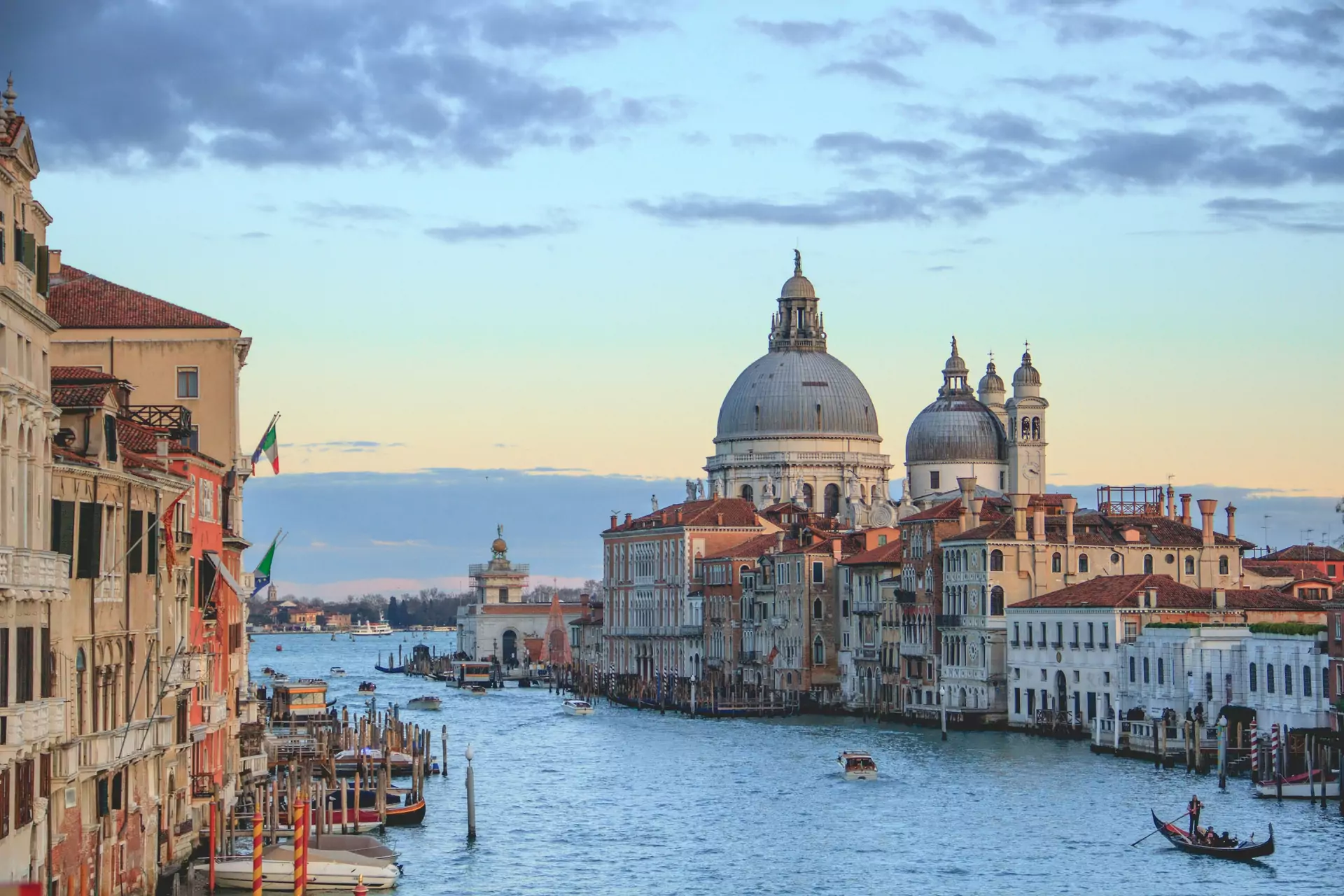
Venice stands out as a city built on water. Its streets are canals and people travel by boat instead of car. The historic center features narrow bridges and centuries-old buildings made from brick and stone. Local markets sell fresh seafood while gondolas offer rides through quiet waterways. Public squares host cafes where visitors sip espresso and watch daily life unfold. Art museums display famous works in grand halls and churches showcase intricate mosaics. Venice remains a place shaped by its relationship with water, creating a unique atmosphere unlike any other city.

City in Italy
Climate zone: Mediterranean

Mediterranean: Mid-latitude climates with hot, dry summers and mild, wet winters, typical of coastal regions around the Mediterranean Basin.

See climate table
Price level: $$$
$Cheap
$$Medium
$$$Expensive, upscale
$$$+Very expensive, luxury
See price details
Safety: 7.6
General Safety:8
Health & medical:8
Accessibility:3
Tap water:8
Read details
Tourist English: 4/5
Tourist areas have good English speakers, especially in hotels and restaurants. Outside the main zones, English is less common, but basic communication is usually possible.
Last update: 12 Oct 2026
* We earn a commission from some links on this page.
Venice Summary

These place ratings give you a quick overview of how well a destination matches different types of trips.

‘Best for’ scores:
The specific interest scores show where this place really shines – whether it's ideal for hiking, food & drink experiences, museums or other activities. These highlights help you understand what makes the destination special at a glance.

‘Your personal’ scores:
This reflects how well a place matches your personal preferences. You can adjust the importances of travel topics or other personal requirements categories in your account settings.

‘Suited for’ badges:
These give you a quick overview of how well a destination suits specific types of travellers, to help you find the places that match your lifestyle, preferences or travel situation.

Read how our scores work
World-famous for canals and historic architecture. Take gondola rides, explore narrow alleys, visit grand palaces and museums and relax in lively piazzas.
Place score
9.0
Best at:
Architecture
10
Romantic
10
Islands
9
Luxury
9
Walkable
9
Personal score
?
Log in to see how this place matches your personal travel interests.
Suited for
👶 5
Families
🧓 4
Seniors
❤️ 10
Couples
🛡️ 8
Travel Beginners
Italy – Quick facts
Power Grid: 230 V, 50 Hz
Plug: Type C , Type F
Type C:
Diagram of a Type C power plug
Type F:
Diagram of a Type F power plug

Read about power adapters
Currency: Euro (EUR)
£1 ≈ €1.19
Cashless info: Rating 5/5
Cashless payments are widely accepted in Italy, particularly in cities. While larger establishments and chains are fully cashless, smaller shops may still prefer cash.

Save with a travel credit card
eSIM providers: Best value: Saily
Flexibility: Airalo
Read our in-depth comparison
Tipping: Tipping is customary in Italy, especially in restaurants where 10-15% is typical. Tipping for taxi drivers is usually rounded up or 5-10%. Small tips for hotel staff are also appreciated.
Public drinking: Public drinking is allowed in Italy, especially in public squares and during festivals. In some regions, it is illegal to drink alcohol in certain areas like public transport or near schools.
Public smoking: Smoking is banned in indoor public spaces and on public transport. Designated smoking areas are available outside.
Ferragosto
(August)
Many businesses close, and Italians take holidays. It’s very busy in tourist areas.
Christmas
(December)
Christmas markets and festivities are popular, expect higher prices and crowded attractions.
La Befana
(January)
Celebrated on January 6, the Epiphany is a public holiday with festive events, and some businesses close.
Emergency contact: Emergency Number: 112 (Police, Fire, Ambulance)
Taxi apps: Uber, Free Now, ItTaxi
Other: Italy's tourist infrastructure is well-developed, but some rural or historical areas may require extra planning for accessibility.
Best times to travel

The best times to travel section shows how the months compare for a visit, so you can find the time of year that fits what you want to do.

Background colours of the months:
The colour shows the typical temperature: yellow (hot), green (mild) and blue (cold). How strong the colour is shows the travel season: full colour means high season, soft colour means shoulder season and soft-striped means off season.

Weather symbols:
Each month has one symbol showing what the weather is typically like, such as hot and sunny, freezing or a rainy or snowy season. Use them to quickly spot months that match the weather you want, or to avoid the ones that don't.

Crowdedness:
The people icon shows how busy the place usually is. The more people, the more crowded it gets.

Additional notes:
The grey info boxes point out special things worth knowing, like recurring weather issues or seasonal events.

for Venice, Italy
☁️
Jan
☁️
Feb
🌥️
Mar
🌤️
Apr
🌤️
May
🌤️
Jun
☀️
Jul
☀️
Aug
🌤️
Sep
🌤️
Oct
☁️
Nov
☁️
Dec
High season: Feb., April - Sep.
Shoulder season: March, Oct.
Crowdedness: 10 (Very crowded)
Tap on a month for more info Hover over a month for more info
High water (acqua alta) risk October to January, peak in November
Day-tripper entry fee on selected days, roughly April to July

Why travel to Venice?

Venice is one of the most unique cities in the world, built on water and steeped in history. From the breathtaking St. Mark’s Basilica to the labyrinthine streets of the old town, every corner tells a story. The Venetian food scene offers amazing seafood, cicchetti (Venetian tapas) and of course, Italian coffee. However, be prepared for crowds, especially in summer and high prices in tourist areas. The best way to enjoy Venice is to explore beyond the main attractions – get lost in its quieter districts and soak in the local atmosphere.

🏙️Cities & Regions
  • 1 Burano
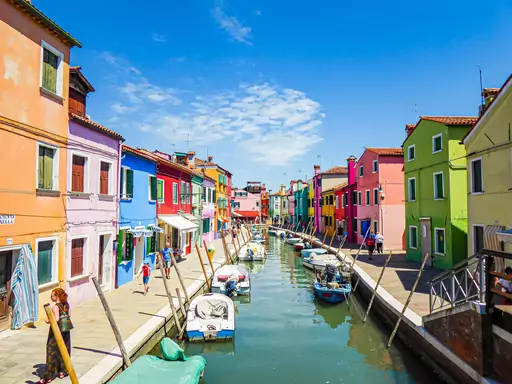
    Known for its glassmaking heritage, this island offers colorful houses, narrow canals and a vibrant market scene. Visitors can explore historic workshops, sample local seafood and enjoy quiet walks along the lagoon during the summer.
🏯Places worth seeing
  • 1 Accademia Gallery
    The Accademia Gallery houses an extensive collection of Venetian art from the Renaissance to the early modern period, featuring works by Titian, Tintoretto and Veronese. Its galleries showcase masterpieces in a historic palazzo setting.
  • 2 St. Mark's Basilica
    This iconic Venetian landmark features a stunning Byzantine facade and intricate mosaics within its vast interior. The square is bustling, yet the basilica offers a serene spiritual atmosphere for visitors seeking quiet reflection amidst the city's vibrant energy.
  • 3 Doges' Palace
    The former residence of Venice’s doges, this Gothic palace dominates the Grand Canal. Its ornate halls, marble staircases and historic art collections showcase Renaissance power and architectural grandeur and history.
  • 4 Grand Canal
    The Grand Canal winds through Venice's historic heart, lined by centuries-old palazzos and bustling bridges. This iconic waterway connects the city's districts, offering a unique perspective of its architecture and vibrant life along the shimmering lagoon.
  • 5 Rialto Bridge
    Spanning the Grand Canal, this iconic stone arch connects San Marco and San Polo districts. Built in the early 16th century, it offers panoramic views, bustling markets and a gateway to Venice’s historic heart.
  • 6 Glass Museum
  • 7 Scuola Grande di San Rocco
  • 8 Rialto Bridge
  • 9 Santa Maria della Salute
  • 10 Teatro La Fenice
  • 11 Peggy Guggenheim Collection
🎡Places for activities
  • 1 Scala Contarini del Bovolo
  • 2 Arsenale di Venezia
🏞️Natural landmarks
  • 1 Sant'Erasmo
  • 2 Venice Lido
  • 3 Venetian Lagoon
  • 4 Giardini della Biennale
  • 5 Isola di Pellestrina
🛍️Shopping
  • 1 Venini
  • 2 Rialto Market
  • 3 Mercerie Maran
  • 4 Postiera del Sol
  • 5 Fondaco dei Tedeschi (Roof top terrace)
🎈Events
  • Venice Carnival (February/March)
  • Venice Biennale (Art and Architecture, alternating years)
  • Venice Film Festival (August/September)
  • Festa del Redentore (July)
  • Regata Storica (September)
  • Festa della Salute (November)
  • Vogalonga (May, non-competitive rowing race)
  • Feast of St. Mark (April 25)
  • Glass Week in Murano (September)
  • New Year’s Eve fireworks in St. Mark’s Square
  • Carnival of Venice (February, about two weeks)
    Masked balls, costume parades and street events around St. Mark's Square and across the city, ending on Shrove Tuesday. The exact dates depend on the Easter calendar. It is the busiest time of the winter, and hotels raise prices and fill up early.
  • Venice Biennale (art in even years and architecture in odd years) (May to November)
    International exhibition with national pavilions in the Giardini and the Arsenale, plus shows in palaces across the city. It draws a large art crowd and adds visitors on top of the usual season. Plan at least a full day for the main venues.
  • Venice Film Festival (End of August to early September)
    One of the world's oldest film festivals, held on the Lido with red carpet premieres at the Palazzo del Cinema. Lido hotels and the vaporetto lines to the island are very busy, and many screenings need advance tickets.
  • Festa del Redentore (Third weekend in July)
    The Saturday night fireworks over the Giudecca Canal are the highlight, watched from boats and a temporary pontoon bridge to the Redentore church. Boat spots and restaurant tables with a view are booked out weeks ahead.
  • Regata Storica (First Sunday in September)
    A parade of historic boats in period costume on the Grand Canal, followed by gondola and rowing races. The best views are along the canal banks and bridges, which fill up early.
  • Festa della Madonna della Salute (November 21)
    Venetians cross a temporary pontoon bridge over the Grand Canal to the Salute church, with candles and street stalls. A traditional, local event in an otherwise quiet month.

Knowledge before you go

  • Pack good walking shoes; Venice is entirely car-free and stair-filled.
  • Watch for pickpockets around Rialto Bridge and St. Mark’s Square, especially in dense crowds and on vaporettos.
  • Check for “acqua alta” forecasts in cooler months and bring simple waterproof boots if visiting during potential high-water periods.
  • Stay in quieter sestieri like Cannaregio or Dorsoduro for local bars, easier canal walks and fewer day-tripper crowds near sunset.

How to travel to Venice

Venice Marco Polo Airport (VCE) is the main airport, with water taxis and Alilaguna boats connecting to the city. Treviso Airport (TSF) serves budget airlines with bus transfers. Venice is also well-connected by train, with Santa Lucia Station being the main hub.

Access summary

  • From Marco Polo (VCE): Airport bus or waterbus to Venice, about 20–60 min.
  • From Treviso (TSF): Shuttle buses to Piazzale Roma, usually about 60 min.
  • City is car-free; final access often by vaporetto or water taxi.

Where to stay in Venice

Venice has everything from luxury palazzos to budget guesthouses. Staying near St. Mark’s Square is convenient but expensive, while quieter areas like Dorsoduro or Giudecca offer a more local feel.

How to get around Venice

Venice is entirely walkable, but vaporetto water buses are essential for longer distances. Gondolas are more for the experience than practical transport. The city has no cars, so be prepared for a lot of walking, often over bridges with steps.
Budget snapshot
Costs compared to home

We calculate the average costs when travelling to destinations and compare those with the living costs at your home. With this you can get an estimate of how expensive or cheap the destination is for you.

To customise this, you can set up which location and price level are used for the calculations in your account settings.

-14 %
Daily expenses in Venice are around 14% lower than the average across United States. That means you'll spend less on meals and getting around.
Exchange rate trend

The exchange rate price factor shows how expensive or cheap a currency currently is compared to its historical average. It's a quick way to see if a country is currently more or less affordable due to exchange rate changes.

-3 %
Your exchange rate (GBP to EUR) is 3% better than in recent years. That means travelling now costs around the same compared to the past.

Travel costs

To help you plan your trip, we provide estimated daily costs per person (when travelling as a pair) for different travel styles. These numbers give you an idea of what you might spend each day at this destination, including accommodation, food, transport and activities.

Additionally, we also provide average hotel costs for different travel styles to give you an estimate for the accommodation only.

Please note that these are only estimates. The real costs depend on booking times, season and other factors.

Daily cost summary

Travel style categories explained:

Backpacker:
Staying in hostels or budget hotels, cooking your own meals or eating cheap and choosing low-cost activities.

Mid-range:
Staying in mid-range hotels, eating at a mix of restaurants and casual spots and enjoying a variety of activities.

Luxury:
Staying in luxury hotels, dining out at high-end restaurants and enjoying premium experiences without worrying about the price.

Backpacker Mid-range Luxury
💵 Total costs per day, including accommodation
£78
£159
£385
🏨 Accommodation per night, per person
£45
£90
£180
🍝 Food per day
£27
£61
£168
🚕 Transportation per day
£6
£9
£37
Notable additional fees: Day-tripper fee €5 (£4.19) or €10 (£8.37) if booked within 4 days, on 60 peak days (3 Apr–26 Jul 2026), 8.30am–4pm, historic centre only. Overnight guests and under-14s pay nothing but must still register for a QR code.
Food & Drink
🍽️ Restaurant Dinner, per person
£22
🍛 Lunch Set, per person
£14
🍟 Fast food combo
£8
🍝 Preparing your own food, per day
£9.50
☕ Cappuccino
£1.70
🍺 Beer in a restaurant, 0.5 l
£4.30
Transportation
🚌 Public transport ticket
£1.30
🚕 Taxi Ride, 10 km / 6 mi
£23
⛽ Petrol, 1 l
£1.30
Other
🎞️ Cinema ticket
£7
👩‍⚕️ Doctor's consult
£80
🤧 Cold medication
£9
💇 Basic haircut
£12.50

Safety information overview

General safety
8
Venice is generally very safe, but pickpockets operate in crowded tourist areas. Be mindful of inflated prices and tourist traps, especially in restaurants near main attractions.
Health & Medical
8
Good medical facilities are available, but hospitals are on the mainland. Pharmacies (farmacie) are widespread and some stay open late. Tap water is safe to drink.
Accessi­bility
3
Venice can be difficult for those with mobility issues due to numerous bridges with steps. However, vaporettos and some major sights are wheelchair accessible.
Tap water
8
Tap water is safe and of high quality. Public drinking fountains (nasoni) are available, but some may be turned off during acqua alta.

Looking for inspiration?

Discover
Intimate escapes and romantic getaways
The most memorable trips for couples tend to have less to do with luxury and more to do with the quality of shared experience. A place that slows you down, removes the usual…
Read more
Discover
Best art destinations in Europe
Europe holds the world's greatest concentration of significant art collections, accumulated over centuries of patronage, acquisition and in many cases imperial appropriation, with…
Read more
Discover
Best travel destinations for food allergies in Europe
Europe is one of the more manageable continents for allergy conscious travelers, thanks to strict food labeling rules that apply across the entire European Union. Restaurants…
Read more
Discover
Best island getaway destinations in Europe
Europe's island destinations range from the sun-drenched Mediterranean archipelagos and the dramatic volcanic landscapes of the Atlantic to the remote northern island groups where…
Read more
Discover
Best travel destinations for food allergies
Travelling with a food allergy adds a layer of planning most people never have to think about and the right destination can make that planning a lot easier. Some travellers…
Read more
Discover
Top luxury island resort destinations in Europe
Asia is home to the destination most people picture first when they think of luxury island travel, along with several others that have built strong reputations of their own. The…
Read more
Discover
Top art destinations and cultural hubs
For many travellers, standing in front of a painting they have only ever seen in books is one of the best moments of a trip and it often feels very different from what they…
Read more
Discover
Markets and street shopping in Europe
Europe has a long and serious market tradition, from the medieval trading halls of northern cities to the sprawling weekly markets of the Mediterranean south. Markets here are…
Read more
Discover
Best cruise destinations in Europe
Europe's cruise offer is the most developed in the world, with Mediterranean, Baltic and Norwegian fjord itineraries forming the backbone of the global cruise industry and…
Read more
Discover
Best outlet shopping destinations in Europe
Read more
Discover
Top cruise destinations and major routes
Cruise travel has evolved considerably beyond its traditional demographic and now encompasses everything from large resort ships carrying thousands of passengers to small…
Read more
Discover
Best fine dining destinations in Europe
Europe still anchors the world's idea of fine dining, from classical haute cuisine traditions to a reinvention of Nordic cooking that has reshaped the culinary world over the past…
Read more
Discover
Top island destinations and tropical getaways
Island travel offers a self-contained quality that few other destination types match, with defined geography, distinct local culture and the particular atmosphere that comes from…
Read more
Discover
Best destinations to visit in February in Europe
Europe stays firmly in winter through February, though the month also brings its own set of traditions that set it apart from January. Alpine regions remain deep into ski…
Read more
Discover
Top architecture destinations and iconic landmarks
Architecture travel spans everything from ancient ceremonial complexes and medieval urban cores to the grands projets of the twentieth century and contemporary buildings that draw…
Read more
Was this page helpful?
Feedback

