
If you take medication regularly, it is probably a routine part of your day that you complete almost subconsciously. Bringing your meds abroad also sounds easy as long as you have enough of a supply, but it can sometimes be harder than it sounds. Making sure you are allowed to bring the specific type of medication to your destination and having the proper paperwork can be extremely important in some cases.
One note before we start getting into the topic: this is merely general travel advice and for anything about your specific medication and health, your doctor or pharmacist is the right person to ask.
Step 1: Check that your medication is allowed at your destination
This is the step that can come as a surprise: a medication that is perfectly ordinary at home can be restricted, prescription-only or even outright banned somewhere else. Some widely used painkillers, ADHD medications, sleeping aids, strong allergy medicines and anything containing codeine or other controlled substances fall into this category in various countries. The pill that your pharmacy hands over without blinking might require an import permit at your destination or be confiscated at the border.
So for every regular medication you plan to bring, check the rules of your destination country. If you have a layover, ideally look into the transit country too. The reliable sources are the destination's embassy or official government pages and your own country's travel advice. If a medication turns out to be restricted, do not just hope for the best or improvise. There is usually an official route, like a permit or a specific document and your doctor can often suggest an alternative that you are allowed to travel with. What you want to avoid is finding all of this out in an arrivals hall.
Step 2: Bring the necessary paperwork

At home, nobody asks you to justify your medication. At a border, you might be asked just that. Carry your prescriptions and for anything beyond the everyday, a letter from your doctor stating what the medication is, that it is for your personal use and, in general terms, the condition it treats. English is the practical default for such letters. For some destinations, a translation can be worth the small effort.
It is also a good idea to look up the generic name of your medications, not just the brand name. Brand names change from country to country, but the active ingredient is the universal language. This is what a border officer's list refers to and what a pharmacist abroad will actually understand if you ever need a replacement. Writing the generic names into your phone notes takes minutes and can save you from wasting your precious holiday time at a pharmacy trying to get to the bottom of things.
Step 3: Pack it in the carry-on, in the original packaging
You should keep two simple rules in mind when packing your meds. First, medication should go in the carry-on, not in the checked bag. Checked luggage gets delayed, rerouted and occasionally lost. You shouldn't put something you need daily in jeopardy like that. Cabin luggage stays with you and the temperature in the cabin is far kinder to medication than the cargo hold of the plane. Security rules in most places explicitly allow medication in the cabin, including liquids above the usual limits when they are medically necessary. Have the necessary documentation at hand and mention it at security.
The second rule is to keep everything in its original packaging. It is important to have the label that ties the medication to your name and prescription. A plastic bag of loose, unlabelled pills is exactly what border officers are trained to be curious about. Also, it is smart to bring a bit more than you expect to need on the trip. If your flight gets delayed or you are stuck for whatever reason, you will be glad to have a buffer of a few days.
Step 4: Plan for special storage and medical devices
Medication that needs refrigeration, like insulin, can be taken on trips in a small cooling pouch, but it is worth confirming your accommodation has a fridge that is cold enough. A minibar and a reliable fridge are not always the same thing. Needles and injectables are fine to fly with in most places, but a doctor's note mentioning them keeps the security check smooth. Medical devices with batteries, from CPAP machines to portable nebulisers, have their own airline rules. Get in contact with the airline in advance to get the necessary information straight from the source.
Time zones can also get a bit tricky when it comes to dosing your medication. If you take something at home every 24 hours and suddenly you are halfway around the world and your clock has jumped 10 hours, you need to have a plan. Timing can matter a lot, so make sure to talk with your doctor or pharmacist beforehand about how to handle this shift.
Step 5: Know your plan B at the destination
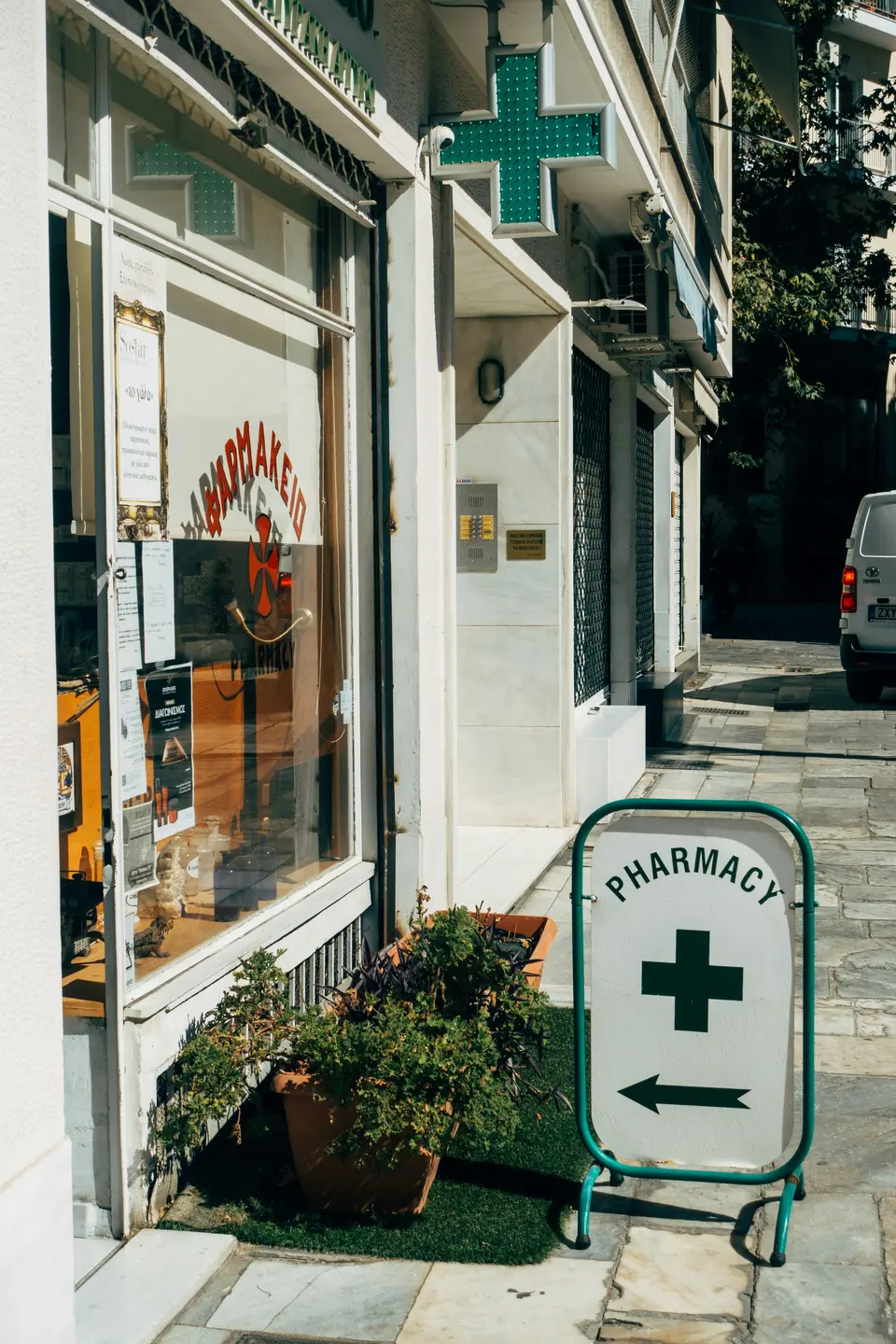
Even with perfect packing, it is worth knowing what you would do if something ran out, got lost or stopped working. Find out how pharmacies work at your destination. What is sold over the counter versus prescription-only differs enormously between countries and a prescription from home is not automatically valid abroad. Oftentimes you would need a local doctor to issue a new one. Again, this is where knowing the generic names of your medications comes in handy.
In this regard, it is also worth taking a closer look at your travel insurance. Does it cover a doctor's visit abroad and replacement medication? For destinations where healthcare is expensive, that question can matter a lot. Even if you are not likely to end up in a situation where you actually need it, a plan B you never use is the cheapest kind.
Step 6: Let your health needs have a vote in the destination choice
How much effort managing your health takes while travelling depends a lot on where you go. A city trip in a country with pharmacies on every corner makes things easy, while two weeks on a remote island or a trekking route far from the nearest town requires a lot more preparation if you depend on medication. Of course, people who need daily medication can travel everywhere, but the destination decides how much effort you need to put in.
So when you compare destinations, let the practical health questions be part of the comparison if this issue is highly important to you. Our Trip Finder allows you to filter for destinations with high health standards, so that you can choose from locations where you will feel most at ease.
It's all about being prepared
Travelling with medication sounds daunting mainly because the stakes feel high and the rules can be foreign. Check the regulations for your destination, carry the paperwork and the generic names, keep everything labelled in the carry-on and know your plan B. If you are prepared like that, taking your medication abroad will ideally feel like the familiar routine it is at home.