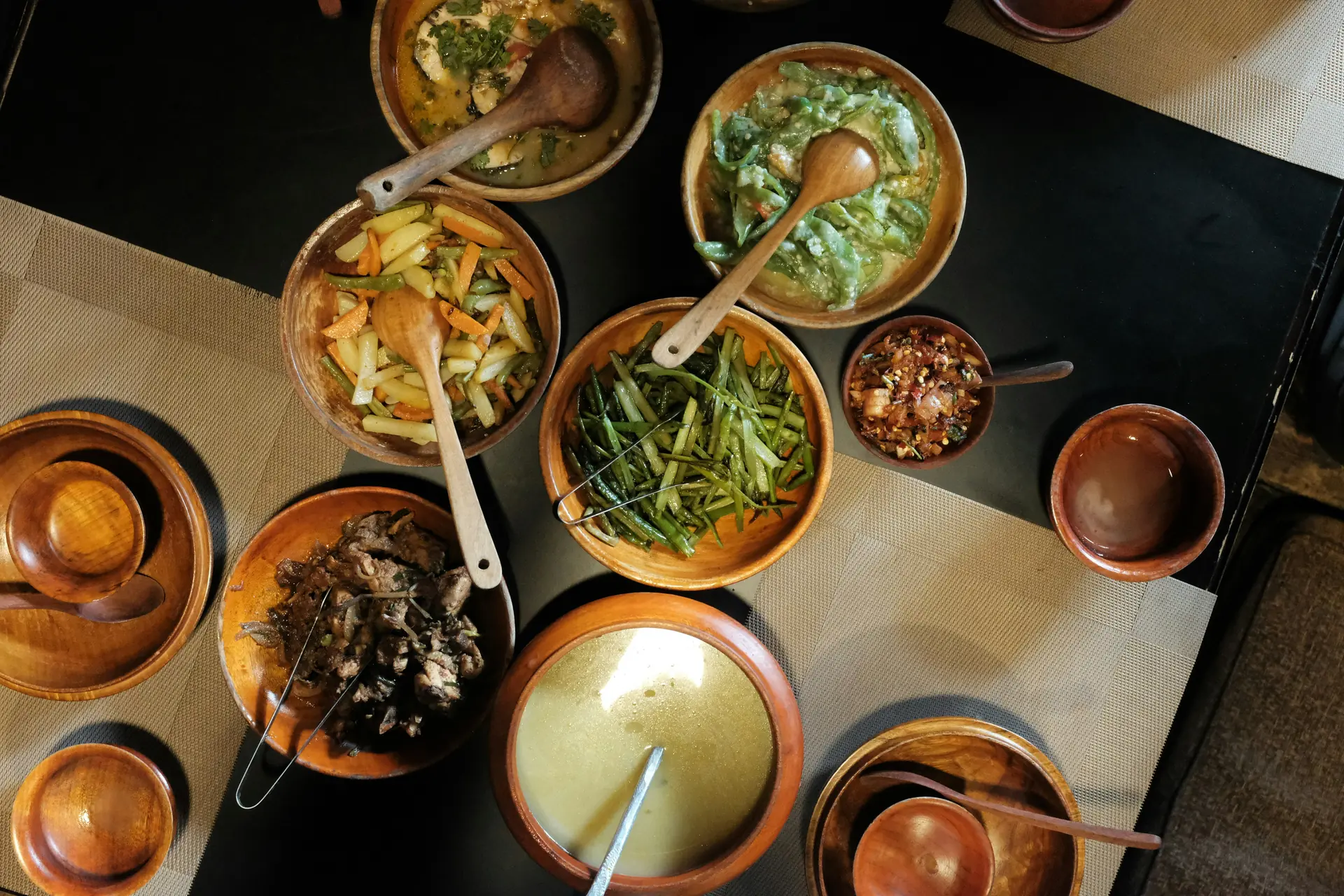

Food is the part of a culture you'll interact with most on any trip. You can skip the museums and sleep through the sunrise hike, but you'll eat around three times a day, every day, no matter where you are. That makes the local cuisine the most accessible way into a place and also the one where a bit of preparation pays off the most. The difference between pointing at a random menu item and knowing what the region does best is the difference between eating somewhere and actually tasting it.
Still, most travelers prepare very little on this front. Order the one dish you've heard of and stick with it for two weeks? End up at the restaurant next to the main sight because everyone is hungry now? Come home and find out you missed the specialty the whole region is famous for?
Learning about a destination's food is honestly the most enjoyable homework in all of travel planning. Let's go through it step by step.
Step 1: Learn the signature dishes before you go
Every destination has a handful of dishes it's genuinely proud of and knowing them changes your whole trip. Spend an evening finding out what they are, what's in them and when people eat them. Food videos, blogs and the food section of any guide make this easy and it's the kind of research that builds excitement for the trip on its own. Write your personal shortlist into your phone, so you can recognize the dishes on menus and ask for them by name.
While you're at it, look one level deeper than the national dishes. Cuisine is often very regional and the specialty of one city can be hard to find two hours away. If your trip covers several stops, it's worth knowing what each region does best. Ordering the local specialty in the place it actually comes from is one of the simple pleasures of travel and it usually gets an approving nod from whoever is serving you.
Step 2: Learn how eating works at your destination
Beyond the dishes themselves, it helps to know how meals work. When do people eat, since lunch and dinner times vary a lot between countries and showing up at the wrong hour can mean an empty restaurant or a closed kitchen. How does ordering work, whether at the counter, at the table or from a street stall. Is sharing normal or does everyone order their own plate. And how does paying and tipping work, which differs enough between countries that our money guide dedicates a section to it.
A few food words in the local language go a long way here too. The names of your shortlisted dishes, the words for the things you don't eat and a polite way to ask for a recommendation cover most situations. Our guide on navigating foreign languages shows how to handle the rest, including the translation apps that can read a menu through your camera.
Step 3: Prepare for your dietary needs
If you have allergies or follow a specific diet, this preparation deserves extra care. Learn how your requirements are usually understood at the destination, because the same words don't always mean the same thing. In many countries, saying you don't eat meat is understood to still include fish or chicken. Hidden ingredients like broths, animal fats or fish sauce are common in dishes that look safe on the menu, so knowing the local traps for your specific diet is worth ten minutes of reading.
The most reliable tool is a small translation card that explains exactly what you can and can't eat, saved on your phone and ideally also on paper. It removes the language barrier from the equation and cooks almost everywhere are remarkably helpful once they clearly understand what you need. If you travel plant-based, our guide on vegan and vegetarian travel covers the whole topic in depth, including how much the destination choice itself matters.
Step 4: Eat where the locals eat
Once you've arrived, one principle finds you better food than any list of restaurant tips. Eat where the locals eat, when the locals eat. The busy place full of people who obviously live there beats the half-empty restaurant with the photo menu next to the main sight, basically every time. Markets are the other reliable address, both for fresh snacks and for the simple stalls where you can watch your food being made.
Street food deserves a special mention because many travelers are unsure about it. The basic rules are simple. Choose busy stalls with high turnover, eat what is cooked fresh and hot in front of you and be a bit more careful with things that have been sitting out. A queue of locals is the best quality certificate a food stall can have. With those rules in mind, street food is often the most authentic and affordable eating a destination offers.
Step 5: Ask the right people the right way
The best food tips on any trip come from people, not from rankings. Your host, the person at the market stall and the taxi driver all know where the good food is. The trick is in how you ask. Asking for a restaurant recommendation often gets you the standard answer for tourists. Asking where they personally eat or what dish you absolutely have to try while you're in town gets you the real answer.
And when a tip turns out great, go back and say so. People who hear that their recommendation was a hit tend to have another one ready and suddenly you have a local food guide for the rest of your stay. It's a small habit that has upgraded many trips.
Step 6: Go deeper with food experiences
If food is a big part of why you travel, a few activities are worth building into the trip. A food tour early on works like an orientation course. You taste your way through the local classics with someone who can explain them and afterwards you know exactly what to order for the rest of the trip. A cooking class goes one step further and it's the rare souvenir you'll actually use, since the dishes come home with you. Even a simple guided market visit can teach you more about a place in two hours than a whole day of sightseeing.
Food is also a factor worth considering when you pick the destination in the first place. Culinary quality and things like plant-based availability are among the filters in our Trip Finder, so if eating well is central to your travel happiness, you can make it part of the search. Wherever you end up, the pattern of this guide stays the same. Learn a little before you go, ask the right people once you're there and let three meals a day do what they do best.