








Oceania › Australia › Great Barrier Reef

Great Barrier Reef

Scroll
World's largest living coral wonder

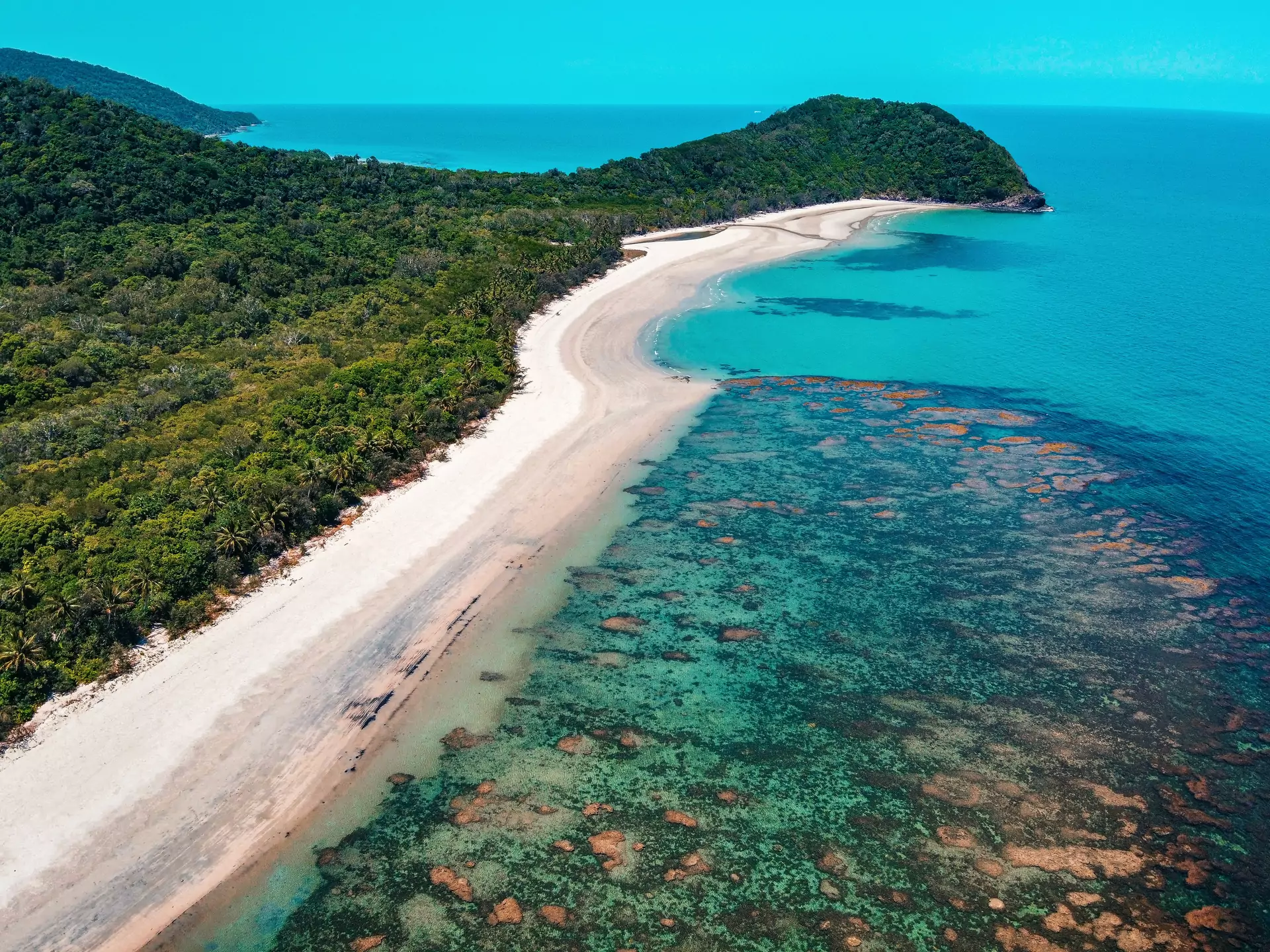
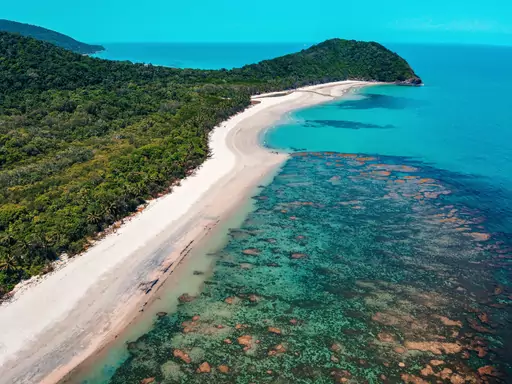
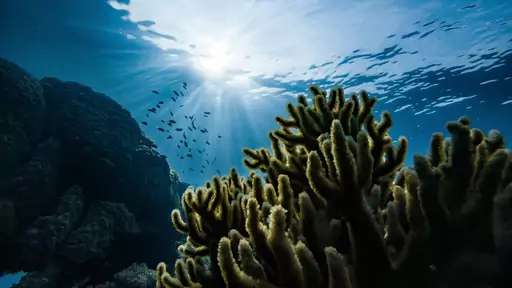
The Great Barrier Reef stretches over two thousand kilometers along Australia’s northeast coast. It is home to thousands of marine species making it one of the most diverse ecosystems on Earth. The reef supports vibrant coral formations that attract scientists, divers and photographers alike. Visitors can explore protected islands or take boat tours to observe sea turtles, colorful fish and occasional whales. Conservation efforts focus on protecting this fragile environment from climate change and pollution while supporting sustainable tourism practices for future generations.

Reef in Australia
Climate zone: Tropical savanna

Tropical savanna: Tropical climates with distinct wet and dry seasons, warm year-round, featuring grasslands with scattered trees and shrubs.

See climate table
Ticket price: $$$
$Cheap
$$Medium
$$$Expensive, upscale
$$$+Very expensive, luxury
Safety: 7.8
General Safety:8
Accessibility:7
Read details
Tourist English: 5/5
English is the official language of Australia and is spoken fluently by everyone working in tourism around the Great Barrier Reef. All tours, signs, and services are provided in English, making communication seamless for English-speaking visitors.
Last update: 12 Oct 2026
* We earn a commission from some links on this page.
Great Barrier Reef Summary
World-class for coral reefs and marine life. Go snorkeling and scuba diving, spot colorful fish and turtles and explore tropical islands and clear lagoons.
Public website: www.australia.com
Australia – Quick facts
Power Grid: 230 V, 50 Hz
Plug: Type I
Type I:
Diagram of a Type I power plug

Read about power adapters
Currency: Australian Dollar (AUD)
£1 ≈ A$1.89
Cashless info: Rating 5/5
Cashless payment is widely accepted, even in rural areas. Digital wallets are commonly used.

Save with a travel credit card
eSIM providers: Best value: Saily
Flexibility: Airalo
Read our in-depth comparison
Tipping: Tipping is not mandatory in Australia. Rounding up or 10% is appreciated in high-end restaurants.
Public drinking: Public drinking is regulated and often prohibited, except in designated areas.
Public smoking: Smoking is banned in public indoor spaces and most outdoor public areas.
Australia Day
(January)
Public events and celebrations occur nationwide.
ANZAC Day
(April)
Commemorations and closures happen.
Christmas
(December)
Festive events and closures occur.
Emergency contact: Emergency Number: 000 (Police, Fire, Ambulance)
Taxi apps: Uber, 13cabs, Ola
Other: Australia's vast size requires careful planning for travel between regions. Be aware of wildlife and sun exposure.
Best times to travel

The best times to travel section shows how the months compare for a visit, so you can find the time of year that fits what you want to do.

Background colours of the months:
The colour shows the typical temperature: yellow (hot), green (mild) and blue (cold). How strong the colour is shows the travel season: full colour means high season, soft colour means shoulder season and soft-striped means off season.

Weather symbols:
Each month has one symbol showing what the weather is typically like, such as hot and sunny, freezing or a rainy or snowy season. Use them to quickly spot months that match the weather you want, or to avoid the ones that don't.

Crowdedness:
The people icon shows how busy the place usually is. The more people, the more crowded it gets.

Additional notes:
The grey info boxes point out special things worth knowing, like recurring weather issues or seasonal events.

for Great Barrier Reef, Australia
🌦️
Jan
🌦️
Feb
🌦️
Mar
☀️
Apr
☀️
May
☀️
Jun
☀️
Jul
☀️
Aug
☀️
Sep
☀️
Oct
🔥
Nov
🔥
Dec
High season: June - Oct.
Shoulder season: Jan., April - May, Nov. - Dec.
Tap on a month for more info Hover over a month for more info
Box jellyfish stinger season runs roughly November to May; swim only in a stinger suit or in netted areas
Cyclone season December to April: reef tours can be cancelled at short notice
Humpback whale season June to September, with swim-with-minke-whale tours in June and July

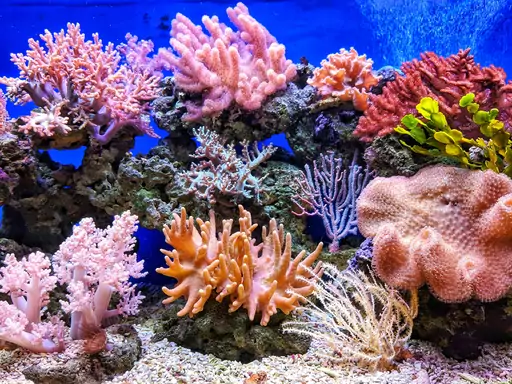
The Great Barrier Reef is one of Earth's most spectacular natural wonders, comprising a vast mosaic of over 3,000 individual reef systems and hundreds of tropical islands. This living structure stretches for 2,300km along Australia's northeastern coast and covers an area of approximately 348,700 square kilometers. What makes the reef truly remarkable is its biodiversity – it's home to 400 types of coral, 1,500 species of fish, 4,000 varieties of mollusc and countless other marine creatures including dolphins, whales and endangered sea turtles.

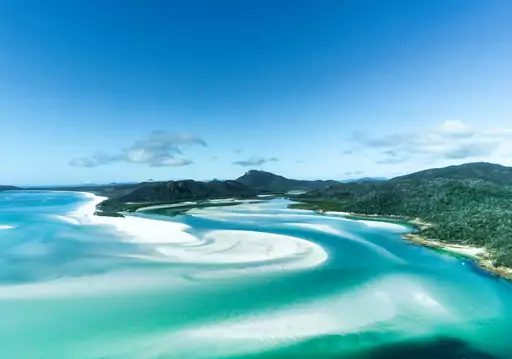
Experiencing the reef offers something for everyone, regardless of swimming ability. Divers and snorkelers can immerse themselves in an underwater wonderland of vibrant coral gardens and marine life, while non-swimmers can enjoy the reef from glass-bottom boats, semi-submersibles or underwater observatories. For a broader perspective, scenic flights provide breathtaking aerial views of this massive ecosystem. The reef experience extends beyond the water too – the Whitsunday Islands offer magnificent vistas of green vegetated islands and spectacular sandy beaches, while Indigenous-guided tours provide cultural insights into how Aboriginal and Torres Strait Islander peoples have lived in harmony with the reef for thousands of years.

The best time to visit is generally from June to October (Australian winter and spring), when water temperatures remain comfortable for swimming (around 23°C/73°F), underwater visibility is at its peak and the weather is typically dry and sunny. This period also falls outside the stinger season, when dangerous box jellyfish are prevalent in coastal waters. For wildlife enthusiasts, January to March offers the special opportunity to witness turtle hatching, while the annual coral spawning (a spectacular underwater event where corals simultaneously release eggs and sperm) typically occurs in November or December after the full moon.

Despite its beauty and resilience, the Great Barrier Reef faces significant challenges. Climate change has triggered multiple mass coral bleaching events in recent years, while water quality issues from coastal development and agricultural runoff pose ongoing threats. Visitors should also be aware of potential drawbacks – reef tours can be expensive, with day trips from Cairns starting around AUD $200 and specialty experiences like helicopter tours costing significantly more. Seasickness affects many visitors during the boat journey to the outer reef and weather conditions can sometimes lead to tour cancellations or poor visibility. Additionally, the popularity of certain sites means crowds can be an issue, particularly during peak season and some visitors have reported inconsistent tour quality, as highlighted in recent reviews.

Knowledge before you go

  • Book reef tours from Cairns or Port Douglas in advance.
  • Apply reef-safe sunscreen only; chemicals harm delicate corals and marine life.
  • June to October offers calmer seas, cooler temps and peak whale watching season.
  • Lady Elliot Island provides pristine snorkeling right off the beach with fewer crowds.

How to travel to Great Barrier Reef

The Great Barrier Reef is accessible from multiple points along Australia's Queensland coast, with Cairns and Port Douglas being the main launching pads for reef tours. Five popular airports provide access to different sections of the reef: - Cairns Airport (CNS): 5.5km from Cairns, accepting international and domestic flights - Townsville Airport (TSV): 5km from Townsville, domestic flights only - Proserpine Airport (PPP): 39km from Airlie Beach, domestic flights only - Bundaberg Regional Airport (BDB): 6km from Bundaberg, domestic flights only - Hamilton Island Airport (HTI): lands directly on Hamilton Island, domestic flights only From these coastal towns, boat tours ranging from large catamarans to intimate charters take visitors to the reef, typically requiring 90-120 minutes to reach the outer reef areas. The Spirit of Queensland train also connects Brisbane to Cairns for those preferring rail travel.

Access summary

  • From Cairns (CNS): 30–90 min reef boat or 25–30 min helicopter.
  • From Airlie Beach/Proserpine (PPP): 1–2 hour reef or island boat tours.
  • From Hamilton Island (HTI): Fast catamaran to reef pontoons about 2 hours.

Where to stay near Great Barrier Reef

Accommodation options for visiting the Great Barrier Reef vary widely depending on your preferred access point. Cairns and Port Douglas offer everything from backpacker hostels to luxury resorts, serving as convenient mainland bases for day trips to the reef. For a more immersive experience, consider staying on one of the islands within the reef system, such as Hamilton Island in the Whitsundays, which has its own airport and range of accommodation options. Other coastal towns like Airlie Beach, Townsville and Bundaberg also provide good bases with varying price points. Book well in advance for peak season (June to October).

Hotel recommendations

*by rating and popularity. Commissions have no influence on the rankings.
We couldn't find any nearby hotels for now.
Budget snapshot
Costs compared to home

We calculate the average costs when travelling to destinations and compare those with the living costs at your home. With this you can get an estimate of how expensive or cheap the destination is for you.

To customise this, you can set up which location and price level are used for the calculations in your account settings.

-9 %
Daily expenses in the region are around 9% lower than the average across United States. That means you'll spend less on meals and getting around.
Exchange rate trend

The exchange rate price factor shows how expensive or cheap a currency currently is compared to its historical average. It's a quick way to see if a country is currently more or less affordable due to exchange rate changes.

-2 %
Your exchange rate (GBP to AUD) is 2% better than in recent years. That means travelling now costs around the same compared to the past.

Safety information overview

General safety
8
The Great Barrier Reef area remains generally safe for travelers, with low crime rates and well‑monitored tourist sites. Visitors should stay on designated paths, avoid isolated spots after dark, keep valuables secure and heed local marine safety advisories to ensure a worry‑free visit.
Accessi­bility
7
The Great Barrier Reef offers limited accessibility: wheelchair‑friendly viewing platforms and audio guides are available at major dive sites, but many reefs remain inaccessible due to depth and tide constraints. Visitors with mobility issues should plan ahead, use guided tours and check local facilities for assistance.

Looking for inspiration?

Discover
Most beautiful beaches and coastal escapes
For a lot of people, a beach is the whole point of a holiday, but what makes a beach day perfect really depends on personal taste. Some travellers want isolation and the feeling…
Read more
Discover
Intimate escapes and romantic getaways
The most memorable trips for couples tend to have less to do with luxury and more to do with the quality of shared experience. A place that slows you down, removes the usual…
Read more
Discover
Top cruise destinations and major routes
Cruise travel has evolved considerably beyond its traditional demographic and now encompasses everything from large resort ships carrying thousands of passengers to small…
Read more
Discover
Top photography destinations and scenic landscapes
A genuinely photogenic destination offers more than one good shot: it has the light, the composition and enough variety of conditions to reward repeat visits at different times of…
Read more
Discover
Best destinations to visit in September in Oceania
September brings spring to Oceania, easing the region out of winter just as wildflowers and warmer days start to return. Western Australia's wildflower season reaches its peak…
Read more
Discover
Top boating destinations and cruising waters
Boating travel encompasses an enormous range of experiences from river cruising and canal boating to motor yacht charter, liveaboard diving and the growing circuit of destinations…
Read more
Discover
Best destinations to visit in May in Oceania
May brings a real split across Oceania, with the south cooling toward winter while parts of the tropical north stay warm and inviting. Southern Australia and New Zealand settle…
Read more
Discover
Best photography destinations in Oceania
Dramatic fjord scenery in New Zealand combines with consistently changeable weather, while a vast desert formation in Australia changes colour through the day in ways that have…
Read more
Discover
Top luxury destinations and exclusive getaways
Luxury travel is defined less by price than by the quality of attention, access and experience that money can unlock at the top end of the market. The most rewarding luxury…
Read more
Discover
Best destinations to visit in October in Oceania
Spring continues to warm across Oceania in October, easing the region further out of winter with each passing week. Ski season wraps up almost entirely by October, with only the…
Read more
Discover
Best diving destinations in Oceania
A major reef system remains the defining diving destination in this region, though changing reef health has made site selection more important than it once was. Remote Pacific…
Read more
Discover
Best destinations for first-time travelers in Oceania
Oceania asks first-time travelers to commit to a long flight, but the payoff is a destination that stays easy to navigate once you actually arrive. Australia and New Zealand are…
Read more
Discover
Best destinations to visit in September
September often gets called one of the best months to travel, sitting right in that shoulder season sweet spot after summer crowds thin out. School terms restart in much of the…
Read more
Discover
Top scuba diving destinations and coral reefs
The world's best diving destinations share a few things in common: visibility, healthy reef structure and enough marine biodiversity to reward repeated dives in the same spot.…
Read more
Discover
Best cruise destinations in Oceania
Oceania's cruise offer is shaped by the vast distances of the Pacific and the contrast between the well-developed coastal itineraries of Australia and New Zealand and the remote…
Read more
Was this page helpful?
Feedback