







Oceania › Australia › Uluru

Uluru

Scroll
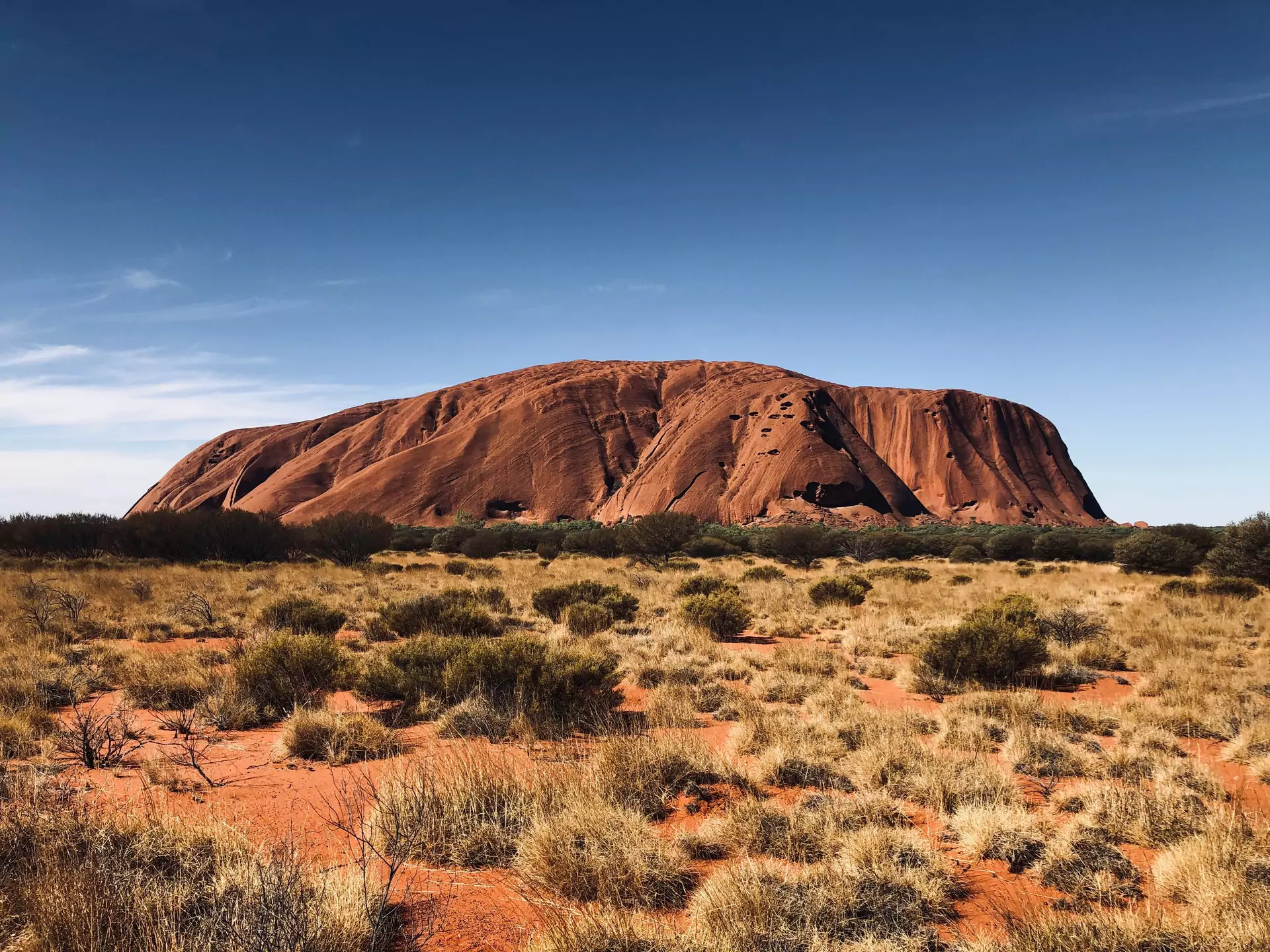
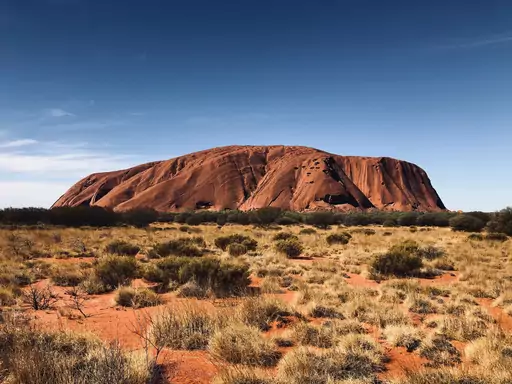
Majestic sandstone monolith under endless skies

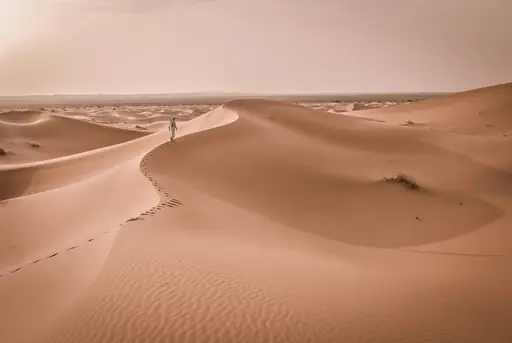
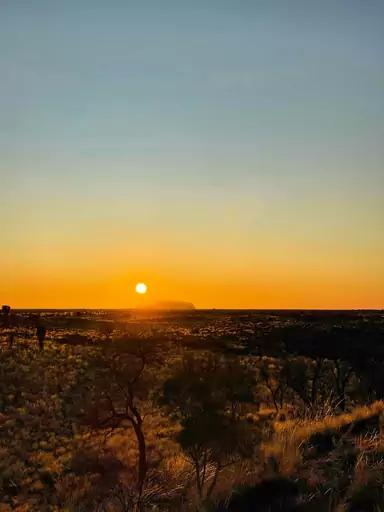
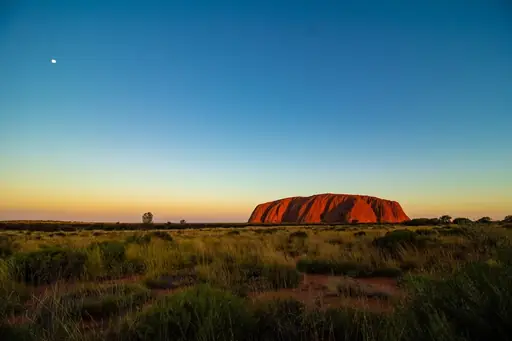
Oceania’s largest landmass includes Australia and Uluru, a massive sandstone rock in central Australia. Known as Ayers Rock to many, Uluru rises 348 meters above the Outback plain with striking red hues that change at sunrise and sunset. The area holds deep cultural meaning for Indigenous Australians who have cared for this landscape for thousands of years. Beyond Uluru, surrounding deserts offer wide skies, unique wildlife and opportunities to learn about ancient traditions alongside modern Australian life.

Landmark in Australia
Climate zone: Hot desert

Hot desert: Extremely arid climates with very high temperatures, minimal rainfall, strong evaporation and sparse vegetation, typical of subtropical deserts.

See climate table
Ticket price: $$$
$Cheap
$$Medium
$$$Expensive, upscale
$$$+Very expensive, luxury
Safety: 7.8
General Safety:8
Accessibility:7
Read details
Tourist English: 5/5
In Uluru, English is widely spoken by locals and tour operators, making communication easy for visitors. Most signs, guides and services are bilingual, ensuring smooth interactions throughout the area.
Last update: 12 Oct 2026
* We earn a commission from some links on this page.
Uluru Summary
Iconic for desert landscapes and Aboriginal heritage. Walk base trails, watch sunrise and sunset colors and learn about Indigenous culture.
Australia – Quick facts
Power Grid: 230 V, 50 Hz
Plug: Type I
Type I:
Diagram of a Type I power plug

Read about power adapters
Currency: Australian Dollar (AUD)
£1 ≈ A$1.89
Cashless info: Rating 5/5
Cashless payment is widely accepted, even in rural areas. Digital wallets are commonly used.

Save with a travel credit card
eSIM providers: Best value: Saily
Flexibility: Airalo
Read our in-depth comparison
Tipping: Tipping is not mandatory in Australia. Rounding up or 10% is appreciated in high-end restaurants.
Public drinking: Public drinking is regulated and often prohibited, except in designated areas.
Public smoking: Smoking is banned in public indoor spaces and most outdoor public areas.
Australia Day
(January)
Public events and celebrations occur nationwide.
ANZAC Day
(April)
Commemorations and closures happen.
Christmas
(December)
Festive events and closures occur.
Emergency contact: Emergency Number: 000 (Police, Fire, Ambulance)
Taxi apps: Uber, 13cabs, Ola
Other: Australia's vast size requires careful planning for travel between regions. Be aware of wildlife and sun exposure.
Best times to travel

The best times to travel section shows how the months compare for a visit, so you can find the time of year that fits what you want to do.

Background colours of the months:
The colour shows the typical temperature: yellow (hot), green (mild) and blue (cold). How strong the colour is shows the travel season: full colour means high season, soft colour means shoulder season and soft-striped means off season.

Weather symbols:
Each month has one symbol showing what the weather is typically like, such as hot and sunny, freezing or a rainy or snowy season. Use them to quickly spot months that match the weather you want, or to avoid the ones that don't.

Crowdedness:
The people icon shows how busy the place usually is. The more people, the more crowded it gets.

Additional notes:
The grey info boxes point out special things worth knowing, like recurring weather issues or seasonal events.

for Uluru, Australia
🔥
Jan
🔥
Feb
🔥
Mar
🔥
Apr
☀️
May
☀️
Jun
☀️
Jul
☀️
Aug
☀️
Sep
🔥
Oct
🔥
Nov
🔥
Dec
High season: May - Sep.
Shoulder season: April, Oct.
Tap on a month for more info Hover over a month for more info
Hot months: Base Walk and other trails close in the morning heat, so start at dawn
Climbing Uluru has been banned since October 2019; walking around its base is the main activity

Uluru stands as a massive sandstone formation in central Australia. Its surface shows layers shaped by wind and water over millions of years. The rock changes color during sunrise and sunset turning red orange and deep purple. This natural landmark holds cultural importance for the Anangu people who have cared for it for generations.

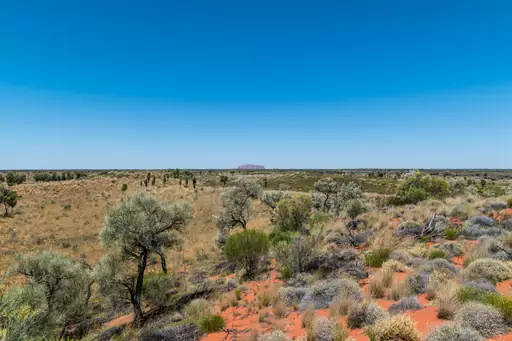
The area around Uluru features a dry climate with sparse vegetation. Small shrubs and hardy grasses grow in rocky soil. Seasonal rains bring brief bursts of life to the landscape supporting insects birds and reptiles adapted to harsh conditions. Visitors often see tracks left by kangaroos or hear calls from parrots during early morning hours.

Aboriginal stories explain Uluru’s creation through Dreamtime narratives passed down over thousands of years. These tales describe how ancestral beings shaped the land forming caves waterholes and other features. Respectful visitors follow guidelines set by local communities to preserve sacred sites and avoid harming fragile ecosystems.

Tourism activities include guided walks with Indigenous rangers who share knowledge about plants animals and history. Photography is encouraged but climbing Uluru is discouraged out of respect for cultural values. Campgrounds near the base provide access to stargazing opportunities as clear night skies reveal countless stars without light pollution from cities.

Why travel to Uluru?

🏯Places worth seeing
  • 1 Uluru
  • 2 Kata Tjuta
  • 3 Mala Walk
  • 4 Valley of the Winds Walk
🎡Places for activities
  • 1 Northern Uluru Base Walk
🏞️Natural landmarks
  • 1 Uluru
  • 2 Kata Tjuta
  • 3 Valley of the Winds T-Intersection

Knowledge before you go

  • Arrive early; Uluru’s sunrise and sunset are peak times for crowds.
  • Wear light, breathable clothing and a wide-brimmed hat; the desert can heat up quickly during midday.
  • Carry plenty of water, sunscreen and a reusable bottle; refill stations are limited near the base walk.
  • Respect local Anangu customs by staying on marked paths and avoiding photography in restricted areas.

How to travel to Uluru

Uluru, also known as Ayers Rock, is located in central Australia within Uluru-Kata Tjuta National Park, Northern Territory. Access to Uluru requires traveling through remote desert terrain, primarily via the Lassiere Road or the Stuart Highway from Alice Springs, approximately 335 kilometers (208 miles) south. The nearest major town is Yulara, a service hub offering accommodations and transport services for visitors. Public transport options include scheduled buses operated by companies like Red Centre Travel, connecting Alice Springs to Uluru. Private vehicles are common due to limited public transit in the region. Visitors must adhere to park regulations, including restricted access to certain areas during specific times or conditions.

Access summary

  • From Ayers Rock Airport (AYQ): Shuttle bus to Uluru 30–45 min.
  • From Alice Springs: 4‑hour drive or 5‑hr flight; from Darwin: 6‑hr flight.
  • By chartered helicopter, 20‑min direct from Ayers Rock Airport.

Where to stay near Uluru

In the remote Red Centre around Uluru, accommodation ranges from luxury resorts to modest campgrounds, catering to diverse budgets and preferences. The area is renowned for its eco‑friendly lodges that blend seamlessly with the desert landscape, offering panoramic views of the sandstone monolith at sunrise and sunset. Boutique hotels provide high‑end amenities such as private plunge pools, guided stargazing tours and indigenous art galleries, while budget-friendly options include self‑contained cabins and caravan parks equipped with basic facilities. For adventurous travelers, camping under the stars is a popular choice, with designated sites offering electricity and potable water. The region’s hospitality industry emphasizes sustainability, ensuring that even the most affordable stays minimize environmental impact while delivering authentic Australian outback experiences.

Hotel recommendations

*by rating and popularity. Commissions have no influence on the rankings.
We couldn't find any nearby hotels for now.
Budget snapshot
Costs compared to home

We calculate the average costs when travelling to destinations and compare those with the living costs at your home. With this you can get an estimate of how expensive or cheap the destination is for you.

To customise this, you can set up which location and price level are used for the calculations in your account settings.

---
We can't detect your current location. Please log in and set your current location in the account settings to see a cost comparison.
Exchange rate trend

The exchange rate price factor shows how expensive or cheap a currency currently is compared to its historical average. It's a quick way to see if a country is currently more or less affordable due to exchange rate changes.

-2 %
Your exchange rate (GBP to AUD) is 2% better than in recent years. That means travelling now costs around the same compared to the past.

Safety information overview

General safety
8
Uluru and surrounding areas in Australia are generally safe for travelers, with low crime rates and well‑maintained tourist facilities. Visitors should stay hydrated, respect local customs, avoid walking alone at night and follow park guidelines to ensure a secure experience.
Accessi­bility
7
Uluru offers limited accessibility: wheelchair‑friendly paths and audio guides are available, but uneven sandstone and steep climbs remain challenging. Accessible parking and restrooms exist nearby, yet the main viewing area requires a short walk on rough terrain – plan accordingly.

Looking for inspiration?

Discover
Best desert destinations in Oceania
Desert landscapes in Oceania cover more ground than the classic red sand image suggests, and a few very different versions of that landscape show up on this list. Uluru and the…
Read more
Discover
Best destinations to visit in August in Oceania
August still counts as one of the better months for winter sports across Oceania, even as the tropical north holds onto its dry season. Ski season remains strong across the…
Read more
Discover
Top desert destinations and arid landscapes
Desert travel offers some of the most visually arresting and physically demanding environments on earth, with the world's great sand seas, stone plateaus and salt flat systems…
Read more
Discover
Top spiritual travel destinations and wellness retreats
Spiritual travel works best at destinations with a genuine, long-standing tradition behind the practice on offer: places where meditation, ritual or retreat has been part of local…
Read more
Discover
Best destinations to visit in September in Oceania
September brings spring to Oceania, easing the region out of winter just as wildflowers and warmer days start to return. Western Australia's wildflower season reaches its peak…
Read more
Discover
Best destinations to visit in May in Oceania
May brings a real split across Oceania, with the south cooling toward winter while parts of the tropical north stay warm and inviting. Southern Australia and New Zealand settle…
Read more
Discover
Best destinations to visit in October in Oceania
Spring continues to warm across Oceania in October, easing the region further out of winter with each passing week. Ski season wraps up almost entirely by October, with only the…
Read more
Discover
Most famous religious destinations in Oceania
Oceania is not usually the first place people think of for religious travel, but the region has some of the oldest sacred traditions on earth and plenty of places where faith is…
Read more
Discover
Best natural wonder destinations in Oceania
Oceania's natural wonders reflect the region's extraordinary geological and biological diversity, shaped by volcanic activity, ancient erosion and the forces that have kept island…
Read more
Discover
Best travel destinations for seniors in Oceania
Oceania asks older travelers to commit to a long flight, but many find the comfortable infrastructure on the other end makes it worthwhile. Australia and New Zealand both offer…
Read more
Discover
Extraordinary natural wonders and scenic landscapes
Natural wonders occupy a different category from other travel destinations. They are places where the scale, the geology, the light or the sheer improbability of what exists there…
Read more
Discover
Best destinations to visit in June in Oceania
June brings winter to the southern half of Oceania, while the tropical north settles into one of its best stretches of the year. Ski season gets underway in the Australian Alps…
Read more
Discover
Best destinations to visit in July in Oceania
July is one of the best months of the year for winter sports in Oceania, even as the tropical north stays warm and dry. Ski season reaches its peak across the Australian Alps…
Read more
Discover
Best spiritual destinations in Oceania
Oceania has huge open spaces, very old cultures and a relaxed pace of life, which makes it an easy place to slow down and reconnect with nature. Uluru in central Australia is…
Read more
Discover
Best destinations to visit in April in Oceania
Autumn deepens across Oceania in April, cooling the region further after the last of the summer crowds have gone. Australia settles into comfortable autumn weather, with mild…
Read more
Was this page helpful?
Feedback