

South America › Peru › Machu Picchu

Machu Picchu

Scroll
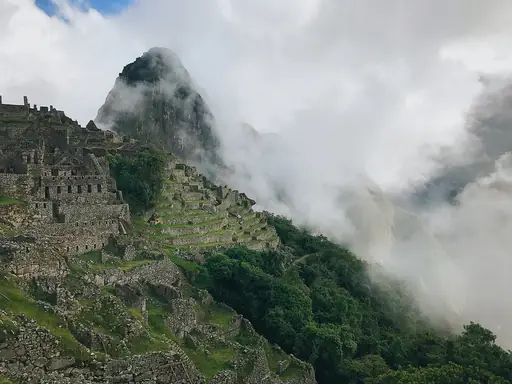
Lost Inca city among clouds

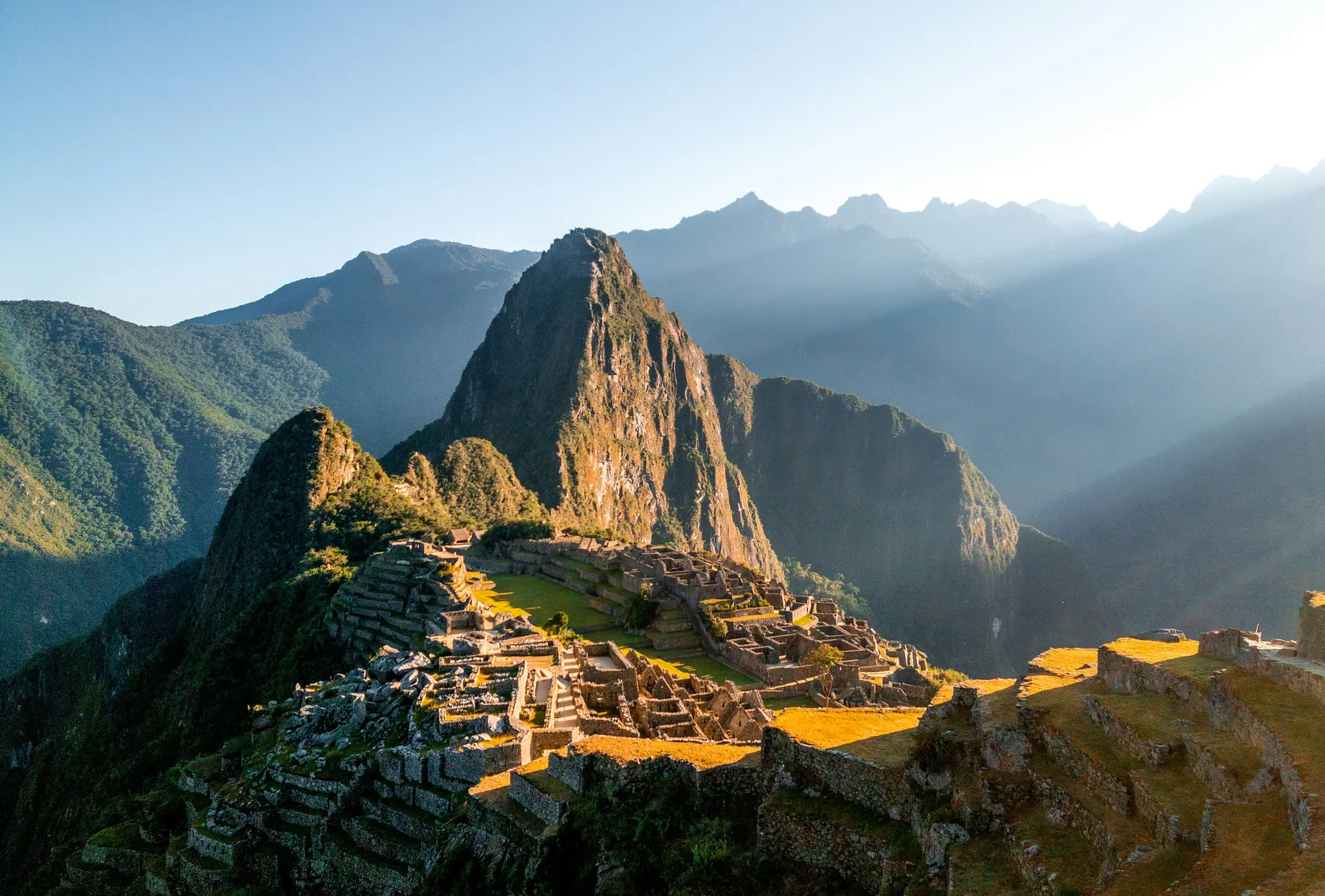
Machu Picchu stands high in Peru’s Andes Mountains as a 15th-century Inca city built without modern tools. Its stone structures align with mountains and sunrise, showing advanced engineering. The site includes temples, terraces and plazas surrounded by cloud forests. Local guides explain its history while sharing Quechua traditions still practiced today. Visitors hike trails or take trains to reach the citadel, which draws researchers and travelers interested in ancient cultures. The area’s climate varies seasonally, affecting access routes and views of surrounding valleys.

Archaeological Site in Peru
Climate zone: Mild oceanic

Mild oceanic: Marine-influenced climates with cool summers, mild winters and frequent precipitation year-round, typical of western coasts at mid-latitudes.

See climate table
Ticket price: $$$
$Cheap
$$Medium
$$$Expensive, upscale
$$$+Very expensive, luxury
Safety: 7.4
General Safety:8
Accessibility:5
Read details
Tourist English: 3/5
English proficiency varies in the Machu Picchu area. Tour guides and hotel staff generally speak good English, while English levels may be more basic among local vendors and transportation staff. Having a few Spanish phrases is helpful but not essential.
Last update: 12 Oct 2026
* We earn a commission from some links on this page.
Machu Picchu Summary
World-class for ancient Inca history and mountain scenery. Hike historic trails, explore remarkable stone ruins, photograph misty peaks and discover one of the most iconic archaeological sites.
Opening hours:
Mon-Sun:06:30 - 15:45
Public website: www.machupicchu.gob.pe
Peru – Quick facts
Power Grid: 220 V, 60 Hz
Plug: Type A , Type B
Type A:
Diagram of a Type A power plug
Type B:
Diagram of a Type B power plug

Read about power adapters
Currency: Peruvian Sol (PEN)
£1 ≈ PEN 4.59
Cashless info: Rating 4/5
Cashless payments are widely accepted in Peru, especially in larger cities and tourist areas.

Save with a travel credit card
eSIM providers: Best value: Saily
Flexibility: Airalo
Read our in-depth comparison
Tipping: Tipping is customary in Peru, with 10-15% being the usual amount in restaurants. Small tips are appreciated by taxi drivers and hotel staff.
Public drinking: Public drinking is prohibited in Peru, and alcohol consumption is restricted to licensed venues.
Public smoking: Smoking is allowed in designated areas, but smoking indoors in public spaces is generally prohibited.
Emergency contact: Emergency Numbers: 105 (Police), 106 (Ambulance), 116 (Fire)
Taxi apps: Uber
Other: Peru is known for its ancient culture, including Inca ruins and the Amazon rainforest, making it a popular destination for nature lovers and history enthusiasts.
Best times to travel

The best times to travel section shows how the months compare for a visit, so you can find the time of year that fits what you want to do.

Background colours of the months:
The colour shows the typical temperature: yellow (hot), green (mild) and blue (cold). How strong the colour is shows the travel season: full colour means high season, soft colour means shoulder season and soft-striped means off season.

Weather symbols:
Each month has one symbol showing what the weather is typically like, such as hot and sunny, freezing or a rainy or snowy season. Use them to quickly spot months that match the weather you want, or to avoid the ones that don't.

Crowdedness:
The people icon shows how busy the place usually is. The more people, the more crowded it gets.

Additional notes:
The grey info boxes point out special things worth knowing, like recurring weather issues or seasonal events.

for Machu Picchu, Peru
🌦️
Jan
🌦️
Feb
🌦️
Mar
☀️
Apr
☀️
May
☀️
Jun
☀️
Jul
☀️
Aug
☀️
Sep
☀️
Oct
☀️
Nov
🌦️
Dec
High season: May - Sep.
Shoulder season: April, Oct. - Nov.
Tap on a month for more info Hover over a month for more info
Inca Trail is closed every February for maintenance; permits for May to September sell out months ahead
Entry tickets are timed and limited daily; they often sell out weeks ahead from June to August
Heavy rain from December to March can cause landslides that disrupt trains and roads

Machu Picchu stands as a testament to the incredible engineering prowess and astronomical knowledge of the Inca civilization. Built in the 15th century and then abandoned during the Spanish conquest, the site remained hidden from the outside world until American explorer Hiram Bingham brought it to international attention in 1911. What makes this ancient city so remarkable is its state of preservation - since the Spanish never discovered it, the original structures remain largely intact, offering an authentic window into Inca life and architecture.

The site is divided into different sectors, each with unique features. The Agricultural Zone contains impressive terracing that prevented erosion and created microclimates for growing various crops. The Urban Sector housed the city's inhabitants, while the Sacred District contains the most important religious structures, including the Temple of the Sun and the Intihuatana stone - a kind of astronomical clock or calendar. The precision of Inca stonework is evident throughout, with massive blocks fitted together so perfectly that not even a knife blade can be inserted between them, all accomplished without the use of mortar or metal tools.

Visiting Machu Picchu has become increasingly regulated to protect the site from the damage caused by overtourism. As of 2025, visitors must follow strict rules including mandatory guided tours, timed entry slots with a four-hour limit and designated circuits. Only 2,500 visitors are permitted daily and tickets sell out weeks or even months in advance, especially during the high season (June-August). The site is open from 6 AM to 5:30 PM, with the first buses departing from Aguas Calientes at 5:30 AM. Many visitors aim for early morning entry to avoid crowds and have the best chance of seeing the ruins before potential afternoon mist rolls in.

While the beauty and historical significance of Machu Picchu are undeniable, potential visitors should be aware of several challenges. The high altitude (2,430 meters) can cause altitude sickness for some visitors, though it's actually lower than Cusco. The weather can change rapidly, with misty conditions often obscuring views, particularly in the wet season (November-April). The site's popularity means advance planning is essential - entry tickets, train tickets and accommodations should be booked as early as possible. Additionally, facilities are limited once inside the citadel, with no bathrooms, food or drink available, so visitors must prepare accordingly before entering.

Why travel to Machu Picchu?

🏯Places worth seeing
  • 1 Temple of the Condor
  • 2 Temple of the Sun
🎡Places for activities
  • 1 Machupicchu Town
  • 2 Circuit 2
  • 3 Montaña Huayna Picchu
  • 4 Inca Trail
  • 5 Salkantay Trek
  • 6 Sun Gate
🏞️Natural landmarks
  • 1 Machupicchu Mountain
🛍️Shopping
  • 1 Central Market

Knowledge before you go

  • Book tickets months ahead; they sell out fast.
  • Acclimatize in Cusco 2-3 days before to avoid altitude sickness symptoms.
  • Choose Circuit 2 ticket for classic access to Temple of Sun and Sacred Plaza.
  • Arrive via early train from Cusco; beat crowds at 6 AM entry for best photos and tranquility.

How to travel to Machu Picchu

Most visitors reach Machu Picchu by first flying into Cusco, then taking either a train or trekking to the site. The most popular route is by train from either Cusco or Ollantaytambo to Aguas Calientes (also called Machu Picchu Pueblo), followed by a 30-minute bus ride up to the entrance. Train services are operated by PeruRail and Inca Rail, with varying comfort levels from budget to luxury options. For the more adventurous, trekking to Machu Picchu is a memorable experience. The classic 4-day Inca Trail requires permits that sell out months in advance, especially for the high season (June-August). Alternative treks include the 5-day Salkantay Trek and the 2-day shortened Inca Trail. All treks culminate with an entrance to Machu Picchu, typically through the Sun Gate for the classic Inca Trail.

Access summary

  • From Cusco (CUZ): Taxi to Poroy/Ollantaytambo, train to Aguas Calientes, 3–4.5 hours.
  • From Cusco city: Bus or taxi to Ollantaytambo, train onwards, around 4 hours.
  • From Lima: Fly to Cusco (1.5 hours), then train route as above.

Where to stay near Machu Picchu

Most visitors stay in Aguas Calientes (Machu Picchu Pueblo), the small town at the base of the mountain, which offers a range of accommodations from budget hostels to luxury options like Sumaq Machu Picchu. Staying overnight allows for early access to the site before day-trippers arrive from Cusco. For a more immersive experience, consider spending two nights - arriving on day one, exploring Machu Picchu on day two and visiting other local attractions on day three before departing. Accommodations in Aguas Calientes tend to be pricier than elsewhere in Peru and booking well in advance is essential, especially during high season.

Budget snapshot
Costs compared to home

We calculate the average costs when travelling to destinations and compare those with the living costs at your home. With this you can get an estimate of how expensive or cheap the destination is for you.

To customise this, you can set up which location and price level are used for the calculations in your account settings.

-56 %
Daily expenses in the region are around 56% lower than the average across United States. That means you'll spend a lot less on meals and getting around.
Exchange rate trend

The exchange rate price factor shows how expensive or cheap a currency currently is compared to its historical average. It's a quick way to see if a country is currently more or less affordable due to exchange rate changes.

+6 %
Your exchange rate (GBP to PEN) is 6% worse than in recent years. That means travelling now is more expensive compared to the past.

Safety information overview

General safety
8
Machu Picchu is generally safe for visitors, with well‑patrolled trails and a strong tourist police presence. Avoid carrying valuables in crowded areas, stay on marked paths and heed local advisories about altitude sickness and sudden weather changes.
Accessi­bility
5
Machu Picchu offers limited accessibility: paved paths and a shuttle lift aid visitors, but steep climbs and uneven stone steps challenge mobility. Wheelchair users can reach the entrance via a ramp, yet many trails remain inaccessible; plan ahead for assistance and sturdy footwear.

Looking for inspiration?

Discover
Intimate escapes and romantic getaways
The most memorable trips for couples tend to have less to do with luxury and more to do with the quality of shared experience. A place that slows you down, removes the usual…
Read more
Discover
Best spiritual destinations in South America
South America has ancient ruins, huge empty landscapes and living Indigenous traditions, which makes it a natural choice for travelers looking for something deeper than a regular…
Read more
Discover
Best must-see destinations in South America
North America's must-see destinations range from the canyon and wilderness landscapes of the west and the dense cultural offer of its major eastern cities to the ancient…
Read more
Discover
Best destinations to visit in August
August closes out peak summer across the Northern Hemisphere, often bringing the hottest weather of the year to many regions. Parts of Europe slow down noticeably this month,…
Read more
Discover
Best destinations to visit in July in South America
July draws some of the year's biggest crowds to parts of South America, even as the far south stays locked in winter. Andean trekking season is in full swing, and July counts…
Read more
Discover
Top spiritual travel destinations and wellness retreats
Spiritual travel works best at destinations with a genuine, long-standing tradition behind the practice on offer: places where meditation, ritual or retreat has been part of local…
Read more
Discover
Top architecture destinations and iconic landmarks
Architecture travel spans everything from ancient ceremonial complexes and medieval urban cores to the grands projets of the twentieth century and contemporary buildings that draw…
Read more
Discover
Top hiking destinations and famous trails
Hiking at its best is one of the most direct ways to engage with a landscape. The pace forces a relationship with terrain, weather and distance that faster forms of travel rarely…
Read more
Discover
Best destinations to visit in May
May often gets called one of the best months to travel, sitting in that comfortable window before summer crowds and heat take over in the north. Europe and much of North America…
Read more
Discover
Best architecture destinations in South America
South America's architectural heritage is shaped by the collision between pre-Columbian monumental traditions and the colonial urban frameworks imposed from the sixteenth century…
Read more
Discover
Top ancient ruins destinations and archaeological sites
The world's most significant ancient ruin destinations range from the ceremonial complexes of early river civilisations and the monumental remains of classical empires to the less…
Read more
Discover
Best flower destinations in South America
The Amazon basin holds extraordinary floral biodiversity, while jacaranda-lined streets in a southern capital turn entire neighbourhoods purple each spring, a more urban,…
Read more
Discover
Top historical destinations and historic sites
The most compelling history destinations are places where the past is still physically present and legible in the landscape, the architecture and the daily life of the people who…
Read more
Discover
Best destinations to visit in September in South America
September marks the start of spring across South America, though winter conditions still linger in parts of the continent. Andean regions remain in their dry season, with stable…
Read more
Discover
Top flower destinations and botanical gardens
Flower travel has developed a dedicated following built around the world's most significant wildflower seasons, bulb field landscapes and botanical garden collections that offer…
Read more
Was this page helpful?
Feedback

