



South America › Peru › Lake Titicaca

Lake Titicaca

Scroll
Crystal waters echo ancient Andean legends

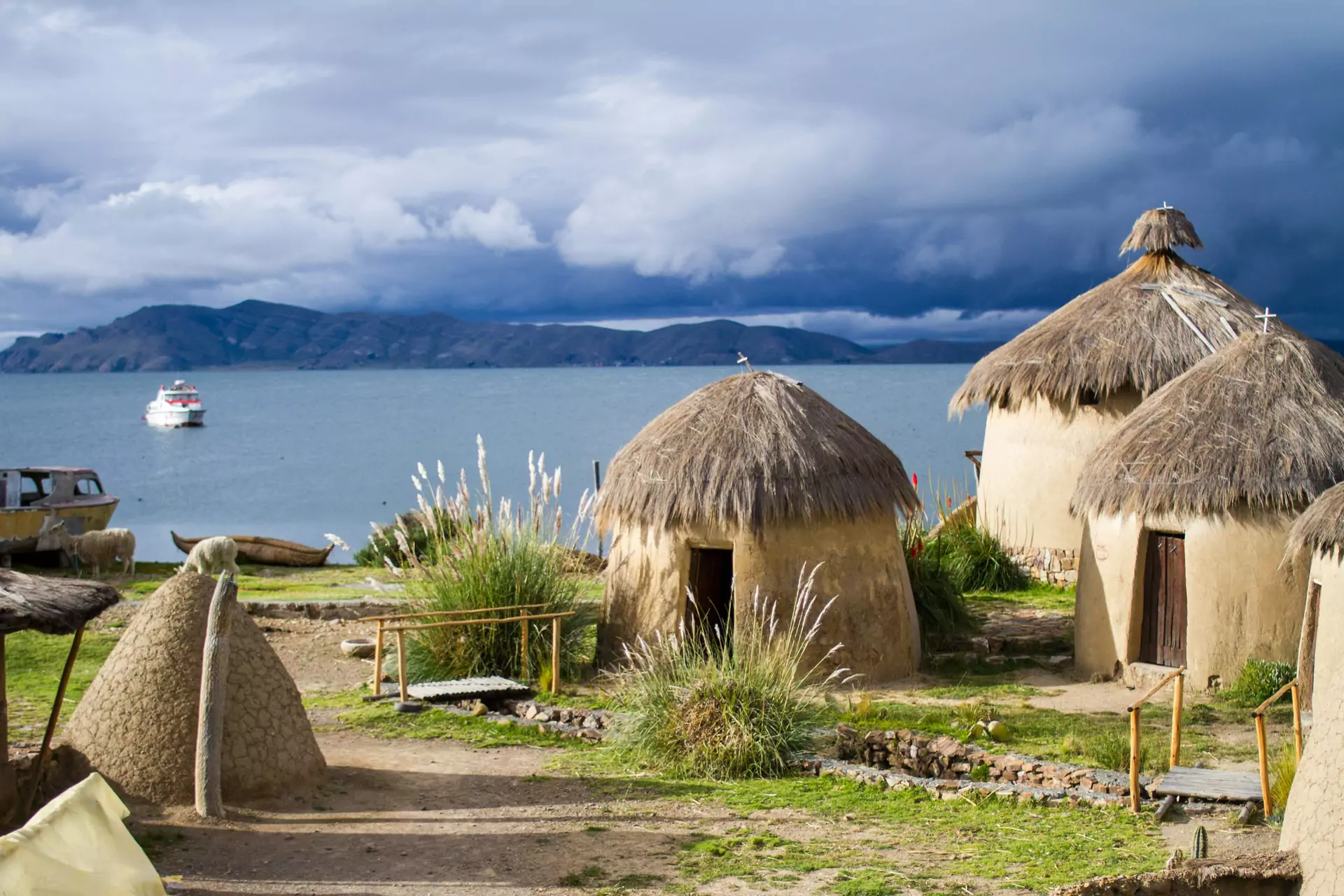
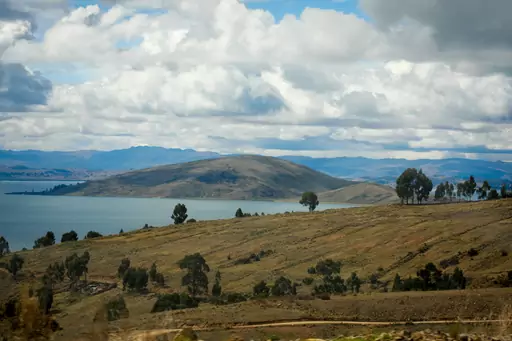
Lake Titicaca sits high in the Andes Mountains of Peru and Bolivia at over 3,800 meters above sea level. It is the largest freshwater lake by volume in South America and holds deep cultural significance for Indigenous communities living along its shores. The waters are home to unique floating reed islands built by the Uros people. Surrounded by dramatic landscapes, the area provides a glimpse into traditional ways of life while offering opportunities for hiking, boating and exploring archaeological sites nearby.

Lake
Climate zone: Mild highland

Mild highland: Highland climates in subtropics or tropics, with mild temperatures, distinct wet summers and dry or cooler winters.

See climate table
Ticket price: $$$
$Cheap
$$Medium
$$$Expensive, upscale
$$$+Very expensive, luxury
Safety: 6.0
General Safety:6
Accessibility:6
Read details
Tourist English: 3/5
At Lake Titicaca, English is spoken by many tour guides and hospitality staff, especially in popular villages like Copacabana and Juliaca. Most visitors find basic conversations easy, though local dialects may vary.
Last update: 12 Oct 2026
* We earn a commission from some links on this page.
Lake Titicaca Summary
Famous for high-altitude lake culture. Boat to floating reed islands, visit traditional villages and experience Andean lake landscapes.
Public website: laketiticaca.com
Best times to travel

The best times to travel section shows how the months compare for a visit, so you can find the time of year that fits what you want to do.

Background colours of the months:
The colour shows the typical temperature: yellow (hot), green (mild) and blue (cold). How strong the colour is shows the travel season: full colour means high season, soft colour means shoulder season and soft-striped means off season.

Weather symbols:
Each month has one symbol showing what the weather is typically like, such as hot and sunny, freezing or a rainy or snowy season. Use them to quickly spot months that match the weather you want, or to avoid the ones that don't.

Crowdedness:
The people icon shows how busy the place usually is. The more people, the more crowded it gets.

Additional notes:
The grey info boxes point out special things worth knowing, like recurring weather issues or seasonal events.

for Lake Titicaca
⛅
Jan
⛅
Feb
⛅
Mar
⛅
Apr
⛅
May
⛅
Jun
⛅
Jul
⛅
Aug
⛅
Sep
⛅
Oct
⛅
Nov
⛅
Dec
High season: May - Sep.
Shoulder season: Feb., April, Oct.
Tap on a month for more info Hover over a month for more info
Virgen de la Candelaria festival in Puno, first half of February: huge dance parades, book accommodation months ahead
Dry season May to September has sunny days, but nights often fall below freezing at 3,800 m

Lake Titicaca sits high in the Andes Mountains where Peru and Bolivia share a border. The lake’s surface rests more than 12 thousand feet above sea level making it one of the highest large bodies of water in the world. Its size covers over eight thousand square miles creating a striking visual presence across the region.

Surrounding the lake are communities that have lived here for centuries. Many families rely on fishing and farming to support themselves. Traditional boats made from reeds called _totora_ float quietly along calm waters. Visitors can see local markets where handmade textiles and fresh produce line narrow streets offering a glimpse into daily life.

The lake holds deep cultural meaning for the people who call it home. Ancient ruins nearby show evidence of early civilizations that once thrived here. Some sites contain stone structures aligned with astronomical events suggesting advanced knowledge long before modern tools existed. These remains attract researchers and curious travelers alike.

Travelers can explore islands such as Taquile or Amantani by small boat. Hiking trails lead to viewpoints where the sky meets water in a seamless line. The crisp mountain air makes each step feel clear and calm. Whether walking along quiet shores or learning from local guides the experience feels genuine and grounded.

Knowledge before you go

  • Arrive early to avoid crowds at Uros floating islands.
  • Bring a reusable water bottle; tap water is not potable, but bottled options are plentiful nearby.
  • Wear layered clothing; temperatures vary from warm day to cool night, especially near the high plateau.
  • Learn basic Quechua greetings before visiting local villages; locals appreciate respectful interaction and often share cultural stories.

How to travel to Lake Titicaca

Lake Titicaca, located on the border between Peru and Bolivia, is accessible primarily by road or air. In Peru, the main gateway is the city of Puno, reachable via bus from Cusco (approximately 10–12 hours) or Arequipa (around 8 hours). From Puno, boats depart daily to various islands on the lake, including Taquile and Amantani. The Uros people’s floating islands are also accessible by boat from the city of Puno. For travelers flying in, Juliaca Airport serves as a connection point near Puno. Once on the lake, local transportation includes taxis, boats or guided tours to explore its shores and surrounding communities.

Access summary

  • From Jorge Chávez (LIM): Bus to Puno 10–12 hrs; flight 1 hr.
  • From Juliaca: Shuttle bus 30 min; from Cusco: train 6 hrs via Machu Picchu.
  • By ferry from Puno to Copacabana 1.5 hrs; popular for cycling around lake.

Where to stay near Lake Titicaca

Accommodations around Lake Titicaca range from modest hostels in Copacabana to upscale eco‑resorts perched on the high plateau, offering panoramic views of the turquoise waters. In Bolivia, budget travelers can find simple lodges with shared kitchens, while Peruvian towns like Juliaca offer mid‑range boutique hotels featuring local textiles and traditional décor. The region is renowned for its floating reed islands, where visitors stay in rustic cabins built from natural materials, providing an authentic experience. Luxury options include private villas with infinity pools overlooking the lake, catering to those seeking comfort without compromising on the dramatic Andean scenery. Many accommodations offer guided tours of the surrounding wetlands and opportunities for traditional music performances.

Budget snapshot
Costs compared to home

We calculate the average costs when travelling to destinations and compare those with the living costs at your home. With this you can get an estimate of how expensive or cheap the destination is for you.

To customise this, you can set up which location and price level are used for the calculations in your account settings.

-67 %
Daily expenses in the region are around 67% lower than the average across United States. That means you'll spend a lot less on meals and getting around.
Exchange rate trend

The exchange rate price factor shows how expensive or cheap a currency currently is compared to its historical average. It's a quick way to see if a country is currently more or less affordable due to exchange rate changes.

---
We currently don't have exchange rates for this place

Safety information overview

General safety
6
Lake Titicaca in Peru offers generally safe travel conditions, with low crime rates and well‑patrolled tourist areas. Visitors should stay vigilant against petty theft, avoid isolated paths at night and respect local customs to ensure a smooth, secure experience.
Accessi­bility
6
Lake Titicaca in Peru offers limited accessibility: paved paths and wheelchair‑friendly boat tours are available at main sites, yet many terraces and traditional villages remain steep and uneven. Visitors should plan ahead for mobility aids and check local guides’ support.

Looking for inspiration?

Discover
Intimate escapes and romantic getaways
The most memorable trips for couples tend to have less to do with luxury and more to do with the quality of shared experience. A place that slows you down, removes the usual…
Read more
Discover
Most famous religious destinations in South America
Religion in South America is often a mix of Catholic traditions brought by the Spanish and Portuguese and much older Indigenous beliefs, and in many places you can see both side by…
Read more
Discover
Top spiritual travel destinations and wellness retreats
Spiritual travel works best at destinations with a genuine, long-standing tradition behind the practice on offer: places where meditation, ritual or retreat has been part of local…
Read more
Discover
Pilgrimage destinations and sacred sites
Pilgrimage travel is among the oldest forms of purposeful journey, with sacred routes, shrine destinations and holy cities drawing millions of travellers annually across every…
Read more
Discover
Best destinations to visit in September in South America
September marks the start of spring across South America, though winter conditions still linger in parts of the continent. Andean regions remain in their dry season, with stable…
Read more
Discover
Best destinations to visit in October in South America
Spring continues to build across South America in October, with conditions improving steadily in several regions at once. Andean regions remain largely in their dry season,…
Read more
Discover
Top lake destinations and scenic waters
Lake destinations offer a distinct category of landscape experience shaped by the particular qualities of still or slow-moving water, reflective surfaces and the contained…
Read more
Discover
Most famous pilgrimage destinations in South America
South America's pilgrimage traditions draw millions of Catholic pilgrims annually to some of the world's largest basilicas, while sacred sites tied to mountains and water hold…
Read more
Discover
Extraordinary natural wonders and scenic landscapes
Natural wonders occupy a different category from other travel destinations. They are places where the scale, the geology, the light or the sheer improbability of what exists there…
Read more
Discover
Best destinations to visit in May in South America
May pushes South America further into autumn, though conditions for travel actually improve in several parts of the continent this month. Andean trekking season is in full swing…
Read more
Discover
Ultimate bike routes and cycling getaways
Cycling is one of the most rewarding ways to explore a destination, covering enough ground to see real variety while staying connected to the landscape in a way that faster travel…
Read more
Discover
Best romantic destinations in South America
Argentina's wine country pairs world-class wine with dramatic Andean backdrops, while Brazil's coastline offers a warmer, beach-focused alternative further north. Both represent…
Read more
Discover
Most beautiful beaches and coastal escapes
For a lot of people, a beach is the whole point of a holiday, but what makes a beach day perfect really depends on personal taste. Some travellers want isolation and the feeling…
Read more
Discover
Stunning national parks and wilderness areas
National parks exist because someone decided that certain landscapes were too important to lose. The best of them protect ecosystems, wildlife and natural processes that would…
Read more
Was this page helpful?
Feedback