



Europe › Germany › Bavaria

Bavaria

Scroll
Alps, castles, beer gardens and old towns

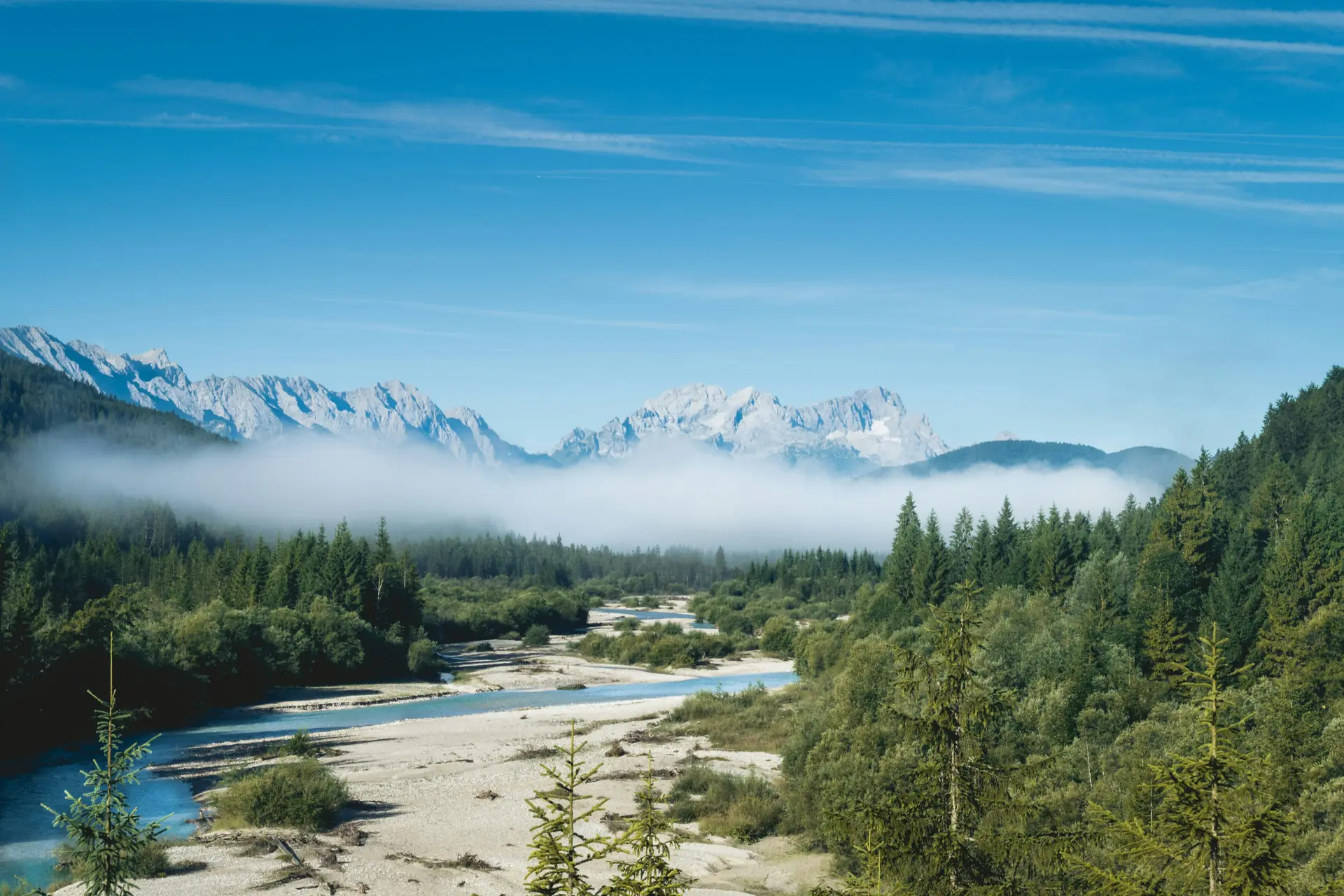
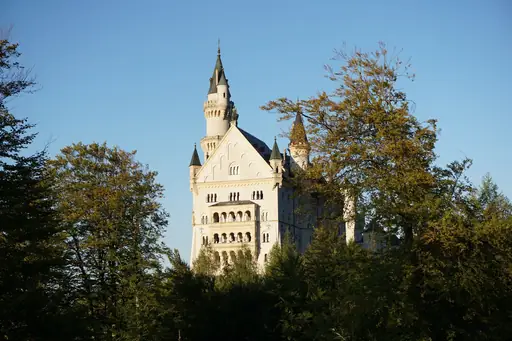
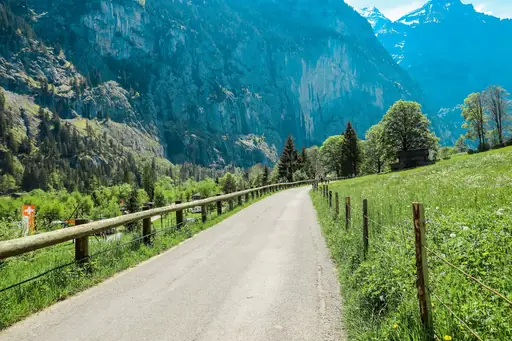
Bavaria is Germany's largest state by area and its regions feel quite different from one another. Upper Bavaria has Munich, the lakes and the Alps with the Zugspitze, Germany's highest mountain. Franconia in the north has the cities of Nuremberg and Bamberg. Regensburg and Passau are on the Danube and the Bavarian Forest National Park is along the Czech border. Visitors can see Neuschwanstein Castle, drink beer in a beer garden or hike in the mountains. A first trip usually combines Munich with the Alps and one other region, with trains for the cities and a car for the countryside.

Region in Germany
Climate zone: Warm continental

Warm continental: Humid continental climates with warm summers, cold winters and evenly distributed precipitation, typical of northern interior mid-latitudes.

See climate table
Price level: $$$
$Cheap
$$Medium
$$$Expensive, upscale
$$$+Very expensive, luxury
See price details
Safety: 8.8
General Safety:9
Health & medical:9
Accessibility:6
Tap water:9
Read details
Tourist English: 3/5
English proficiency varies across Bavaria. In tourist areas, hotels, and attractions, English is widely spoken. In rural areas and among older generations, communication might require patience and basic German phrases.
Last update: Oct 22, 2026
* We earn a commission from some links on this page.
Bavaria Summary

These place ratings give you a quick overview of how well a destination matches different types of trips.

"Best for" scores:
The specific interest scores show where this place really shines – whether it's ideal for hiking, food & drink experiences, museums or other activities. These highlights help you understand what makes the destination special at a glance.

"Your personal" scores:
This reflects how well a place matches your personal preferences. You can adjust the importances of travel topics or other personal requirements categories in your account settings.

"Suited for" badges:
These give you a quick overview of how well a destination suits specific types of travelers, to help you find the places that match your lifestyle, preferences or travel situation.

Read how our scores work
World-class for castles and alpine scenery. Visit fairy-tale palaces, hike mountain trails, enjoy beer gardens and explore historic towns.
Place score
8.6
Best at:
Beer
10
Castles
10
Festivals
10
Cozy towns
9
Local cuisine
9
Personal score
?
Log in to see how this place matches your personal travel interests.
Suited for
👶 9
Families
🧓 8
Seniors
🛡️ 9
Travel Beginners
🐕 9
With dogs
Germany – Quick facts
Power Grid: 230 V, 50 Hz
Plug: Type C , Type F
Type C:

Diagram of a Type C power plug
Type F:
Diagram of a Type F power plug

Read about power adapters
Currency: Euro (EUR)
$1 ≈ €0.90
Cashless info: Rating 4/5
Cards are widely accepted, especially in urban areas, but small establishments may prefer cash. Be prepared for occasional cash-only situations.

Save with a travel credit card
eSIM providers: Best value: Saily
Flexibility: Airalo
Read our in-depth comparison
Tipping: Tipping is common in restaurants, typically 5-10%. For taxis, it is customary to round up to the nearest euro. Tipping in cash is more common than adding it to card payments.
Public drinking: Public drinking is allowed in most parts of Germany, especially in beer gardens and public events, but some local regulations may restrict it in specific areas.
Public smoking: Smoking is prohibited indoors in public places such as restaurants, trains, and buses. Designated smoking areas are available outside many buildings.
Oktoberfest
(September)
Huge crowds in Munich. Expect high hotel rates and crowded transportation.
Christmas
(December)
Christmas markets are popular, expect crowded cities and higher prices.
Labour Day
(May)
Many shops are closed, and there are celebrations throughout the country.
Emergency contact: Police: 110, Emergency Number: 112 (Fire, Ambulance)
Taxi apps: Uber, Free Now, myTaxi
Other: Germany is well-equipped for tourists, with good public transport and high-quality facilities. However, be prepared for language barriers in some rural areas.
Best times to travel

The best times to travel section shows how the months compare for a visit, so you can find the time of year that fits what you want to do.

Background colors of the months:
The color shows the typical temperature: yellow (hot), green (mild) and blue (cold). How strong the color is shows the travel season: full color means high season, soft color means shoulder season and soft-striped means off season.

Weather symbols:
Each month has one symbol showing what the weather is typically like, such as hot and sunny, freezing or a rainy or snowy season. Use them to quickly spot months that match the weather you want, or to avoid the ones that don't.

Crowdedness:
The people icon shows how busy the place usually is. The more people, the more crowded it gets.

Additional notes:
The gray info boxes point out special things worth knowing, like recurring weather issues or seasonal events.

for Bavaria, Germany
🌨️
Jan
🌨️
Feb
🌥️
Mar
🌤️
Apr
🌦️
May
🌤️
Jun
🌦️
Jul
🌤️
Aug
🌤️
Sep
🌤️
Oct
🌥️
Nov
🌨️
Dec
High season: May - Oct., Dec.
Shoulder season: Jan. - Feb., April
Crowdedness: 7 (Many tourists)
Tap on a month for more info Hover over a month for more info
Climate and season vary by region: Alps best for skiing December to March and hiking July to September, cities and Franconia best May to October, lakes and beer gardens best June to August
Christmas markets from late November to December 23, with Nuremberg's among the most famous in Germany
Alpine huts, cable cars and many mountain roads close between late October and mid December and again in April to May

Why travel to Bavaria?

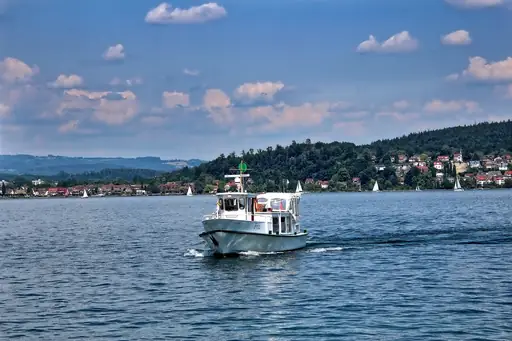
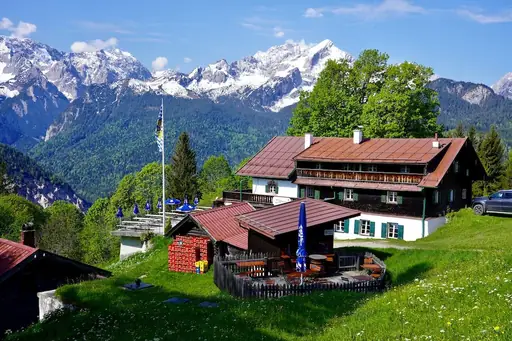
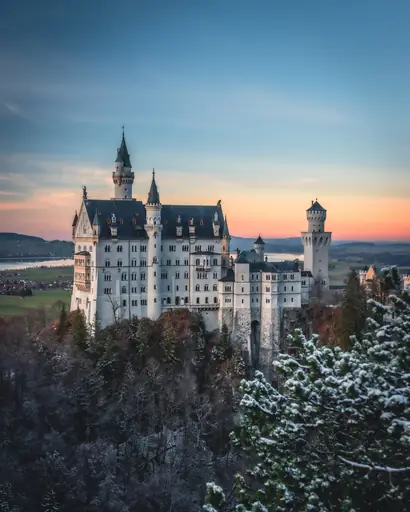
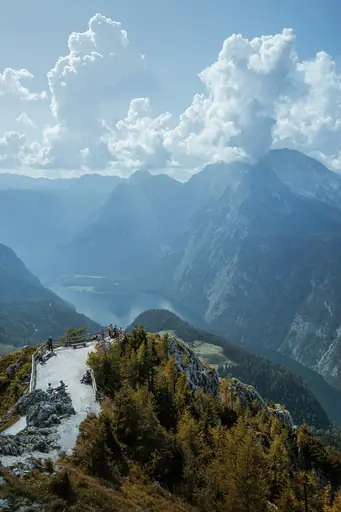
Bavaria has a lot of variety, so the best reason to go depends on the region. Munich has major museums, the Residenz palace and beer gardens. Oktoberfest runs for about two weeks from September into early October and fills the city with visitors. South of Munich the Alps begin. Neuschwanstein and Linderhof were built for King Ludwig II while his third palace, Herrenchiemsee, is on an island in Lake Chiemsee. The Zugspitze, Germany's highest mountain at 9,500 ft, can be reached from Garmisch-Partenkirchen by cogwheel train and cable car. Berchtesgaden has the Königssee and the only Alpine national park in Germany. The rest of the state has quieter old towns and landscapes. Franconia has its own wine country and a UNESCO-listed Baroque residence in Würzburg. Regensburg has an old town on the UNESCO list and Passau is where the Danube, the Inn and the Ilz meet. The Bavarian Forest National Park was Germany's first national park. The Romantic Road, a route of towns and castles, goes from Würzburg to Füssen. One week fits Munich, a castle or two and a stretch of the Alps. Two weeks leave room for Franconia or the Danube towns. Distances are large and the Alps and Franconia are several hours apart by train, so it helps to pick two or three bases instead of trying to cover everything.

🏙️Cities & Regions
  • 1 Munich
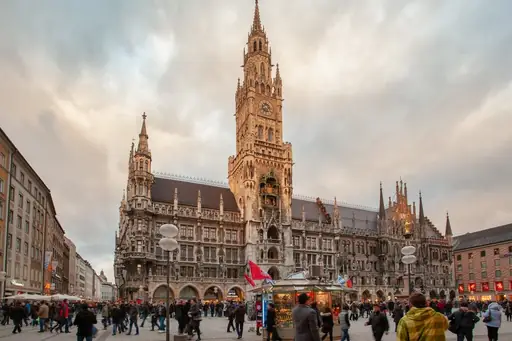
    The capital of Bavaria, with a walkable old town around Marienplatz, large museums and shaded beer gardens. Oktoberfest is its best-known event while the Alps, the lakes and the royal castles are all within reach on a day trip.
  • 2 Nuremberg
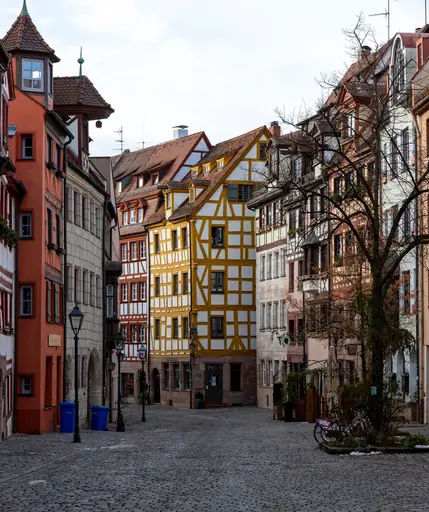
    The second-largest city in Bavaria, on the Pegnitz river in Franconia, with a walled old town and an imperial castle above it. It's known for its Christmas market, small grilled sausages and Nazi-era sites that are open to visitors.
  • 3 Würzburg
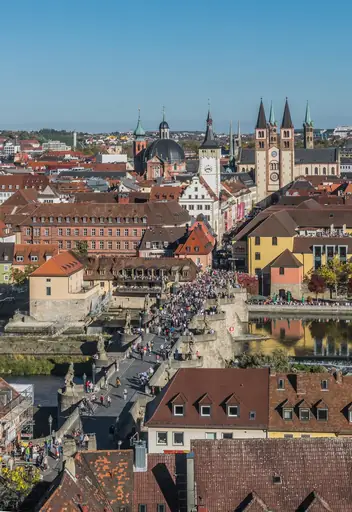
    A lively university city on the Main river with a UNESCO listed baroque palace and a hilltop fortress. Vineyards reach the edge of the old town and fast trains from Frankfurt and Nuremberg arrive in about an hour.
  • 4 Bayreuth
    A small Franconian town known worldwide for the annual Wagner festival and a UNESCO listed baroque opera house. The center is compact and walkable and trains from Nuremberg reach the station in about an hour.
  • 5 Regensburg
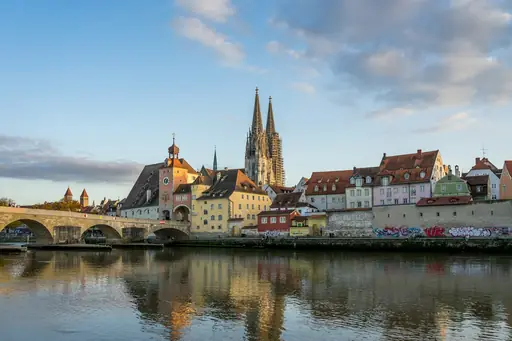
    A medieval trading city on the northernmost bend of the Danube in Bavaria, with an old town on the UNESCO list. Visitors can see a 12th-century stone bridge, a Gothic cathedral and beer gardens by the river.
  • 6 Füssen
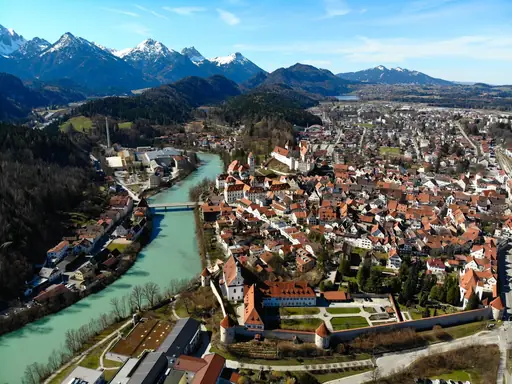
    An old town in the Allgäu at the southern end of the Romantic Road. It's the closest town to Neuschwanstein Castle and has its own castle, an abbey and a waterfall on the Lech River, all within a short walk.
  • 7 Schwangau
    A small Alpine foothill village in Bavaria beside two famous royal castles, Neuschwanstein and Hohenschwangau. Lakes, mountain trails and a cable car surround it and trains from Munich reach nearby Füssen in about two hours.
  • 8 Rothenburg ob der Tauber
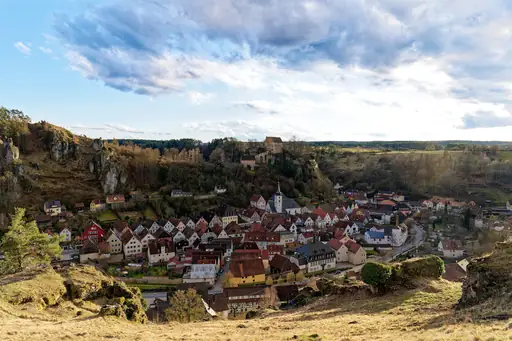
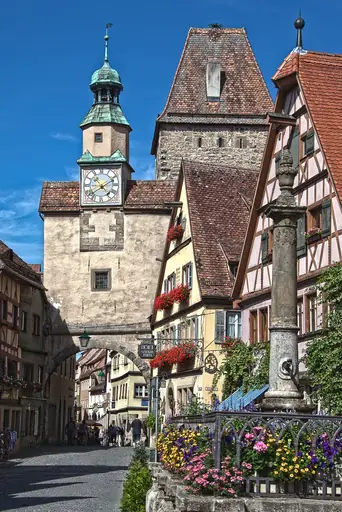
    A walled medieval town above the Tauber valley in Bavaria, on the Romantic Road. The town wall is lined with towers and open for walking. The old town is quietest in the evening, after the day-trip groups leave.
  • 9 Bamberg
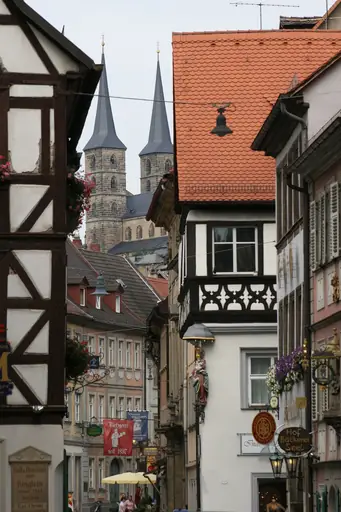
    A UNESCO-listed old town on the Regnitz River in Upper Franconia, with a medieval cathedral, riverside fishermen's houses and a long beer tradition. Smoked beer is the local specialty while Nuremberg is about half an hour away by train.
  • 10 Berchtesgaden
    An Alpine town in the far southeast corner of Bavaria, surrounded by Germany's only Alpine national park. Königssee lake, a salt mine and cable cars to mountain views are all close and Salzburg is about an hour away.
🏯Places worth seeing
  • 1 Linderhof Palace
  • 2 Residenz
  • 3 Nymphenburg Palace
  • 4 Neuschwanstein Castle
  • 5 Old Town Hall
🎡Places for activities
  • 1 Königssee
  • 2 Zugspitze
  • 3 Donau
  • 4 Englischer Garten
  • 5 Spessartstraße
  • 6 Allgäu Alps
  • 7 Eibsee
🏞️Natural landmarks
  • 1 Bohemian Forest
  • 2 Partnach Gorge
  • 3 Franconian Jura
  • 4 Franconian Forest
🛍️Shopping
  • 1 Viktualienmarkt
  • 2 Kaufingerstraße
  • 3 Sendlinger Straße
  • 4 Maximiliansbrücke
  • 5 Ingolstadt Village Outlet Shopping
  • 6 Dallmayr
  • 7 Oberpollinger
  • 8 Neuhauser Straße
🎈Events
  • Oktoberfest Munich
  • Landshut Wedding Historical Pageant
  • Oberammergau Passion Plays
  • Munich Opera Festival
  • Bayreuth Festival
  • Fasching Carnival
  • Dult Festival Regensburg
  • Augsburg Peace Festival
  • Maibaumaufstellen (Maypole Raising)

Knowledge before you go

  • Shops close on Sundays and holidays such as Corpus Christi.
  • In traditional beer gardens you can bring your own food as long as you buy your drinks there.
  • Oktoberfest ends in early October and Munich rooms get expensive or sell out months ahead.
  • Grüß Gott is the usual Bavarian greeting and Servus works as a casual hello and goodbye.

How to travel to Bavaria

Munich Airport (MUC) is the main gateway, with flights from many European and long-distance cities. The S1 and S8 S-Bahn lines take about 40 minutes to Munich Hauptbahnhof. Nuremberg Airport (NUE) serves Franconia and Salzburg Airport (SZG) in Austria is close to Berchtesgaden. Frankfurt Airport (FRA) also works well for Würzburg and Nuremberg, with fast ICE trains from there. By train, Munich Hauptbahnhof is the main hub, with ICE connections from Frankfurt, Berlin, Hamburg and Cologne as well as from Zurich, Salzburg and Vienna. From Frankfurt the trip takes roughly three to four hours. Nuremberg and Würzburg are on the main north to south line. By car, the A3 comes in from Frankfurt, the A9 from Berlin through Nuremberg and the A8 from Stuttgart and from Salzburg. Driving from Frankfurt to Munich takes about four hours without traffic.

Access summary

  • From Munich Airport (MUC): Suburban train or airport bus to Munich, 40–50 minutes.
  • From Munich city: Intercity trains or driving to Bavarian towns, usually 1–3 hours.
  • From Nuremberg: Direct regional or high-speed trains to Franconian Bavaria, around 1–2 hours.

Where to stay in Bavaria

Most visitors base themselves in Munich for the city and day trips, then add a second base in the Alps or in Franconia. Munich has the widest choice, from large hotels near the Hauptbahnhof to guesthouses and apartments in neighborhoods like Schwabing, Haidhausen or the Altstadt. In the Alps, villages like Garmisch-Partenkirchen, Füssen and Berchtesgaden have hotels, guesthouses, holiday apartments and farm stays (Urlaub auf dem Bauernhof). Many places give guests a card that covers local buses and some regional trains. Mountain huts offer simple rooms and shared dormitories on hiking routes and usually need to be booked ahead. Rooms in Munich are scarce and expensive during Oktoberfest and large trade fairs. Summer weekends and school holidays are busy in the Alps and the lakes. Staying in Augsburg, Regensburg or Nuremberg is often cheaper and still has good train links.

How to get around Bavaria

Bavaria is large, so getting around mostly means choosing a base and linking it by train. The cities and many Alpine towns have good rail connections while villages and mountain valleys are easier with a car.

Trains:
Deutsche Bahn ICE trains link Munich with Nuremberg, Augsburg and Würzburg while regional trains reach most towns.
Munich has an S-Bahn, a U-Bahn and trams while the other large cities have trams or buses.

Bayern-Ticket:
The Bayern-Ticket is a day pass for up to five people for regional trains, S-Bahns, trams and most buses across Bavaria.
On weekdays it's valid from 9:00 AM. ICE and IC trains aren't included, so check the train type.

Buses:
Regional buses go to Alpine valleys, lakes and villages away from the rail lines.
They run less often in the evening and on Sundays, so check timetables before a hike.

Car:
A car helps for the Alpine foothills, the Romantic Road and the Bavarian Forest. Autobahns connect the main cities and mountain roads can need winter tires or snow chains from late autumn.

Bikes:
The Danube Cycle Path goes through Regensburg and Passau and the lakes and river valleys have signposted routes.
E-bikes are rented in many towns.

Food in Bavaria

Food in Bavaria is hearty and meat based, with pork, dumplings, bread and beer on most menus. Traditional inns (Wirtshäuser) and beer gardens serve the classics while the cities also have a wide range of international restaurants. Bakeries and supermarkets make self-catering easy. Vegetarian dishes are common in cities and less so in village inns.

Weißwurst:
A pale veal sausage served with sweet mustard and a pretzel and traditionally eaten in the morning.
It's a Munich specialty and is best known from beer halls and traditional taverns.

Schweinebraten:
Roast pork with crackling, served with dumplings and dark gravy.
It's the standard Sunday meal at traditional inns across southern Bavaria.

Beer:
Helles is the light lager and Weißbier the cloudy wheat beer.
Both are served in beer gardens by the liter (Maß) or in half-liter glasses.

Regional dishes:
Franconia has bratwurst and Schäufele (roast pork shoulder) and Silvaner wine from the Main valley.
In the Allgäu, Käsespätzle (cheese noodles) is a mountain staple.

Budget snapshot
Costs compared to home

We calculate the average costs when traveling to destinations and compare those with the living costs at your home. With this you can get an estimate of how expensive or cheap the destination is for you.

To customize this, you can set up which location and price level are used for the calculations in your account settings.

-6 %
Daily expenses in the region are around 6% lower than the average across United States. That means you'll spend less on meals and getting around.
Exchange rate trend

The exchange rate price factor shows how expensive or cheap a currency currently is compared to its historical average. It's a quick way to see if a country is currently more or less affordable due to exchange rate changes.

+1 %
Your exchange rate (USD to EUR) is 1% worse than in recent years. That means traveling now costs around the same compared to the past.

Travel costs

To help you plan your trip, we provide estimated daily costs per person (when traveling as a pair) for different travel styles. These numbers give you an idea of what you might spend each day at this destination, including accommodation, food, transport and activities.

Additionally, we also provide average hotel costs for different travel styles to give you an estimate for the accommodation only.

Please note that these are only estimates. The real costs depend on booking times, season and other factors.

Daily cost summary

Travel style categories explained:

Backpacker:
Staying in hostels or budget hotels, cooking your own meals or eating cheap and choosing low-cost activities.

Mid-range:
Staying in mid-range hotels, eating at a mix of restaurants and casual spots and enjoying a variety of activities.

Luxury:
Staying in luxury hotels, dining out at high-end restaurants and enjoying premium experiences without worrying about the price.

Backpacker Mid-range Luxury
💵 Total costs per day, including accommodation
$123
$203
$451
🏨 Accommodation per night, per person
$68
$101
$159
🍝 Food per day
$40
$86
$239
🚕 Transportation per day
$14
$16
$53
Food & Drink
🍽️ Restaurant Dinner, per person
$33
🍛 Lunch Set, per person
$19
🍟 Fast food combo
$12.50
🍝 Preparing your own food, per day
$14
☕ Cappuccino
$4.40
🍺 Beer in a restaurant, 0.5 l / 16 oz
$4.60
Transportation
🚌 Public transport ticket
$3.60
🚕 Taxi Ride, 10 km / 6 mi
$31
⛽ Gas, 1 l / ¼ gal
$2
Other
🎞️ Movie ticket
$17
👩‍⚕️ Doctor's consult
$65
🤧 Cold medication
$12
💇 Basic haircut
$22

Safety information overview

General safety
9
Bavaria is one of the safer parts of Germany. Pickpockets work in crowds at Oktoberfest and around Munich's main station. The bigger risks are in the Alps, where weather changes fast and avalanches threaten in winter. Check forecasts and avalanche reports before higher routes.
Health & Medical
9
Medical care is excellent, with university hospitals in Munich, Erlangen and Würzburg and pharmacies in every town. Ticks in forests and meadows can carry tick-borne encephalitis in many Bavarian districts, so cover up on hikes and ask about vaccination. The emergency number is 112.
Accessi­bility
6
Munich and the larger cities have low-floor trams and many step-free stations, but old towns have cobblestones and castles have stairs. Neuschwanstein involves a steep approach and many steps inside. Alpine trails are steep and rough, so cable cars and lakeside paths are easier.
Tap water
9
Tap water is safe to drink throughout Bavaria and much of Munich's comes from springs south of the city. Streams and lakes in the Alps aren't treated, so fill a bottle at your lodging before hikes. Mountain huts sell drinks on most main routes.

Popular districts of Bavaria

Looking for inspiration?

Discover
Best castle destinations in Europe
Europe is where most of us look first when someone says castle and it's easy to see why, since the continent has many thousands of them. You can find tall towers above river…
Read more
Discover
Best travel destinations for food allergies in Europe
Europe is one of the more manageable continents for allergy conscious travelers, thanks to strict food labeling rules that apply across the entire European Union. Restaurants…
Read more
Discover
Best family friendly destinations in Europe
Europe might be the easiest continent for family travel, with strong infrastructure, dependable healthcare and safe food and water almost everywhere you go. There is enough variety…
Read more
Discover
Best cycling destinations in Europe
Europe is one of the world's great cycling continents, with a infrastructure and culture around the activity that few regions can match. From Alpine climbs that have defined…
Read more
Discover
Top cozy towns and quaint villages
Some towns have an atmosphere that's hard to manufacture deliberately: scale, architecture and a pace of life that makes a short visit feel unusually restorative. The best of them…
Read more
Discover
Best hiking destinations in Europe
Europe has one of the most developed long distance hiking cultures in the world, with a network of waymarked trails covering everything from high alpine routes and coastal paths to…
Read more
Discover
Best travel destinations for food allergies
Traveling with a food allergy adds a layer of planning most people never have to think about, and the right destination can make that planning a lot easier. Some travelers…
Read more
Discover
Top fall foliage destinations and autumn colors
Few natural spectacles are as season-specific and location-dependent as autumn foliage, where the combination of tree species composition, temperature drop and daylight reduction…
Read more
Discover
Top architecture destinations and iconic landmarks
Architecture travel spans everything from ancient ceremonial complexes and medieval urban cores to the grands projets of the twentieth century and contemporary buildings that draw…
Read more
Discover
Top digital nomad destinations and remote work hubs in Europe
Europe offers remote workers a level of infrastructure that is hard to beat, along with enough cultural variety to keep even a long stay interesting. City based nomads can hop…
Read more
Discover
Top castle destinations and historic fortresses
For many travellers, a castle is the one stop on a trip that makes history feel real, but what counts as a great castle depends on what you picture when you hear the word. Some…
Read more
Discover
Top hiking destinations and famous trails
Hiking at its best is one of the most direct ways to engage with a landscape. The pace forces a relationship with terrain, weather and distance that faster forms of travel rarely…
Read more
Discover
Top forest destinations and woodland landscapes
Forest travel encompasses some of the world's most biodiverse and ecologically significant environments, with the great tropical rainforests, temperate old growth systems and…
Read more
Discover
Top traditional destinations and cultural heritage sites
Traditional destinations are those where cultural practices, craftsmanship, ceremony and ways of life that predate industrialisation and mass tourism remain visible and active…
Read more
Discover
Best architecture destinations in Europe
Europe's architectural range spans Gothic cathedrals, Renaissance palaces and twentieth-century modernist landmarks within a single train journey, making it the continent most…
Read more
Feedback
