
Last update: Oct 19, 2026
* We earn a commission from some links on this page.
Germany Summary
These place ratings give you a quick overview of how well a destination matches different types of trips.
"Best for" scores:
The specific interest scores show where this place really shines – whether it's ideal for hiking, food & drink experiences, museums or other activities. These highlights help you understand what makes the destination special at a glance.
"Your personal" scores:
This reflects how well a place matches your personal preferences. You can adjust the importances of travel topics or other personal requirements categories in your account settings.
"Suited for" badges:
These give you a quick overview of how well a destination suits specific types of travelers, to help you find the places that match your lifestyle, preferences or travel situation.
Suited for
Germany – Quick facts
| Power Grid: |
230 V, 50 Hz Plug: Type C , Type F
Type C:
  Read about power adapters |
|---|---|
| Currency: |
Euro (EUR) $1 ≈ €0.90 |
| Cashless info: |
Rating 4/5
Cards are widely accepted, especially in urban areas, but small establishments may prefer cash. Be prepared for occasional cash-only situations.
Save with a travel credit card |
| eSIM providers: |
Best value: Saily Flexibility: Airalo Read our in-depth comparison |
| Tipping: | Tipping is common in restaurants, typically 5-10%. For taxis, it is customary to round up to the nearest euro. Tipping in cash is more common than adding it to card payments. |
|---|---|
| Public drinking: | Public drinking is allowed in most parts of Germany, especially in beer gardens and public events, but some local regulations may restrict it in specific areas. |
| Public smoking: | Smoking is prohibited indoors in public places such as restaurants, trains, and buses. Designated smoking areas are available outside many buildings. |
| Oktoberfest (September) |
Huge crowds in Munich. Expect high hotel rates and crowded transportation. |
|---|---|
| Christmas (December) |
Christmas markets are popular, expect crowded cities and higher prices. |
| Labour Day (May) |
Many shops are closed, and there are celebrations throughout the country. |
| Emergency contact: | Police: 110, Emergency Number: 112 (Fire, Ambulance) |
|---|---|
| Taxi apps: | Uber, Free Now, myTaxi |
| Other: | Germany is well-equipped for tourists, with good public transport and high-quality facilities. However, be prepared for language barriers in some rural areas. |
Best times to travel
The best times to travel section shows how the months compare for a visit, so you can find the time of year that fits what you want to do.
Background colors of the months:
The color shows the typical temperature: yellow (hot), green (mild) and blue (cold). How strong the color is shows the travel season: full color means high season, soft color means shoulder season and soft-striped means off season.
Weather symbols:
Each month has one symbol showing what the weather is typically like, such as hot and sunny, freezing or a rainy or snowy season. Use them to quickly spot months that match the weather you want, or to avoid the ones that don't.
Crowdedness:
The people icon shows how busy the place usually is. The more people, the more crowded it gets.
Additional notes:
The gray info boxes point out special things worth knowing, like recurring weather issues or seasonal events.
for Germany, Germany
Climate and season vary by region: Alps best for skiing in winter and hiking in summer, Baltic and North Sea coasts for beaches July and August, cities good from May to September
Christmas markets run from late November to December 23
Oktoberfest in Munich runs mid September to the first Sunday in October, accommodation very expensive
Don't miss
- 🏰 Visit Neuschwanstein Castle, the fairy-tale palace of Bavaria
- 🧱 Explore Berlin's historic Brandenburg Gate and Berlin Wall remnants
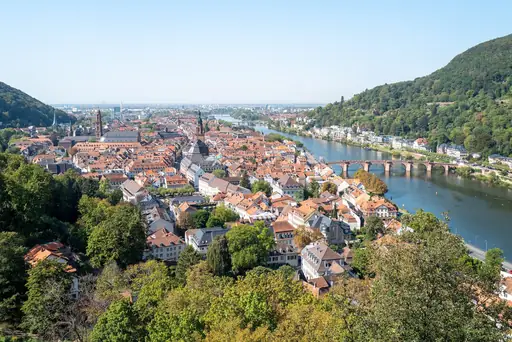
- 🌿 Stroll through the charming old town of Heidelberg
- 🥾 Hike the scenic trails of Saxon Switzerland for breathtaking views
- 🍺 Experience the lively atmosphere at Oktoberfest in Munich
- ⛪ Discover the ancient monastery complex of Monastère de l'Abbaye
You've been here?
Log in to manage your own bucket list! Why travel to Germany?
Germany suits travelers who like variety within a few hours of train travel. Berlin has the Brandenburg Gate, the Reichstag and a large museum scene that includes Museum Island. Munich is the main city of Bavaria with beer gardens and the Oktoberfest, which runs from mid-September to early October. Hamburg is a port city with canals and a big harbor. Dresden's baroque center, with the Frauenkirche and the Zwinger palace, was rebuilt after World War II. Outside the cities the steep vineyards of the Rhine and Moselle valleys come with castles on the ridges. The Black Forest has hiking trails and spa towns. The Bavarian Alps have lakes and mountain trails below the Zugspitze, the country's highest peak at 9,500 ft. Neuschwanstein Castle near Füssen is one of the most visited castles. The Romantic Road is a scenic route through walled towns such as Rothenburg ob der Tauber between Würzburg and Füssen. In late November Christmas markets open in most towns and run until Christmas. The ones in Nuremberg and Dresden are among the best known. In the north you can find beaches on the Baltic and the North Sea and islands like Rügen and Sylt. A week covers two or three regions by train. Two weeks leaves room for the Alps or the coast.
🏙️Cities & Regions
-
1
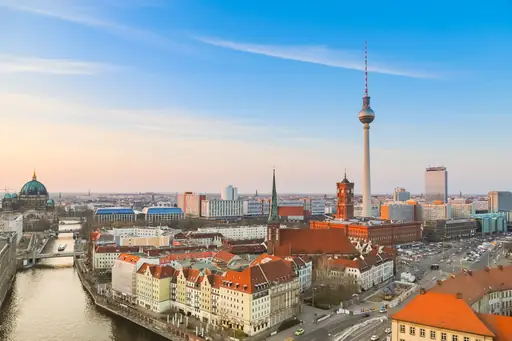
Berlin
Germany's capital and largest city, set along the Spree with the Brandenburg Gate, Museum Island and remains of the Berlin Wall. Each district feels different and some clubs stay open from Friday night into Monday morning. -
2
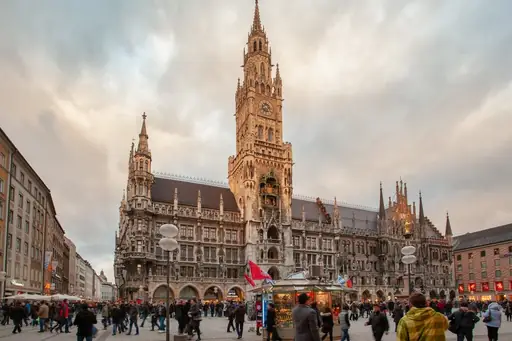
Munich
The capital of Bavaria, with a walkable old town around Marienplatz, large museums and shaded beer gardens. Oktoberfest is its best-known event while the Alps, the lakes and the royal castles are all within reach on a day trip. -
3
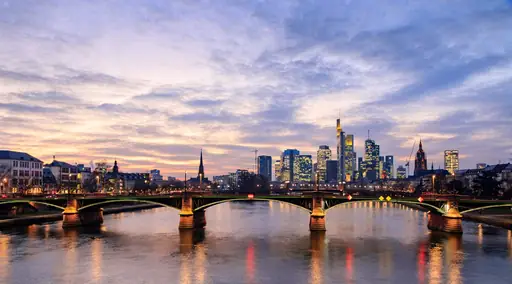
Frankfurt am Main
Germany's financial center on the Main River, with a high-rise skyline, a rebuilt old town and a row of museums on the riverbank. Apple wine taverns in Sachsenhausen and Germany's busiest airport are part of the city's character. -
4
Dresden
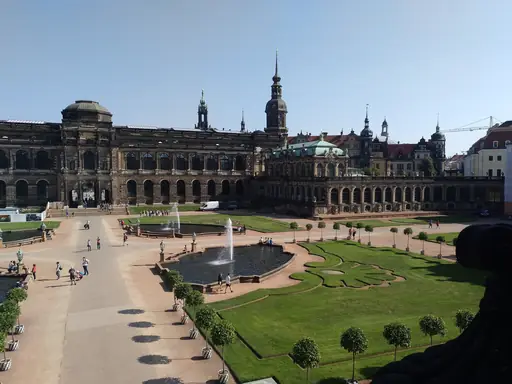
A Baroque city on the Elbe in Saxony, rebuilt after the 1945 bombing, with the Frauenkirche, the Zwinger and the Semperoper in a compact old town. The Neustadt across the river has cafés, courtyards and nightlife. -
5
Cologne
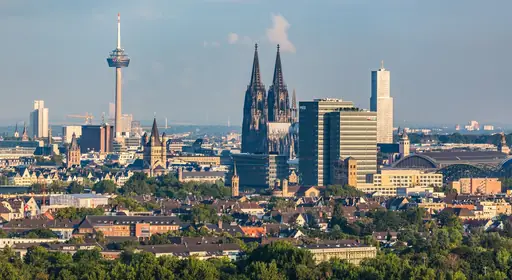
A Rhine city of about 1.1 million with a Gothic cathedral next to the main station and Roman remains under the old town. Brewery taverns serve Kölsch beer in small glasses and a cheese roll called half a chicken. -
6
Hamburg
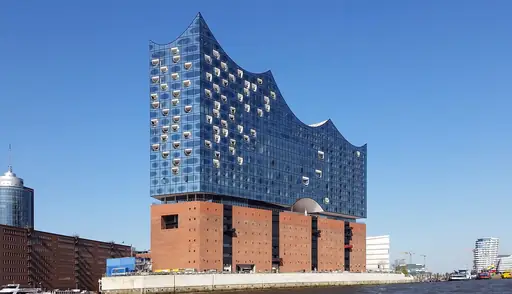
Germany's second-largest city and a major port on the Elbe, with the Elbphilharmonie concert hall, the brick warehouses of the Speicherstadt and the nightlife of the Reeperbahn. Harbor ferries and canals give a city break a waterside feel. -
7
Stuttgart
The capital of Baden-Württemberg in southwest Germany, set in a valley with vineyards on its slopes. It's the home of Mercedes-Benz and Porsche, which both have museums here. The food is Swabian and built on Maultaschen and Spätzle. -
8
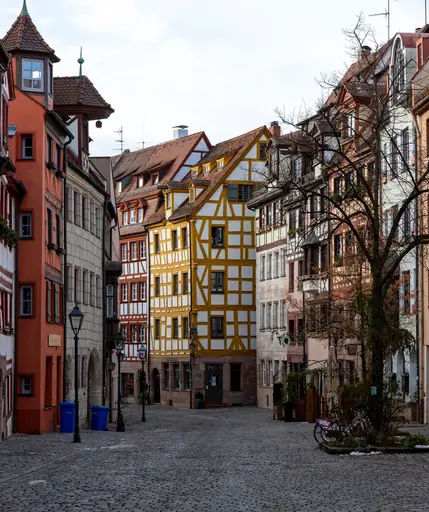
Nuremberg
The second-largest city in Bavaria, on the Pegnitz river in Franconia, with a walled old town and an imperial castle above it. It's known for its Christmas market, small grilled sausages and Nazi-era sites that are open to visitors. -
9
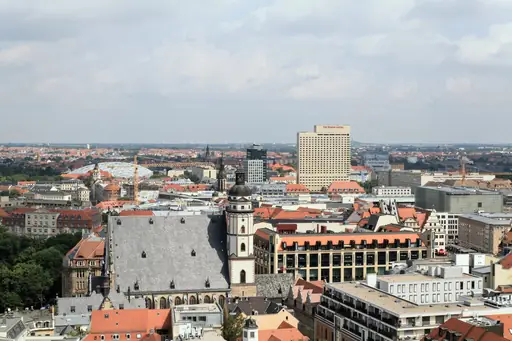
Leipzig
A large, lively city in Saxony, known for Bach, the Thomanerchor and the 1989 Monday demonstrations. Music, arcades, a huge railway station and former industrial districts turned creative make it easy to enjoy over a few days. -
10
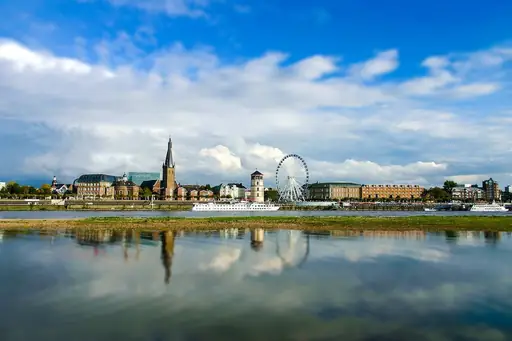
Düsseldorf
The capital of North Rhine-Westphalia on the Rhine, known for the Königsallee shopping boulevard, a lively old town of brewpubs and a harbor district with striking modern architecture. Cologne is 25 minutes away by train.
🏯Places worth seeing
🎡Places for activities
🏞️Natural landmarks
🛍️Shopping
🎈Events
-
Oktoberfest, Munich
-
Reeperbahn Festival, Hamburg
-
Berlinale Film Festival, Berlin
-
Karneval, Cologne
-
Cannstatter Volksfest, Stuttgart
-
Beethovenfest, Bonn
-
Christmas Markets (nationwide)
-
Kiel Week
-
Bayreuth Festival
-
Berlin Festival of Lights
Popular travel destinations in Germany
Knowledge before you go
- Shops and supermarkets are closed on Sundays, except at stations and airports.
- Some small restaurants and rural guesthouses take cash only, so keep some euros with you.
- Cheap Sparpreis fares tie you to one train, unless it's delayed by 20 minutes or more.
- Most single-use plastic bottles and cans carry a €0.25 ($0.28) deposit that supermarkets refund at return machines.
How to travel to Germany
Flying is the easiest way to reach Germany from outside Europe, with Frankfurt (FRA) and Munich (MUC) as the main hubs. Berlin Brandenburg (BER), Hamburg (HAM), Düsseldorf (DUS), Cologne/Bonn (CGN) and Stuttgart (STR) also have international flights. Frankfurt Airport has its own long-distance train station, so ICE trains can take you on to cities like Cologne or Stuttgart without going into central Frankfurt. From Munich Airport an S-Bahn line goes to the city center in about 40 minutes. By train, Germany is linked with its neighbors. ÖBB trains come from Austria, SBB trains from Switzerland and SNCF trains from France. Direct trains also run from the Netherlands, Belgium, Denmark, Czechia and Poland. Long-distance buses such as FlixBus cover many of the same routes, often at lower fares. Germany borders nine countries and is in the Schengen area, so most land borders have no routine checks. Temporary checks are possible. Ferries from Kiel, Rostock and Travemünde cross the Baltic to Scandinavia.
Access summary
- Berlin: Fly to BER from European/world hubs; trains from nearby countries.
- Munich/Bavaria: Fly to MUC; ICE trains from Austria, Switzerland, northern Germany.
- Frankfurt/Rhine region: Fly to FRA; major rail hub linking European cities.
Check your route from anywhere
Where to stay in Germany
Most visitors stay in hotels in the larger cities and in family-run guesthouses (Pensionen) or country inns (Gasthöfe) in smaller towns. Holiday apartments (Ferienwohnungen) are common in the Alps, the Black Forest and on the coast. Campsites and youth hostels cover budget travel. Berlin, Munich, Hamburg and Cologne are the usual bases for city trips with day trips by train. Frankfurt works well for the Rhine valley. Freiburg is a base for the Black Forest. Cochem and Bernkastel-Kues suit the Moselle. Füssen and Garmisch-Partenkirchen suit the Bavarian Alps. Rooms get scarce and expensive during Oktoberfest in Munich and during trade fairs in Frankfurt, Düsseldorf, Cologne and Hanover. Christmas market towns fill up in December. Many towns add a visitor tax per night that can come on top of the room price.
Hotel recommendations
*by rating and popularity. Commissions have no influence on the rankings.

IntercityHotel Frankfurt Hauptbahnhof

Leonardo Royal Hotel Berlin Alexanderplatz

Toyoko Inn Frankfurt am Main Hauptbahnhof

Park Inn by Radisson Berlin Alexanderplatz

Motel One Frankfurt-Hauptbahnhof

Ocak Hotel

Garner Hotel Berlin - Mitte By IHG

Savoy Hotel

The Cloud One Frankfurt-Metropolitan

marc hotel Munich
How to get around Germany
Germany is about 550 mi from the North Sea and Baltic coasts to the Alps, so it helps to pick your main regions first and link them by train. Trains cover the big cities and most tourist towns. A car only makes sense in rural areas.
Trains:
Deutsche Bahn runs ICE and IC trains between the big cities. Berlin to Munich takes about 4 hours, Frankfurt to Cologne about 1 hour and Hamburg to Berlin under 2 hours. Regional trains (RE and RB) reach smaller towns. Delays on long-distance trains are common so leave extra time for tight connections.
City transit:
Larger cities have S-Bahn, U-Bahn and tram networks. The Deutschlandticket is a monthly subscription that covers regional trains and local transit across the country. It doesn't cover ICE or IC trains and you can cancel it monthly.
Buses:
FlixBus and other operators link most larger cities. Fares are often lower than on ICE trains but trips take longer.
Car:
A car helps in the Black Forest, the Alps, the Moselle valley and other rural areas where public transport is less frequent. Many sections of the Autobahn have no general speed limit but 80 mph is the recommended speed. Many cities have low-emission zones that need a green sticker. Parking in city centers is limited and costly.
Flights:
Domestic flights can save time on the longest routes such as Berlin to Munich. Most other city pairs are well served by train.
Food in Germany
German food is regional and hearty, with bread, potatoes, pork and sausages at the center. Bakeries sell many kinds of bread and rolls and are a quick option for breakfast or lunch. Vegetarian and vegan dishes are common in larger cities. Supermarkets make self-catering easy.
Bavaria:
Beer halls and beer gardens serve roast pork with dumplings, soft pretzels and Weißwurst, a white veal sausage traditionally eaten before noon. Wheat beer is the usual drink.
Swabia:
In the southwest around Stuttgart, Spätzle (soft egg noodles) and Maultaschen (filled pasta pockets) are typical menu items. Both usually come with gravy or in broth.
Rhineland:
Cologne has Kölsch, a light beer served in small glasses. Sauerbraten, a marinated roast beef, is a classic in the Rhine region.
North coast:
Around Hamburg and the coast, fish dishes such as Matjes herring and Fischbrötchen (fish sandwiches) are common.
Berlin:
Currywurst (sausage with curry ketchup) and Döner kebab are the typical street food in the city.
Budget snapshot
Costs compared to home
We calculate the average costs when traveling to destinations and compare those with the living costs at your home. With this you can get an estimate of how expensive or cheap the destination is for you.
To customize this, you can set up which location and price level are used for the calculations in your account settings.
Daily expenses in Germany are around 1% lower than the average across United States. That means you'll spend around the same on meals and getting around.
Exchange rate trend
The exchange rate price factor shows how expensive or cheap a currency currently is compared to its historical average. It's a quick way to see if a country is currently more or less affordable due to exchange rate changes.
Your exchange rate (USD to EUR) is 1% worse than in recent years. That means traveling now costs around the same compared to the past.
Travel costs
To help you plan your trip, we provide estimated daily costs per person (when traveling as a pair) for different travel styles. These numbers give you an idea of what you might spend each day at this destination, including accommodation, food, transport and activities.
Additionally, we also provide average hotel costs for different travel styles to give you an estimate for the accommodation only.
Please note that these are only estimates. The real costs depend on booking times, season and other factors.
Daily cost summary
Travel style categories explained:
Backpacker:
Staying in hostels or budget hotels, cooking your own meals or eating cheap and choosing low-cost activities.
Mid-range:
Staying in mid-range hotels, eating at a mix of restaurants and casual spots and enjoying a variety of activities.
Luxury:
Staying in luxury hotels, dining out at high-end restaurants and enjoying premium experiences without worrying about the price.
| Backpacker | Mid-range | Luxury | |
|---|---|---|---|
| 💵 Total costs per day, including accommodation | |||
| 🏨 Accommodation per night, per person | |||
| 🍝 Food per day | |||
| 🚕 Transportation per day |
Food & Drink
| 🍽️ Restaurant Dinner, per person | |
|---|---|
| 🍛 Lunch Set, per person | |
| 🍟 Fast food combo | |
| 🍝 Preparing your own food, per day | |
| ☕ Cappuccino | |
| 🍺 Beer in a restaurant, 0.5 l / 16 oz |
Transportation
| 🚌 Public transport ticket | |
|---|---|
| 🚕 Taxi Ride, 10 km / 6 mi | |
| ⛽ Gas, 1 l / ¼ gal |
Other
| 🎞️ Movie ticket | |
|---|---|
| 👩⚕️ Doctor's consult | |
| 🤧 Cold medication | |
| 💇 Basic haircut |
Safety information overview
General safety
Germany is a safe country for travelers and violent crime against visitors is uncommon. Pickpockets work at train stations, on crowded transit and at festivals such as Oktoberfest and the Christmas markets. Areas around some big-city stations can feel rough at night.
Health & Medical
Medical care is of a very high standard, with hospitals in every larger city and pharmacies marked Apotheke in most towns. Visitors from outside the EU should have travel insurance. Ticks in southern Germany can carry tick-borne encephalitis as well as Lyme disease.
Accessibility
Accessibility is generally good, with step-free access at most major train stations and low-floor trams and buses in larger cities. Old towns often have cobblestones and some castles have stairs only. Smaller stations may lack lifts but DB's mobility service can help with boarding.
Tap water
Tap water is safe to drink everywhere in Germany and is tightly regulated. Restaurants rarely bring tap water by default and usually sell bottled water. Some cities have public drinking fountains and cafes or hotels will usually refill a bottle.
Packing recommendations for Germany
Log in to add this place to a travel list and get a summary of all recommended items for your whole trip.
📷
Camera
👟
Comfortable walking shoes
🚰
Reusable water bottle
🧥
Rain jacket
☂️
Folding umbrella
🎒
Small backpack
for day trips
👛
Cash in small denominations
🧕
Modest clothing covering shoulders and knees
for visiting religious sites
🔋
Power bank
🩹
Basic first aid kit
📃
Travel insurance
🪪
Copies of passport and important documents
🧥
Fleece mid-layer
📱
Travel eSIM
🔌
Universal power adapter
Type F plugs
🩺
Prescription medication
💳
Credit card with no foreign transaction fees
🛂
Passport
Destinations in Germany
Related articles & guides for Germany



Looking for inspiration?

Discover
Best destinations for first-time travelers
A first trip abroad works best somewhere that eases you in, rather than throwing every possible culture shock and logistical headache at you at once. Some first-time travelers…
Read more

Discover
Best couple vacation destinations
Travelling as a couple sounds simple enough, yet the best couple vacation destinations mean something different to almost every pair. What feels romantic to one couple can feel…
Read more

Discover
Best travel destinations for seniors
Senior travel covers a wide range, from slow, low effort trips built around comfort to more independent trips for travelers who still want to cover plenty of ground. Some…
Read more

Discover
Best travel destinations for food allergies
Traveling with a food allergy adds a layer of planning most people never have to think about, and the right destination can make that planning a lot easier. Some travelers…
Read more

Discover
Top digital nomad destinations and remote work hubs in 2026
Working from anywhere in the world sounds simple until you actually try it, and the best digital nomad destinations look different depending on what kind of remote worker you are.…
Read more

Discover
Top solo travel destinations and safe hubs
Traveling alone sounds like a bigger deal than it is. The first day feels strange – eating dinner by yourself, navigating without someone to double-check the map with, making every…
Read more
Discover
Best destinations for first-time travelers in Europe
Europe is often the easiest continent to start with, thanks to short distances between countries and infrastructure built for travelers of every experience level. Trains connect…
Read more
Discover
Best couple vacation destinations in Europe
Europe has been the backdrop for love stories for centuries, and for couples it remains one of the easiest continents to feel romantic in without even trying. The choice of…
Read more
Discover
Best travel destinations for seniors in Europe
Europe remains one of the easiest continents for older travelers, thanks to excellent trains, reliable healthcare and cities built for walking rather than driving. River cruises…
Read more
Discover
Best travel destinations for food allergies in Europe
Europe is one of the more manageable continents for allergy conscious travelers, thanks to strict food labeling rules that apply across the entire European Union. Restaurants…
Read more

Discover
Top historical destinations and historic sites
The most compelling history destinations are places where the past is still physically present and legible in the landscape, the architecture and the daily life of the people who…
Read more

Discover
Top digital nomad destinations and remote work hubs in Europe
Europe offers remote workers a level of infrastructure that is hard to beat, along with enough cultural variety to keep even a long stay interesting. City based nomads can hop…
Read more

Discover
Top castle destinations and historic fortresses
Castle travel spans an enormous range of surviving structures, from the intact hilltop fortresses and walled palace complexes that have been continuously inhabited or maintained to…
Read more
Discover
Top beer destinations and famous breweries
Beer travel has developed a dedicated following built around the explosion of craft and independent brewing that has transformed the offer in many countries over the past two…
Read more
Discover
Best solo travel destinations in Europe
Europe is where most people start, and for good reason. The trains connect cities across borders, the hostels have been running for decades, and the distances between completely…
Read more
What other users say about travelfilters
“travelfilters made it easy for me to find ski areas and compare what else they offer, so that I could find the best place for my personal travel style.”

Chris
Snowboarding & Onsen trip to Japan
“I love how transparent the data feels. There is no pushy upsell, just honest information and settings I can tune to my own travel style.”

Maria
After booking her 2027 winter escape
“The level of detail for each destination and how well those are displayed, make planning feel confident instead of overwhelming.”

Mina
Planned a week in New York City
“We used travelfilters for our planning from start to end. The trip turned out even better than expected, thanks to all their tools and customization options.”

Allan & Etienne
Trip to Japan to see autumn foliage
“Thanks to travelfilters, I found some hidden gems to see. Being able to filter for exactly your interests is a game changer for my travel planning.”

Michael
Tour through the old cities of Northern Italy
“The customizable filters helped me find a quiet beach town with good wifi and low season crowds in under five minutes.”

Diego
Weekend Escape to Llanes, Spain
“The airport connection map saved me hours by showing good flight options from my home airport to lesser-known cities.”

Nguyen
Planning a 2027 trip to France
“The website is clean, fast and focused on the search itself, which makes travelfilters feel more like a professional tool than an ad-heavy booking site.”

Hassan
Christmas Market trip, Germany
