


Asia › Japan › Kyoto

Kyoto

Scroll
Temples, geisha districts and kaiseki dining

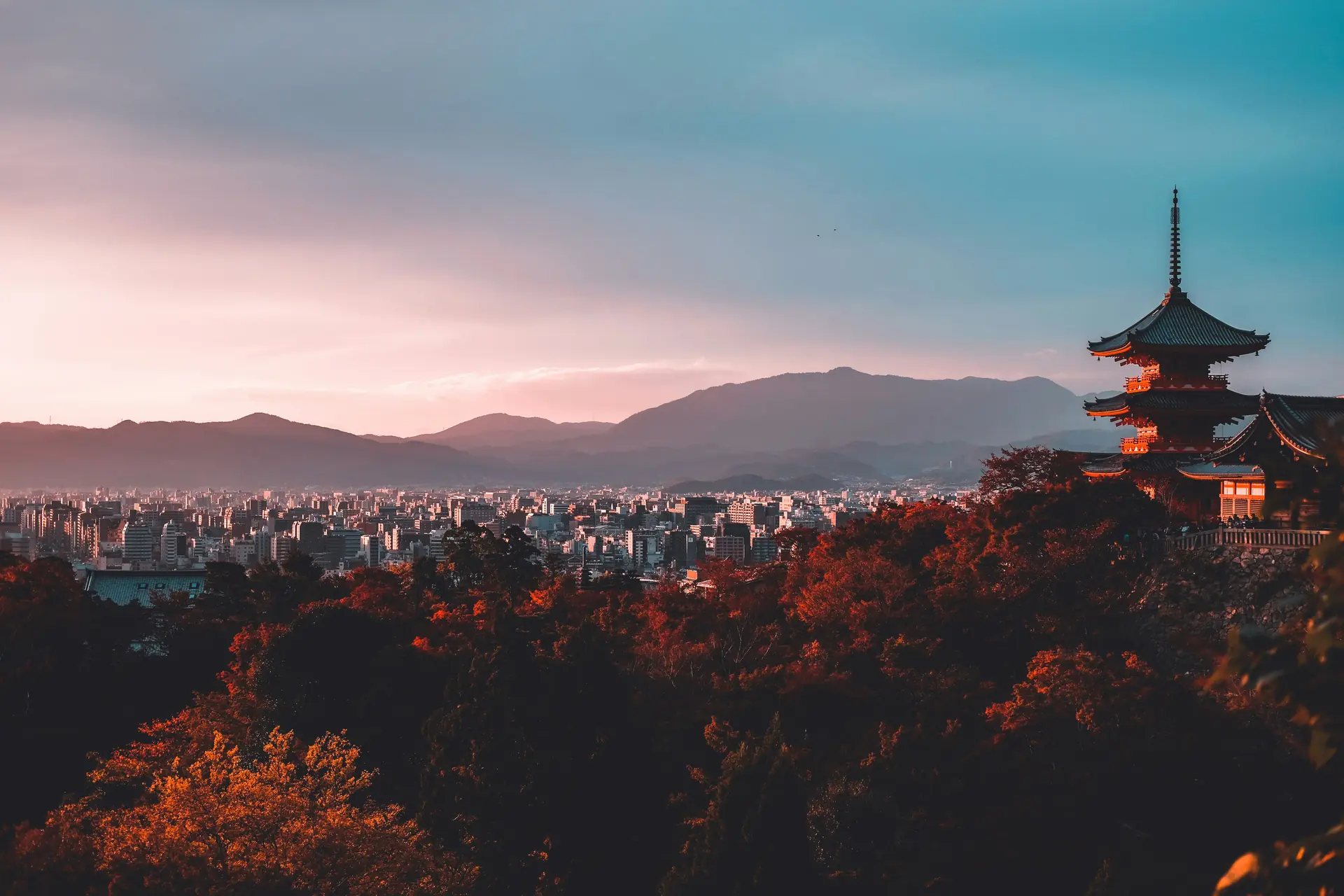
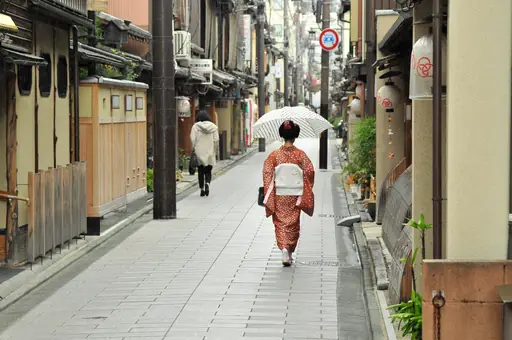
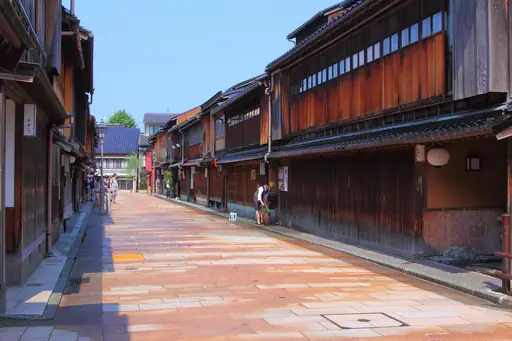
Kyoto was Japan's capital for more than a thousand years and was spared bombing in World War II, so many of its temples, shrines and wooden townhouses survive. Visitors can walk through the torii gates of Fushimi Inari, see the gold-covered Kinkaku-ji pavilion and watch the city from the hillside terrace of Kiyomizu-dera. Gion and Pontocho keep the teahouse streets where geiko work in the evenings. The sights are spread across several districts around a basin ringed by hills. Buses, the subway and a few days work better than trying to cover it in one. Osaka and Nara make easy side trips.

City in Japan
Climate zone: Humid subtropical

Humid subtropical: Warm temperate climates with hot, humid summers, mild winters and evenly distributed rainfall, common on eastern continental margins.

See climate table
Price level: $$$
$Cheap
$$Medium
$$$Expensive, upscale
$$$+Very expensive, luxury
See price details
Safety: 8.5
General Safety:9
Health & medical:8
Accessibility:6
Tap water:9
Read details
Tourist English: 3/5
In tourist areas, many signs are in English and staff at hotels, restaurants, and attractions often speak basic English. However, outside these areas, English may be limited.
Last update: Oct 20, 2026
* We earn a commission from some links on this page.
Kyoto Summary

These place ratings give you a quick overview of how well a destination matches different types of trips.

"Best for" scores:
The specific interest scores show where this place really shines – whether it's ideal for hiking, food & drink experiences, museums or other activities. These highlights help you understand what makes the destination special at a glance.

"Your personal" scores:
This reflects how well a place matches your personal preferences. You can adjust the importances of travel topics or other personal requirements categories in your account settings.

"Suited for" badges:
These give you a quick overview of how well a destination suits specific types of travelers, to help you find the places that match your lifestyle, preferences or travel situation.

Read how our scores work
World-class for temples and traditional culture. Visit historic shrines, walk bamboo forests, watch geisha districts and enjoy seasonal gardens and tea houses.
Place score
9.2
Best at:
Tea
10
Historic sites
10
Religious sites
10
Traditional culture
10
Gardens & parks
10
Personal score
?
Log in to see how this place matches your personal travel interests.
Suited for
👶 6
Families
🧓 6
Seniors
🛡️ 9
Travel Beginners
👩 9
Solo
Japan – Quick facts
Power Grid: 100 V, 50 Hz
Plug: Type A
Type A:
Diagram of a Type A power plug

Read about power adapters
Currency: Japanese Yen (JPY)
$1 ≈ ¥158
Cashless info: Rating 4/5
Cashless payments are becoming more common, especially in cities, with some shops still preferring cash. Be prepared for occasional cash-only situations in rural areas.

Save with a travel credit card
eSIM providers: Best value: Saily
Flexibility: Airalo
Read our in-depth comparison
Tipping: Tipping is not customary in Japan and can be considered rude. Excellent service is the norm, and tipping is unnecessary in most places.
Public drinking: Public drinking is legal and commonly accepted, particularly during festivals and events.
Public smoking: Smoking is prohibited in indoor public places but allowed in designated outdoor areas. Some restaurants may have smoking sections.
New Year
(January)
One of the most important holidays, expect crowded temples and high prices. Plan ahead.
Golden Week
(April-May)
The busiest travel time, expect high demand for accommodation and transportation.
Obon
(August)
A time to honor ancestors, many businesses close, and transportation can be crowded.
Emergency contact: Emergency Number: 110 (Police), 119 (Fire & Ambulance)
Taxi apps: Uber, JapanTaxi, DiDi
Other: Japan is a country of respect, so understanding local customs and etiquette is important. Public transportation is efficient, but can be crowded during peak hours.
Best times to travel

The best times to travel section shows how the months compare for a visit, so you can find the time of year that fits what you want to do.

Background colors of the months:
The color shows the typical temperature: yellow (hot), green (mild) and blue (cold). How strong the color is shows the travel season: full color means high season, soft color means shoulder season and soft-striped means off season.

Weather symbols:
Each month has one symbol showing what the weather is typically like, such as hot and sunny, freezing or a rainy or snowy season. Use them to quickly spot months that match the weather you want, or to avoid the ones that don't.

Crowdedness:
The people icon shows how busy the place usually is. The more people, the more crowded it gets.

Additional notes:
The gray info boxes point out special things worth knowing, like recurring weather issues or seasonal events.

for Kyoto, Japan
🌥️
Jan
🌥️
Feb
🌤️
Mar
🌤️
Apr
🌤️
May
🌤️
Jun
🌦️
Jul
🔥
Aug
🌤️
Sep
🌤️
Oct
🌤️
Nov
🌤️
Dec
High season: March - May, Oct. - Nov.
Shoulder season: July, Sep., Dec.
Crowdedness: 9 (Very crowded)
Tap on a month for more info Hover over a month for more info
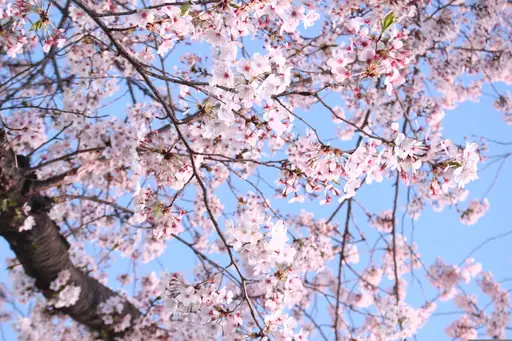
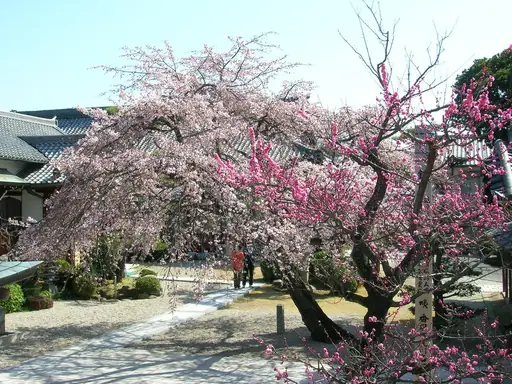
Cherry blossoms late March to early April and autumn leaves mid November to early December bring the biggest crowds and highest prices
Gion Festival all July, main processions July 17 and 24
Golden Week (late April to early May) and Obon (mid August) are very crowded with domestic travelers

Why travel to Kyoto?

Temples and shrines fill every corner of the city. Fushimi Inari is known for thousands of vermilion torii gates along a trail up a forested mountain and its grounds are free to enter. Kiyomizu-dera holds a wooden stage over a hillside and Kinkaku-ji is covered in gold leaf. Ryoan-ji has a famous raked-gravel rock garden. Nijo Castle, the Tokugawa shoguns' Kyoto residence, has floorboards that squeak on purpose to warn of intruders. The old city also still works as a living place. In Gion you may spot geiko and maiko, as Kyoto's geisha and their apprentices are called, heading to evening appointments along the lanes near the Shirakawa canal. Nishiki Market is a covered food street of pickles, tofu and sweets. The Philosopher's Path is a walk beside a canal of cherry trees between two Zen temples. Arashiyama on the western edge adds a bamboo grove, a monkey park and the long Togetsukyo bridge. Kyoto deserves at least two full days and three or four let you go beyond the headline sights. The main temples get crowded, especially in cherry blossom and autumn leaf seasons, so early mornings help. Osaka and Nara are close by train, which makes Kyoto a good base for both.

🏙️Cities & Regions
  • 1 Higashiyama
    The eastern hillside of Kyoto, home to Kiyomizu-dera and the old lanes of Gion. Wooden teahouses, temples and shrines line the slopes, linked by walkable lanes that make an easy route between the major sights.
  • 2 Gion
    Kyoto's best known geisha district, centered on wooden teahouses along Hanamikoji Street and the Shirakawa canal. Yasaka Shrine and Shijo Street frame its edges, so evening walks pass lanterns, restaurants and teahouses on every side.
🏯Places worth seeing
  • 1 Ryoan-ji
    A Zen temple in northwest Kyoto with a dry garden of fifteen stones in raked white gravel. It's a UNESCO World Heritage Site and a short trip from Kinkaku-ji, so both fit into one morning.
  • 2 Kinkaku-ji
    A gold-leaf temple pavilion beside a reflecting pond in northern Kyoto. The present building dates from 1955 and the grounds hold a tea house, a small waterfall and mossy garden paths to wander.
  • 3 Fushimi Inari-taisha
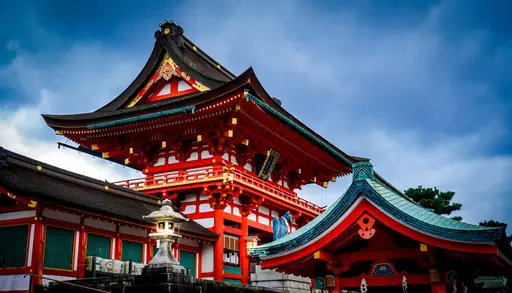
    The head shrine of Japan's Inari shrines, in southern Kyoto, with thousands of orange torii gates along paths up a forested mountain. It costs nothing to enter and foxes appear everywhere as the deity's messengers.
  • 4 Nijō Castle
    A UNESCO-listed shogun's residence in central Kyoto, built in 1603 and ringed by double moats. Its palace has painted screens and squeaking nightingale floors. A traditional garden designed by Kobori Enshu is beside it.
  • 5 Kiyomizu-dera
    A hillside Buddhist temple in eastern Kyoto, known for a wooden stage built out from the main hall over the slope. It has a three-stream waterfall, a shrine for romance and views across the city.
  • 6 Heian Shrine
  • 7 Nanzen-ji
  • 8 Nijō Castle
  • 9 East Temple
  • 10 Fushimi Inari Shrine
  • 11 Kiyomizu-dera Temple
🎡Places for activities
  • 1 TOEI Kyoto Studio Park
  • 2 Gekkeikan Okura Sake Museum
  • 3 Pontochō Alley
🏞️Natural landmarks
  • 1 Arashiyama Bamboo Grove
    A long lane of tall bamboo in Arashiyama, west of central Kyoto, where sunlight filters through the canopy overhead. It's free to walk and is close to Tenryu-ji temple and the small Nonomiya Shrine.
  • 2 Maruyama Park
  • 3 Katsura River
  • 4 Mount Hiei Summit
🛍️Shopping
  • 1 Nishiki Market
  • 2 Kyoto Handicraft Center
  • 3 Shijō Street
  • 4 Kyoto Station Building
🍽️Eat & Drink
  • 1 Nanzenji Junsei
    Nanzenji Junsei serves yudofu, Kyoto’s delicately simmered tofu in kombu broth, alongside yuba and seasonal vegetable dishes in a historic garden setting. It is at 60 Nanzenji Kusakawacho, beside Nanzen-ji Temple and about a 10-minute walk from Keage Station.
  • 2 Okutan Nanzenji
    Okutan is a long-running tofu specialist serving yudofu, sesame tofu and tofu dishes in a traditional wooden building. It is at 86 Nanzenji Fukuchicho, a short walk from Nanzen-ji Temple and the Philosopher’s Path.
  • 3 Tousuiro Kiyamachi
    Tousuiro offers tofu kaiseki courses featuring yuba sashimi, tofu hot pots and seasonal Kyoto vegetables. It is on Kiyamachi-dori beside the Kamo River, about five minutes on foot from Kyoto Shiyakusho-mae Station.
  • 4 Gion Karyo
    Gion Karyo serves refined Kyoto kaiseki, with seasonal ingredients arranged in a multi-course meal. It is in Gion’s Hanamikoji area, near Yasaka Shrine and Gion-Shijo Station.
  • 5 Menami
    Menami serves obanzai, Kyoto home-style small dishes centred on seasonal vegetables, tofu, fish and dashi. It is in the Kawaramachi area, close to Sanjo Station and the Kamo River.
  • 6 Yubanzai Komameya Nishiki
    Komameya serves approachable Kyoto tofu, yuba and obanzai dishes in a casual dining format. It is one minute from Nishiki Market and about three minutes on foot from Karasuma Station.
  • 7 Honke Owariya
    Honke Owariya is one of Kyoto’s oldest soba restaurants, known for its horai soba served with numerous toppings and dipping broth. It is at 322 Kurumayacho, a short walk from Karasuma Oike Station.
  • 8 Nishiki Market
    Nishiki Market is a covered food market for Kyoto ingredients and ready-to-eat snacks such as grilled seafood, pickles, tofu, yuba, dashimaki omelette and sweets. It runs between Teramachi and Takakura streets in central Kyoto, near Shijo and Karasuma stations.
  • 9 Gion Tsujiri Gion Main Store
    Gion Tsujiri serves high-quality Uji matcha drinks, parfaits, soft serve and traditional tea sweets. It is at 573-3 Gionmachi Minamigawa on Shijo-dori, near Yasaka Shrine and Gion-Shijo Station.
  • 10 Inoda Coffee Honten
    Inoda Coffee’s flagship is a classic Kyoto kissaten serving its signature aromatic coffee, breakfast toast, sandwiches and cakes in a garden-facing setting. It is at 140 Doyucho, about five minutes on foot from Karasuma Oike Station.
🎈Events
  • Gion Matsuri (July)
  • Aoi Matsuri (May)
  • Jidai Matsuri (October)
  • Hanatouro Lantern Festival
  • Setsubun at Yoshida Shrine
  • Cherry Blossom Season (March-April)
  • Autumn Leaf Viewing (November)
  • Arashiyama Hanatouro

Knowledge before you go

  • Start at major temples early, since many close around 5:00 PM.
  • Fushimi Inari is free and open at all hours, so a late evening climb avoids the daytime crowds.
  • In Gion, signs bar photography in some private lanes and visitors who ignore them can be fined.
  • Luggage forwarding can send bags from your hotel to the airport or next stop, which saves hauling them on crowded buses.

How to travel to Kyoto

The Shinkansen is the easiest way to reach Kyoto, stopping at Kyoto Station on the Tokaido line. From Tokyo the fastest Nozomi trains take roughly 2 hours 15 minutes. Osaka's Shin-Osaka station is about 15 minutes away and Nagoya about 35 minutes. Hiroshima takes under 2 hours and Fukuoka's Hakata about 2 hours 40 minutes. Kansai International Airport (KIX) is the main gateway, with the JR Haruka express reaching Kyoto Station in roughly 75 minutes. Osaka Itami Airport (ITM) handles domestic flights and limousine buses take about an hour to Kyoto Station. From Tokyo's airports most travelers take the Shinkansen from the city instead of flying on to Osaka. JR, Hankyu and Keihan trains link Osaka and Kyoto. Highway buses from Tokyo take 8 hours or more and driving takes around 6. The route uses the Tomei and Shin-Meishin expressways, though the train is faster and parking in Kyoto is hard.

Access summary

  • From Kansai Airport (KIX): JR Haruka Express to Kyoto Station, about 75 minutes.
  • From Osaka: Frequent JR or shinkansen trains to Kyoto, roughly 15–30 minutes.
  • From Tokyo: Tokaido Shinkansen to Kyoto Station, usually about 2–2.5 hours.

Where to stay in Kyoto

Kyoto has a wide range of places to stay, from business hotels and luxury inns to guesthouses and renovated wooden townhouses called machiya. The area around Kyoto Station has the most hotels and is next to the Shinkansen, the airport train and the main bus terminal. It suits short stays and early departures. Central Kyoto around Kawaramachi and Shijo puts you beside Nishiki Market, Pontocho and a short walk from Gion. Higashiyama is quieter at night and has traditional ryokan and machiya stays close to Kiyomizu-dera. Arashiyama has ryokan too and the area gets quiet after the day trippers leave. Rooms fill and prices rise in cherry blossom season, in autumn leaf season and during the Gion Matsuri in July, so book early at those times. Osaka is a short Shinkansen ride away and often has more rooms for less.

How to get around Kyoto

Buses and the subway cover most of Kyoto and many visitors end up using both.

Subway and buses:
The subway has two lines, Karasuma running north to south and Tozai running east to west. It's quick but doesn't reach many of the best-known temples.
City buses fill that gap with routes from Kyoto Station to Kinkaku-ji, Kiyomizu-dera, Ginkaku-ji and Gion. They get crowded in peak seasons, so a train is often faster when one runs where you're going.

Trains:
Fushimi Inari has its own JR station about 5 minutes from Kyoto Station on the Nara Line.
Arashiyama is about 15 minutes away on the JR Sagano Line to Saga-Arashiyama. Day passes for buses and the subway exist. Prices and coverage change, so check at a station ticket office.

Bikes and taxis:
Rental bicycles suit the flat center and the grid of streets is easy to follow.
Taxis are easy to flag and worth it for groups or late evenings. You don't need a car, since parking is expensive and many streets are narrow.

Food in Kyoto

Kyoto cooking is delicate and seasonal, built on dashi stock, tofu and vegetables. Dashi is made from fish in many dishes, so vegetarians should ask about ingredients even in vegetable-heavy meals.

Kaiseki:
Kaiseki is a multi-course meal served in small plates and is the city's best-known dining style.
The finer restaurants often need a reservation. Lunch sets are usually a cheaper way to try them than dinner.

Shojin ryori:
Shojin ryori is the vegetarian cooking of Buddhist temples.
It contains no meat or fish, which makes it one of the easiest ways to eat vegetarian in the city.

Yudofu and obanzai:
Yudofu is tofu simmered in a hot pot.
Obanzai are the small home-style side dishes found in local restaurants and are a relaxed way to try several vegetable dishes at once.

Matcha:
Matcha comes from nearby Uji and shows up in sweets and ice cream across the city.
Tea houses and cafes serve it as a drink or with a small sweet.

Nishiki Market and the streets around it sell pickles, skewers and sweets you can eat on the go. Convenience stores and department store food halls cover quick meals.

Budget snapshot
Costs compared to home

We calculate the average costs when traveling to destinations and compare those with the living costs at your home. With this you can get an estimate of how expensive or cheap the destination is for you.

To customize this, you can set up which location and price level are used for the calculations in your account settings.

-42 %
Daily expenses in Kyoto are around 42% lower than the average across United States. That means you'll spend a lot less on meals and getting around.
Exchange rate trend

The exchange rate price factor shows how expensive or cheap a currency currently is compared to its historical average. It's a quick way to see if a country is currently more or less affordable due to exchange rate changes.

-17 %
Your exchange rate (USD to JPY) is 17% better than in recent years. That means traveling now is considerably cheaper compared to the past.

Travel costs

To help you plan your trip, we provide estimated daily costs per person (when traveling as a pair) for different travel styles. These numbers give you an idea of what you might spend each day at this destination, including accommodation, food, transport and activities.

Additionally, we also provide average hotel costs for different travel styles to give you an estimate for the accommodation only.

Please note that these are only estimates. The real costs depend on booking times, season and other factors.

Daily cost summary

Travel style categories explained:

Backpacker:
Staying in hostels or budget hotels, cooking your own meals or eating cheap and choosing low-cost activities.

Mid-range:
Staying in mid-range hotels, eating at a mix of restaurants and casual spots and enjoying a variety of activities.

Luxury:
Staying in luxury hotels, dining out at high-end restaurants and enjoying premium experiences without worrying about the price.

Backpacker Mid-range Luxury
💵 Total costs per day, including accommodation
$54
$146
$410
🏨 Accommodation per night, per person
$25
$90
$220
🍝 Food per day
$23
$46
$139
🚕 Transportation per day
$6
$10
$51
Food & Drink
🍽️ Restaurant Dinner, per person
$17
🍛 Lunch Set, per person
$8
🍟 Fast food combo
$4.90
🍝 Preparing your own food, per day
$9
☕ Cappuccino
$3.20
🍺 Beer in a restaurant, 0.5 l / 16 oz
$3.40
Transportation
🚌 Public transport ticket
$1.50
🚕 Taxi Ride, 10 km / 6 mi
$32
⛽ Gas, 1 l / ¼ gal
$1.10
Other
🎞️ Movie ticket
$12
👩‍⚕️ Doctor's consult
$27
🤧 Cold medication
$9.50
💇 Basic haircut
$16

Safety information overview

General safety
9
Kyoto is very safe, with low violent crime and calm streets late at night around Gion and Kawaramachi. Petty theft is uncommon but crowded buses and busy temples call for normal care. Earthquakes and heavy typhoon rain are possible but rarely disrupt trips.
Health & Medical
8
Kyoto has many hospitals, clinics and pharmacies, including university hospitals. English-speaking care is limited though, so travel insurance is worth having. Summers are hot and humid, so heatstroke is the main health risk from July to September.
Accessi­bility
6
Central Kyoto is flat and laid out on a grid with elevators in subway stations. Many temples have gravel paths and steps while the streets up to Kiyomizu-dera climb steadily. Buses get crowded and can be hard for wheelchairs and strollers.
Tap water
9
Tap water in Kyoto is safe to drink, as in the rest of Japan. Vending machines and convenience stores sell bottled water and tea on almost every block. Temple purification basins are for ritual washing, not drinking, so carry a bottle on hot summer days.

Looking for inspiration?

Discover
Intimate escapes and romantic getaways
The most memorable trips for couples tend to have less to do with luxury and more to do with the quality of shared experience. A place that slows you down, removes the usual…
Read more
Discover
Best festivals in Asia
Few regions match Asia for the sheer scale and variety of festivals: religious, agricultural and seasonal traditions span the continent across multiple major faiths, often…
Read more
Discover
Best cherry blossom destinations in Asia
Cherry blossom season turns parts of Asia into a completely different place for a few short weeks each year, drawing travelers who plan their entire trip around a single bloom.…
Read more
Discover
Best destinations to visit in December in Asia
December counts among the best months of the year across much of Asia, even as it becomes one of the busiest. Southeast Asia holds onto its dry season through December, with…
Read more
Discover
Best destinations to visit in October in Asia
October counts among the best months of the year across much of Asia, as the wet season eases and clearer skies take over. India's monsoon has typically fully retreated by…
Read more
Discover
Top art destinations and cultural hubs
For many travelers, standing in front of a painting they have only ever seen in books is one of the best moments of a trip, and it often feels very different from what they…
Read more
Discover
Best couple vacation destinations in Asia
Asia is perfect for couples who want their holiday to feel like a shared adventure rather than just a change of scenery. Few continents offer so many ways to be amazed together.…
Read more
Discover
Best fall foliage destinations in Asia
Asia's autumn foliage season spans a wide geographic range, with the most celebrated displays concentrated in the temperate forests of East Asia where a rich mix of deciduous…
Read more
Discover
Top fall foliage destinations and autumn colors
Few natural spectacles are as season-specific and location-dependent as autumn foliage, where the combination of tree species composition, temperature drop and daylight reduction…
Read more
Discover
Best craft destinations in Asia
Asia contains the world's most diverse and technically sophisticated craft traditions, with ceramics, textiles, lacquerwork, metalsmithing, woodcarving and papermaking traditions…
Read more
Discover
Top cherry blossom destinations and spring blooms
Cherry blossom season is brief and weather-dependent almost everywhere it happens, which is part of why it draws so much dedicated travel. The bloom typically lasts only a week or…
Read more
Discover
Top spiritual travel destinations and wellness retreats
Spiritual travel works best at destinations with a genuine, long-standing tradition behind the practice on offer: places where meditation, ritual, or retreat has been part of local…
Read more
Discover
Markets and street shopping in Asia
Asia has some of the most extraordinary market cultures on earth, shaped by thousands of years of trade and an extraordinary diversity of produce, cuisine, and craft traditions.…
Read more
Discover
Best destinations for first-time travelers in Asia
Asia has one of the best established beginner travel routes anywhere, largely because so many first time travelers have worn the path before you. Southeast Asia in particular…
Read more
Discover
Pilgrimage destinations and sacred sites
Pilgrimage travel is among the oldest forms of purposeful journey, with sacred routes, shrine destinations and holy cities drawing millions of travellers annually across every…
Read more
Feedback
