









Was this page helpful?

These place ratings give you a quick overview of how well a destination matches different types of trips.
"Best for" scores:
The specific interest scores show where this place really shines – whether it's ideal for hiking, food & drink experiences, museums or other activities. These highlights help you understand what makes the destination special at a glance.
"Your personal" scores:
This reflects how well a place matches your personal preferences. You can adjust the importances of travel topics or other personal requirements categories in your account settings.
"Suited for" badges:
These give you a quick overview of how well a destination suits specific types of travelers, to help you find the places that match your lifestyle, preferences or travel situation.
| Power Grid: |
230 V, 50 Hz Plug: Type C , Type F
Type C:
  Read about power adapters |
|---|---|
| Currency: |
Euro (EUR) $1 ≈ €0.90 |
| Cashless info: |
Rating 4/5
Cards are widely accepted, especially in urban areas, but small establishments may prefer cash. Be prepared for occasional cash-only situations.
Save with a travel credit card |
| eSIM providers: |
Best value: Saily Flexibility: Airalo Read our in-depth comparison |
| Tipping: | Tipping is common in restaurants, typically 5-10%. For taxis, it is customary to round up to the nearest euro. Tipping in cash is more common than adding it to card payments. |
|---|---|
| Public drinking: | Public drinking is allowed in most parts of Germany, especially in beer gardens and public events, but some local regulations may restrict it in specific areas. |
| Public smoking: | Smoking is prohibited indoors in public places such as restaurants, trains, and buses. Designated smoking areas are available outside many buildings. |
| Oktoberfest (September) |
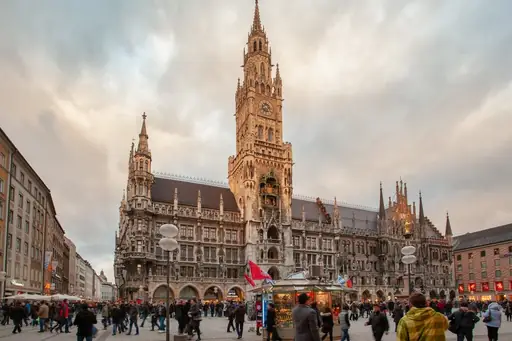
Huge crowds in Munich. Expect high hotel rates and crowded transportation. |
|---|---|
| Christmas (December) |
Christmas markets are popular, expect crowded cities and higher prices. |
| Labour Day (May) |
Many shops are closed, and there are celebrations throughout the country. |
| Emergency contact: | Police: 110, Emergency Number: 112 (Fire, Ambulance) |
|---|---|
| Taxi apps: | Uber, Free Now, myTaxi |
| Other: | Germany is well-equipped for tourists, with good public transport and high-quality facilities. However, be prepared for language barriers in some rural areas. |
The best times to travel section shows how the months compare for a visit, so you can find the time of year that fits what you want to do.
Background colors of the months:
The color shows the typical temperature: yellow (hot), green (mild) and blue (cold). How strong the color is shows the travel season: full color means high season, soft color means shoulder season and soft-striped means off season.
Weather symbols:
Each month has one symbol showing what the weather is typically like, such as hot and sunny, freezing or a rainy or snowy season. Use them to quickly spot months that match the weather you want, or to avoid the ones that don't.
Crowdedness:
The people icon shows how busy the place usually is. The more people, the more crowded it gets.
Additional notes:
The gray info boxes point out special things worth knowing, like recurring weather issues or seasonal events.
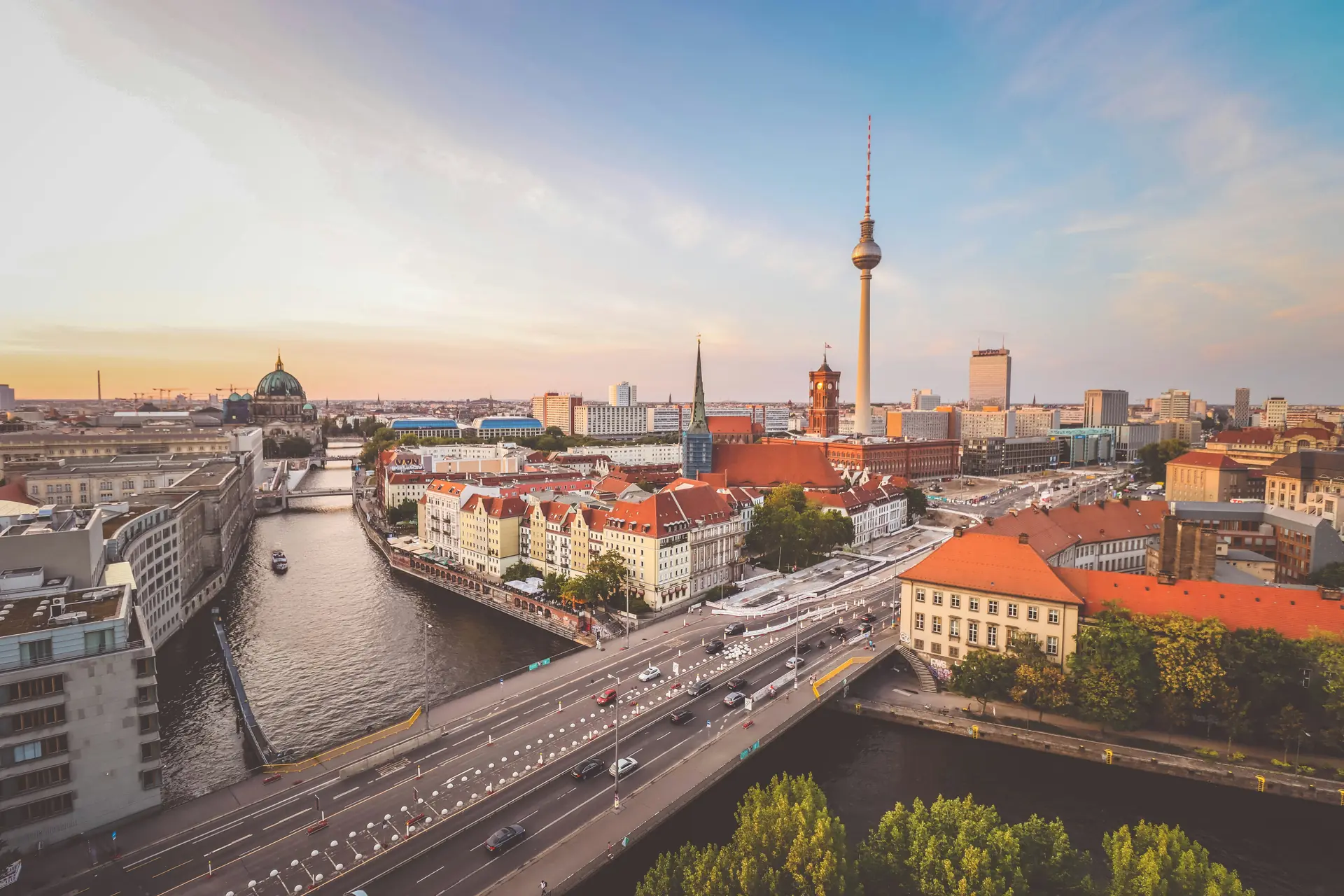
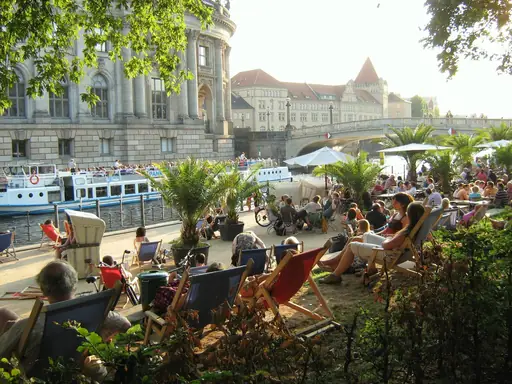
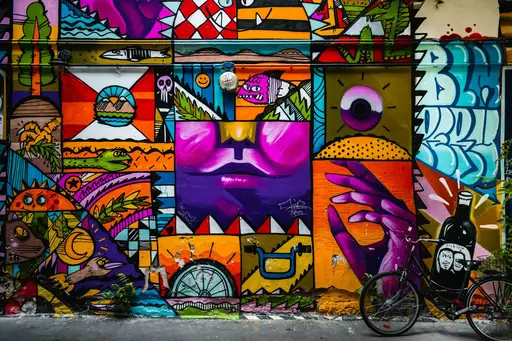
Much of Berlin's twentieth-century history is still visible on the street. The Berlin Wall Memorial on Bernauer Straße keeps a preserved stretch of the border strip with a viewing platform and a documentation center. The East Side Gallery is a section of the Wall about 0.8 mi long that artists turned into a mural gallery. The Topography of Terror stands on the site of the former Gestapo and SS headquarters. The Memorial to the Murdered Jews of Europe covers a city block near the Brandenburg Gate with 2,711 concrete slabs. Museum Island is a UNESCO World Heritage site with five museums on one small island in the Spree. The Neues Museum shows the bust of Nefertiti. The Reichstag has a glass dome by Norman Foster that visitors can walk up for views over the government quarter. Schloss Charlottenburg adds baroque rooms and the Tiergarten adds a large park in the middle of the city. Potsdam with Sanssouci Palace is roughly half an hour away by regional train and works as a day trip. Berlin has no single compact old town like Prague or Munich, so it suits visitors who enjoy exploring districts. Kreuzberg and Neukölln are known for street art and international food, Prenzlauer Berg for cafes and tree-lined streets and Charlottenburg for the shopping along Kurfürstendamm. Tempelhofer Feld is a former airport where people walk and cycle on the old runways. In summer many people swim in lakes such as Wannsee and Müggelsee. Three or four days cover the central sights while a week leaves room for the districts and a day trip.
Berlin Brandenburg Airport (BER) is the city's only airport and the rail station sits directly below Terminal 1. The Airport Express (FEX) runs every 15 minutes to the Hauptbahnhof in about 23 minutes and also stops at Südkreuz and Potsdamer Platz. The S-Bahn lines S9 and S85 are slower but reach Alexanderplatz and the east. BER is in fare zone C so a single trip into the city needs an ABC ticket at €5 ($5.60). The Hauptbahnhof is the main rail hub. ICE trains take around two hours from Hamburg and around four from Munich or Frankfurt. Prague and Warsaw are each roughly five hours away. Six autobahns (A2, A9, A11, A12, A13 and A24) lead to the A10 ring road around the city. Leipzig and Dresden are around two hours by car and Hamburg around three.
Berlin has hotels in every price range plus apartments and plenty of hostels. Rooms tend to cost less than in many other European capitals. Most visitors stay in Mitte, which puts the main sights within walking distance but costs more. Prenzlauer Berg to the north is calmer with cafes and tree-lined streets. Kreuzberg and Friedrichshain are lively at night so street-facing rooms can be loud. Charlottenburg in the west has the shopping streets and quieter evenings. Neukölln offers lower prices and a local feel. Because public transport reaches every district, a room near a station matters more than the exact neighborhood. Book well ahead for trade fairs, the Berlin Marathon and New Year's Eve.


Berlin covers about 340 sq mi so the sights are spread across several districts. Mitte holds Museum Island, Alexanderplatz and the Brandenburg Gate while Zoologischer Garten and the shopping streets are in the west. Public transport is the main way to get around and the inner city also works well on foot or by bike.
Tickets:
One ticket covers the U-Bahn, S-Bahn, trams, buses and ferries. A single ticket for zones A and B costs €4 ($4.48) and lasts two hours. Buy it at station machines or in the BVG app, while bus drivers take cards only.
U-Bahn and S-Bahn:
The U-Bahn covers the inner city and the S-Bahn adds the Ringbahn circle plus an east-west line through the center. Most lines run all night on weekends.
Trams and buses:
Trams run mostly in the eastern districts while buses fill the gaps and night buses cover the rest of the week.
Taxis and ride-hailing:
Taxis are easy to find and Uber and Bolt both operate in the city.
Car:
A car isn't worth it for a city stay. The inner city has an environmental zone with an emissions sticker rule and paid parking in many areas.
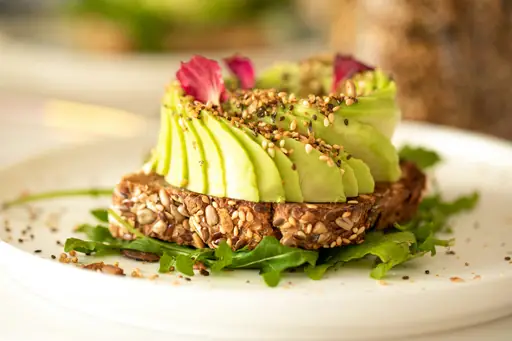
Berlin's food scene is shaped by its immigrant communities so Turkish, Vietnamese, Middle Eastern and Italian cooking is easy to find next to German taverns. Vegetarian and vegan options are widespread and many menus come in English. Bakeries sell breakfast and lunch rolls and street food suits most budgets.
Currywurst:
A sausage cut into pieces and covered with a curry-spiced ketchup sauce, usually served with fries or a roll at snack stands.
Döner kebab:
Sliced meat or vegetarian fillings in flatbread with salad and sauces, sold on almost every street and often open late.
Pfannkuchen:
The jam-filled doughnut that the rest of Germany calls a Berliner is known here as a Pfannkuchen and sold at bakeries.
Berliner Weisse:
A light and sour wheat beer, often served with a shot of raspberry or woodruff syrup.
We calculate the average costs when traveling to destinations and compare those with the living costs at your home. With this you can get an estimate of how expensive or cheap the destination is for you.
To customize this, you can set up which location and price level are used for the calculations in your account settings.
The exchange rate price factor shows how expensive or cheap a currency currently is compared to its historical average. It's a quick way to see if a country is currently more or less affordable due to exchange rate changes.
To help you plan your trip, we provide estimated daily costs per person (when traveling as a pair) for different travel styles. These numbers give you an idea of what you might spend each day at this destination, including accommodation, food, transport and activities.
Additionally, we also provide average hotel costs for different travel styles to give you an estimate for the accommodation only.
Please note that these are only estimates. The real costs depend on booking times, season and other factors.
Travel style categories explained:
Backpacker:
Staying in hostels or budget hotels, cooking your own meals or eating cheap and choosing low-cost activities.
Mid-range:
Staying in mid-range hotels, eating at a mix of restaurants and casual spots and enjoying a variety of activities.
Luxury:
Staying in luxury hotels, dining out at high-end restaurants and enjoying premium experiences without worrying about the price.
| Backpacker | Mid-range | Luxury | |
|---|---|---|---|
| 💵 Total costs per day, including accommodation | |||
| 🏨 Accommodation per night, per person | |||
| 🍝 Food per day | |||
| 🚕 Transportation per day |
| 🍽️ Restaurant Dinner, per person | |
|---|---|
| 🍛 Lunch Set, per person | |
| 🍟 Fast food combo | |
| 🍝 Preparing your own food, per day | |
| ☕ Cappuccino | |
| 🍺 Beer in a restaurant, 0.5 l / 16 oz |
| 🚌 Public transport ticket | |
|---|---|
| 🚕 Taxi Ride, 10 km / 6 mi | |
| ⛽ Gas, 1 l / ¼ gal |
| 🎞️ Movie ticket | |
|---|---|
| 👩⚕️ Doctor's consult | |
| 🤧 Cold medication | |
| 💇 Basic haircut |
Log in to add this place to a travel list and get a summary of all recommended items for your whole trip.
