
The world is generally a welcoming place and the vast majority of trips end with happy memories rather than police reports. But traveling means leaving behind your support network and your intuitive knowledge of what's normal and what isn't. At home you know which neighborhoods to avoid at night and which stranger is being too friendly. Abroad, unfamiliar cultures and customs around you can make all of that difficult.
When it comes to safety while traveling, you want to hit the sweet spot between having enough of a guard up that is appropriate for your destination and not letting any worries about the safety situation have a negative impact on your trip. You can avoid unnecessary fear by preparing yourself before you even depart. A prepared traveler can relax properly, which is the whole point of going after all. Let's go through it step by step.
Step 1: Research the real risk profile of your destination
Every destination has its own risk profile and relying on stereotypes or a single news story gives you a distorted picture. Reliable sources are official government travel advisories, like the ones from the UK Foreign Office, Smartraveller in Australia or your own country's equivalent. They're updated regularly, specific about regions rather than whole countries and factual instead of emotional. Local English-language news and expat forums add the street-level detail, like which neighborhoods to avoid or what's currently going on that international news doesn't cover.
Part of this research is the local laws, because ignorance isn't a defense anywhere. Things that are completely normal at home, like vaping, certain medications or even wearing camouflage clothing, are illegal in some countries and the fines can be substantial. Your government's travel advice page usually lists these legal surprises in a few paragraphs.
Step 2: Be honest about your own anxiety tolerance

There's a factor that statistics don't capture. Some destinations offer incredible culture and beauty, but require a heightened level of alertness. Cities like Rio de Janeiro or Cape Town are absolutely visitable and hundreds of thousands of travelers enjoy them every year. But you can't walk around there without a care in the world or leave your phone on the café table the way you might at home. You need to stay aware of your surroundings, more or less constantly.
For some travelers, that alertness becomes second nature within a day and doesn't reduce the fun at all. For others, the feeling of having to look over their shoulder makes it impossible to relax and the vacation suffers even if nothing bad ever happens. It's important to ask yourself what type you are before you book a vacation to this kind of place. There's no shame in choosing a destination where you can let your guard down and sleep well. You don't want to be so stressed out that you'll need a vacation after your vacation, so take your personal safety into account when choosing your destination, right next to the budget and the weather. By the way, our Trip Finder lets you use safety level as one of the filters you can use to find your ideal destination.
Step 3: Respect the everyday risks first
The most important safety fact in travel is the one that isn't top of mind for most travelers. The thing most likely to hurt people is traffic, not crime. Unfamiliar roads, different driving cultures and especially scooters rented on vacation confidence cause far more serious problems than anything from the headlines. The habits that are most important in this context are correspondingly simple. Wear the helmet even if nobody else does, use the seatbelt even if the driver looks surprised, choose licensed taxis or established ride apps over improvised alternatives and think twice before renting a vehicle you wouldn't confidently drive at home.
The rest of the things you should keep in mind in everyday life are manageable as well. Be careful with tap water and street food where the advisories suggest it, take the sun seriously in climates stronger than yours and follow the local flags and advice when swimming.
Step 4: Make yourself a hard target for theft
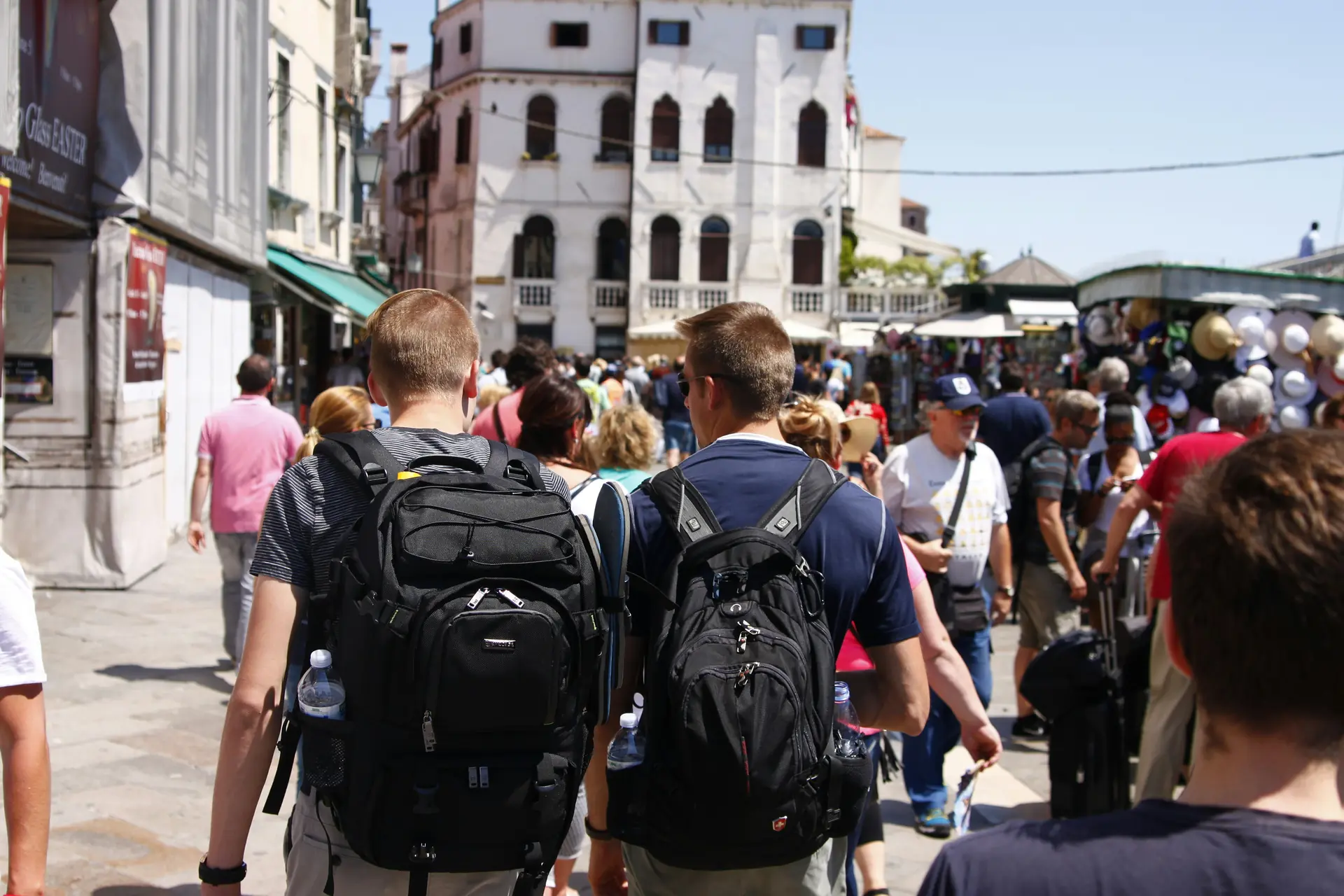
A common mistake is assuming that wealthy countries are automatically safe from crime. In reality, some of the richest cities in Europe, like Barcelona, Paris, Rome and Prague, have some of the highest pickpocketing rates in the world. Travelers who would guard their bag carefully elsewhere often drop their guard in Europe and that's exactly what professional thieves count on. They work in teams, they're not threatening and they strike in crowded metros, at major landmarks and in busy plazas.
The setup is almost always a distraction. A petition shoved in your face, a drink accidentally spilled on you or a sudden commotion nearby, while an accomplice goes through your pockets. To prevent yourself from being an easy target, put nothing valuable in your back pocket, wear your backpack on the front in crowds and don't leave your phone on the coffee table. Split your valuables with your fellow travelers too, so one theft can't take everything. Bring daily cash and one card with you. Leave the backup card and some emergency cash back in the safe at the accommodation. Beyond that, blend in a bit. Walk with purpose, step into a shop to check the map instead of looking lost on the corner and leave the flashy jewelry and expensive watch at home.
Step 5: Be aware of the classic scams
Scammers are creative, but their core tricks are surprisingly consistent around the world. The broken taxi meter is one of the classics, where the driver wants to negotiate an inflated flat rate instead. Insist on the meter or use a ride app with a fixed price. There is also the overly friendly stranger who wants to practice English and invites you to a special tea ceremony or a bar, which ends with an enormous bill and unfriendly staff between you and the exit.
You don't need to memorize a catalog, because almost all scams share the same skeleton. An unexpected offer or sudden urgency from someone you didn't approach. A polite "no, thank you" while you keep walking defeats most of them. Just trust your gut when something seems off. Leaving a street, a bar or a conversation that feels wrong costs nothing and needs no explanation. Don't let anyone take advantage of you just because you're trying to be friendly. Unfortunately this good character trait is exactly what scammers exploit.
Step 6: Build the safety net you'll probably never use
A few preparations before you leave change the consequences an incident abroad will have for you. Travel insurance is the big one and it's not optional. Your health insurance from home rarely covers international emergencies and a medical evacuation from a remote area can cost more than a car. Good travel medical insurance means a hospital visit doesn't turn into a financial disaster and the 24/7 hotline helps you navigate a foreign healthcare system when you're in no state to figure it out yourself.
It's also a good idea to learn the local emergency number, since it's often not the one from home. In the EU it's 112, in the UK 999 and in North America 911. Know where your embassy or consulate is, keeping in mind that they help with lost passports and legal trouble but won't pay your bills. Back up your phone before the trip and keep encrypted copies of your passport, insurance and visas somewhere you can access from any computer. Use your mobile data or a VPN instead of open Wi-Fi for anything sensitive, which our guide on Internet access covers in more detail. And share your rough itinerary with someone at home, with a simple agreement to check in every day or two. If you travel solo, this last point is especially important.
Prepared travelers are relaxed travelers
Travel safety comes down to a short list. Know the real risks of your destination, respect the traffic, spread out the valuables, recognize the scam patterns and carry proper insurance. Do that and the worrying is minimized before the trip starts, so you can focus on better and more interesting things.
And remember that safety starts with the destination choice. Pick a place that matches your personal comfort level, using the same care you put into the budget and the climate. That way you'll spend the trip enjoying the place instead of managing your nerves.