















Was this page helpful?

These place ratings give you a quick overview of how well a destination matches different types of trips.
‘Best for’ scores:
The specific interest scores show where this place really shines – whether it's ideal for hiking, food & drink experiences, museums or other activities. These highlights help you understand what makes the destination special at a glance.
‘Your personal’ scores:
This reflects how well a place matches your personal preferences. You can adjust the importances of travel topics or other personal requirements categories in your account settings.
‘Suited for’ badges:
These give you a quick overview of how well a destination suits specific types of travellers, to help you find the places that match your lifestyle, preferences or travel situation.
| Power Grid: |
230 V, 50 Hz Plug: Type C , Type F
Type C:
  Read about power adapters |
|---|---|
| Currency: |
Euro (EUR) £1 ≈ €1.19 |
| Cashless info: |
Rating 5/5
Cashless payment is widely accepted in Spain, particularly in urban areas and tourist destinations. Credit and debit cards are commonly used, and mobile payment options are available in many establishments.
Save with a travel credit card |
| eSIM providers: |
Best value: Saily Flexibility: Airalo Read our in-depth comparison |
| Tipping: | Tipping is not mandatory in Spain but appreciated for good service. In restaurants, rounding up the bill or leaving 5-10% is customary. Taxi drivers and hotel staff may also be tipped, though it is less common. |
|---|---|
| Public drinking: | Public drinking is restricted in some regions, particularly in tourist-heavy cities. Local laws may vary. |
| Public smoking: | Smoking is banned indoors in public places but allowed in designated outdoor areas. |
| La Tomatina (August) |
A famous tomato-throwing festival, expect large crowds in Buñol. |
|---|---|
| Semana Santa (March/April) |
Religious parades and events make this a busy time in major cities. |
| Christmas (December) |
Markets and festive celebrations, with tourist areas becoming busier. |
| Emergency contact: | Emergency Number: 112 (Police, Fire, Ambulance) |
|---|---|
| Taxi apps: | Cabify, Bolt, Uber |
| Other: | Spain is known for its diverse culture, stunning architecture, and vibrant festivals. Public transport is reliable and efficient, making it easy to explore. |
The best times to travel section shows how the months compare for a visit, so you can find the time of year that fits what you want to do.
Background colours of the months:
The colour shows the typical temperature: yellow (hot), green (mild) and blue (cold). How strong the colour is shows the travel season: full colour means high season, soft colour means shoulder season and soft-striped means off season.
Weather symbols:
Each month has one symbol showing what the weather is typically like, such as hot and sunny, freezing or a rainy or snowy season. Use them to quickly spot months that match the weather you want, or to avoid the ones that don't.
Crowdedness:
The people icon shows how busy the place usually is. The more people, the more crowded it gets.
Additional notes:
The grey info boxes point out special things worth knowing, like recurring weather issues or seasonal events.
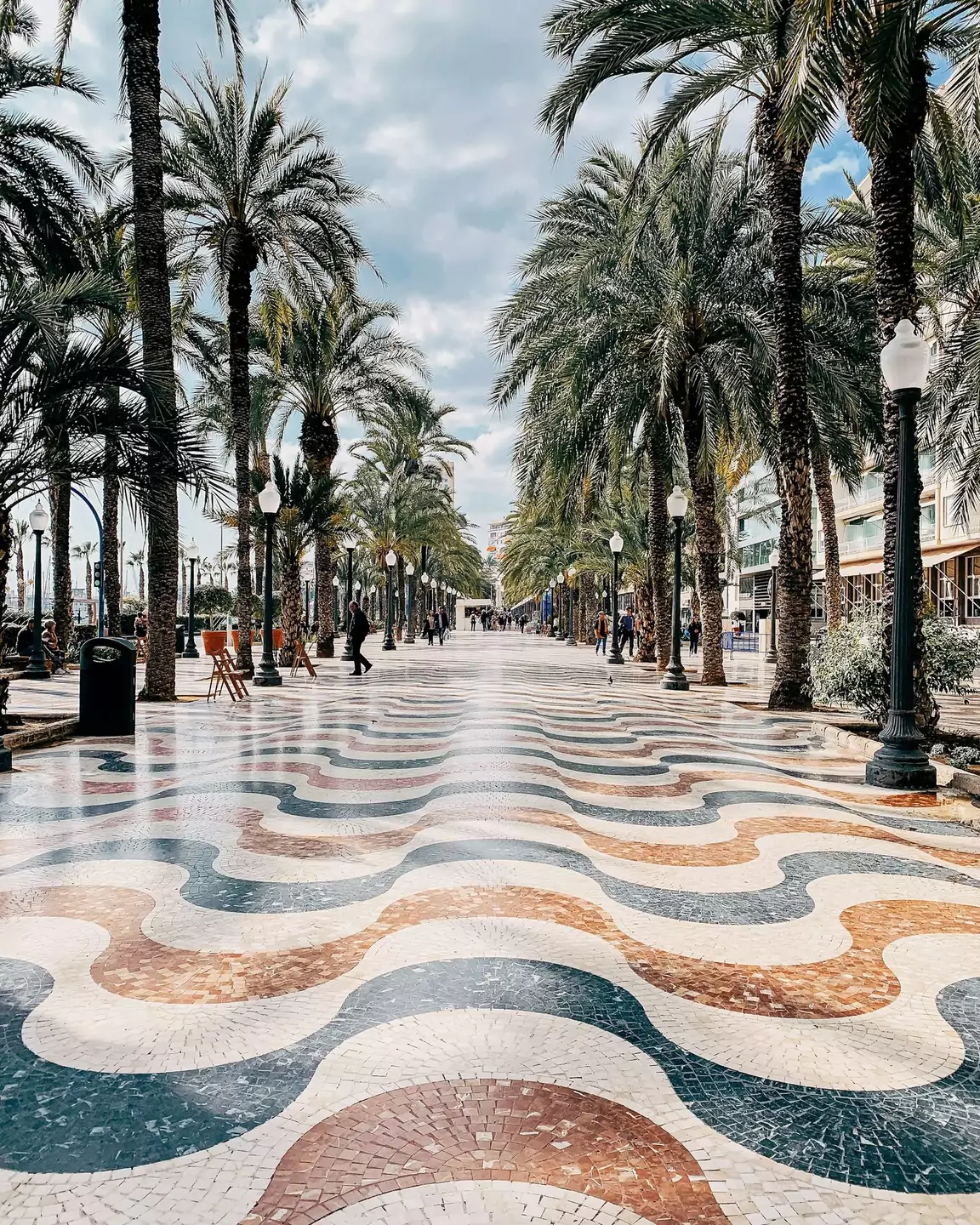
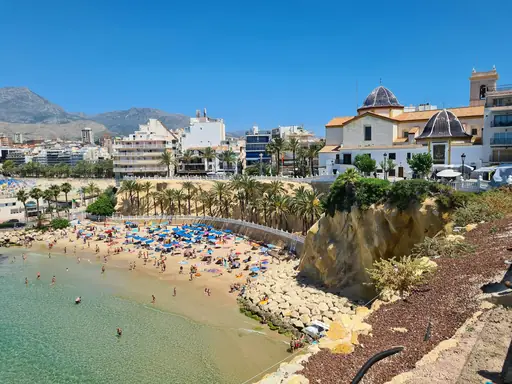
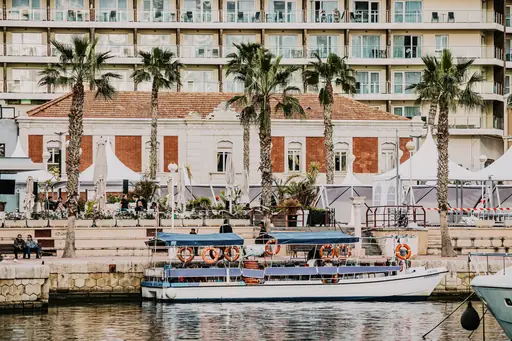
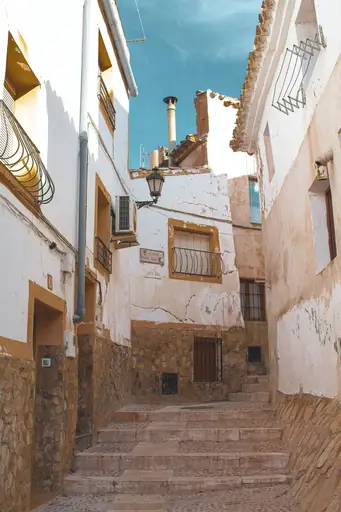
The Costa Blanca, stretching from Benidorm to Denia along Spain’s eastern coast, offers a balanced mix of natural beauty, cultural heritage and practical amenities that appeal to a wide range of travelers. The region’s Mediterranean climate provides warm, sunny days for beach activities while the nearby Sierra Nevada mountains offer hiking, skiing and scenic viewpoints. Visitors can enjoy pristine sandy stretches such as Playa de Levante in Benidorm or the quieter coves around Calpe, all within easy reach of local restaurants serving fresh seafood and traditional paella. Beyond the coast, towns like Altea and Jávea showcase whitewashed streets, art galleries and historic churches that reflect a blend of Moorish and Catalan influences. The area’s well-developed infrastructure – modern hotels, family-friendly resorts and efficient public transport – makes it accessible for solo travelers, couples and families alike. For those interested in history, the Roman ruins at Gorga or the medieval castle of Peñíscola provide tangible links to Spain’s past. The Costa Blanca also supports sustainable tourism initiatives, with many accommodations adopting eco-friendly practices and promoting local produce. Whether you’re seeking relaxation on sunlit beaches, cultural exploration or outdoor adventures, this region offers a well-rounded experience grounded in authenticity and convenience.
The Costa Blanca in Spain is accessible via several transportation routes. The region has three main airports: Alicante–Elche Airport, Valencia Airport and Murcia Airport, all of which offer domestic and international flights. Trains connect major cities along the coast to Madrid and Barcelona through high-speed rail lines, with stops in towns like Alicante, Benidorm and Torrevieja. Bus services operated by companies such as ALSA provide extensive coverage across the region, linking coastal towns and inland areas. The A7 motorway runs parallel to the coastline, enabling car travel between major destinations. Ferry services also connect coastal towns with nearby islands in the Mediterranean Sea.
Costa Blanca offers a wide spectrum of lodging, from budget-friendly apartments and hostels to luxury beachfront resorts. Many towns feature well‑maintained holiday rentals – self‑contained studios or family homes – often equipped with kitchens and balconies overlooking the Mediterranean. Mid‑range hotels typically provide comfortable rooms, free Wi‑Fi and on‑site dining, while upscale properties boast private pools, spa facilities and panoramic sea views. The area is renowned for its “pension” style accommodations: small, family‑run guesthouses offering a homely atmosphere at modest rates. In coastal hotspots like Benidorm or Torrevieja, you’ll find boutique hotels that blend contemporary design with local charm, catering to both leisure travelers and business visitors.
We calculate the average costs when travelling to destinations and compare those with the living costs at your home. With this you can get an estimate of how expensive or cheap the destination is for you.
To customise this, you can set up which location and price level are used for the calculations in your account settings.
The exchange rate price factor shows how expensive or cheap a currency currently is compared to its historical average. It's a quick way to see if a country is currently more or less affordable due to exchange rate changes.
To help you plan your trip, we provide estimated daily costs per person (when travelling as a pair) for different travel styles. These numbers give you an idea of what you might spend each day at this destination, including accommodation, food, transport and activities.
Additionally, we also provide average hotel costs for different travel styles to give you an estimate for the accommodation only.
Please note that these are only estimates. The real costs depend on booking times, season and other factors.
Travel style categories explained:
Backpacker:
Staying in hostels or budget hotels, cooking your own meals or eating cheap and choosing low-cost activities.
Mid-range:
Staying in mid-range hotels, eating at a mix of restaurants and casual spots and enjoying a variety of activities.
Luxury:
Staying in luxury hotels, dining out at high-end restaurants and enjoying premium experiences without worrying about the price.
| Backpacker | Mid-range | Luxury | |
|---|---|---|---|
| 💵 Total costs per day, including accommodation | |||
| 🏨 Accommodation per night, per person | |||
| 🍝 Food per day | |||
| 🚕 Transportation per day |
| 🍽️ Restaurant Dinner, per person | |
|---|---|
| 🍛 Lunch Set, per person | |
| 🍟 Fast food combo | |
| 🍝 Preparing your own food, per day | |
| ☕ Cappuccino | |
| 🍺 Beer in a restaurant, 0.5 l |
| 🚌 Public transport ticket | |
|---|---|
| 🚕 Taxi Ride, 10 km / 6 mi | |
| ⛽ Petrol, 1 l |
| 🎞️ Cinema ticket | |
|---|---|
| 👩⚕️ Doctor's consult | |
| 🤧 Cold medication | |
| 💇 Basic haircut |
Log in to add this place to a travel list and get a summary of all recommended items for your whole trip.
