
















Was this page helpful?

These place ratings give you a quick overview of how well a destination matches different types of trips.
‘Best for’ scores:
The specific interest scores show where this place really shines – whether it's ideal for hiking, food & drink experiences, museums or other activities. These highlights help you understand what makes the destination special at a glance.
‘Your personal’ scores:
This reflects how well a place matches your personal preferences. You can adjust the importances of travel topics or other personal requirements categories in your account settings.
‘Suited for’ badges:
These give you a quick overview of how well a destination suits specific types of travellers, to help you find the places that match your lifestyle, preferences or travel situation.
| Power Grid: |
230 V, 50 Hz Plug: Type I
Type I:
 Read about power adapters |
|---|---|
| Currency: |
Australian Dollar (AUD) £1 ≈ A$1.89 |
| Cashless info: |
Rating 5/5
Cashless payment is widely accepted, even in rural areas. Digital wallets are commonly used.
Save with a travel credit card |
| eSIM providers: |
Best value: Saily Flexibility: Airalo Read our in-depth comparison |
| Tipping: | Tipping is not mandatory in Australia. Rounding up or 10% is appreciated in high-end restaurants. |
|---|---|
| Public drinking: | Public drinking is regulated and often prohibited, except in designated areas. |
| Public smoking: | Smoking is banned in public indoor spaces and most outdoor public areas. |
| Australia Day (January) |
Public events and celebrations occur nationwide. |
|---|---|
| ANZAC Day (April) |
Commemorations and closures happen. |
| Christmas (December) |
Festive events and closures occur. |
| Emergency contact: | Emergency Number: 000 (Police, Fire, Ambulance) |
|---|---|
| Taxi apps: | Uber, 13cabs, Ola |
| Other: | Australia's vast size requires careful planning for travel between regions. Be aware of wildlife and sun exposure. |
The best times to travel section shows how the months compare for a visit, so you can find the time of year that fits what you want to do.
Background colours of the months:
The colour shows the typical temperature: yellow (hot), green (mild) and blue (cold). How strong the colour is shows the travel season: full colour means high season, soft colour means shoulder season and soft-striped means off season.
Weather symbols:
Each month has one symbol showing what the weather is typically like, such as hot and sunny, freezing or a rainy or snowy season. Use them to quickly spot months that match the weather you want, or to avoid the ones that don't.
Crowdedness:
The people icon shows how busy the place usually is. The more people, the more crowded it gets.
Additional notes:
The grey info boxes point out special things worth knowing, like recurring weather issues or seasonal events.
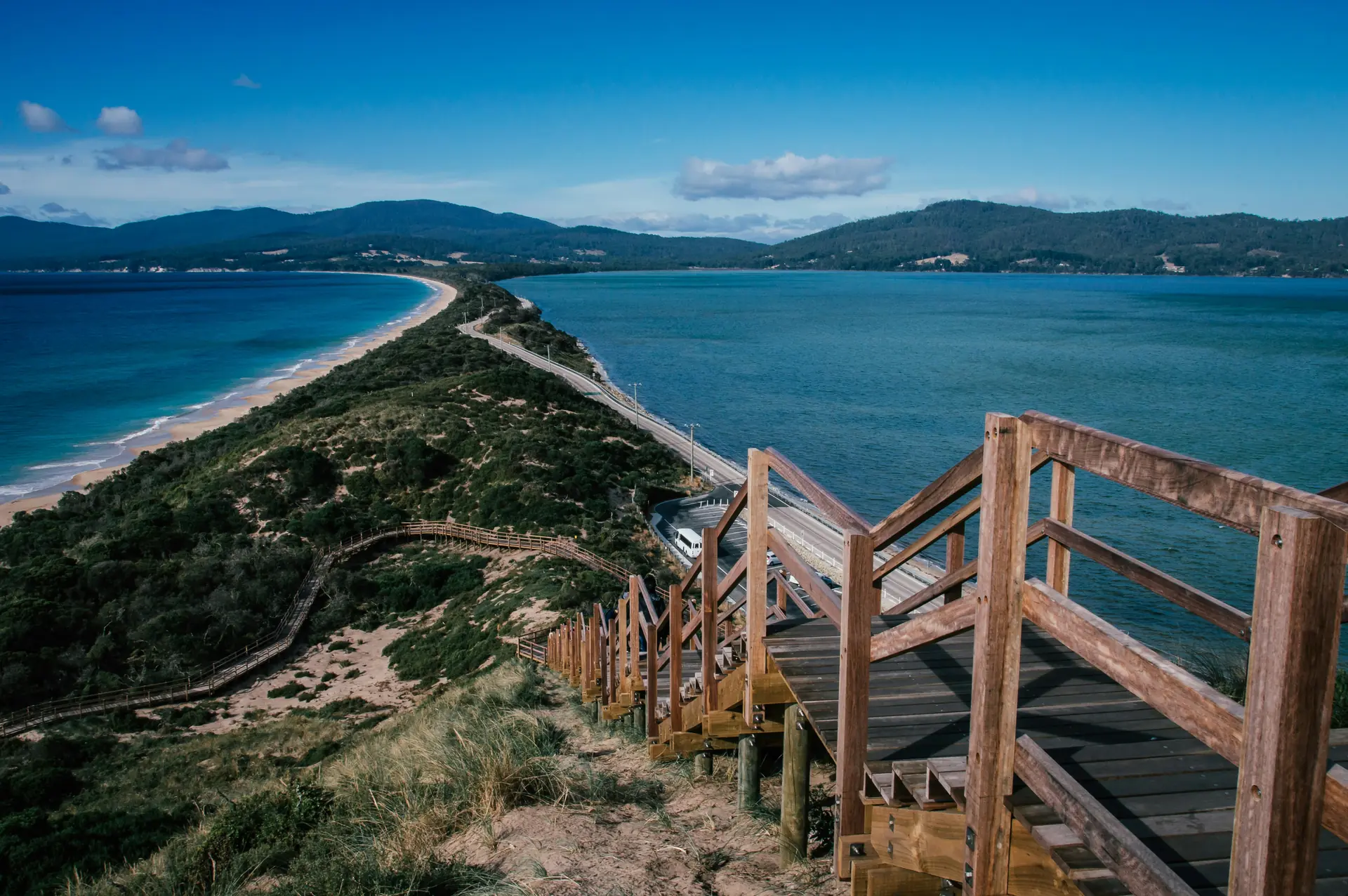
Hobart, the capital of Tasmania, offers a blend of natural beauty and cultural depth that appeals to travelers seeking both relaxation and enrichment. The city sits at the mouth of the Derwent River, where the waterfront provides scenic views of Mount Wellington’s rugged silhouette. A short walk across Salamanca Place leads to its historic sandstone warehouses, now home to art galleries, boutique shops and cafés that showcase local produce. Food enthusiasts will appreciate Hobart’s emphasis on fresh seafood and farm‑to‑table cuisine. Restaurants such as The Glass House and Franklin offer menus featuring locally sourced oysters, mussels and Tasmanian beef, while the nearby Bruny Island is renowned for its cheese and smoked salmon. For history buffs, the Maritime Museum and the National Art Gallery of Tasmania trace the region’s colonial past and contemporary artistic achievements. Outdoor lovers can explore the surrounding wilderness: Mount Wellington offers panoramic hikes, whereas the nearby Bonorong Wildlife Sanctuary provides close encounters with Tasmanian devils and other native species. The city’s compact size makes it easy to navigate on foot or by bike and its public transport network connects visitors to regional attractions like Port Arthur and the Huon Valley. Hobart’s relaxed pace, combined with its commitment to sustainability and community, creates an inviting environment for travelers who value authenticity over spectacle.
Hobart, the capital of Tasmania, is accessible via Hobart International Airport (HBA), located approximately 15 km northeast of the city center. Flights connect Hobart to major Australian cities such as Sydney, Melbourne and Brisbane, with domestic carriers like Qantas and Virgin Australia operating regular services. The airport also offers seasonal international flights during peak travel periods. For travelers arriving by sea, the Port of Hobart accommodates cruise ships and ferries from mainland Australia and New Zealand, particularly during summer months. A 20-minute taxi ride or a 40-minute bus transfer (Route 300) connects the airport to central Hobart. The city’s compact size allows for efficient public transport options, including buses and bike‑sharing schemes, to explore key attractions like Salamanca Place and Battery Point.
Hobart offers a mix of boutique inns, heritage apartments and modern serviced residences that cater to both budget travelers and luxury seekers. The waterfront precinct hosts stylish lofts with panoramic views of the Derwent River, while the historic Battery Point district features charming bed‑and‑breakfast establishments in preserved Georgian houses. For families or longer stays, self‑contained apartments in the city centre provide kitchen facilities and easy access to public transport. Boutique hostels scattered around Salamanca Market offer affordable dormitory rooms with communal kitchens for backpackers. The nearby suburbs of Sandy Bay and New Town boast upscale hotels with spa amenities, making Hobart a versatile destination for every type of visitor.
We calculate the average costs when travelling to destinations and compare those with the living costs at your home. With this you can get an estimate of how expensive or cheap the destination is for you.
To customise this, you can set up which location and price level are used for the calculations in your account settings.
The exchange rate price factor shows how expensive or cheap a currency currently is compared to its historical average. It's a quick way to see if a country is currently more or less affordable due to exchange rate changes.
To help you plan your trip, we provide estimated daily costs per person (when travelling as a pair) for different travel styles. These numbers give you an idea of what you might spend each day at this destination, including accommodation, food, transport and activities.
Additionally, we also provide average hotel costs for different travel styles to give you an estimate for the accommodation only.
Please note that these are only estimates. The real costs depend on booking times, season and other factors.
Travel style categories explained:
Backpacker:
Staying in hostels or budget hotels, cooking your own meals or eating cheap and choosing low-cost activities.
Mid-range:
Staying in mid-range hotels, eating at a mix of restaurants and casual spots and enjoying a variety of activities.
Luxury:
Staying in luxury hotels, dining out at high-end restaurants and enjoying premium experiences without worrying about the price.
| Backpacker | Mid-range | Luxury | |
|---|---|---|---|
| 💵 Total costs per day, including accommodation | |||
| 🏨 Accommodation per night, per person | |||
| 🍝 Food per day | |||
| 🚕 Transportation per day |
| 🍽️ Restaurant Dinner, per person | |
|---|---|
| 🍛 Lunch Set, per person | |
| 🍟 Fast food combo | |
| 🍝 Preparing your own food, per day | |
| ☕ Cappuccino | |
| 🍺 Beer in a restaurant, 0.5 l |
| 🚌 Public transport ticket | |
|---|---|
| 🚕 Taxi Ride, 10 km / 6 mi | |
| ⛽ Petrol, 1 l |
| 🎞️ Cinema ticket | |
|---|---|
| 👩⚕️ Doctor's consult | |
| 🤧 Cold medication | |
| 💇 Basic haircut |
Log in to add this place to a travel list and get a summary of all recommended items for your whole trip.
