












Was this page helpful?

These place ratings give you a quick overview of how well a destination matches different types of trips.
‘Best for’ scores:
The specific interest scores show where this place really shines – whether it's ideal for hiking, food & drink experiences, museums or other activities. These highlights help you understand what makes the destination special at a glance.
‘Your personal’ scores:
This reflects how well a place matches your personal preferences. You can adjust the importances of travel topics or other personal requirements categories in your account settings.
‘Suited for’ badges:
These give you a quick overview of how well a destination suits specific types of travellers, to help you find the places that match your lifestyle, preferences or travel situation.
| Power Grid: |
230 V, 50 Hz Plug: Type C , Type J
Type C:
  Read about power adapters |
|---|---|
| Currency: |
Swiss Franc (CHF) £1 ≈ CHF 1.10 |
| Cashless info: |
Rating 5/5
Switzerland is very cashless-friendly, with credit and debit cards widely accepted. Mobile payments like Apple Pay and Google Pay are also increasingly common.
Save with a travel credit card |
| eSIM providers: |
Best value: Saily Flexibility: Airalo Read our in-depth comparison |
| Tipping: | Tipping is appreciated but not mandatory in Switzerland. Most service charges are included in bills. In restaurants, rounding up to the nearest 5 CHF or leaving 5-10% is common. Taxi drivers and hotel staff appreciate small tips for exceptional service. |
|---|---|
| Public drinking: | Public drinking is allowed and socially acceptable in Switzerland, but being disruptive is frowned upon. Alcohol can be consumed in parks, trains, and outdoor events. |
| Public smoking: | Smoking is banned indoors in public places but allowed in designated areas. Outdoor smoking is common. |
| Swiss National Day (August) |
Expect celebrations, parades, and fireworks throughout the country. |
|---|---|
| Christmas (December) |
Markets and festive events are common, with tourist areas being busier than usual. |
| Easter (March/April) |
Many attractions are closed, but some areas offer special events and celebrations. |
| Emergency contact: | Emergency Number: 112 (Police, Fire, Ambulance) |
|---|---|
| Taxi apps: | Uber, Bolt |
| Other: | Switzerland is famous for its natural beauty, well-organised transport, and multilingual culture. The Swiss Travel Pass is highly recommended for tourists. |
The best times to travel section shows how the months compare for a visit, so you can find the time of year that fits what you want to do.
Background colours of the months:
The colour shows the typical temperature: yellow (hot), green (mild) and blue (cold). How strong the colour is shows the travel season: full colour means high season, soft colour means shoulder season and soft-striped means off season.
Weather symbols:
Each month has one symbol showing what the weather is typically like, such as hot and sunny, freezing or a rainy or snowy season. Use them to quickly spot months that match the weather you want, or to avoid the ones that don't.
Crowdedness:
The people icon shows how busy the place usually is. The more people, the more crowded it gets.
Additional notes:
The grey info boxes point out special things worth knowing, like recurring weather issues or seasonal events.
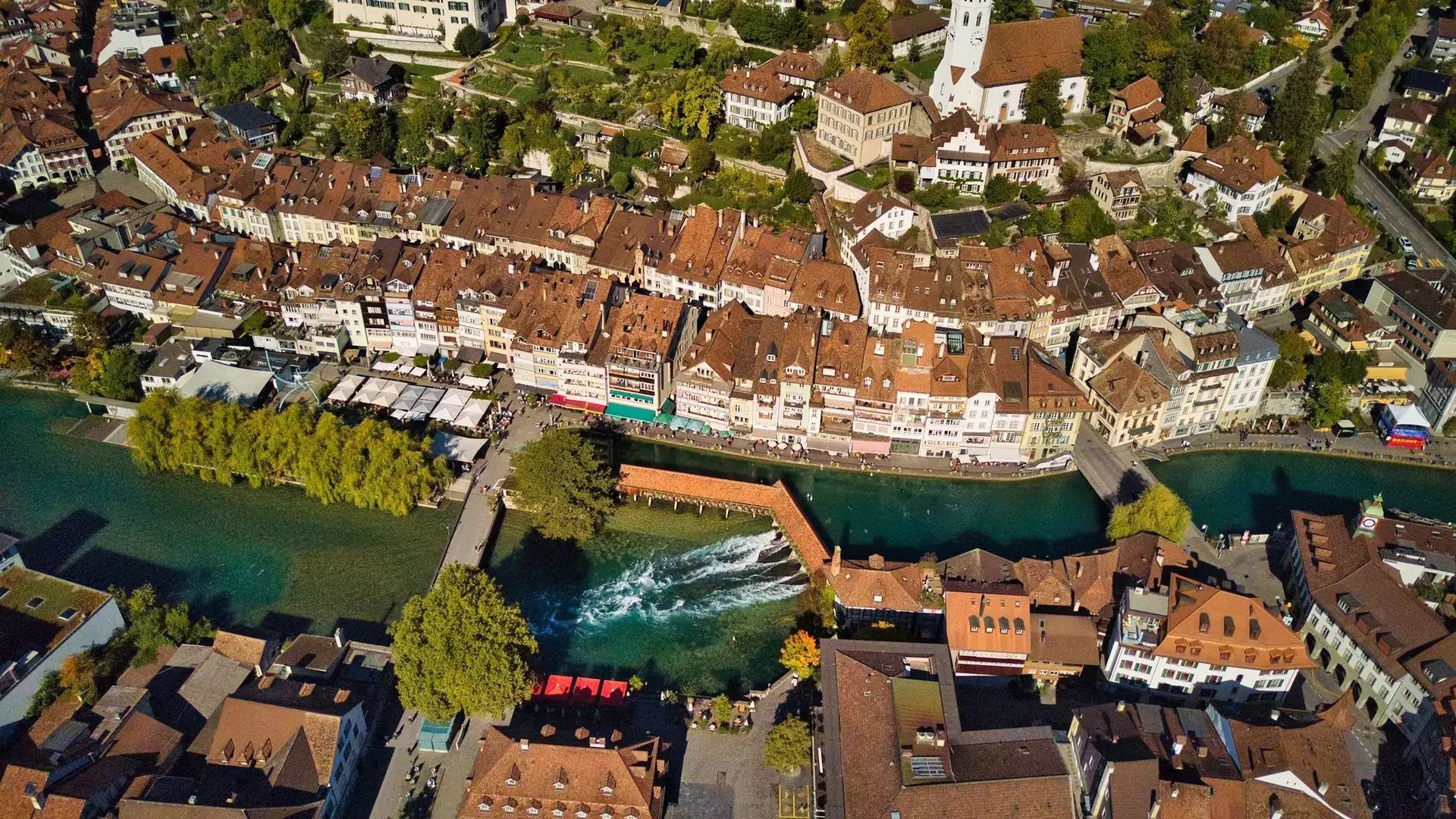
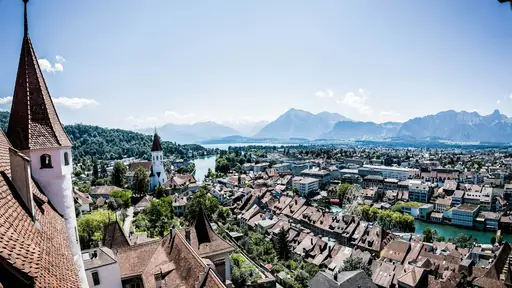
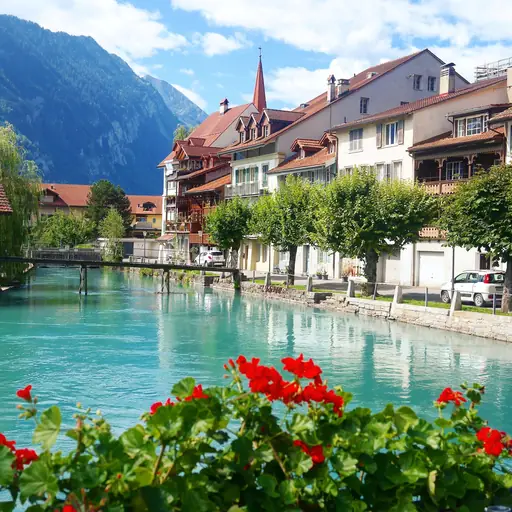
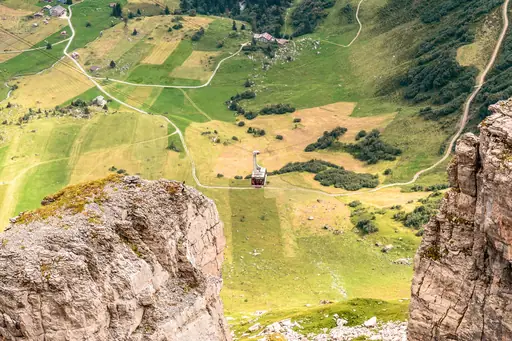
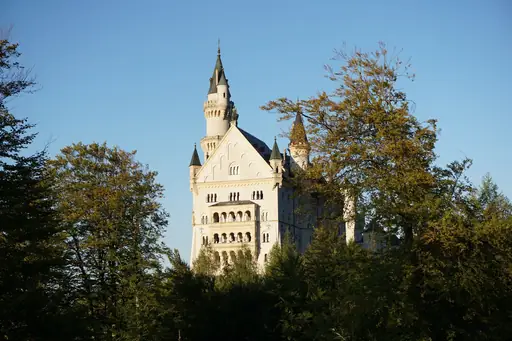
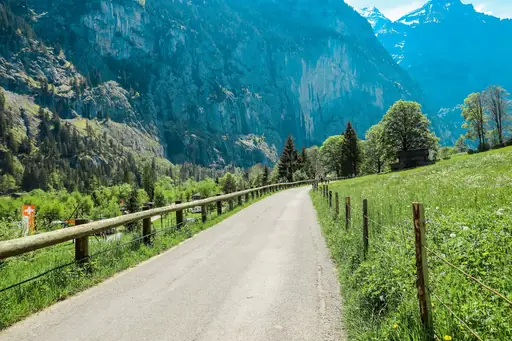
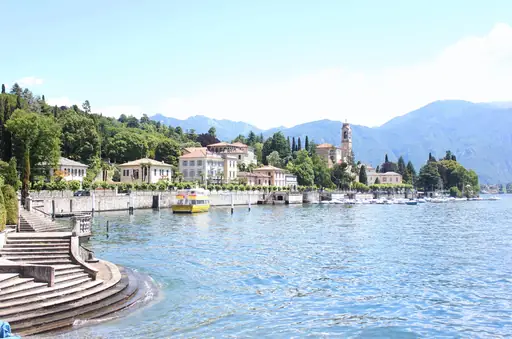
Thun is magical for anyone who loves both history and nature. The medieval old town is incredibly charming with its elevated walkways built on shop roofs, creating a unique two-tiered shopping experience. The 800-year-old castle dominates the skyline with its four white turrets and offers spectacular views of the Alps from its towers. Meanwhile, the striking turquoise Aare River flows through town, where you might even spot locals surfing the standing waves near the wooden bridges. Beyond the city itself, Lake Thun provides endless opportunities for relaxation and adventure. You can take cruises on historic paddle steamers, swim at numerous lidos or use the city as a base to explore nearby mountains like the Niesen, Stockhorn and Niederhorn. Just be aware that while Thun is less touristy than Interlaken, Switzerland's high prices apply here too and some attractions have limited opening hours outside the summer season.
Thun is easily accessible by train, with direct connections from major Swiss cities. From Bern, it's just a 17-minute ride on intercity trains or 30 minutes on the S1 suburban line. International visitors typically fly into Zurich or Geneva airports, then connect by train. If driving, Thun is accessible via the A6 motorway with two exits (Thun North and Thun South).
Thun offers a range of accommodation options from boutique hotels in historic buildings to modern establishments with lake views. While not as extensive as in larger Swiss cities, the quality is generally high. Prices tend to be steep during summer months, so booking ahead is recommended, especially if you want a room with views of the castle or lake.
We calculate the average costs when travelling to destinations and compare those with the living costs at your home. With this you can get an estimate of how expensive or cheap the destination is for you.
To customise this, you can set up which location and price level are used for the calculations in your account settings.
The exchange rate price factor shows how expensive or cheap a currency currently is compared to its historical average. It's a quick way to see if a country is currently more or less affordable due to exchange rate changes.
To help you plan your trip, we provide estimated daily costs per person (when travelling as a pair) for different travel styles. These numbers give you an idea of what you might spend each day at this destination, including accommodation, food, transport and activities.
Additionally, we also provide average hotel costs for different travel styles to give you an estimate for the accommodation only.
Please note that these are only estimates. The real costs depend on booking times, season and other factors.
Travel style categories explained:
Backpacker:
Staying in hostels or budget hotels, cooking your own meals or eating cheap and choosing low-cost activities.
Mid-range:
Staying in mid-range hotels, eating at a mix of restaurants and casual spots and enjoying a variety of activities.
Luxury:
Staying in luxury hotels, dining out at high-end restaurants and enjoying premium experiences without worrying about the price.
| Backpacker | Mid-range | Luxury | |
|---|---|---|---|
| 💵 Total costs per day, including accommodation | |||
| 🏨 Accommodation per night, per person | |||
| 🍝 Food per day | |||
| 🚕 Transportation per day |
| 🍽️ Restaurant Dinner, per person | |
|---|---|
| 🍛 Lunch Set, per person | |
| 🍟 Fast food combo | |
| 🍝 Preparing your own food, per day | |
| ☕ Cappuccino | |
| 🍺 Beer in a restaurant, 0.5 l |
| 🚌 Public transport ticket | |
|---|---|
| 🚕 Taxi Ride, 10 km / 6 mi | |
| ⛽ Petrol, 1 l |
| 🎞️ Cinema ticket | |
|---|---|
| 👩⚕️ Doctor's consult | |
| 🤧 Cold medication | |
| 💇 Basic haircut |
Log in to add this place to a travel list and get a summary of all recommended items for your whole trip.
