









Was this page helpful?

| Opening hours: |
|
||||
|---|---|---|---|---|---|
| Public website: | sagradafamilia.org |
| Power Grid: |
230 V, 50 Hz Plug: Type C , Type F
Type C:
  Read about power adapters |
|---|---|
| Currency: |
Euro (EUR) £1 ≈ €1.19 |
| Cashless info: |
Rating 5/5
Cashless payment is widely accepted in Spain, particularly in urban areas and tourist destinations. Credit and debit cards are commonly used, and mobile payment options are available in many establishments.
Save with a travel credit card |
| eSIM providers: |
Best value: Saily Flexibility: Airalo Read our in-depth comparison |
| Tipping: | Tipping is not mandatory in Spain but appreciated for good service. In restaurants, rounding up the bill or leaving 5-10% is customary. Taxi drivers and hotel staff may also be tipped, though it is less common. |
|---|---|
| Public drinking: | Public drinking is restricted in some regions, particularly in tourist-heavy cities. Local laws may vary. |
| Public smoking: | Smoking is banned indoors in public places but allowed in designated outdoor areas. |
| La Tomatina (August) |
A famous tomato-throwing festival, expect large crowds in Buñol. |
|---|---|
| Semana Santa (March/April) |
Religious parades and events make this a busy time in major cities. |
| Christmas (December) |
Markets and festive celebrations, with tourist areas becoming busier. |
| Emergency contact: | Emergency Number: 112 (Police, Fire, Ambulance) |
|---|---|
| Taxi apps: | Cabify, Bolt, Uber |
| Other: | Spain is known for its diverse culture, stunning architecture, and vibrant festivals. Public transport is reliable and efficient, making it easy to explore. |
The best times to travel section shows how the months compare for a visit, so you can find the time of year that fits what you want to do.
Background colours of the months:
The colour shows the typical temperature: yellow (hot), green (mild) and blue (cold). How strong the colour is shows the travel season: full colour means high season, soft colour means shoulder season and soft-striped means off season.
Weather symbols:
Each month has one symbol showing what the weather is typically like, such as hot and sunny, freezing or a rainy or snowy season. Use them to quickly spot months that match the weather you want, or to avoid the ones that don't.
Crowdedness:
The people icon shows how busy the place usually is. The more people, the more crowded it gets.
Additional notes:
The grey info boxes point out special things worth knowing, like recurring weather issues or seasonal events.
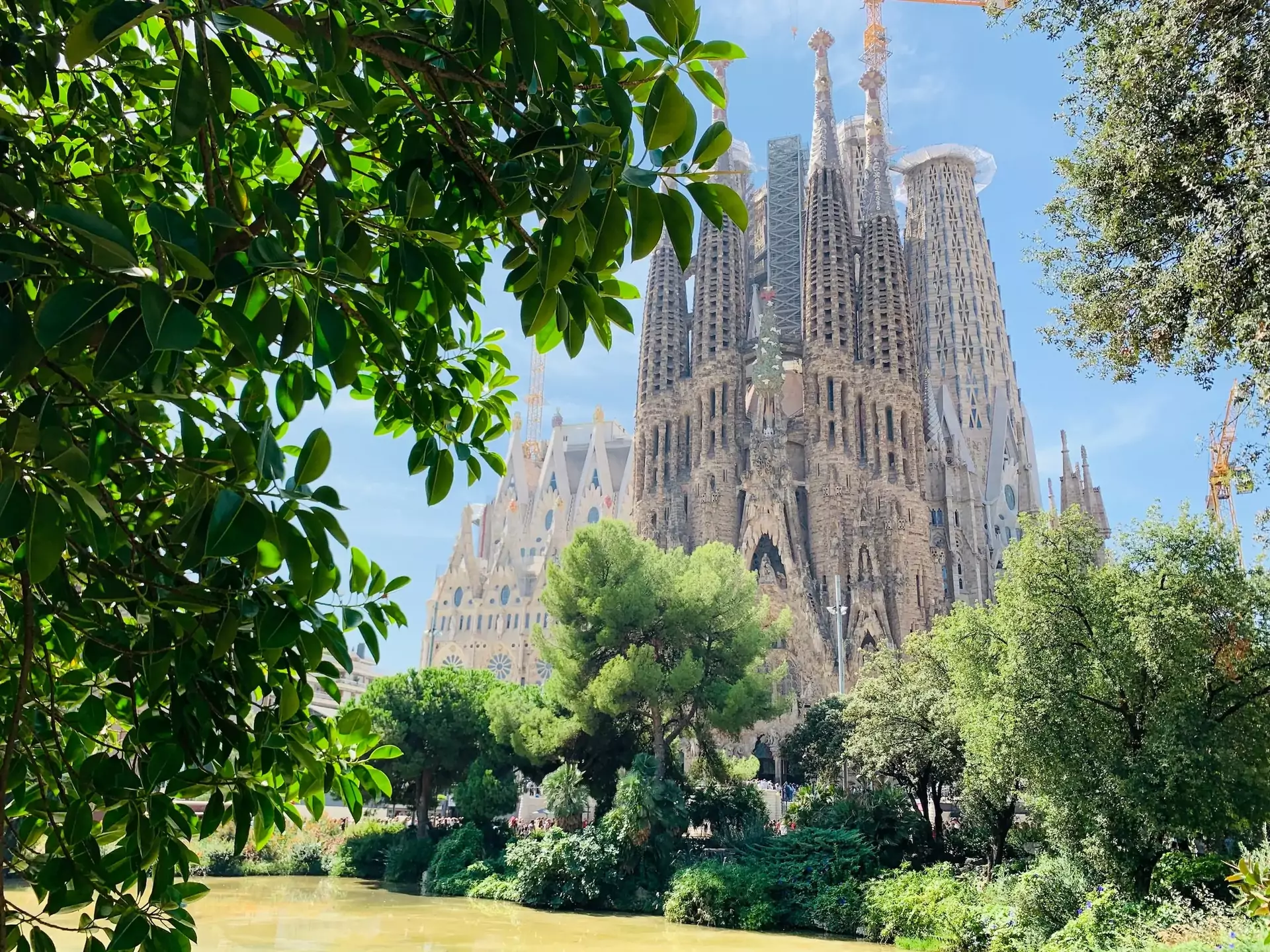
The construction of the Sagrada Família began in 1882 and continues to this day, making it one of the longest ongoing architectural projects in history. Gaudí devoted much of his life to this basilica, blending Gothic and Art Nouveau styles into an extraordinary, highly symbolic design. The basilica features three grand façades representing the birth, passion and glory of Jesus Christ, each richly decorated with detailed sculptures and symbolism.
Inside, visitors marvel at the soaring columns reminiscent of trees and the kaleidoscope of light created by magnificent stained glass windows. The basilica’s interior is designed to inspire awe and contemplation, with every detail reflecting Gaudí's vision of nature and spirituality. The towers, accessible to visitors, provide spectacular views over Barcelona.
While the basilica is an iconic symbol of Barcelona and draws millions of visitors annually, it can be very crowded, especially during peak tourist seasons. Tickets should be booked in advance to avoid long queues. The ongoing construction might affect certain viewing angles and some parts are still under scaffolding.
Overall, the Sagrada Família is a must-see cultural and spiritual landmark, combining architectural innovation, breathtaking artistry and deep religious significance.
The Sagrada Família is located in the Eixample district of Barcelona and is easily accessible by the city’s extensive public transportation system, including metro lines 2 and 5 (Sagrada Família station). Barcelona-El Prat Airport offers international flights with shuttle and taxi services to the city center. Walking or cycling within Barcelona is a popular way to explore the surroundings.
Barcelona offers diverse accommodation options near the Sagrada Família, from luxury hotels to charming boutique stays and budget hostels. Staying in the Eixample or nearby districts provides easy access to the basilica and other city attractions.
Log in to add this place to a travel list and get a summary of all recommended items for your whole trip.
We calculate the average costs when travelling to destinations and compare those with the living costs at your home. With this you can get an estimate of how expensive or cheap the destination is for you.
To customise this, you can set up which location and price level are used for the calculations in your account settings.
The exchange rate price factor shows how expensive or cheap a currency currently is compared to its historical average. It's a quick way to see if a country is currently more or less affordable due to exchange rate changes.
