




Europe › Italy › Campania › Naples › Pompeii Archaeological Site

Pompeii Archaeological Site

Scroll
Ancient City in Vesuvius’ Shadow

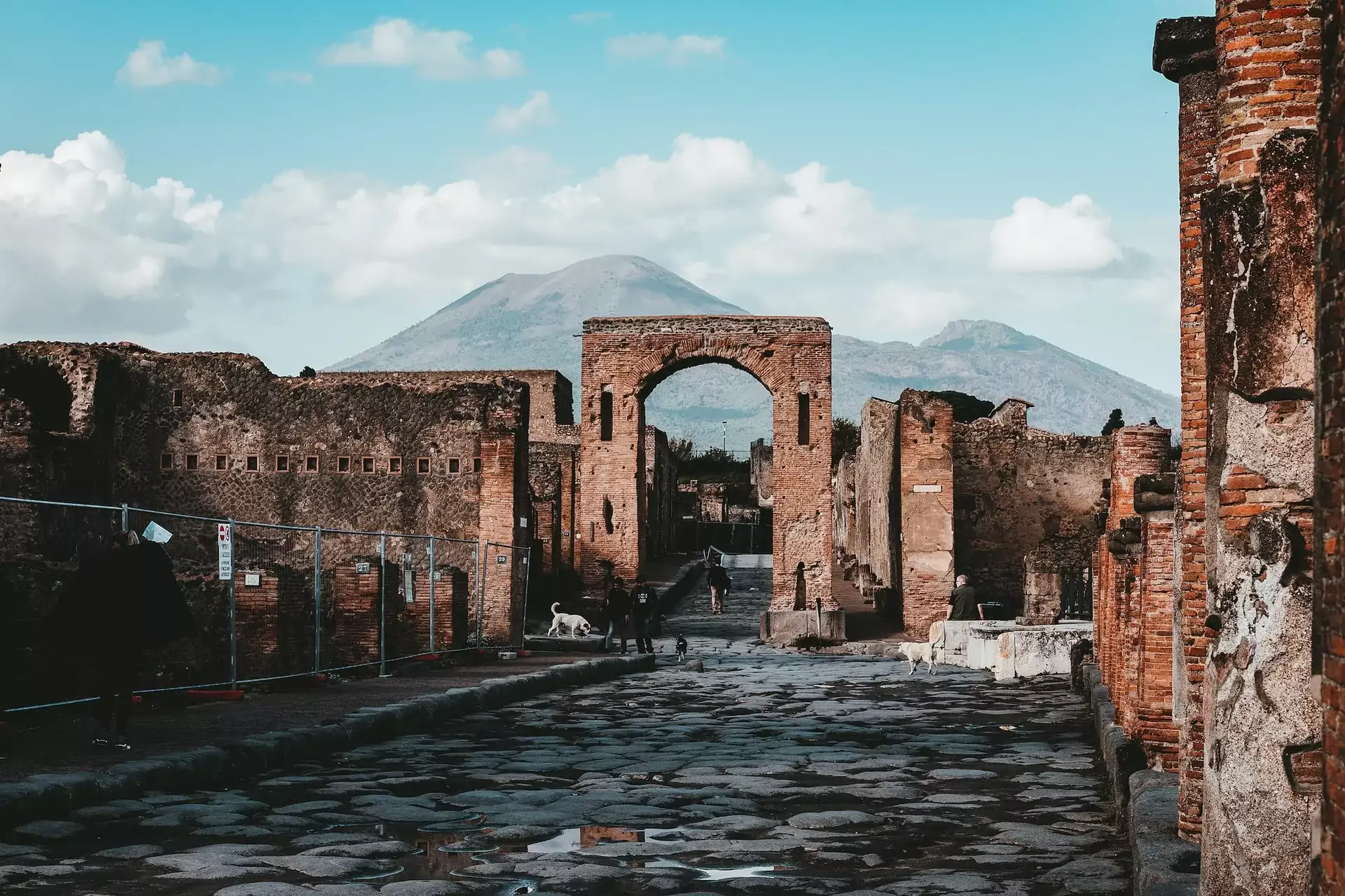
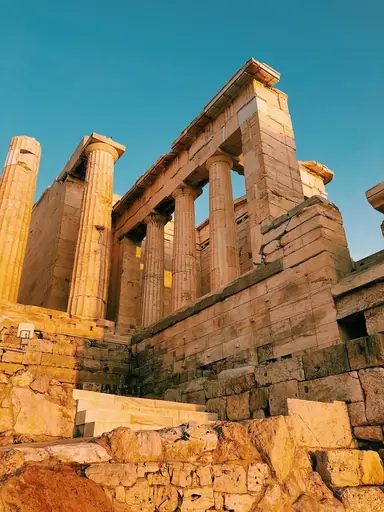
Pompeii stands near Naples in Italy’s Campania region as a preserved ancient city buried by Mount Vesuvius’ eruption in 79 AD. The site reveals streets, homes and public spaces frozen in time under layers of ash. Artifacts such as pottery, tools and wall paintings provide insight into daily life before the disaster. Visitors walk through original doorways and see plaster casts made from voids left by decomposed bodies. The archaeological park remains one of Europe’s most detailed records of Roman society.

Archaeological Site in Naples
Climate zone: Mediterranean

Mediterranean: Mid-latitude climates with hot, dry summers and mild, wet winters, typical of coastal regions around the Mediterranean Basin.

See climate table
Ticket price: $$$
$Cheap
$$Medium
$$$Expensive, upscale
$$$+Very expensive, luxury
Safety: 7.0
General Safety:7
Accessibility:7
Read details
Tourist English: 4/5
English is widely spoken in hotels, restaurants, and at the archaeological site. Most signage and tours are available in English, though a few Italian phrases are always appreciated in local shops or markets.
Last update: 12 Oct 2026
* We earn a commission from some links on this page.
Pompeii Archaeological Site Summary
World-class for ancient Roman ruins. Walk preserved streets, explore houses and temples and learn about daily life before the eruption.
Opening hours:
Mon-Sun:09:00 - 17:00
Public website: pompeiisites.org
Italy – Quick facts
Power Grid: 230 V, 50 Hz
Plug: Type C , Type F
Type C:
Diagram of a Type C power plug
Type F:
Diagram of a Type F power plug

Read about power adapters
Currency: Euro (EUR)
£1 ≈ €1.19
Cashless info: Rating 5/5
Cashless payments are widely accepted in Italy, particularly in cities. While larger establishments and chains are fully cashless, smaller shops may still prefer cash.

Save with a travel credit card
eSIM providers: Best value: Saily
Flexibility: Airalo
Read our in-depth comparison
Tipping: Tipping is customary in Italy, especially in restaurants where 10-15% is typical. Tipping for taxi drivers is usually rounded up or 5-10%. Small tips for hotel staff are also appreciated.
Public drinking: Public drinking is allowed in Italy, especially in public squares and during festivals. In some regions, it is illegal to drink alcohol in certain areas like public transport or near schools.
Public smoking: Smoking is banned in indoor public spaces and on public transport. Designated smoking areas are available outside.
Ferragosto
(August)
Many businesses close, and Italians take holidays. It’s very busy in tourist areas.
Christmas
(December)
Christmas markets and festivities are popular, expect higher prices and crowded attractions.
La Befana
(January)
Celebrated on January 6, the Epiphany is a public holiday with festive events, and some businesses close.
Emergency contact: Emergency Number: 112 (Police, Fire, Ambulance)
Taxi apps: Uber, Free Now, ItTaxi
Other: Italy's tourist infrastructure is well-developed, but some rural or historical areas may require extra planning for accessibility.
Best times to travel

The best times to travel section shows how the months compare for a visit, so you can find the time of year that fits what you want to do.

Background colours of the months:
The colour shows the typical temperature: yellow (hot), green (mild) and blue (cold). How strong the colour is shows the travel season: full colour means high season, soft colour means shoulder season and soft-striped means off season.

Weather symbols:
Each month has one symbol showing what the weather is typically like, such as hot and sunny, freezing or a rainy or snowy season. Use them to quickly spot months that match the weather you want, or to avoid the ones that don't.

Crowdedness:
The people icon shows how busy the place usually is. The more people, the more crowded it gets.

Additional notes:
The grey info boxes point out special things worth knowing, like recurring weather issues or seasonal events.

for Pompeii Archaeological Site, Italy
🌤️
Jan
🌤️
Feb
☀️
Mar
☀️
Apr
☀️
May
☀️
Jun
🔥
Jul
🔥
Aug
☀️
Sep
☀️
Oct
🌦️
Nov
☀️
Dec
High season: April - Oct.
Shoulder season: March
Tap on a month for more info Hover over a month for more info
Last entry about 90 minutes before closing, and the site closes earlier from November to March
Free entry on the first Sunday of each month, with very long queues

Pompeii stands as a remarkable window into ancient Roman life. The site preserves streets, homes and public spaces exactly as they existed before the eruption of Mount Vesuvius in 79 CE. Visitors walk along stone paths where merchants once sold goods and families gathered for meals. The level of detail in these ruins makes history feel immediate and tangible.

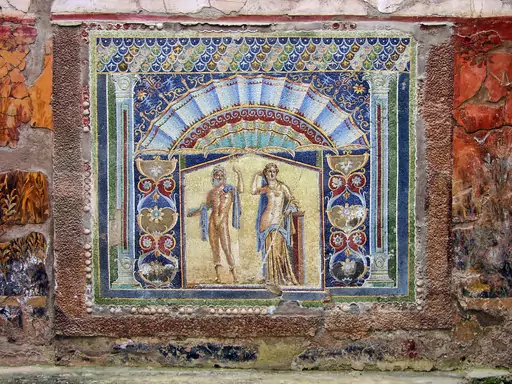
The archaeological park covers dozens of acres with buildings like the Forum, temples and amphitheaters still standing in recognizable form. Frescoes on walls show daily activities while mosaics reveal artistic skill. A plaster cast of a resident captures a moment frozen in time showing how people lived and died during the disaster. Every structure tells part of a larger story about society, trade and culture.

Nearby towns such as Naples provide easy access to transportation and accommodations. Public buses connect the city center with Pompeii train station making entry straightforward for travelers. Local guides share insights that go beyond guidebooks highlighting lesser-known corners and explaining historical context clearly. Many tours include stops at cafes serving regional food so visitors can taste local flavors after exploring ruins.

Visiting requires planning due to crowds especially in summer months. Early arrival helps avoid peak heat and allows more time for walking between sites without rushing. Wear comfortable shoes as uneven paths and stone steps are common across the area. Photography is allowed but flash should be avoided inside certain buildings to protect fragile artifacts.

Why travel to Pompeii Archaeological Site?

Pompeii is one of the world’s most fascinating archaeological sites, offering a rare chance to walk through a Roman city almost as it was two millennia ago. Beyond the ruins, the modern city charms with its basilica, bustling markets and welcoming trattorias. You’ll find a unique mix of ancient and modern, with easy access to Naples, the Amalfi Coast and Mount Vesuvius itself. But be prepared: the archaeological site is vast, mostly exposed to the sun and the ground is uneven – good shoes, water and sun protection are essential. Summer can be crowded and extremely hot, while some areas may be closed for restoration. Plan for a full day if you want to do the city justice.

🏯Places worth seeing
  • 1 Amphitheatre of Pompeii
  • 2 House of the Faun
  • 3 Lupanar (brothel)
  • 4 Porta Marina
  • 5 Temple of Apollo
  • 6 Villa of the Mysteries
🏞️Natural landmarks
  • 1 Mount Vesuvius
  • 2 Sarno
🎈Events
  • Feast of the Virgin of the Rosary (October)
  • Summer concerts in the ruins
  • Theatrical performances at the Amphitheatre
  • Religious processions (Easter, Christmas)
  • Pompeii Marathon
  • Flower festivals in spring
  • European Heritage Days
  • Wine festivals in autumn
  • Local food fairs
  • Open-air cinema nights

Knowledge before you go

  • Arrive at opening time; shade is limited inside.
  • Wear sturdy shoes; ancient streets are uneven, slippery and hard underfoot.
  • Download an offline map; the site is huge and easy to mis-navigate.
  • Pair Pompeii with Naples Archaeological Museum to see key frescoes and artifacts removed from the ruins.

How to travel to Pompeii Archaeological Site

Pompeii is easily reached by train: the Circumvesuviana line from Naples or Sorrento stops at Pompei Scavi–Villa dei Misteri, close to the ruins. Regional trains and buses serve the main Pompei station. Naples International Airport is about 30 km away, with shuttle and taxi options.

Access summary

  • From Naples Airport (NAP): Shuttle or taxi, about 25–40 minutes.
  • From Naples city: Circumvesuviana train to Pompei Scavi, roughly 30–40 minutes.
  • From Sorrento: Circumvesuviana train direct to Pompei Scavi, about 30–40 minutes.

Where to stay near Pompeii Archaeological Site

Pompei offers a range of hotels, B&Bs and guesthouses-many within walking distance of the ruins and train station. For a quieter stay, look for accommodations in the surrounding countryside or in nearby towns like Sorrento. Book ahead in peak season.

How to get around Pompeii Archaeological Site

The city and ruins are best explored on foot – bring sturdy shoes for uneven roads. The archaeological park has several entrances and is well-signposted, but distances can be long. Local buses and taxis connect the train station, city center and ruins. Water taps are available in the ruins, but seating and shade are limited.

Packing recommendations for Pompeii Archaeological Site

Log in to add this place to a travel list and get a summary of all recommended items for your whole trip.

Budget snapshot
Costs compared to home

We calculate the average costs when travelling to destinations and compare those with the living costs at your home. With this you can get an estimate of how expensive or cheap the destination is for you.

To customise this, you can set up which location and price level are used for the calculations in your account settings.

-21 %
Daily expenses in the region are around 21% lower than the average across United States. That means you'll spend considerably less on meals and getting around.
Exchange rate trend

The exchange rate price factor shows how expensive or cheap a currency currently is compared to its historical average. It's a quick way to see if a country is currently more or less affordable due to exchange rate changes.

-3 %
Your exchange rate (GBP to EUR) is 3% better than in recent years. That means travelling now costs around the same compared to the past.

Safety information overview

General safety
7
Naples’ Pompeii archaeological site remains generally safe for visitors, with well‑patrolled entrances and clear signage. Petty theft can occur in crowded areas; keep valuables secure and stay alert. Follow local guidelines, avoid isolated spots after dark and heed staff instructions.
Accessi­bility
7
Pompeii’s archaeological site offers accessible pathways and ramps, making it welcoming for visitors with mobility aids. However, uneven stone surfaces and narrow stairways can pose challenges. Prioritize guided tours or wheelchair rentals to navigate the ruins safely and comfortably.

Looking for inspiration?

Discover
Top ancient ruins destinations and archaeological sites
The world's most significant ancient ruin destinations range from the ceremonial complexes of early river civilisations and the monumental remains of classical empires to the less…
Read more
Discover
Top historical destinations and historic sites
The most compelling history destinations are places where the past is still physically present and legible in the landscape, the architecture and the daily life of the people who…
Read more
Discover
Best ancient ruins destinations in Europe
Europe's ancient sites span an exceptional chronological range, from the megalithic stone structures of the Atlantic fringe that predate the classical world by millennia to the…
Read more
Discover
Best historical destinations in Europe
Europe is one of the most historically dense regions on earth, where the evidence of successive civilisations, empires, conflicts and cultural movements is layered into the…
Read more
Discover
Most beautiful beaches and coastal escapes
For a lot of people, a beach is the whole point of a holiday, but what makes a beach day perfect really depends on personal taste. Some travellers want isolation and the feeling…
Read more
Discover
Stunning national parks and wilderness areas
National parks exist because someone decided that certain landscapes were too important to lose. The best of them protect ecosystems, wildlife and natural processes that would…
Read more
Discover
Intimate escapes and romantic getaways
The most memorable trips for couples tend to have less to do with luxury and more to do with the quality of shared experience. A place that slows you down, removes the usual…
Read more
Was this page helpful?
Feedback

