









Was this page helpful?

| Public website: | www.parconazionaledelvesuvio.it |
|---|
| Power Grid: |
230 V, 50 Hz Plug: Type C , Type F
Type C:
  Read about power adapters |
|---|---|
| Currency: |
Euro (EUR) £1 ≈ €1.19 |
| Cashless info: |
Rating 5/5
Cashless payments are widely accepted in Italy, particularly in cities. While larger establishments and chains are fully cashless, smaller shops may still prefer cash.
Save with a travel credit card |
| eSIM providers: |
Best value: Saily Flexibility: Airalo Read our in-depth comparison |
| Tipping: | Tipping is customary in Italy, especially in restaurants where 10-15% is typical. Tipping for taxi drivers is usually rounded up or 5-10%. Small tips for hotel staff are also appreciated. |
|---|---|
| Public drinking: | Public drinking is allowed in Italy, especially in public squares and during festivals. In some regions, it is illegal to drink alcohol in certain areas like public transport or near schools. |
| Public smoking: | Smoking is banned in indoor public spaces and on public transport. Designated smoking areas are available outside. |
| Ferragosto (August) |
Many businesses close, and Italians take holidays. It’s very busy in tourist areas. |
|---|---|
| Christmas (December) |
Christmas markets and festivities are popular, expect higher prices and crowded attractions. |
| La Befana (January) |
Celebrated on January 6, the Epiphany is a public holiday with festive events, and some businesses close. |
| Emergency contact: | Emergency Number: 112 (Police, Fire, Ambulance) |
|---|---|
| Taxi apps: | Uber, Free Now, ItTaxi |
| Other: | Italy's tourist infrastructure is well-developed, but some rural or historical areas may require extra planning for accessibility. |
The best times to travel section shows how the months compare for a visit, so you can find the time of year that fits what you want to do.
Background colours of the months:
The colour shows the typical temperature: yellow (hot), green (mild) and blue (cold). How strong the colour is shows the travel season: full colour means high season, soft colour means shoulder season and soft-striped means off season.
Weather symbols:
Each month has one symbol showing what the weather is typically like, such as hot and sunny, freezing or a rainy or snowy season. Use them to quickly spot months that match the weather you want, or to avoid the ones that don't.
Crowdedness:
The people icon shows how busy the place usually is. The more people, the more crowded it gets.
Additional notes:
The grey info boxes point out special things worth knowing, like recurring weather issues or seasonal events.
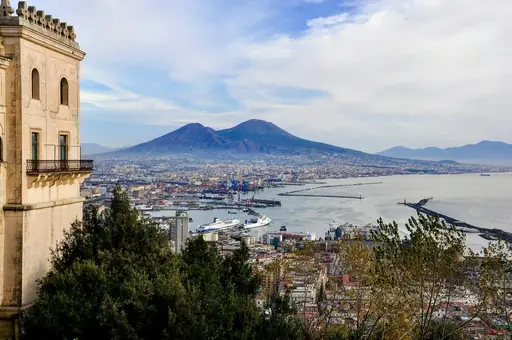
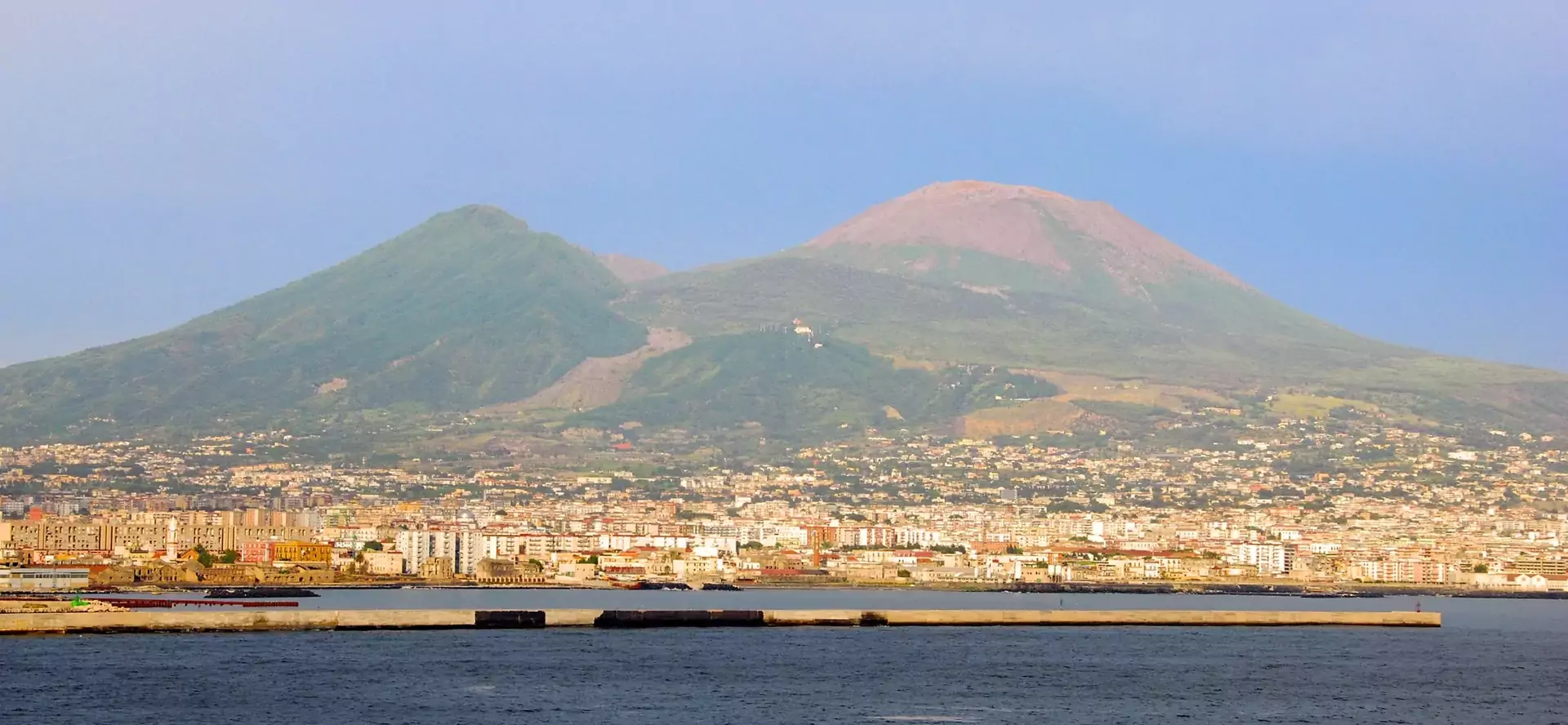
Mount Vesuvius towers as an active stratovolcano standing about 1,281 meters high overlooking the Bay of Naples. Its most famous eruption in 79 AD devastated nearby Roman towns, preserving them under volcanic ash. Today, the volcano is a major tourist destination and a symbol of natural power and historical tragedy.
The hike to the summit is roughly 4 kilometers round-trip with an elevation gain of about 140 meters. Paths include steep switchbacks, stairs and sometimes loose volcanic gravel. The last stretch reveals the crater’s edge, offering panoramic views of Naples, the surrounding countryside and on clear days, the distant Apennine mountains.
The crater itself is about 300 meters wide and 250 meters deep, fostering a stark, lunar landscape. The surrounding Vesuvius National Park offers several marked trails and picnic areas amid Mediterranean vegetation.
Visitors should be cautious of weather changes, slippery paths and moderate physical demands of the hike. Carry water, wear sturdy shoes and start early to avoid the midday heat. As an active volcano near densely populated areas, Vesuvius is closely monitored for any signs of eruption by scientists.
Mount Vesuvius can be reached via Naples International Airport, followed by a train or bus to Pompeii or Ercolano. From there, local buses or guided tours take visitors to the Vesuvius National Park entrance. Private cars and taxis are also options. The hike to the summit starts from the park entrance about 1,050 meters above sea level.
Nearby towns such as Naples, Pompeii and Sorrento offer a wide range of accommodations from luxury hotels to guesthouses, providing easy access to Mount Vesuvius and surrounding attractions.
Log in to add this place to a travel list and get a summary of all recommended items for your whole trip.
We calculate the average costs when travelling to destinations and compare those with the living costs at your home. With this you can get an estimate of how expensive or cheap the destination is for you.
To customise this, you can set up which location and price level are used for the calculations in your account settings.
The exchange rate price factor shows how expensive or cheap a currency currently is compared to its historical average. It's a quick way to see if a country is currently more or less affordable due to exchange rate changes.
