












Was this page helpful?

These place ratings give you a quick overview of how well a destination matches different types of trips.
‘Best for’ scores:
The specific interest scores show where this place really shines – whether it's ideal for hiking, food & drink experiences, museums or other activities. These highlights help you understand what makes the destination special at a glance.
‘Your personal’ scores:
This reflects how well a place matches your personal preferences. You can adjust the importances of travel topics or other personal requirements categories in your account settings.
‘Suited for’ badges:
These give you a quick overview of how well a destination suits specific types of travellers, to help you find the places that match your lifestyle, preferences or travel situation.
| Power Grid: |
230 V, 50 Hz Plug: Type C , Type F
Type C:
  Read about power adapters |
|---|---|
| Currency: |
Euro (EUR) £1 ≈ €1.19 |
| Cashless info: |
Rating 4/5
Cards are widely accepted, especially in urban areas, but small establishments may prefer cash. Be prepared for occasional cash-only situations.
Save with a travel credit card |
| eSIM providers: |
Best value: Saily Flexibility: Airalo Read our in-depth comparison |
| Tipping: | Tipping is common in restaurants, typically 5-10%. For taxis, it is customary to round up to the nearest euro. Tipping in cash is more common than adding it to card payments. |
|---|---|
| Public drinking: | Public drinking is allowed in most parts of Germany, especially in beer gardens and public events, but some local regulations may restrict it in specific areas. |
| Public smoking: | Smoking is prohibited indoors in public places such as restaurants, trains, and buses. Designated smoking areas are available outside many buildings. |
| Oktoberfest (September) |
Huge crowds in Munich. Expect high hotel rates and crowded transport. |
|---|---|
| Christmas (December) |
Christmas markets are popular, expect crowded cities and higher prices. |
| Labour Day (May) |
Many shops are closed, and there are celebrations throughout the country. |
| Emergency contact: | Police: 110, Emergency Number: 112 (Fire, Ambulance) |
|---|---|
| Taxi apps: | Uber, Free Now, myTaxi |
| Other: | Germany is well-equipped for tourists, with good public transport and high-quality facilities. However, be prepared for language barriers in some rural areas. |
The best times to travel section shows how the months compare for a visit, so you can find the time of year that fits what you want to do.
Background colours of the months:
The colour shows the typical temperature: yellow (hot), green (mild) and blue (cold). How strong the colour is shows the travel season: full colour means high season, soft colour means shoulder season and soft-striped means off season.
Weather symbols:
Each month has one symbol showing what the weather is typically like, such as hot and sunny, freezing or a rainy or snowy season. Use them to quickly spot months that match the weather you want, or to avoid the ones that don't.
Crowdedness:
The people icon shows how busy the place usually is. The more people, the more crowded it gets.
Additional notes:
The grey info boxes point out special things worth knowing, like recurring weather issues or seasonal events.
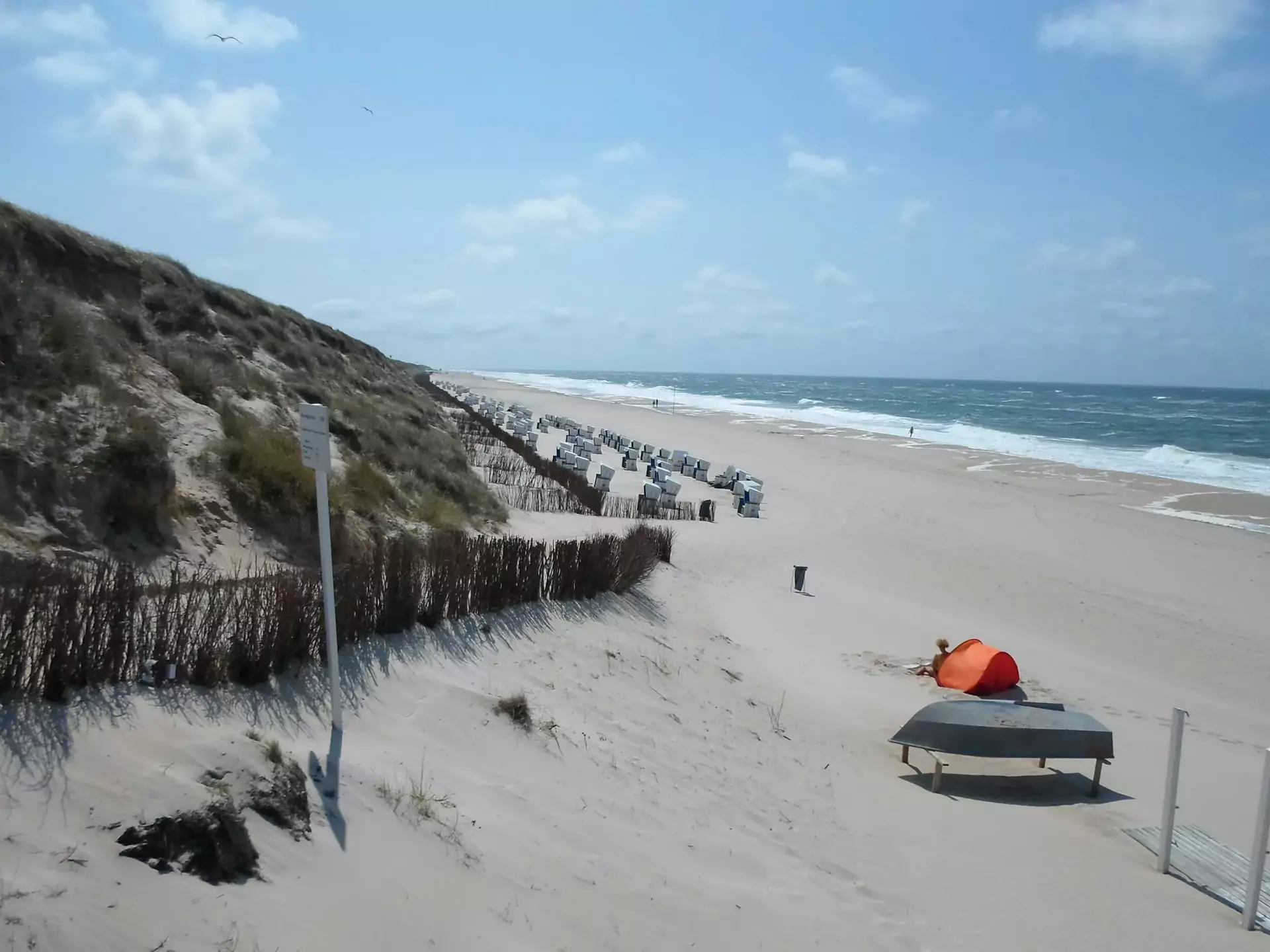
The west coast is the main reason to come. A wide sandy beach runs along almost the whole island with surf, strong wind and long walks between Hörnum in the south and List in the north. Westerland has the main beach promenade and Brandenburger Strand hosts the Windsurf World Cup. Between Wenningstedt and Kampen the beach is backed by the Rotes Kliff, a red cliff that makes a good walk with sea views. The two ends of the island are protected landscapes. In the north the dunes and heath around List include a large migrating dune. The Lister Ellenbogen peninsula has a lighthouse and open sand. In the south the Hörnum Odde is a nature reserve of dunes and heath. The Rantum basin is a bird sanctuary. On the east side the Wadden Sea is a UNESCO World Heritage Site. Low tide exposes the mudflats and boat trips go from List and Hörnum to see seals on the sandbanks. Keitum on the Wadden Sea side has reed-thatched Frisian houses and small museums such as the Altfriesisches Haus. It was the island's most important village until the late 19th century. Kampen has a name for its celebrity crowd and restaurants. Sylt is a destination in its own right rather than a stopover and it has a reputation as one of the pricier places in Germany. A long weekend covers the beaches and a village or two. A week leaves time for both ends of the island. Late autumn and winter are far quieter with empty beaches and storms on the west coast.
Most people reach Sylt by train over the Hindenburgdamm, a railway causeway opened in 1927. Regional trains run from Hamburg-Altona to Westerland in about three and a half hours. Direct IC trains serve several larger German cities. If you drive you put the car on a shuttle train at the terminal in Niebüll and cross to Westerland in about 35 minutes. Two operators run these trains, the red DB Sylt Shuttle and the blue RDC Autozug. Niebüll is around two hours by road from Hamburg. Reserve a slot ahead in peak periods because waits at the terminals can be long. From Denmark the FRS Syltfähre sails from Havneby on Rømø to List up to 32 times a day and takes about 40 minutes. Pedestrians and cyclists can board as well as cars. Drivers reach Rømø over a free causeway from the Danish mainland before boarding. Sylt Airport (GWT) is in Tinnum, a short taxi ride from Westerland. Flights come from cities such as Düsseldorf, Stuttgart, Vienna, Zurich and Luxembourg. Some routes are seasonal.
The island has hotels, holiday apartments, guesthouses and campsites spread across its villages so the choice mostly comes down to which village suits your trip. Westerland is the practical base with the station, shops, restaurants and a beach promenade. It works well if you don't have a car. Wenningstedt and Kampen are next to the red cliff and Kampen is known as the most upscale address. Keitum on the east side is quieter and has thatched Frisian houses. List in the north and Hörnum in the south are good for nature and calm though they're far from the middle of the island. Tinnum and Braderup tend to be cheaper than the beach villages. Prices are high in general. Summer, school holidays and the weeks around Christmas and New Year fill up early so it's worth booking well ahead. Campervans may stay overnight only on the official campsites.
Sylt has no single centre. Westerland is roughly in the middle of the west coast with the main station and bus hub. Wenningstedt and Kampen are to the north and Rantum and Hörnum to the south. List is at the northern tip with the ferry port while Keitum and the other east side villages are on the Wadden Sea. Buses and bikes cover most of what you'd want to see. A car is mainly useful for the far ends of the island.
Buses:
The island buses are run by the SVG. Line 1 goes between Westerland and List in about 30 minutes. Line 2 goes south through Rantum to Hörnum while other lines serve the east side and the beaches. You can buy tickets from the driver or in the SyltGO app. Guests of taking-part accommodation ride free during their stay.
Bikes:
Cycling is a popular way to get around and bikes can be hired in the main villages and at the airport. Westerland to Keitum or Tinnum is an easy ride on a calm day. Wind from the west can make the way back from the coast slow.
Car:
Hire cars are available on the island and make most sense for the north and south ends. Parking near the beaches is limited and mostly paid in season.
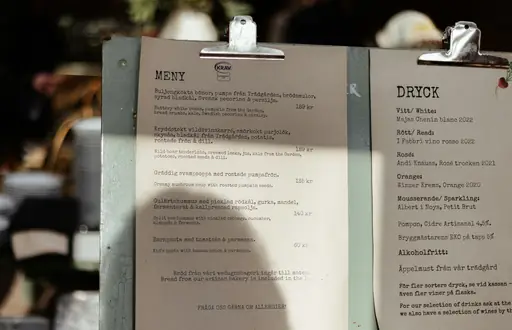
Food on Sylt centres on North Sea fish and seafood with lamb from the salt marshes as the main meat. Places to eat range from beach kiosks and harbour stands to fine dining. Prices are higher than on the mainland. Supermarkets in Westerland and the larger villages make self-catering easy if your apartment has a kitchen. Smokehouses at the harbours sell fresh and smoked fish.
Fischbrötchen:
A bread roll filled with fish such as pickled herring, smoked salmon or North Sea shrimp is the standard quick lunch. You'll find them at harbour stands and in town centres.
Oysters:
Oysters are farmed in the Wadden Sea near List and sold fresh at the shore and in restaurants. They're a local speciality and a common starter on island menus.
Salt-marsh lamb:
Lamb from sheep that graze on coastal salt marshes has a distinct and slightly salty taste. It appears on many restaurant menus on the island.
Pharisäer:
This North Frisian coffee comes with rum and whipped cream and is often served on cold days at cafes and beach restaurants.
We calculate the average costs when travelling to destinations and compare those with the living costs at your home. With this you can get an estimate of how expensive or cheap the destination is for you.
To customise this, you can set up which location and price level are used for the calculations in your account settings.
The exchange rate price factor shows how expensive or cheap a currency currently is compared to its historical average. It's a quick way to see if a country is currently more or less affordable due to exchange rate changes.
To help you plan your trip, we provide estimated daily costs per person (when travelling as a pair) for different travel styles. These numbers give you an idea of what you might spend each day at this destination, including accommodation, food, transport and activities.
Additionally, we also provide average hotel costs for different travel styles to give you an estimate for the accommodation only.
Please note that these are only estimates. The real costs depend on booking times, season and other factors.
Travel style categories explained:
Backpacker:
Staying in hostels or budget hotels, cooking your own meals or eating cheap and choosing low-cost activities.
Mid-range:
Staying in mid-range hotels, eating at a mix of restaurants and casual spots and enjoying a variety of activities.
Luxury:
Staying in luxury hotels, dining out at high-end restaurants and enjoying premium experiences without worrying about the price.
| Backpacker | Mid-range | Luxury | |
|---|---|---|---|
| 💵 Total costs per day, including accommodation | |||
| 🏨 Accommodation per night, per person | |||
| 🍝 Food per day | |||
| 🚕 Transportation per day |
| 🍽️ Restaurant Dinner, per person | |
|---|---|
| 🍛 Lunch Set, per person | |
| 🍟 Fast food combo | |
| 🍝 Preparing your own food, per day | |
| ☕ Cappuccino | |
| 🍺 Beer in a restaurant, 0.5 l |
| 🚌 Public transport ticket | |
|---|---|
| 🚕 Taxi Ride, 10 km / 6 mi | |
| ⛽ Petrol, 1 l |
| 🎞️ Cinema ticket | |
|---|---|
| 👩⚕️ Doctor's consult | |
| 🤧 Cold medication | |
| 💇 Basic haircut |
Log in to add this place to a travel list and get a summary of all recommended items for your whole trip.
