








Was this page helpful?

These place ratings give you a quick overview of how well a destination matches different types of trips.
‘Best for’ scores:
The specific interest scores show where this place really shines – whether it's ideal for hiking, food & drink experiences, museums or other activities. These highlights help you understand what makes the destination special at a glance.
‘Your personal’ scores:
This reflects how well a place matches your personal preferences. You can adjust the importances of travel topics or other personal requirements categories in your account settings.
‘Suited for’ badges:
These give you a quick overview of how well a destination suits specific types of travellers, to help you find the places that match your lifestyle, preferences or travel situation.
| Power Grid: |
230 V, 50 Hz Plug: Type C , Type E
Type C:
  Read about power adapters |
|---|---|
| Currency: |
Euro (EUR) £1 ≈ €1.19 |
| Cashless info: |
Rating 5/5
Cashless payments are widely accepted, especially in cities and tourist areas.
Save with a travel credit card |
| eSIM providers: |
Best value: Saily Flexibility: Airalo Read our in-depth comparison |
| Tipping: | Tipping is optional but appreciated in restaurants (5-10%) and for exceptional service. |
|---|---|
| Public drinking: | Public drinking is allowed in designated areas, but restrictions apply in some cities. |
| Public smoking: | Smoking is banned in indoor public spaces but common in outdoor cafes. |
| Bastille Day (July) |
Parades and fireworks occur nationwide. |
|---|---|
| Easter (March/April) |
Cultural celebrations and closures. |
| Christmas (December) |
Markets and festive events. |
| Emergency contact: | Emergency Numbers: 112 (EU emergency), 15 (Ambulance), 17 (Police), 18 (Fire) |
|---|---|
| Taxi apps: | Uber, Bolt, Heetch |
| Other: | France offers diverse experiences, from art and culture to nature and cuisine. Be cautious in crowded areas. |
The best times to travel section shows how the months compare for a visit, so you can find the time of year that fits what you want to do.
Background colours of the months:
The colour shows the typical temperature: yellow (hot), green (mild) and blue (cold). How strong the colour is shows the travel season: full colour means high season, soft colour means shoulder season and soft-striped means off season.
Weather symbols:
Each month has one symbol showing what the weather is typically like, such as hot and sunny, freezing or a rainy or snowy season. Use them to quickly spot months that match the weather you want, or to avoid the ones that don't.
Crowdedness:
The people icon shows how busy the place usually is. The more people, the more crowded it gets.
Additional notes:
The grey info boxes point out special things worth knowing, like recurring weather issues or seasonal events.
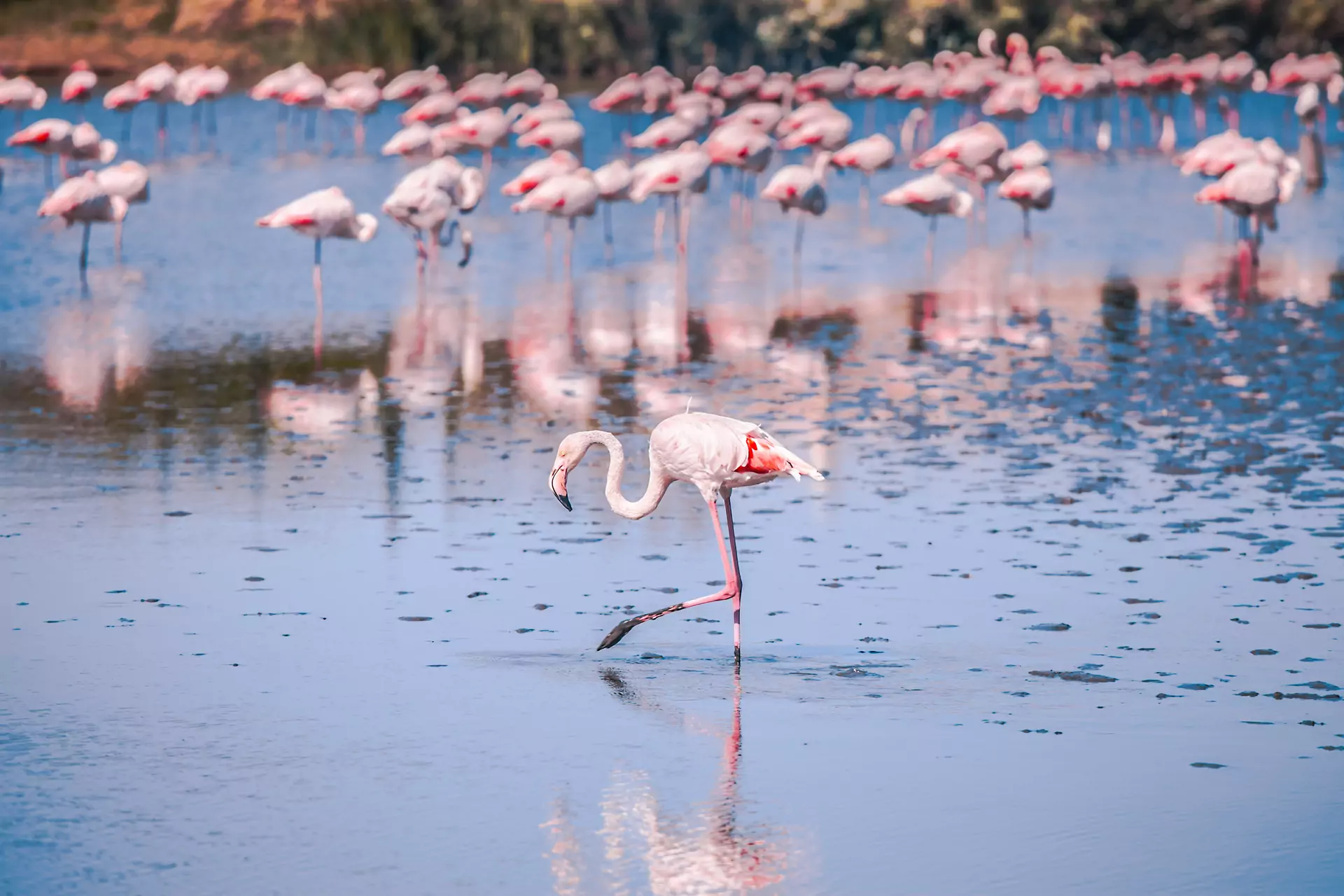
The Camargue, a low‑lying delta on France’s Mediterranean coast, offers a unique natural experience that blends wetlands, salt flats and sandy beaches. Its extensive network of marshes supports an impressive array of wildlife, including the iconic white horses, black bulls and numerous bird species such as flamingos, herons and pelicans. The reserve’s diverse habitats – salt pans, reed beds and lagoons – provide a living laboratory for ecological study and observation. Visitors can explore the Camargue on foot or by bike along well‑marked trails that wind through the wetlands, offering close encounters with wildlife in their natural settings. Guided tours often include visits to traditional fishing villages where local fishermen still use age‑old techniques, giving insight into sustainable practices that coexist with conservation efforts. The region’s climate is mild, with warm summers and cool winters, making it suitable for year‑round travel. The salt flats reflect the sky, creating striking visual contrasts that appeal to photographers and nature lovers alike. Local markets sell fresh seafood and regional products such as olive oil and honey, allowing travelers to taste the flavors of the delta. Overall, the Camargue’s combination of ecological diversity, cultural heritage and accessible landscapes makes it an appealing destination for those interested in experiencing a distinctive natural environment without the crowds found at more commercialized sites.
The Camargue, a vast regional nature reserve in southern France, is accessible primarily by road and rail. The nearest major train station is in Arles or Marseille, from which visitors can take regional buses or rent a car to reach the area. A few rural bus lines connect nearby towns such as Saintes-Maries-de-la-Mer and Salin-de-Giraud to the reserve’s main entrances. For those preferring independent travel, car rental services are available at airports in Marseille or Avignon, with scenic drives leading into the Camargue’s wetlands and marshes. Cycling routes and guided boat tours also provide immersive access to its unique ecosystems.
The Camargue offers a range of lodging that blends rustic charm with eco‑friendly sensibilities. Traditional “chambres d’hôtes” dot the marshlands, providing intimate rooms furnished in local style and often featuring organic breakfasts sourced from nearby farms. Agritourism stays on working salt pans or vineyards give guests hands‑on experiences while staying in comfortable cottages or converted barns. For those seeking a more upscale retreat, boutique eco‑resorts along the coast offer modern amenities, spa services and panoramic views of the wetlands, all built with sustainable materials. Campsites scattered across the reserve cater to budget travelers, offering basic pitches amid natural scenery. Overall, accommodation options in the Camargue range from modest, locally run inns to luxury eco‑hotels, each emphasizing a connection to the region’s unique landscape.


We calculate the average costs when travelling to destinations and compare those with the living costs at your home. With this you can get an estimate of how expensive or cheap the destination is for you.
To customise this, you can set up which location and price level are used for the calculations in your account settings.
The exchange rate price factor shows how expensive or cheap a currency currently is compared to its historical average. It's a quick way to see if a country is currently more or less affordable due to exchange rate changes.
To help you plan your trip, we provide estimated daily costs per person (when travelling as a pair) for different travel styles. These numbers give you an idea of what you might spend each day at this destination, including accommodation, food, transport and activities.
Additionally, we also provide average hotel costs for different travel styles to give you an estimate for the accommodation only.
Please note that these are only estimates. The real costs depend on booking times, season and other factors.
Travel style categories explained:
Backpacker:
Staying in hostels or budget hotels, cooking your own meals or eating cheap and choosing low-cost activities.
Mid-range:
Staying in mid-range hotels, eating at a mix of restaurants and casual spots and enjoying a variety of activities.
Luxury:
Staying in luxury hotels, dining out at high-end restaurants and enjoying premium experiences without worrying about the price.
| Backpacker | Mid-range | Luxury | |
|---|---|---|---|
| 💵 Total costs per day, including accommodation | |||
| 🏨 Accommodation per night, per person | |||
| 🍝 Food per day | |||
| 🚕 Transportation per day |
| 🍽️ Restaurant Dinner, per person | |
|---|---|
| 🍛 Lunch Set, per person | |
| 🍟 Fast food combo | |
| 🍝 Preparing your own food, per day | |
| ☕ Cappuccino | |
| 🍺 Beer in a restaurant, 0.5 l |
| 🚌 Public transport ticket | |
|---|---|
| 🚕 Taxi Ride, 10 km / 6 mi | |
| ⛽ Petrol, 1 l |
| 🎞️ Cinema ticket | |
|---|---|
| 👩⚕️ Doctor's consult | |
| 🤧 Cold medication | |
| 💇 Basic haircut |
Log in to add this place to a travel list and get a summary of all recommended items for your whole trip.
