



marco_44, CC BY 2.0
Europe › France › Brittany

Brittany

Scroll
Coastal charm meets historic Breton villages

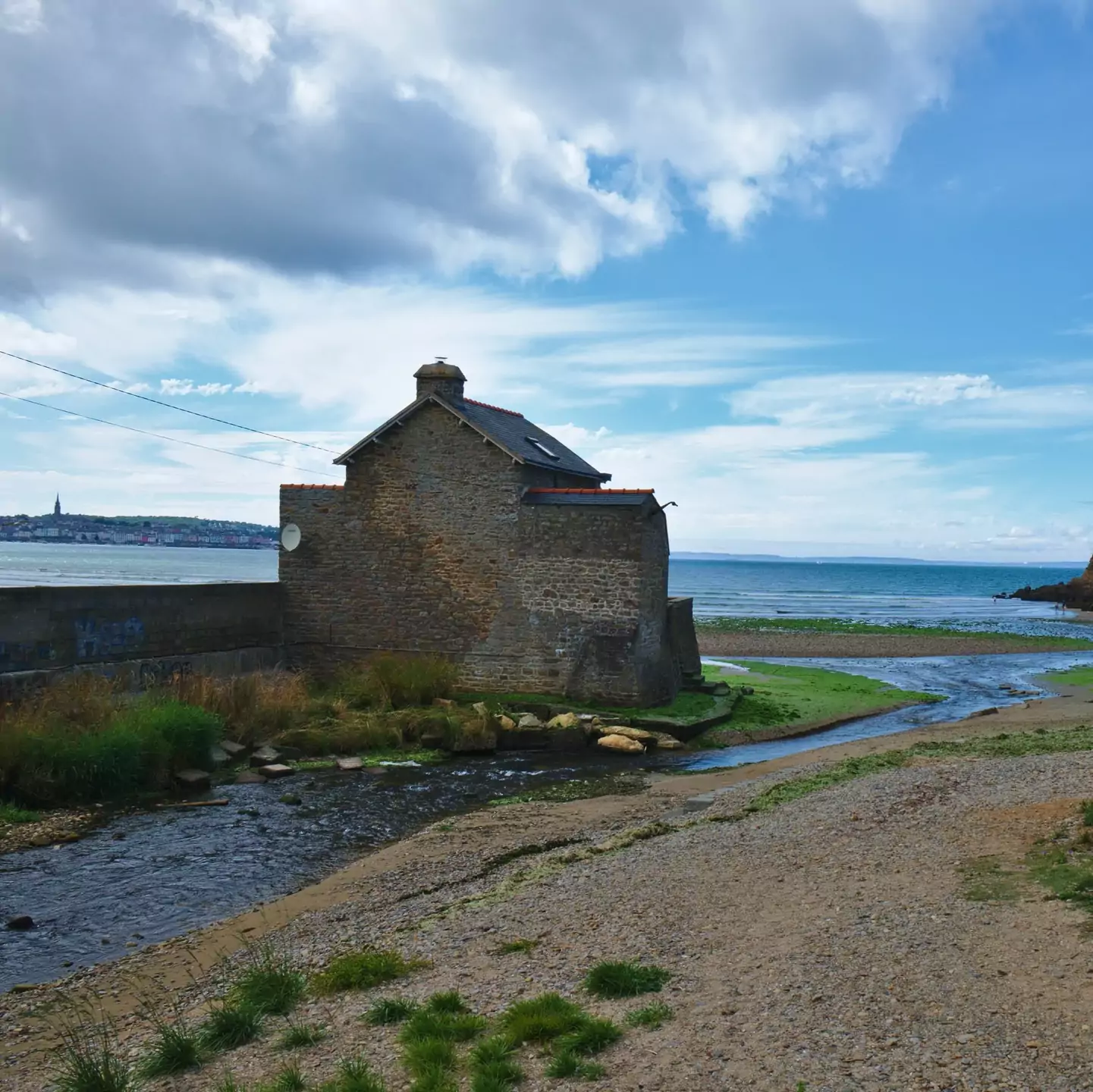
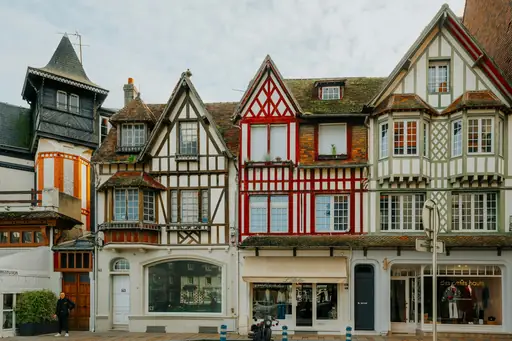
Brittany stretches along France’s northwestern coast with rugged cliffs, quiet beaches and rolling green hills. The region is known for its strong maritime culture, historic ports and centuries-old traditions like the use of the Breton language. Famous for seafood such as oysters and crêpes made from buckwheat flour, Brittany also boasts medieval towns, ancient stone walls and a network of coastal paths perfect for walking or cycling. Its mix of natural beauty and local heritage makes it appealing to travelers seeking both relaxation and history.

Region in France
Climate zone: Mild oceanic

Mild oceanic: Marine-influenced climates with cool summers, mild winters and frequent precipitation year-round, typical of western coasts at mid-latitudes.

See climate table
Price level: $$$
$Cheap
$$Medium
$$$Expensive, upscale
$$$+Very expensive, luxury
See price details
Safety: 8.5
General Safety:9
Health & medical:8
Accessibility:6
Tap water:9
Read details
Tourist English: 2/5
In Brittany, English is widely understood in tourist hotspots like Saint‑Malo and Dinan, but locals often speak French. Visitors will find basic phrases helpful; many hospitality staff converse comfortably in English.
Last update: 12 Oct 2026
* We earn a commission from some links on this page.
Brittany Summary

These place ratings give you a quick overview of how well a destination matches different types of trips.

‘Best for’ scores:
The specific interest scores show where this place really shines – whether it's ideal for hiking, food & drink experiences, museums or other activities. These highlights help you understand what makes the destination special at a glance.

‘Your personal’ scores:
This reflects how well a place matches your personal preferences. You can adjust the importances of travel topics or other personal requirements categories in your account settings.

‘Suited for’ badges:
These give you a quick overview of how well a destination suits specific types of travellers, to help you find the places that match your lifestyle, preferences or travel situation.

Read how our scores work
Excellent for rugged coasts and maritime culture. Walk coastal cliffs, visit lighthouses, explore medieval towns and enjoy seafood and sailing.
Place score
8.5
Best at:
Cosy towns
9
Sea
9
Historic sites
9
Sailing
9
Beaches
8
Personal score
?
Log in to see how this place matches your personal travel interests.
Suited for
👶 7
Families
🧓 7
Seniors
🛡️ 7
Travel Beginners
❤️ 7
Couples
France – Quick facts
Power Grid: 230 V, 50 Hz
Plug: Type C , Type E
Type C:
Diagram of a Type C power plug
Type E:
Diagram of a Type E power plug

Read about power adapters
Currency: Euro (EUR)
£1 ≈ €1.19
Cashless info: Rating 5/5
Cashless payments are widely accepted, especially in cities and tourist areas.

Save with a travel credit card
eSIM providers: Best value: Saily
Flexibility: Airalo
Read our in-depth comparison
Tipping: Tipping is optional but appreciated in restaurants (5-10%) and for exceptional service.
Public drinking: Public drinking is allowed in designated areas, but restrictions apply in some cities.
Public smoking: Smoking is banned in indoor public spaces but common in outdoor cafes.
Bastille Day
(July)
Parades and fireworks occur nationwide.
Easter
(March/April)
Cultural celebrations and closures.
Christmas
(December)
Markets and festive events.
Emergency contact: Emergency Numbers: 112 (EU emergency), 15 (Ambulance), 17 (Police), 18 (Fire)
Taxi apps: Uber, Bolt, Heetch
Other: France offers diverse experiences, from art and culture to nature and cuisine. Be cautious in crowded areas.
Best times to travel

The best times to travel section shows how the months compare for a visit, so you can find the time of year that fits what you want to do.

Background colours of the months:
The colour shows the typical temperature: yellow (hot), green (mild) and blue (cold). How strong the colour is shows the travel season: full colour means high season, soft colour means shoulder season and soft-striped means off season.

Weather symbols:
Each month has one symbol showing what the weather is typically like, such as hot and sunny, freezing or a rainy or snowy season. Use them to quickly spot months that match the weather you want, or to avoid the ones that don't.

Crowdedness:
The people icon shows how busy the place usually is. The more people, the more crowded it gets.

Additional notes:
The grey info boxes point out special things worth knowing, like recurring weather issues or seasonal events.

for Brittany, France
☁️
Jan
☁️
Feb
🌥️
Mar
🌤️
Apr
🌤️
May
🌥️
Jun
🌤️
Jul
🌤️
Aug
🌤️
Sep
🌤️
Oct
☁️
Nov
🌥️
Dec
High season: June - Sep.
Shoulder season: April - May, Oct.
Crowdedness: 5 (Moderate tourist numbers)
Tap on a month for more info Hover over a month for more info
Climate and season vary by area: coasts and islands best June to September for beaches, coastal hiking and sightseeing best April to June and September, towns quiet in winter
Many seaside hotels, restaurants and campsites close October to Easter, especially on smaller islands
Festival Interceltique de Lorient, first half of August: huge crowds, lodging in Lorient and nearby booked far ahead

Why travel to Brittany?

Brittany, the rugged north‑western corner of France, offers a blend of maritime heritage, historic towns and natural beauty that appeals to travelers seeking authenticity over spectacle. The region’s coastline is marked by dramatic cliffs, sandy coves and the iconic whitewashed houses of Saint‑Malo, where narrow streets lead to quiet cafés and a lively harbor. Visitors can explore medieval castles such as Château de Fougères or the fortified town of Dinan, both preserved with timber‑framed architecture that tells stories of feudal France. Cultural life in Brittany is vibrant yet understated. Local festivals celebrate Breton music, dance and the region’s distinct language, giving travelers a chance to experience genuine traditions without the crowds found in larger cities. Gastronomy is another draw: fresh seafood – especially oysters from Cancale – is paired with regional cider and galettes, offering simple but satisfying flavors. Nature lovers will appreciate the varied landscapes: the lush green hills of the Monts d’Arrée, the serene inland lakes and the expansive dunes of the Côte de Granit Rose. Outdoor activities such as hiking, cycling or kayaking are readily available. Overall, Brittany provides a relaxed atmosphere where history, culture and nature coexist in harmony.

🏙️Cities & Regions
  • 1 Saint-Malo
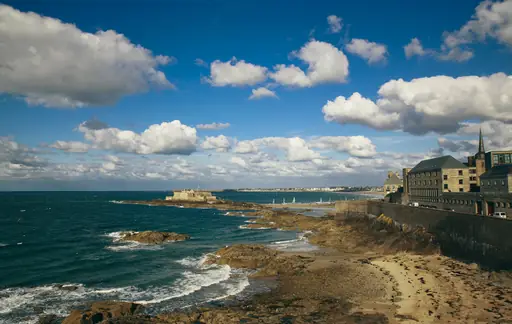
    Coastal town on France's northwestern coast known for its fortified walls, sandy beaches and vibrant maritime culture. Visitors enjoy historic ramparts, a lively harbor and local seafood specialties amid a relaxed seaside atmosphere and traditions.
  • 2 Carnac
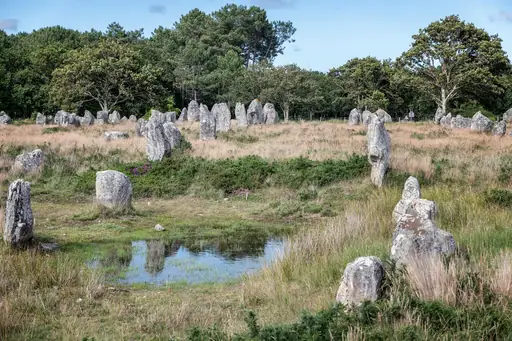
    This coastal town in Brittany features dramatic cliffs, ancient standing stones and sandy beaches. Visitors explore megalithic monuments like Kerlescan while enjoying fresh seafood and scenic walks along the Atlantic shoreline.
🏯Places worth seeing
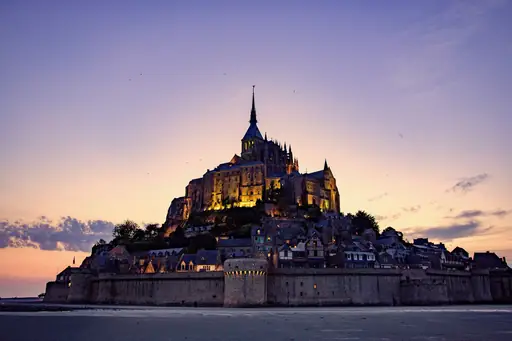
  • 1 Mont Saint-Michel
  • 2 Saint-Malo
  • 3 Pointe du Raz
  • 4 Château de Chambord
  • 5 Base navale
  • 6 Le Pont d'Egrenne
🏞️Natural landmarks
  • 1 Pointe du Raz
  • 2 Belle Île
  • 3 Forêt de Brocéliande
🛍️Shopping
  • 1 Saint-Gilles-Vieux-Marché
  • 2 Galeries Lafayette
  • 3 Marché Couvert
  • 4 Marché
  • 5 Les Halles
  • 6 Marché
  • 7 Rue de Paris

Knowledge before you go

  • Pack a waterproof jacket; Brittany’s weather is unpredictable and often misty.
  • Reserve accommodation near the coast early, as seaside towns fill up during summer festivals and harvest celebrations.
  • Learn basic Breton greetings like 'Demat' to engage locals, especially in rural villages where French is less common.
  • Explore the Armorique Regional Natural Park on a bike; it offers hidden coves, ancient dolmens and panoramic sea views rarely seen by mass tourism.

How to travel to Brittany

Traveling to Brittany, France involves several accessible options depending on your starting point. The region is well-connected by air travel through Nantes Atlantique Airport and Brest Bretagne Airport, both offering domestic flights and limited international connections. For those traveling from Paris, high-speed TGV trains provide a direct route to major Breton cities like Rennes and Brest in approximately 2–3 hours. Road access is available via the A11 and A81 highways, linking Brittany to other parts of France. The region also has an extensive bus network operated by companies such as Flixbus, connecting smaller towns and rural areas. Additionally, regional trains (TER) serve local destinations efficiently within the peninsula.

Access summary

  • From Rennes (RNS): Train to Saint-Malo 30–45 min; bus 40–50 min.
  • From Paris (CDG): TGV to Brest 4.5–5 h; train to Nantes 3.5–4 h.
  • By ferry from Cherbourg to St Malo, 1.5–2 h; cycle routes along the coast popular.

Where to stay in Brittany

Brittany offers a spectrum of lodging that caters to every budget and taste. Budget travelers can find well‑maintained hostels and guesthouses in towns like Saint‑Brieuc or Dinan, with nightly rates ranging from €30 (£25.27) to €50 (£42.12). Mid‑range options include boutique hotels and bed‑and‑breakfasts perched on the Côte de Granit Rose, where rooms typically cost between €80 (£67.39) and €120 (£101.09) per night, offering comfortable amenities and local charm. For those seeking luxury, the region’s seaside resorts – such as those along the Pink Granite Coast – feature upscale hotels with sea views, spa facilities and gourmet dining, often priced from €200 (£168.48) upwards. Brittany is renowned for its traditional “chambres d’hôtes,” where guests experience authentic Breton hospitality in historic homes, usually at modest rates that reflect their cozy, personalized service.

How to get around Brittany

Traveling around Brittany, France, is best done using a combination of trains and rental cars. The regional train network, operated by SNCF, connects major cities like Rennes, Brest and Nantes efficiently, with frequent services ideal for longer distances. For exploring rural areas, coastal towns and islands such as Belle-Île-en-Mer, renting a car is highly recommended due to the region’s winding roads and scenic routes. Buses also serve smaller villages but are less frequent. Cycling is another popular option in cities like Quimper or along the coast. Taxis and ride-sharing apps are available in urban centers but limited elsewhere. Plan ahead for train schedules and book car rentals early during peak seasons.
Budget snapshot
Costs compared to home

We calculate the average costs when travelling to destinations and compare those with the living costs at your home. With this you can get an estimate of how expensive or cheap the destination is for you.

To customise this, you can set up which location and price level are used for the calculations in your account settings.

-5 %
Daily expenses in Brittany are around 5% lower than the average across United States. That means you'll spend around the same on meals and getting around.
Exchange rate trend

The exchange rate price factor shows how expensive or cheap a currency currently is compared to its historical average. It's a quick way to see if a country is currently more or less affordable due to exchange rate changes.

-3 %
Your exchange rate (GBP to EUR) is 3% better than in recent years. That means travelling now costs around the same compared to the past.

Travel costs

To help you plan your trip, we provide estimated daily costs per person (when travelling as a pair) for different travel styles. These numbers give you an idea of what you might spend each day at this destination, including accommodation, food, transport and activities.

Additionally, we also provide average hotel costs for different travel styles to give you an estimate for the accommodation only.

Please note that these are only estimates. The real costs depend on booking times, season and other factors.

Daily cost summary

Travel style categories explained:

Backpacker:
Staying in hostels or budget hotels, cooking your own meals or eating cheap and choosing low-cost activities.

Mid-range:
Staying in mid-range hotels, eating at a mix of restaurants and casual spots and enjoying a variety of activities.

Luxury:
Staying in luxury hotels, dining out at high-end restaurants and enjoying premium experiences without worrying about the price.

Backpacker Mid-range Luxury
💵 Total costs per day, including accommodation
£77
£156
£411
🏨 Accommodation per night, per person
£41
£83
£180
🍝 Food per day
£29
£64
£193
🚕 Transportation per day
£7
£9
£38
Food & Drink
🍽️ Restaurant Dinner, per person
£21
🍛 Lunch Set, per person
£12.50
🍟 Fast food combo
£9
🍝 Preparing your own food, per day
£9.50
☕ Cappuccino
£2.90
🍺 Beer in a restaurant, 0.5 l
£5.50
Transportation
🚌 Public transport ticket
£1.50
🚕 Taxi Ride, 10 km / 6 mi
£23
⛽ Petrol, 1 l
£1.50
Other
🎞️ Cinema ticket
£10.50
👩‍⚕️ Doctor's consult
£22
🤧 Cold medication
£7
💇 Basic haircut
£14

Safety information overview

General safety
9
Brittany offers a reassuringly safe travel experience, with low crime rates and friendly locals. Petty theft is rare in towns like Saint-Malo and the region’s well‑maintained roads and reliable public transport enhance overall security for visitors.
Health & Medical
8
Brittany offers high‑standard medical care, with well‑equipped regional hospitals and accessible general practitioners. Clean air and low pollution reduce respiratory risks, while the coastal climate supports wellness. Travelers should stay hydrated, use sun protection and be aware of seasonal flu outbreaks.
Accessi­bility
6
Brittany offers mixed accessibility: many historic towns have cobblestones, but newer developments feature ramps and elevators. Public transport is generally barrier‑free, though some rural stations lack lifts. Prioritize larger cities like Rennes or Brest for better wheelchair access.
Tap water
9
Brittany offers high‑quality tap water, sourced from clean aquifers and rigorously treated to meet EU standards. Public fountains are plentiful in towns and villages, providing free, safe hydration for locals and visitors alike. The region’s cool climate keeps water refreshing year‑round.

Looking for inspiration?

Discover
Best castle destinations in Europe
Europe contains the world's greatest concentration of castle and fortress architecture, with surviving structures ranging from the Norman tower keeps and Crusader citadels of the…
Read more
Discover
Best travel destinations for food allergies in Europe
Europe is one of the more manageable continents for allergy conscious travelers, thanks to strict food labeling rules that apply across the entire European Union. Restaurants…
Read more
Discover
Best travel destinations for food allergies
Travelling with a food allergy adds a layer of planning most people never have to think about and the right destination can make that planning a lot easier. Some travellers…
Read more
Discover
Best wine destinations in Europe
Europe contains the world's most established wine producing regions, with centuries of accumulated knowledge about which varieties, soils and microclimates produce the most…
Read more
Discover
Best van travel destinations
Van travel rewards destinations with genuinely good road networks, scenic variety within reasonable driving distance and enough infrastructure, such as campsites, fuel and…
Read more
Discover
Best van travel destinations in Europe
The classic campervan culture that shaped much of Europe's road-trip identity is still very much alive, particularly along coastal loop routes in the north and fjord roads further…
Read more
Discover
Top digital nomad destinations and remote work hubs in Europe
Europe offers remote workers a level of infrastructure that is hard to beat, along with enough cultural variety to keep even a long stay interesting. City based nomads can hop…
Read more
Discover
Top castle destinations and historic fortresses
Castle travel spans an enormous range of surviving structures, from the intact hilltop fortresses and walled palace complexes that have been continuously inhabited or maintained to…
Read more
Discover
Top digital nomad destinations and remote work hubs in 2026
Working from anywhere in the world sounds simple until you actually try it and the best digital nomad destinations look different depending on what kind of remote worker you are.…
Read more
Discover
Best couple holiday destinations
Travelling as a couple sounds simple enough, yet the best couple holiday destinations mean something different to almost every pair. What feels romantic to one couple can feel like…
Read more
Discover
Best couple vacation destinations in Europe
Europe has been the backdrop for love stories for centuries, and for couples it remains one of the easiest continents to feel romantic in without even trying. The choice of…
Read more
Discover
Top historical destinations and historic sites
The most compelling history destinations are places where the past is still physically present and legible in the landscape, the architecture and the daily life of the people who…
Read more
Discover
Best destinations for first-time travellers
A first trip abroad works best somewhere that eases you in, rather than throwing every possible culture shock and logistical headache at you at once. Some first-time travellers…
Read more
Discover
Top wine destinations and famous vineyards
Wine travel has developed a well-established infrastructure of its own, with dedicated tasting rooms, cellar door visits and harvest experiences now standard across most major…
Read more
Discover
Best sailing destinations in Europe
Mediterranean island chains anchor much of Europe's sailing tourism, both offering hundreds of sheltered anchorages within manageable distances of each other, supported by decades…
Read more
Was this page helpful?
Feedback