







Europe › Ireland › Dublin

Dublin

Scroll
Where History, Pubs and Culture Collide

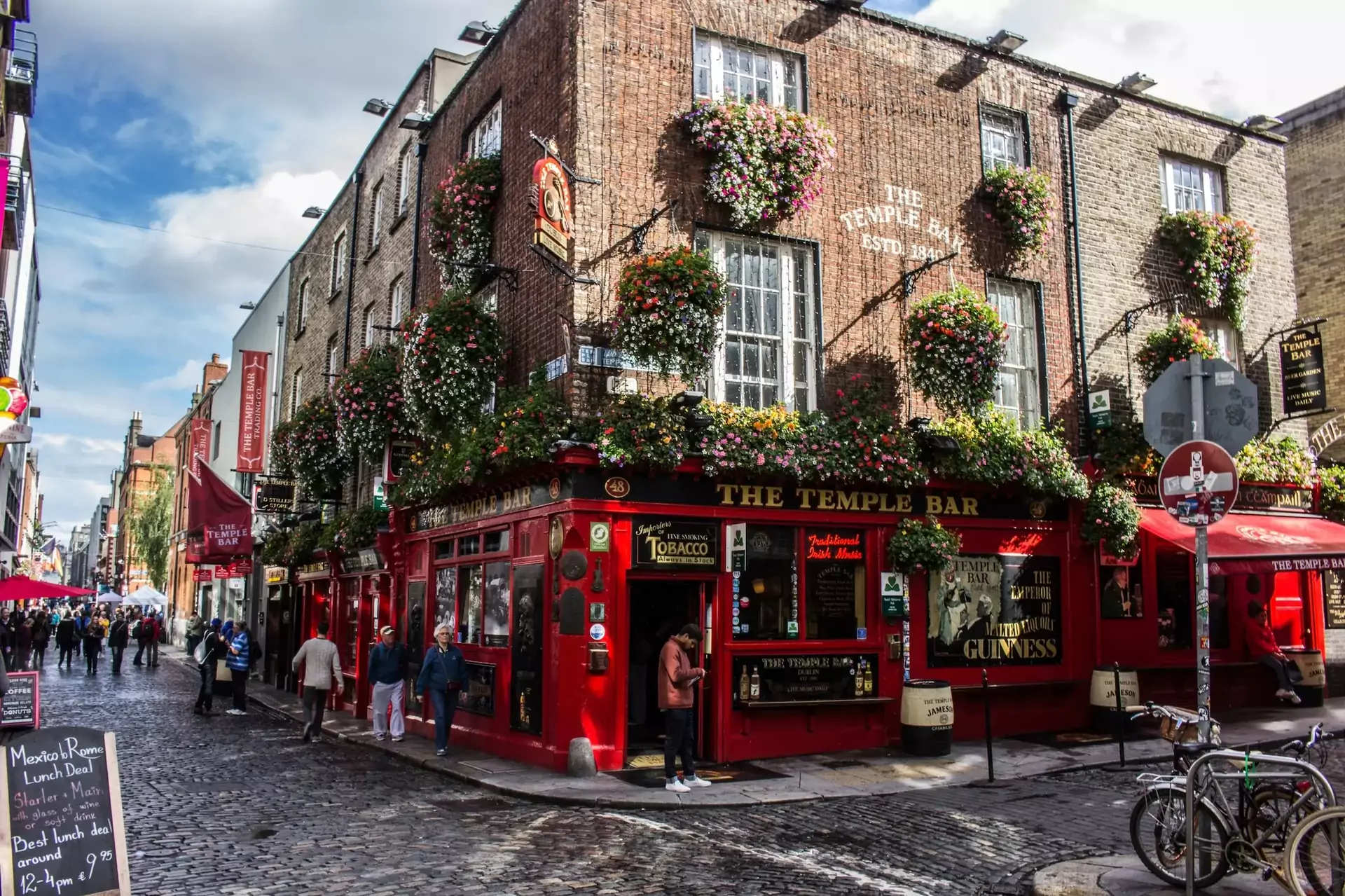
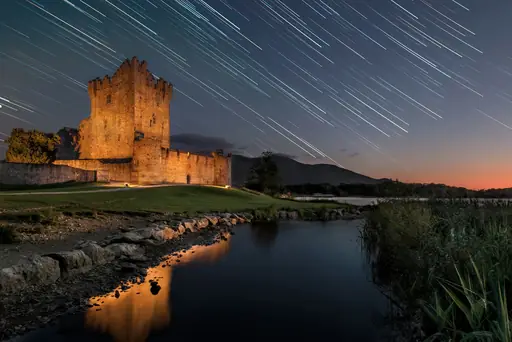
Dublin welcomes visitors with wide sidewalks and historic buildings that line streets filled with pubs, bookshops and cafes. The River Liffey cuts through the city center, offering views of bridges and islands where musicians often play. Public transport connects neighborhoods like Temple Bar, St Stephen’s Green and the Guinness Storehouse. Parks provide quiet spaces for walking or reading. Museums display Irish art and history, while local markets sell fresh food and handmade goods. The city balances lively nightlife with peaceful corners along the water.

City in Ireland
Climate zone: Mild oceanic

Mild oceanic: Marine-influenced climates with cool summers, mild winters and frequent precipitation year-round, typical of western coasts at mid-latitudes.

See climate table
Price level: $$$
$Cheap
$$Medium
$$$Expensive, upscale
$$$+Very expensive, luxury
See price details
Safety: 8.0
General Safety:8
Health & medical:8
Accessibility:7
Tap water:9
Read details
Tourist English: 5/5
English is the main language spoken in Dublin, so communication is effortless. Irish (Gaelic) is also official but rarely used in daily conversation.
Last update: 12 Oct 2026
* We earn a commission from some links on this page.
Dublin Summary

These place ratings give you a quick overview of how well a destination matches different types of trips.

‘Best for’ scores:
The specific interest scores show where this place really shines – whether it's ideal for hiking, food & drink experiences, museums or other activities. These highlights help you understand what makes the destination special at a glance.

‘Your personal’ scores:
This reflects how well a place matches your personal preferences. You can adjust the importances of travel topics or other personal requirements categories in your account settings.

‘Suited for’ badges:
These give you a quick overview of how well a destination suits specific types of travellers, to help you find the places that match your lifestyle, preferences or travel situation.

Read how our scores work
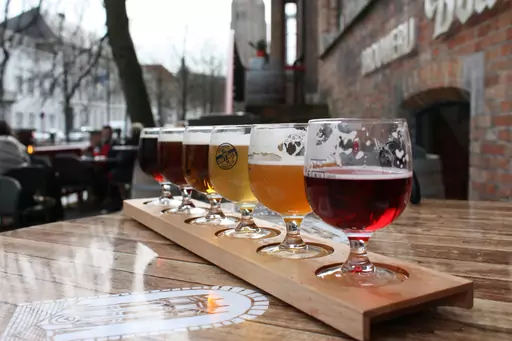
Great for pubs and literary culture. Visit historic landmarks, enjoy live music in traditional pubs, explore museums and walk lively city streets.
Place score
8.3
Best at:
Beer
10
Guided tours
9
Walkable
8
Fine dining
8
Luxury shopping
8
Personal score
?
Log in to see how this place matches your personal travel interests.
Suited for
👶 8
Families
🧓 7
Seniors
🛡️ 9
Travel Beginners
💻 9
Digital Nomads
Ireland – Quick facts
Power Grid: 230 V, 50 Hz
Plug: Type G
Type G:
Diagram of a Type G power plug

Read about power adapters
Currency: Euro (EUR)
£1 ≈ €1.19
Cashless info: Rating 5/5
Cashless payments are widely accepted in Ireland, especially in urban areas. Contactless payments and mobile apps are commonly used. Smaller businesses might still prefer cash.

Save with a travel credit card
eSIM providers: Best value: Saily
Flexibility: Airalo
Read our in-depth comparison
Tipping: Tipping is customary in Ireland, with 10-15% expected in restaurants. Tipping for taxi drivers is usually rounded up or 10-15%. For hotel staff, €1-2 is appreciated.
Public drinking: Public drinking is allowed in many places, such as parks and during festivals, but local laws vary in specific areas.
Public smoking: Smoking is prohibited indoors in public spaces and in most enclosed areas. Designated outdoor smoking areas are common.
St. Patrick’s Day
(March)
Expect large crowds and parades, especially in Dublin. Book accommodations well in advance.
Christmas
(December)
Christmas markets and festive events are popular, with busy streets and higher accommodation rates.
Easter Monday
(March/April)
Many places close or have limited hours, especially in smaller towns.
Emergency contact: Emergency Number: 112 (Police, Fire, Ambulance)
Taxi apps: Uber, Free Now, Bolt
Other: Ireland is known for its scenic landscapes, and rural areas may require more preparation for travellers, especially in terms of accommodation and transport.
Best times to travel

The best times to travel section shows how the months compare for a visit, so you can find the time of year that fits what you want to do.

Background colours of the months:
The colour shows the typical temperature: yellow (hot), green (mild) and blue (cold). How strong the colour is shows the travel season: full colour means high season, soft colour means shoulder season and soft-striped means off season.

Weather symbols:
Each month has one symbol showing what the weather is typically like, such as hot and sunny, freezing or a rainy or snowy season. Use them to quickly spot months that match the weather you want, or to avoid the ones that don't.

Crowdedness:
The people icon shows how busy the place usually is. The more people, the more crowded it gets.

Additional notes:
The grey info boxes point out special things worth knowing, like recurring weather issues or seasonal events.

for Dublin, Ireland
☁️
Jan
☁️
Feb
☁️
Mar
🌥️
Apr
🌤️
May
🌥️
Jun
☁️
Jul
🌥️
Aug
🌥️
Sep
☁️
Oct
☁️
Nov
☁️
Dec
High season: June - Aug.
Shoulder season: March - May, Sep. - Oct.
Crowdedness: 9 (Very crowded)
Tap on a month for more info Hover over a month for more info
St Patrick's Festival, around 17 March for several days, brings huge crowds and parades; hotels book out and prices spike

Why travel to Dublin?

Dublin is a city with a soul. Walk through its historic streets and explore centuries-old castles, grand cathedrals and world-class museums. But it's not just about history – Dubliners are famous for their warm hospitality and the city's pub culture is second to none. However, be prepared for unpredictable weather (rain is always a possibility) and higher prices compared to other European cities. The nightlife is fantastic, but weekends can be rowdy, so plan accordingly.

🏯Places worth seeing
  • 1 Ha'penny Bridge
  • 2 EPIC The Irish Emigration Museum
  • 3 The Little Museum of Dublin
  • 4 Dublin Castle
  • 5 Christ Church Cathedral
  • 6 Saint Patrick's Cathedral
  • 7 Kilmainham Gaol
  • 8 Guinness Storehouse
  • 9 Dublin Writers Museum
🎡Places for activities
  • 1 Dublin Zoo
  • 2 Temple Bar
  • 3 Viking Splash Tours Pick-up Point
  • 4 National Leprechaun Museum
  • 5 The Abbey Bar
🏞️Natural landmarks
  • 1 Phoenix Park
  • 2 Cliffs of Howth
  • 3 Dublin Bay
  • 4 St Stephen's Green
  • 5 Iveagh Gardens
  • 6 Malahide Beach
  • 7 North Bull Island
  • 8 The Rath
  • 9 West Pier Business Campus
  • 10 Grand Canal Dock
🛍️Shopping
  • 1 Flea Market
  • 2 Powerscourt Townhouse Centre
  • 3 Avoca
  • 4 Grafton Street
  • 5 Henry Street
  • 6 George's Street Arcade
  • 7 Brown Thomas
  • 8 Kilkenny Design
  • 9 Stephen's Green Shopping Centre
  • 10 Jervis Shopping Centre
🎈Events
  • St. Patrick’s Festival (March)
  • Bloomsday (June)
  • Dublin Theatre Festival (September/October)
  • Dublin International Film Festival (February/March)
  • TradFest (January)
  • Dublin Pride (June)
  • New Year’s Festival Dublin
  • Bram Stoker Festival (October)
  • Taste of Dublin (June)
  • Longitude Music Festival (July)

Knowledge before you go

  • Pack layers and a rain jacket; Dublin weather changes quickly.
  • Choose accommodation near Temple Bar or Trinity College for easy walking access to pubs, riverfront, museums and main sights.
  • Many top museums and galleries are free; check opening hours and special exhibition tickets online to avoid disappointment or queues.
  • Skip only-tourist pubs and seek smaller traditional bars with live music, where chatting at the bar often leads to local tips.

How to travel to Dublin

Dublin Airport (DUB) is the main gateway, with direct flights from major cities worldwide. Airport buses (Aircoach, Dublin Express) connect to the city center in 30-40 minutes. Ferries also run from the UK to Dublin Port.

Access summary

  • From Dublin Airport (DUB): Express buses or taxi, typically 20–40 minutes.
  • From Belfast: Direct train to Dublin about 2–2.5 hours, frequent departures.
  • From Holyhead (Wales): Car–passenger ferries to Dublin, around 3–3.5 hours sailing.

Where to stay in Dublin

The city center (Temple Bar, Grafton Street, O’Connell Street) is best for first-time visitors, though pricier. Budget travelers can find hostels, while boutique hotels offer a cozy stay. Airbnb is also popular.

How to get around Dublin

Dublin is compact and walkable, but buses and trams (Luas) help cover longer distances. The Leap Card is a must for affordable public transport. Taxis are available, but Uber works differently here (licensed taxis only).
Budget snapshot
Costs compared to home

We calculate the average costs when travelling to destinations and compare those with the living costs at your home. With this you can get an estimate of how expensive or cheap the destination is for you.

To customise this, you can set up which location and price level are used for the calculations in your account settings.

+20 %
Daily expenses in Dublin are around 20% higher than the average across United States. That means you'll spend considerably more on meals and getting around.
Exchange rate trend

The exchange rate price factor shows how expensive or cheap a currency currently is compared to its historical average. It's a quick way to see if a country is currently more or less affordable due to exchange rate changes.

-3 %
Your exchange rate (GBP to EUR) is 3% better than in recent years. That means travelling now costs around the same compared to the past.

Travel costs

To help you plan your trip, we provide estimated daily costs per person (when travelling as a pair) for different travel styles. These numbers give you an idea of what you might spend each day at this destination, including accommodation, food, transport and activities.

Additionally, we also provide average hotel costs for different travel styles to give you an estimate for the accommodation only.

Please note that these are only estimates. The real costs depend on booking times, season and other factors.

Daily cost summary

Travel style categories explained:

Backpacker:
Staying in hostels or budget hotels, cooking your own meals or eating cheap and choosing low-cost activities.

Mid-range:
Staying in mid-range hotels, eating at a mix of restaurants and casual spots and enjoying a variety of activities.

Luxury:
Staying in luxury hotels, dining out at high-end restaurants and enjoying premium experiences without worrying about the price.

Backpacker Mid-range Luxury
💵 Total costs per day, including accommodation
£80
£172
£440
🏨 Accommodation per night, per person
£38
£75
£150
🍝 Food per day
£35
£88
£260
🚕 Transportation per day
£8
£9
£30
Food & Drink
🍽️ Restaurant Dinner, per person
£37
🍛 Lunch Set, per person
£16
🍟 Fast food combo
£10.50
🍝 Preparing your own food, per day
£12
☕ Cappuccino
£3.70
🍺 Beer in a restaurant, 0.5 l
£6.50
Transportation
🚌 Public transport ticket
£1.80
🚕 Taxi Ride, 10 km / 6 mi
£17
⛽ Petrol, 1 l
£1.60
Other
🎞️ Cinema ticket
£11.50
👩‍⚕️ Doctor's consult
£60
🤧 Cold medication
£9
💇 Basic haircut
£17

Safety information overview

General safety
8
Dublin is generally safe, but watch for pickpockets in busy areas like Temple Bar and Grafton Street. Weekend nightlife can get rowdy, so stay aware, especially late at night.
Health & Medical
8
High-quality medical care is available, but private healthcare is expensive. EU travelers can use the EHIC for public care. No major health risks, but rain and cold can lead to colds.
Accessi­bility
7
Most attractions are accessible, but some older buildings have limited options for wheelchair users. Public transport is improving but not always fully accessible.
Tap water
9
Tap water is safe to drink and widely available. Many public fountains allow bottle refills, so bring a reusable bottle.

Looking for inspiration?

Discover
Best travel destinations for food allergies in Europe
Europe is one of the more manageable continents for allergy conscious travelers, thanks to strict food labeling rules that apply across the entire European Union. Restaurants…
Read more
Discover
Best travel destinations for food allergies
Travelling with a food allergy adds a layer of planning most people never have to think about and the right destination can make that planning a lot easier. Some travellers…
Read more
Discover
Best outlet shopping destinations in Europe
Read more
Discover
Best fine dining destinations in Europe
Europe still anchors the world's idea of fine dining, from classical haute cuisine traditions to a reinvention of Nordic cooking that has reshaped the culinary world over the past…
Read more
Discover
Top digital nomad destinations and remote work hubs in Europe
Europe offers remote workers a level of infrastructure that is hard to beat, along with enough cultural variety to keep even a long stay interesting. City based nomads can hop…
Read more
Discover
Top museum destinations and cultural institutions
Museum travel has developed a dedicated following built around the world's great permanent collections, blockbuster exhibition programmes and the architecturally significant…
Read more
Discover
Top music destinations and historic soundscapes
Music travel has developed a dedicated circuit built around the live music cities, festival destinations and the places where significant genres were born and defined. The most…
Read more
Discover
Top beer destinations and famous breweries
Beer travel has developed a dedicated following built around the explosion of craft and independent brewing that has transformed the offer in many countries over the past two…
Read more
Discover
Best solo travel destinations in Europe
Europe is where most people start, and for good reason. The trains connect cities across borders, the hostels have been running for decades, and the distances between completely…
Read more
Discover
Top solo travel destinations and safe hubs
Travelling alone sounds like a bigger deal than it is. The first day feels strange – eating dinner by yourself, navigating without someone to double-check the map with, making…
Read more
Discover
Top digital nomad destinations and remote work hubs in 2026
Working from anywhere in the world sounds simple until you actually try it and the best digital nomad destinations look different depending on what kind of remote worker you are.…
Read more
Discover
Best couple holiday destinations
Travelling as a couple sounds simple enough, yet the best couple holiday destinations mean something different to almost every pair. What feels romantic to one couple can feel like…
Read more
Discover
Best couple vacation destinations in Europe
Europe has been the backdrop for love stories for centuries, and for couples it remains one of the easiest continents to feel romantic in without even trying. The choice of…
Read more
Discover
Top historical destinations and historic sites
The most compelling history destinations are places where the past is still physically present and legible in the landscape, the architecture and the daily life of the people who…
Read more
Discover
Best museum destinations in Europe
Europe holds the world's greatest concentration of significant museum collections, accumulated over centuries of patronage, scientific inquiry and in many cases imperial…
Read more
Was this page helpful?
Feedback