






Was this page helpful?

| Public website: | www.cliffsofmoher.ie |
|---|
| Power Grid: |
230 V, 50 Hz Plug: Type G
Type G:
 Read about power adapters |
|---|---|
| Currency: |
Euro (EUR) £1 ≈ €1.19 |
| Cashless info: |
Rating 5/5
Cashless payments are widely accepted in Ireland, especially in urban areas. Contactless payments and mobile apps are commonly used. Smaller businesses might still prefer cash.
Save with a travel credit card |
| eSIM providers: |
Best value: Saily Flexibility: Airalo Read our in-depth comparison |
| Tipping: | Tipping is customary in Ireland, with 10-15% expected in restaurants. Tipping for taxi drivers is usually rounded up or 10-15%. For hotel staff, €1-2 is appreciated. |
|---|---|
| Public drinking: | Public drinking is allowed in many places, such as parks and during festivals, but local laws vary in specific areas. |
| Public smoking: | Smoking is prohibited indoors in public spaces and in most enclosed areas. Designated outdoor smoking areas are common. |
| St. Patrick’s Day (March) |
Expect large crowds and parades, especially in Dublin. Book accommodations well in advance. |
|---|---|
| Christmas (December) |
Christmas markets and festive events are popular, with busy streets and higher accommodation rates. |
| Easter Monday (March/April) |
Many places close or have limited hours, especially in smaller towns. |
| Emergency contact: | Emergency Number: 112 (Police, Fire, Ambulance) |
|---|---|
| Taxi apps: | Uber, Free Now, Bolt |
| Other: | Ireland is known for its scenic landscapes, and rural areas may require more preparation for travellers, especially in terms of accommodation and transport. |
The best times to travel section shows how the months compare for a visit, so you can find the time of year that fits what you want to do.
Background colours of the months:
The colour shows the typical temperature: yellow (hot), green (mild) and blue (cold). How strong the colour is shows the travel season: full colour means high season, soft colour means shoulder season and soft-striped means off season.
Weather symbols:
Each month has one symbol showing what the weather is typically like, such as hot and sunny, freezing or a rainy or snowy season. Use them to quickly spot months that match the weather you want, or to avoid the ones that don't.
Crowdedness:
The people icon shows how busy the place usually is. The more people, the more crowded it gets.
Additional notes:
The grey info boxes point out special things worth knowing, like recurring weather issues or seasonal events.
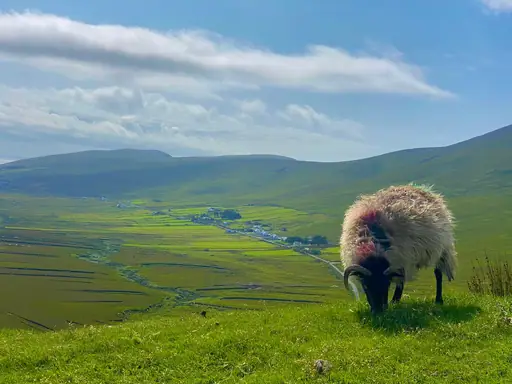
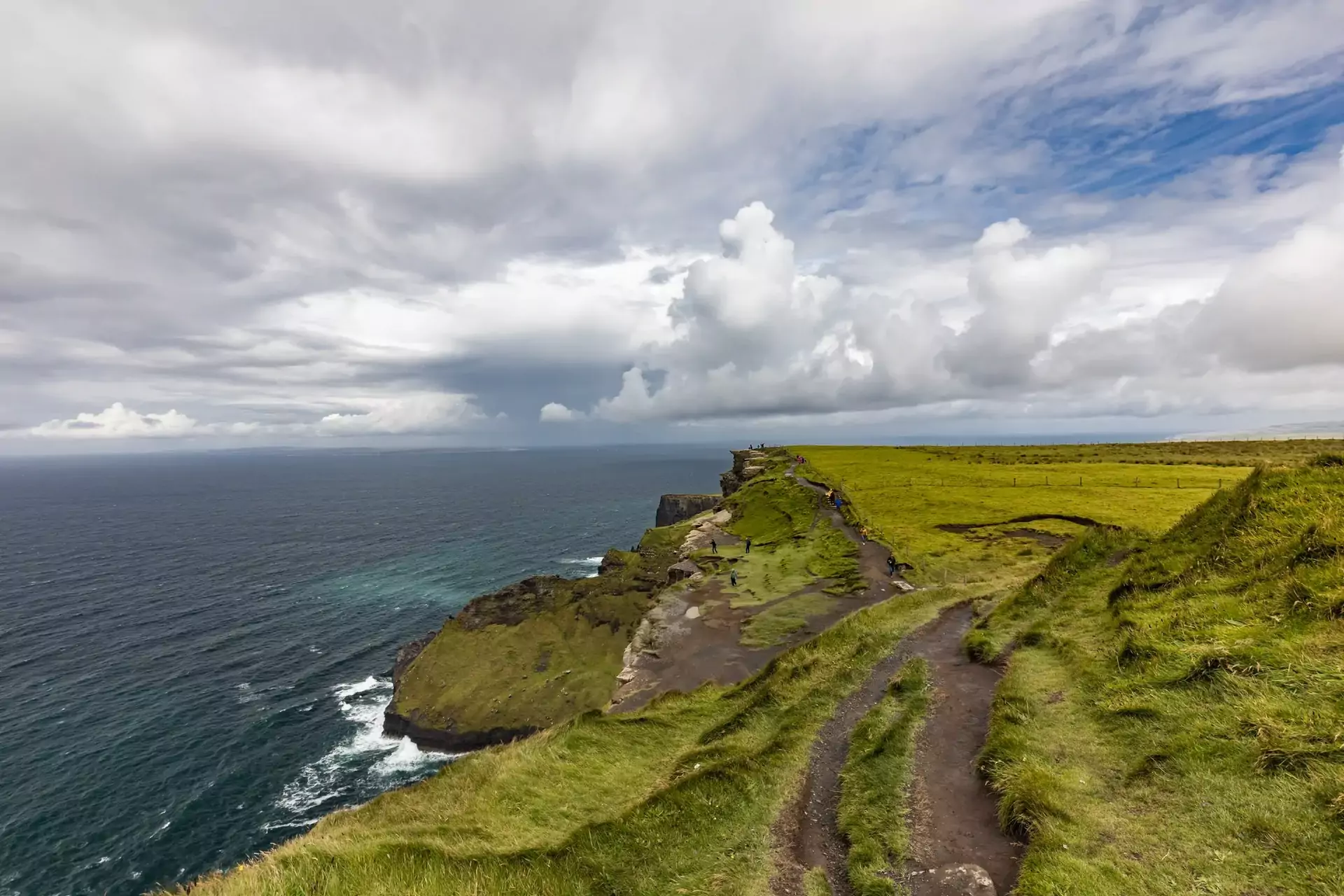
The Cliffs of Moher stand as Ireland's most visited natural attraction, drawing over a million visitors annually to marvel at their imposing beauty. The main viewing area near the Visitor Center offers the most accessible and dramatic vistas, positioned near the highest point of the cliffs. From here, the panoramic views extend far across the Atlantic, with the Aran Islands visible on clear days and the possibility of spotting dolphins and whales in the waters below. O'Brien's Tower, built in 1835 by local landowner Cornelius O'Brien as a viewing point for Victorian tourists, still serves as an excellent vantage point and stands as a testament to the cliffs' long history as a place of wonder.
Beyond the central viewing area, the full majesty of the cliffs can be experienced by walking the 18km Coastal Trail that stretches from Doolin to Liscannor. This trail offers a more intimate and less crowded experience of the cliffs, with constantly changing perspectives as you traverse the undulating path. The southern end culminates at Hag's Head, named after the legend of Mal, a witch who fell to her death pursuing the Irish hero Cú Chulainn. The northern stretch leads to the charming village of Doolin, famous for its traditional Irish music. Walking even a portion of this trail reveals how the cliffs' character changes with the light and weather, creating an ever-shifting canvas of natural beauty.
The Cliffs of Moher are not just a scenic wonder but an important ecological site, designated as a Special Protection Area for seabirds. The cliff faces provide nesting grounds for approximately 30,000 birds representing 20 different species, including the endangered chough and the Atlantic puffin (visible primarily from late March through summer). The geological significance of the area has been recognized with its inclusion in the Burren and Cliffs of Moher UNESCO Global Geopark, highlighting the 320-million-year-old rock formations that tell the story of an ancient river delta.
While the Cliffs of Moher offer an unforgettable experience, visitors should be aware of several important considerations. The weather can change rapidly, with fog sometimes rolling in and obscuring views completely. Strong winds are common and can make standing near the edge dangerous. Tragically, there have been fatalities from visitors venturing too close to the unfenced edges or taking risky photos. The official paths should be strictly adhered to for safety. Additionally, the site can become extremely crowded during peak hours (10 AM to 3 PM), particularly in summer months, diminishing the sense of natural majesty. To avoid both crowds and the higher entrance fee (€12 at the gate versus €7 online), consider visiting early morning or late afternoon or accessing the cliffs via the coastal trail rather than the Visitor Center.
The Cliffs of Moher are accessible by car, public transportation or organized tours. If driving, the cliffs are approximately a 3-hour drive from Dublin, 1.5 hours from Galway and 1.5 hours from Limerick. The roads leading to the cliffs can be narrow and winding, so drive cautiously, especially if you're not used to driving on the left side of the road. Many visitors opt for organized day tours, which are widely available from Dublin, Galway and other major Irish cities. These tours typically include transportation and often combine the Cliffs with other nearby attractions. If using public transportation, Bus Éireann operates services to the area, though connections may be limited. For a unique approach, some visitors hike to the cliffs along the Coastal Trail from nearby towns like Doolin or Liscannor.
Most visitors to the Cliffs of Moher stay in nearby towns rather than at the cliffs themselves. Doolin, about 10 minutes north of the cliffs, offers charming accommodations ranging from family-run B&Bs to small hotels, plus the added bonus of traditional Irish music in its pubs. Liscannor, about 10 minutes south, provides similar options. For those wanting more amenities, the larger towns of Lahinch and Ennistymon are within a 20-minute drive. Staying overnight in the area allows you to visit the cliffs during less crowded times and gives you a second chance if weather conditions are poor on your first visit.
Log in to add this place to a travel list and get a summary of all recommended items for your whole trip.
We calculate the average costs when travelling to destinations and compare those with the living costs at your home. With this you can get an estimate of how expensive or cheap the destination is for you.
To customise this, you can set up which location and price level are used for the calculations in your account settings.
The exchange rate price factor shows how expensive or cheap a currency currently is compared to its historical average. It's a quick way to see if a country is currently more or less affordable due to exchange rate changes.
