

Europe › France › Alsace

Alsace

Scroll
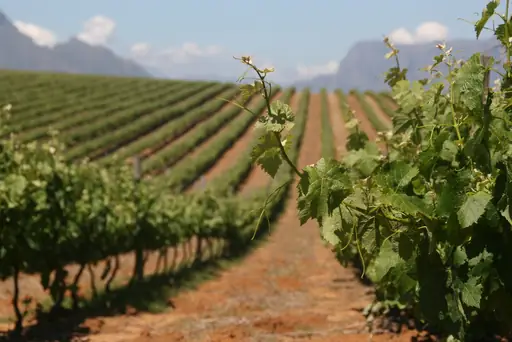
Coastal vineyards and timbered village charm

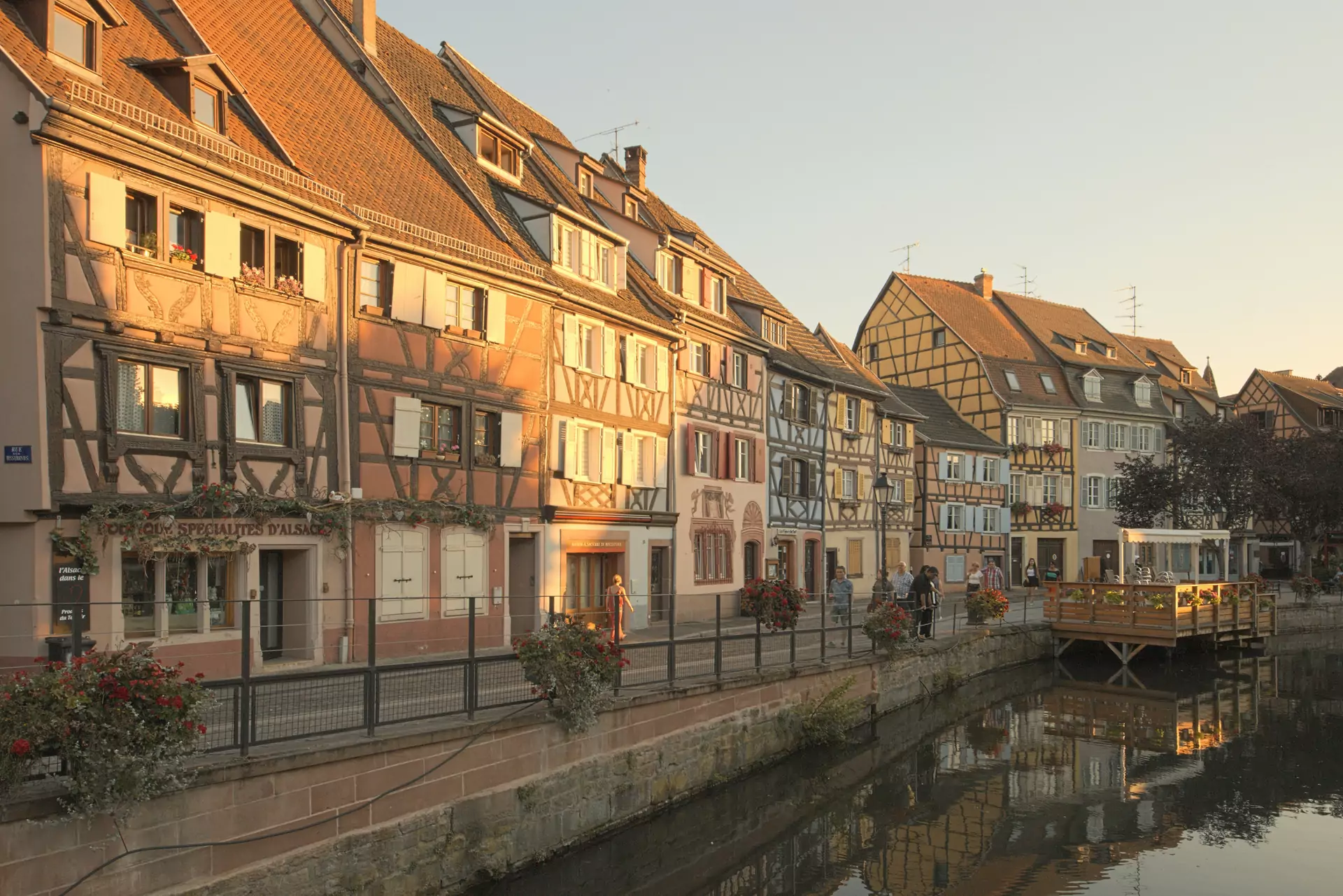
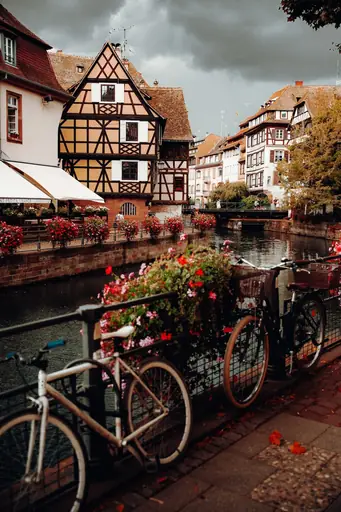
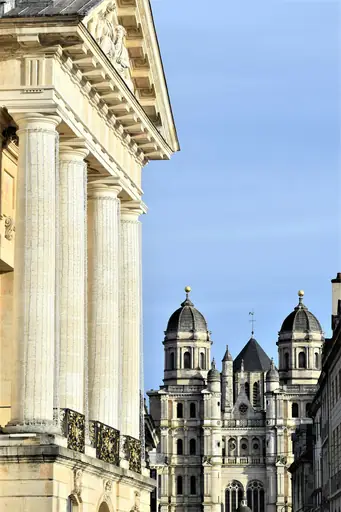
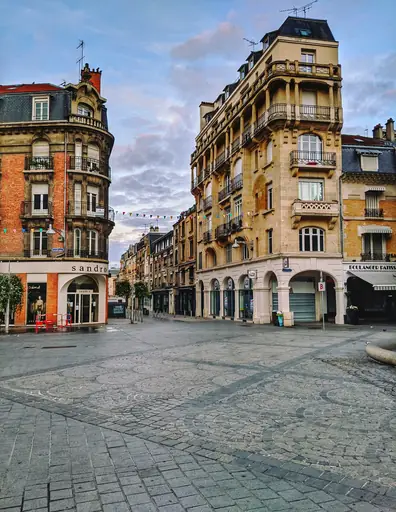
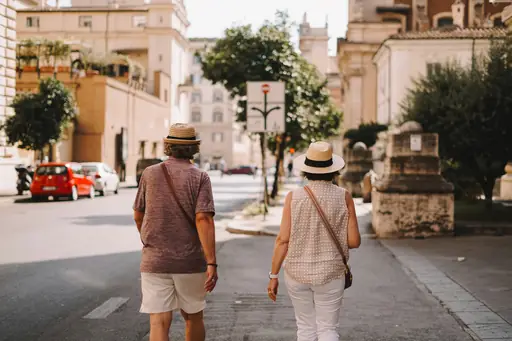
Alsace presents a landscape shaped by rolling vineyards and historic towns built from timber and stone. The region sits near Germany and Switzerland, creating cultural ties that show in its food, language and festivals. Visitors find markets filled with fresh produce, old-world architecture along cobblestone streets and villages where locals greet each other daily. Wine trails follow the River Rhine, inviting travelers to sample local vintages alongside regional cheeses and breads. The mix of French and German influences appears in everyday life here without being forced or obvious.

Region in France
Climate zone: Warm continental

Warm continental: Humid continental climates with warm summers, cold winters and evenly distributed precipitation, typical of northern interior mid-latitudes.

See climate table
Price level: $$$
$Cheap
$$Medium
$$$Expensive, upscale
$$$+Very expensive, luxury
See price details
Safety: 7.9
General Safety:8
Health & medical:8
Accessibility:6
Tap water:9
Read details
Tourist English: 3/5
In Alsace, most locals speak French, but many younger residents and hospitality workers understand basic English. Tourist areas like Strasbourg and Colmar have plenty of bilingual signs and staff who can help with simple conversations.
Last update: 12 Oct 2026
* We earn a commission from some links on this page.
Alsace Summary

These place ratings give you a quick overview of how well a destination matches different types of trips.

‘Best for’ scores:
The specific interest scores show where this place really shines – whether it's ideal for hiking, food & drink experiences, museums or other activities. These highlights help you understand what makes the destination special at a glance.

‘Your personal’ scores:
This reflects how well a place matches your personal preferences. You can adjust the importances of travel topics or other personal requirements categories in your account settings.

‘Suited for’ badges:
These give you a quick overview of how well a destination suits specific types of travellers, to help you find the places that match your lifestyle, preferences or travel situation.

Read how our scores work
Great for wine and charming villages. Visit vineyards and wine cellars, explore colorful medieval towns, cycle scenic wine routes and enjoy regional cuisine.
Place score
9.2
Best at:
Cosy towns
9
Walkable
8
Spotless
8
Wine
8
Architecture
8
Personal score
?
Log in to see how this place matches your personal travel interests.
Suited for
👶 6
Families
🧓 7
Seniors
🛡️ 8
Travel Beginners
❤️ 8
Couples
France – Quick facts
Power Grid: 230 V, 50 Hz
Plug: Type C , Type E
Type C:
Diagram of a Type C power plug
Type E:
Diagram of a Type E power plug

Read about power adapters
Currency: Euro (EUR)
£1 ≈ €1.19
Cashless info: Rating 5/5
Cashless payments are widely accepted, especially in cities and tourist areas.

Save with a travel credit card
eSIM providers: Best value: Saily
Flexibility: Airalo
Read our in-depth comparison
Tipping: Tipping is optional but appreciated in restaurants (5-10%) and for exceptional service.
Public drinking: Public drinking is allowed in designated areas, but restrictions apply in some cities.
Public smoking: Smoking is banned in indoor public spaces but common in outdoor cafes.
Bastille Day
(July)
Parades and fireworks occur nationwide.
Easter
(March/April)
Cultural celebrations and closures.
Christmas
(December)
Markets and festive events.
Emergency contact: Emergency Numbers: 112 (EU emergency), 15 (Ambulance), 17 (Police), 18 (Fire)
Taxi apps: Uber, Bolt, Heetch
Other: France offers diverse experiences, from art and culture to nature and cuisine. Be cautious in crowded areas.
Best times to travel

The best times to travel section shows how the months compare for a visit, so you can find the time of year that fits what you want to do.

Background colours of the months:
The colour shows the typical temperature: yellow (hot), green (mild) and blue (cold). How strong the colour is shows the travel season: full colour means high season, soft colour means shoulder season and soft-striped means off season.

Weather symbols:
Each month has one symbol showing what the weather is typically like, such as hot and sunny, freezing or a rainy or snowy season. Use them to quickly spot months that match the weather you want, or to avoid the ones that don't.

Crowdedness:
The people icon shows how busy the place usually is. The more people, the more crowded it gets.

Additional notes:
The grey info boxes point out special things worth knowing, like recurring weather issues or seasonal events.

for Alsace, France
❄️
Jan
🌤️
Feb
🌤️
Mar
🌤️
Apr
🌤️
May
🌤️
Jun
☀️
Jul
☀️
Aug
☀️
Sep
🌤️
Oct
🌤️
Nov
🌤️
Dec
High season: June - Oct., Dec.
Shoulder season: April - May
Crowdedness: 5 (Moderate tourist numbers)
Tap on a month for more info Hover over a month for more info
Christmas markets late November to Christmas Eve, Strasbourg, Colmar and Kaysersberg most popular; hotels book out early
Wine route villages busiest July to October; many wineries and restaurants close January and February
Vosges hiking best May to October; ski areas small and snow-dependent, mainly January to February

Why travel to Alsace?

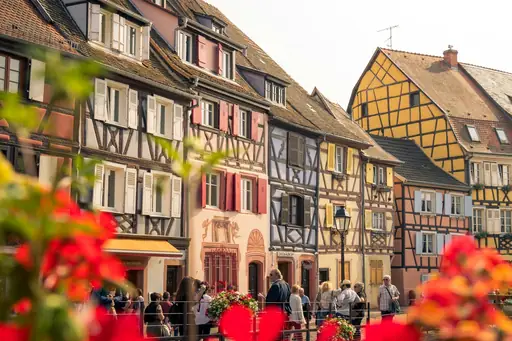
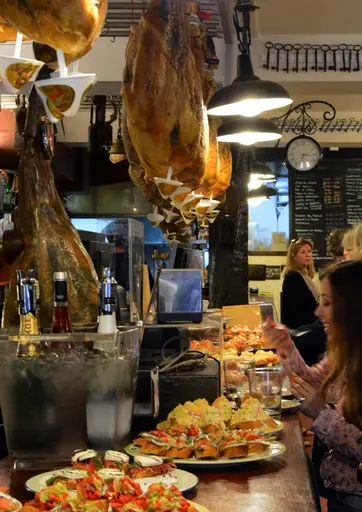
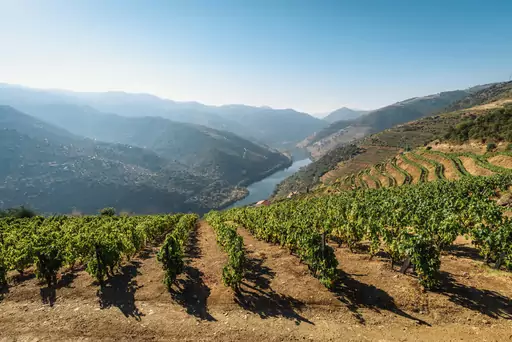
Alsace, located on France’s eastern border, offers a blend of French and German influences that is evident in its architecture, cuisine and language. The region’s picturesque villages – such as Colmar, Riquewihr and Eguisheim – feature half-timbered houses, cobblestone streets and vibrant flower displays that create an authentic, historic atmosphere without the crowds of larger cities. Wine lovers will find Alsace a natural destination. Its vineyards stretch along the Rhine valley, producing renowned white varieties like Riesling, Gewürztraminer and Pinot Gris. Visitors can tour cellars in towns such as Ribeauvillé or explore the scenic Route des Vins, sampling local specialties while learning about traditional winemaking techniques. Culinary experiences extend beyond wine. Alsatian cuisine blends French refinement with German heartiness: flammekueche (tarte flambée), choucroute garnie and baeckeoffe showcase regional ingredients and flavors. Many restaurants emphasize seasonal produce, offering a taste of the local terroir. For those interested in history, the region’s museums – such as the Unterlinden Museum in Colmar – display art from the Middle Ages to modern times, while the fortified towns of Haut-Koenigsbourg and Kaysersberg illustrate Alsace’s strategic past. Overall, Alsace provides a relaxed yet culturally rich experience, making it an appealing choice for travelers seeking authentic European charm without the intensity of major metropolitan hubs.

🏯Places worth seeing
  • 1 Cathedral of Our Lady
  • 2 Parking intérieur Mont Saint-Odile
  • 3 Parc naturel régional des Ballons des Vosges
  • 4 Pays de Hanau
  • 5 Route des Vins
🎡Places for activities
  • 1 Colmar
  • 2 Strasbourg
  • 3 Parking intérieur Mont Saint-Odile
  • 4 Parc naturel régional des Ballons des Vosges
🏞️Natural landmarks
  • 1 Parking intérieur Mont Saint-Odile
  • 2 Réserve Naturelle Nationale Ballons Comtois
  • 3 Parc naturel régional des Ballons des Vosges
  • 4 Communauté de communes du Pays de Rouffach, Vignobles et Châteaux
  • 5 L'Ill
🛍️Shopping
  • 1 Place Broglie
  • 2 Rue des Tanneurs

Knowledge before you go

  • Try regional wines at a local vineyard before visiting Strasbourg.
  • Use the tram network in Strasbourg; it connects major sights and reduces traffic congestion during peak tourist season.
  • Book a guided walking tour of Colmar’s old town to learn about its timber-framed architecture and historical significance.
  • Visit the Alsatian Wine Route early in spring for fewer crowds and explore lesser-known villages like Riquewihr for authentic cultural experiences.

How to travel to Alsace

Traveling to Alsace, France involves several accessible options depending on your starting point. The region is well-connected by rail, with major cities like Strasbourg serving as key hubs linked to Paris via the TGV high-speed train network. International visitors can reach Strasbourg Airport (STR), which offers flights from various European and select global destinations. For those driving, Alsace lies near the French-German border, accessible via the A35 and A36 highways. The region is also reachable by bus through companies like Flixbus, connecting major cities across Europe to Strasbourg and Colmar. Once in Alsace, local public transport includes buses and regional trains for further exploration within the area.

Access summary

  • From Strasbourg Airport (SXB): Train to city center 15–20 min.
  • From Paris Charles de Gaulle (CDG): TGV to Strasbourg 2h 30m; from Frankfurt Airport (FRA) 3h by train.
  • By Eurostar from Brussels: 1h 45m to Strasbourg.

Where to stay in Alsace

Alsace offers a wide spectrum of lodging, from cozy family-run guesthouses (chambres d’hôtes) to boutique hotels and luxury châteaux converted into inns. In the wine villages of Riquewihr and Eguisheim, you’ll find charming bed‑and‑breakfasts that blend historic architecture with modern comforts, often featuring local produce on their menus. The larger towns such as Strasbourg and Colmar boast a range of mid‑priced hotels offering easy access to cultural sites, while the countryside hosts numerous agritourism farms where guests can stay in renovated barns or farmhouses. For those seeking opulence, several grand castles along the Rhine provide five‑star accommodations with spa facilities and panoramic vineyard views. Prices vary seasonally but generally remain affordable compared to other European wine regions.

How to get around Alsace

Alsace, located in northeastern France, offers efficient and scenic transportation options for travelers. The region is well-connected by train, with high-speed TGV services linking major cities like Strasbourg – its capital – to Paris in under two hours. Regional trains also serve smaller towns such as Colmar and Mulhouse. For flexibility, renting a car is ideal to explore rural villages, vineyards and the picturesque Vosges Mountains at your own pace. Buses provide affordable access between urban centers and rural areas, while bike rentals are popular along flat routes near the Rhine River. Walking or cycling through historic half-timbered towns like Riquewihr is also a favorite for immersing in local culture. Always check schedules in advance during off-peak seasons for optimal travel planning.
Budget snapshot
Costs compared to home

We calculate the average costs when travelling to destinations and compare those with the living costs at your home. With this you can get an estimate of how expensive or cheap the destination is for you.

To customise this, you can set up which location and price level are used for the calculations in your account settings.

-5 %
Daily expenses in the region are around 5% lower than the average across United States. That means you'll spend around the same on meals and getting around.
Exchange rate trend

The exchange rate price factor shows how expensive or cheap a currency currently is compared to its historical average. It's a quick way to see if a country is currently more or less affordable due to exchange rate changes.

-3 %
Your exchange rate (GBP to EUR) is 3% better than in recent years. That means travelling now costs around the same compared to the past.

Travel costs

To help you plan your trip, we provide estimated daily costs per person (when travelling as a pair) for different travel styles. These numbers give you an idea of what you might spend each day at this destination, including accommodation, food, transport and activities.

Additionally, we also provide average hotel costs for different travel styles to give you an estimate for the accommodation only.

Please note that these are only estimates. The real costs depend on booking times, season and other factors.

Daily cost summary

Travel style categories explained:

Backpacker:
Staying in hostels or budget hotels, cooking your own meals or eating cheap and choosing low-cost activities.

Mid-range:
Staying in mid-range hotels, eating at a mix of restaurants and casual spots and enjoying a variety of activities.

Luxury:
Staying in luxury hotels, dining out at high-end restaurants and enjoying premium experiences without worrying about the price.

Backpacker Mid-range Luxury
💵 Total costs per day, including accommodation
£70
£151
£407
🏨 Accommodation per night, per person
£30
£75
£180
🍝 Food per day
£29
£63
£182
🚕 Transportation per day
£11
£12
£44
Food & Drink
🍽️ Restaurant Dinner, per person
£26
🍛 Lunch Set, per person
£12
🍟 Fast food combo
£9
🍝 Preparing your own food, per day
£10.50
☕ Cappuccino
£3
🍺 Beer in a restaurant, 0.5 l
£4
Transportation
🚌 Public transport ticket
£2.60
🚕 Taxi Ride, 10 km / 6 mi
£26
⛽ Petrol, 1 l
£1.50
Other
🎞️ Cinema ticket
£11
👩‍⚕️ Doctor's consult
£46
🤧 Cold medication
£13
💇 Basic haircut
£14

Safety information overview

General safety
8
Alsace offers a high safety rating, with low crime rates and well‑policed towns. Travelers enjoy reliable public transport, clear signage and friendly locals. Standard precautions – watch belongings in tourist spots and avoid isolated rural paths at night – ensure a worry‑free visit.
Health & Medical
8
Alsace offers high‑standard medical care, with well‑equipped hospitals and a robust network of clinics in Strasbourg and Colmar. The region’s clean air, low pollution and emphasis on preventive health make it safe for travelers, though seasonal flu remains a minor risk.
Accessi­bility
6
Alsace offers generally good accessibility: most train stations, major towns and tourist sites have ramps, elevators and clear signage. However, many historic villages still feature cobblestones and narrow alleys that can be challenging for wheelchairs or strollers.
Tap water
9
Tap water in Alsace is excellent – potable, soft and rich in minerals, reflecting high European standards. Public fountains and refill stations are plentiful in towns and villages, making hydration convenient for travelers while supporting sustainable, eco‑friendly practices.

Packing recommendations for Alsace

Log in to add this place to a travel list and get a summary of all recommended items for your whole trip.

Looking for inspiration?

Discover
Intimate escapes and romantic getaways
The most memorable trips for couples tend to have less to do with luxury and more to do with the quality of shared experience. A place that slows you down, removes the usual…
Read more
Discover
Best castle destinations in Europe
Europe contains the world's greatest concentration of castle and fortress architecture, with surviving structures ranging from the Norman tower keeps and Crusader citadels of the…
Read more
Discover
Best travel destinations for food allergies in Europe
Europe is one of the more manageable continents for allergy conscious travelers, thanks to strict food labeling rules that apply across the entire European Union. Restaurants…
Read more
Discover
Best travel destinations for food allergies
Travelling with a food allergy adds a layer of planning most people never have to think about and the right destination can make that planning a lot easier. Some travellers…
Read more
Discover
Best wine destinations in Europe
Europe contains the world's most established wine producing regions, with centuries of accumulated knowledge about which varieties, soils and microclimates produce the most…
Read more
Discover
Top architecture destinations and iconic landmarks
Architecture travel spans everything from ancient ceremonial complexes and medieval urban cores to the grands projets of the twentieth century and contemporary buildings that draw…
Read more
Discover
Top digital nomad destinations and remote work hubs in Europe
Europe offers remote workers a level of infrastructure that is hard to beat, along with enough cultural variety to keep even a long stay interesting. City based nomads can hop…
Read more
Discover
Top castle destinations and historic fortresses
Castle travel spans an enormous range of surviving structures, from the intact hilltop fortresses and walled palace complexes that have been continuously inhabited or maintained to…
Read more
Discover
Best architecture destinations in Europe
Europe's architectural range spans Gothic cathedrals, Renaissance palaces and twentieth-century modernist landmarks within a single train journey, making it the continent most…
Read more
Discover
Top digital nomad destinations and remote work hubs in 2026
Working from anywhere in the world sounds simple until you actually try it and the best digital nomad destinations look different depending on what kind of remote worker you are.…
Read more
Discover
Best couple holiday destinations
Travelling as a couple sounds simple enough, yet the best couple holiday destinations mean something different to almost every pair. What feels romantic to one couple can feel like…
Read more
Discover
Best couple vacation destinations in Europe
Europe has been the backdrop for love stories for centuries, and for couples it remains one of the easiest continents to feel romantic in without even trying. The choice of…
Read more
Discover
Top historical destinations and historic sites
The most compelling history destinations are places where the past is still physically present and legible in the landscape, the architecture and the daily life of the people who…
Read more
Discover
Best destinations for first-time travellers
A first trip abroad works best somewhere that eases you in, rather than throwing every possible culture shock and logistical headache at you at once. Some first-time travellers…
Read more
Discover
Top wine destinations and famous vineyards
Wine travel has developed a well-established infrastructure of its own, with dedicated tasting rooms, cellar door visits and harvest experiences now standard across most major…
Read more
Was this page helpful?
Feedback