







Was this page helpful?

These place ratings give you a quick overview of how well a destination matches different types of trips.
‘Best for’ scores:
The specific interest scores show where this place really shines – whether it's ideal for hiking, food & drink experiences, museums or other activities. These highlights help you understand what makes the destination special at a glance.
‘Your personal’ scores:
This reflects how well a place matches your personal preferences. You can adjust the importances of travel topics or other personal requirements categories in your account settings.
‘Suited for’ badges:
These give you a quick overview of how well a destination suits specific types of travellers, to help you find the places that match your lifestyle, preferences or travel situation.
| Power Grid: |
230 V, 50 Hz Plug: Type C , Type F
Type C:
  Read about power adapters |
|---|---|
| Currency: |
Indonesian Rupiah (IDR) £1 ≈ IDR 24,141.20 |
| Cashless info: |
Rating 4/5
Cashless payments are becoming more common in urban areas of Indonesia, particularly in larger cities. Credit cards and mobile payment apps like GoPay and OVO are widely accepted in many establishments.
Save with a travel credit card |
| eSIM providers: |
Best value: Saily Flexibility: Airalo Read our in-depth comparison |
| Tipping: | Tipping is appreciated but not mandatory in Indonesia. A 5-10% tip is common in restaurants, and taxi drivers may expect small tips for good service. |
|---|---|
| Public drinking: | Public drinking is not commonly seen in Indonesia. Alcohol is consumed mainly in licensed establishments such as bars, restaurants, and hotels. |
| Public smoking: | Smoking is prohibited in many indoor public spaces, including restaurants, shopping centres, and public transport. |
| Independence Day (17 August) |
A national holiday with celebrations and ceremonies |
|---|---|
| Nyepi (March/April) |
The Balinese Day of Silence, celebrated with unique rituals and festivities |
| Emergency contact: | Emergency Number: 112 |
|---|---|
| Taxi apps: | GoJek, Grab |
| Other: | Indonesia is known for its stunning natural landscapes, including beaches, volcanoes, and jungles. It is a great destination for nature lovers and adventure seekers. |
The best times to travel section shows how the months compare for a visit, so you can find the time of year that fits what you want to do.
Background colours of the months:
The colour shows the typical temperature: yellow (hot), green (mild) and blue (cold). How strong the colour is shows the travel season: full colour means high season, soft colour means shoulder season and soft-striped means off season.
Weather symbols:
Each month has one symbol showing what the weather is typically like, such as hot and sunny, freezing or a rainy or snowy season. Use them to quickly spot months that match the weather you want, or to avoid the ones that don't.
Crowdedness:
The people icon shows how busy the place usually is. The more people, the more crowded it gets.
Additional notes:
The grey info boxes point out special things worth knowing, like recurring weather issues or seasonal events.
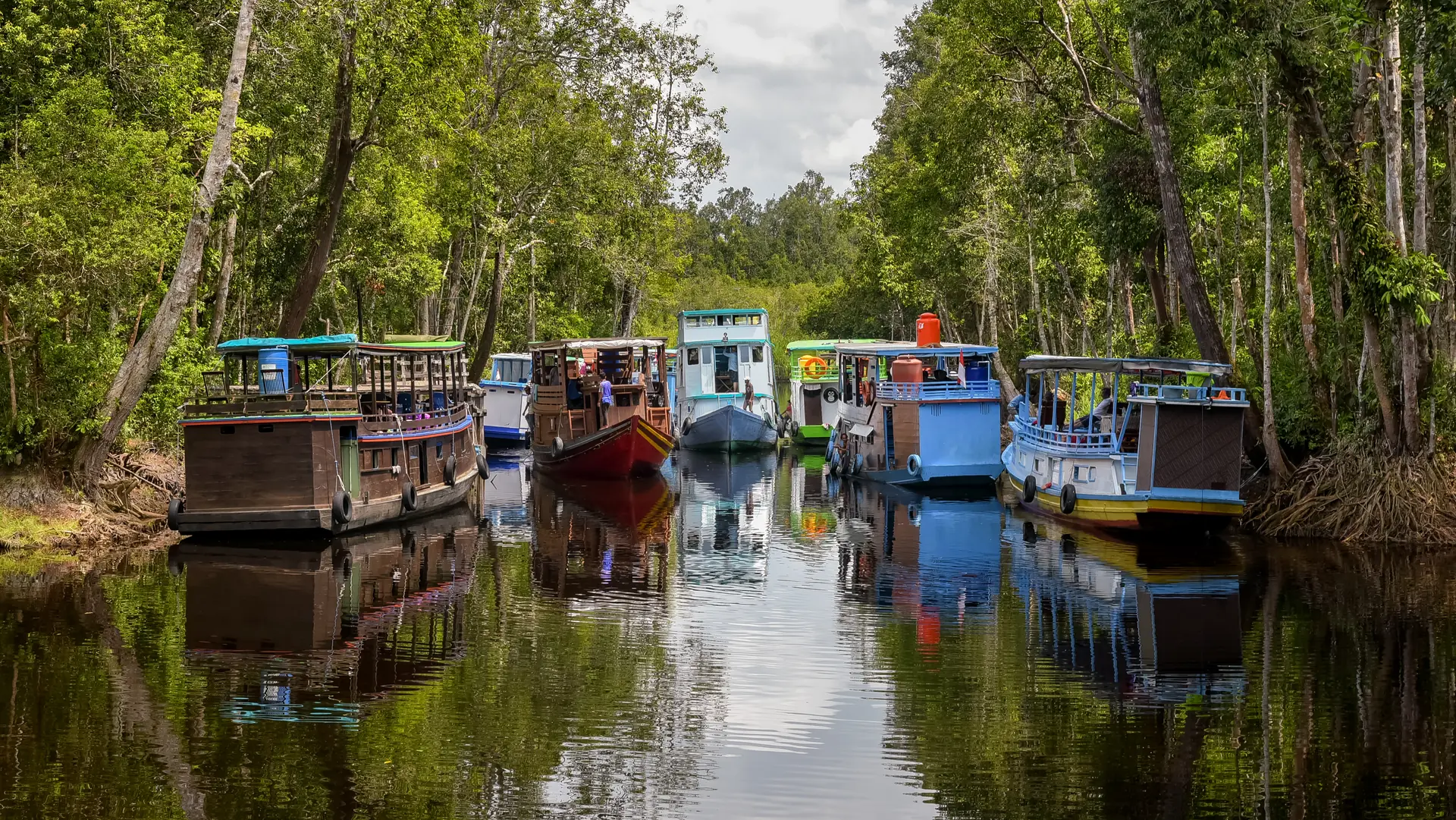
Tanjung Puting offers a wildlife experience that feels both authentic and intimate, without the crowds you might find at more accessible wildlife destinations. The park's unique boat-based exploration system creates an immersive journey where you'll live aboard a traditional klotok boat, sleeping under the stars while listening to the symphony of jungle sounds. The opportunity to see orangutans in their natural habitat is unparalleled, especially at feeding stations like those at Camp Leakey, where conservation efforts have been ongoing for decades. What makes this place truly special is the complete disconnection from modern life and the deep dive into nature. The journey itself becomes part of the adventure – from the boat ride along the coffee-colored Sekonyer River to the short treks through the jungle to reach orangutan feeding stations. However, it's important to note that this is not a luxury experience. The humidity is constant, mosquitoes are abundant, facilities are basic and the journey to reach the park requires effort. But for those willing to embrace a bit of discomfort, the reward is an unforgettable encounter with one of our closest animal relatives in one of Earth's most biodiverse ecosystems.
The main gateway to Tanjung Puting is through Pangkalan Bun, a city in Central Kalimantan. Most visitors fly to Pangkalan Bun's Iskandar Airport, which has connections from Jakarta and other Indonesian cities. From the airport, it's a 15-minute drive to Kumai harbor, where your klotok boat journey begins. Tour operators typically arrange airport pickup and transfer to the harbor. The boat trip from Kumai to the entrance of the Sekonyer River takes less than an hour, after which you'll continue deeper into the park.
Accommodation in Tanjung Puting is a unique experience centered around staying on traditional wooden klotok boats. These floating accommodations range from basic to somewhat comfortable, with most visitors sleeping on the upper deck under mosquito nets, lulled by jungle sounds. The boats typically have a crew including a captain, guide, cook and deckhand. For those preferring solid ground, there are limited options in Pangkalan Bun for before/after your park visit. The experience is rustic but authentic, with most tours being all-inclusive packages covering meals prepared by the boat's cook.
We calculate the average costs when travelling to destinations and compare those with the living costs at your home. With this you can get an estimate of how expensive or cheap the destination is for you.
To customise this, you can set up which location and price level are used for the calculations in your account settings.
The exchange rate price factor shows how expensive or cheap a currency currently is compared to its historical average. It's a quick way to see if a country is currently more or less affordable due to exchange rate changes.
Log in to add this place to a travel list and get a summary of all recommended items for your whole trip.
