








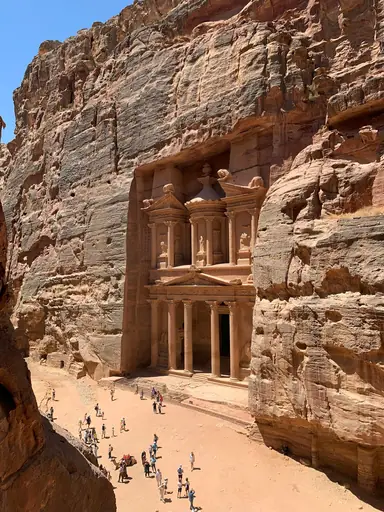


Africa › Ethiopia › Lalibela

Lalibela

Scroll
Stone churches echoing centuries of faith

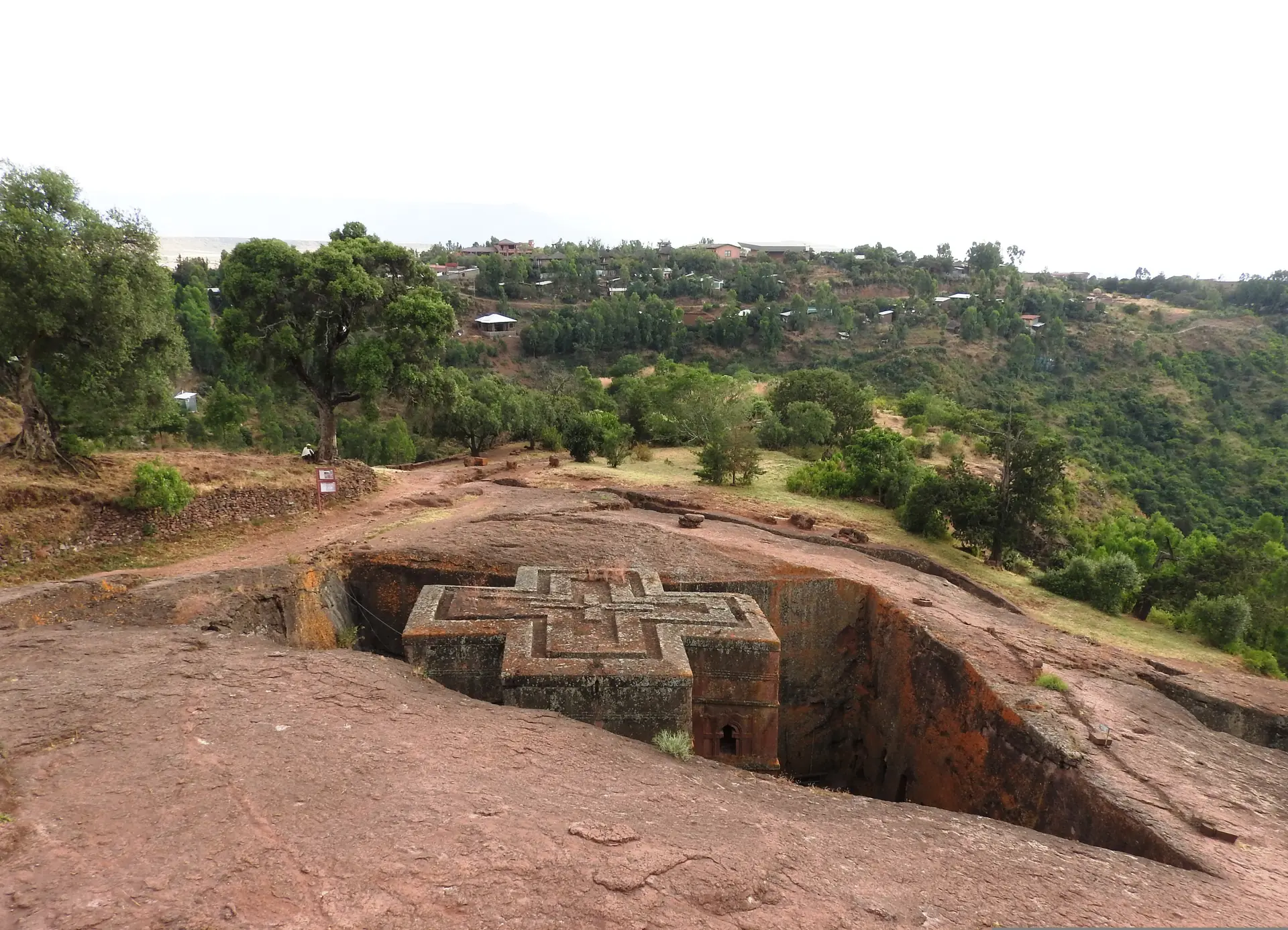
Lalibela in Ethiopia stands out as a place where history and faith shape daily life. Carved from rock centuries ago, these churches form a network of tunnels and structures that have served religious communities since their creation. The site remains active with worship, drawing visitors to see the detailed craftsmanship and learn about its cultural importance. Its location in the highlands adds to its distinct character, making it an important landmark for both locals and travelers interested in ancient architecture and living traditions.

Historic Site in Ethiopia
Climate zone: Mild highland

Mild highland: Highland climates in subtropics or tropics, with mild temperatures, distinct wet summers and dry or cooler winters.

See climate table
Ticket price: $$$
$Cheap
$$Medium
$$$Expensive, upscale
$$$+Very expensive, luxury
Safety: 7.0
General Safety:7
Accessibility:7
Read details
Tourist English: 2/5
In Lalibela, most locals speak Amharic, but many younger residents and tour guides have basic English skills. Tourist communication is generally smooth with simple phrases, though a translator may help for detailed questions.
There is a travel warning issued for this country. Please check the website of your country's foreign office for the latest information.
Last update: 12 Oct 2026
* We earn a commission from some links on this page.
Lalibela Summary
World-renowned for rock-hewn churches and pilgrimage. Explore ancient carved sanctuaries, watch religious ceremonies and walk historic stone passages.
Ethiopia – Quick facts
Power Grid: 220 V, 50 Hz
Plug: Type C , Type F
Type C:
Diagram of a Type C power plug
Type F:
Diagram of a Type F power plug

Read about power adapters
Currency: Ethiopian Birr (ETB)
£1 ≈ ETB 215.60
Cashless info: Rating 3/5
Cashless payments are becoming more common in Ethiopia, especially in urban areas. Credit and debit cards are accepted in larger hotels and businesses, but cash is still preferred in many places.

Save with a travel credit card
eSIM providers: Flexibility: Airalo
Read our in-depth comparison
Tipping: Tipping is not compulsory in Ethiopia, but small tips for good service are appreciated. It is common to tip restaurant staff about 10% and give small tips to hotel staff and taxi drivers.
Public drinking: Public drinking is generally not allowed in Ethiopia, and alcohol consumption is restricted to licensed venues like hotels, bars, and restaurants.
Public smoking: Smoking is prohibited in indoor public spaces, but smoking is allowed in outdoor areas, such as designated smoking zones in cafes and restaurants.
Meskel
(27 September)
Religious holiday celebrating the discovery of the True Cross
Timkat
(19 January)
Epiphany celebration with religious processions
Emergency contact: Emergency Numbers: 991 (Police), 907 (Ambulance), 939 (Fire)
Taxi apps: Ride
Other: Ethiopia is known for its ancient history, including the rock-hewn churches of Lalibela and the ruins of Aksum. The country's diverse culture and landscapes make it a fascinating destination, though infrastructure can be limited in rural areas.
Best times to travel

The best times to travel section shows how the months compare for a visit, so you can find the time of year that fits what you want to do.

Background colours of the months:
The colour shows the typical temperature: yellow (hot), green (mild) and blue (cold). How strong the colour is shows the travel season: full colour means high season, soft colour means shoulder season and soft-striped means off season.

Weather symbols:
Each month has one symbol showing what the weather is typically like, such as hot and sunny, freezing or a rainy or snowy season. Use them to quickly spot months that match the weather you want, or to avoid the ones that don't.

Crowdedness:
The people icon shows how busy the place usually is. The more people, the more crowded it gets.

Additional notes:
The grey info boxes point out special things worth knowing, like recurring weather issues or seasonal events.

for Lalibela, Ethiopia
☀️
Jan
☀️
Feb
☀️
Mar
☀️
Apr
☀️
May
☀️
Jun
⛈️
Jul
⛈️
Aug
☀️
Sep
☀️
Oct
☀️
Nov
☀️
Dec
High season: Jan. - Feb., Oct. - Dec.
Shoulder season: March - May, Sep.
Tap on a month for more info Hover over a month for more info
Genna (Ethiopian Christmas) on 7 January and Timkat (Epiphany) on 19 January draw tens of thousands of pilgrims; book accommodation months ahead

Lalibela stands as a remarkable place where history and faith shape daily life. The town in northern Ethiopia holds ancient churches carved from solid rock. These structures date back to the 12th century when King Lalibela aimed to create a spiritual center for his people. Each building tells stories through its design and location. Visitors see tunnels and chambers that connect different sites across the complex.

The churches of Lalibela are not just religious spots but also community hubs. Locals gather here for ceremonies, festivals and daily prayers. The site draws pilgrims from Ethiopia and beyond who walk long paths to reach specific chapels or altars. Some travelers note that the air feels heavy with history as they move through narrow passages between stone walls. The sound of chanting often echoes in the early morning hours.

Exploring Lalibela requires patience. Walking among the rock-cut structures takes time because each angle reveals new details. Guides explain how artisans worked without modern tools to shape these spaces over decades. Many people find the experience inspiring not only for its age but also for the skill involved in carving such a cohesive site from one material. The town’s layout shows careful planning around water channels and open areas.

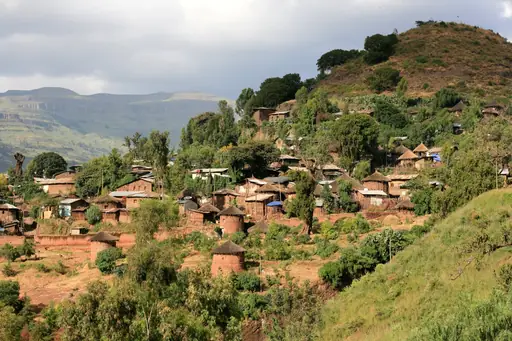
Visiting Lalibela connects travelers with Ethiopia’s deep cultural roots. The region remains active, with markets selling handmade crafts alongside food stalls serving local dishes. Sunlight changes the look of the rock walls throughout the day. Some visitors choose to stay overnight to witness evening prayers and hear stories shared by residents about their traditions. This approach helps support the community while learning about its past.

Knowledge before you go

  • Arrive early; crowds peak mid‑afternoon at Lalibela’s rock‑cut churches.
  • Wear comfortable shoes and bring a hat, as the uneven stone steps can be tiring for long walks.
  • Carry bottled water and light snacks; local vendors sell limited refreshments near the entrance gates.
  • Explore the lesser‑known St. George Church at dawn to experience quiet reverence before tourists arrive.

How to travel to Lalibela

Lalibela, located in northern Ethiopia’s Amhara region, is accessible primarily by road from major cities such as Addis Ababa. The journey covers approximately 370 kilometers and typically takes around six to eight hours via a well-maintained highway. Travelers can also reach Lalibela by domestic flights from Addis Ababa, with flight duration lasting about one hour. Road access includes regular bus services departing from the city center or nearby towns like Bahir Dar. For those preferring rail travel, the nearest railway station is in Addis Ababa, followed by a transfer to road transport for the final leg of the trip. The town’s remote location enhances its historical allure while requiring careful planning for arrival logistics.

Access summary

  • From Addis Ababa Bole (ADD): Domestic flight to Lalibela Airport (30–45 min); taxi 20 km (1 hour).
  • From Mekelle: Bus or shared taxi 4 hours; from Bahir Dar: 6 hours by road.
  • By train to Addis Ababa, then bus to Lalibela. Total travel 8–10 hours.

Where to stay near Lalibela

Lalibela offers a range of lodging that caters to both budget travelers and those seeking comfort. Guesthouses and small inns are plentiful around the town’s main square, providing basic amenities such as shared kitchens, Wi‑Fi and local cuisine at modest prices. For a more upscale experience, boutique hotels with traditional Ethiopian décor and private bathrooms can be found near the rock‑cut churches, often featuring rooftop terraces overlooking the historic site. Many accommodations emphasize sustainability, using locally sourced materials and offering organic meals. The area is renowned for its homestay options, allowing visitors to stay in family homes and immerse themselves in local culture while supporting community development.

Budget snapshot
Costs compared to home

We calculate the average costs when travelling to destinations and compare those with the living costs at your home. With this you can get an estimate of how expensive or cheap the destination is for you.

To customise this, you can set up which location and price level are used for the calculations in your account settings.

-67 %
Daily expenses in the region are around 67% lower than the average across United States. That means you'll spend a lot less on meals and getting around.
Exchange rate trend

The exchange rate price factor shows how expensive or cheap a currency currently is compared to its historical average. It's a quick way to see if a country is currently more or less affordable due to exchange rate changes.

-68 %
Your exchange rate (GBP to ETB) is 68% better than in recent years. That means travelling now is a lot cheaper compared to the past.

Safety information overview

General safety
7
Lalibela remains relatively safe for travelers, with low crime rates and a welcoming local community. Tourists should stay in well‑known guesthouses, avoid isolated areas after dark, keep valuables secure and respect local customs to ensure a smooth, incident‑free visit.
Accessi­bility
7
Lalibela’s rock‑cut churches are largely accessible, with paved paths and ramps to main entrances. However, uneven stone steps can be challenging for wheelchairs and some remote sites lack proper signage or guide services. Visitors should bring sturdy footwear and plan ahead for mobility needs.

Looking for inspiration?

Discover
Best scenic drive destinations in Africa
Road trips across Africa often mean covering serious distance, with some of the most memorable drives found in countries built around wide open, well maintained roads. Namibia…
Read more
Discover
Top motorcycling destinations and scenic routes
A great motorcycle route asks for more than scenery: it needs road surface, corner sequencing and enough remoteness to make the ride itself the point rather than simply transport…
Read more
Discover
Most famous pilgrimage destinations in Africa
Africa's pilgrimage traditions span deep, centuries-old roots, from rock-hewn churches central to annual Christian pilgrimage to cities anchoring significant Sufi traditions tied…
Read more
Discover
Best architecture destinations in Africa
Africa's architectural heritage spans an enormous chronological range, from the ancient stone complexes of the northeast and the monumental earthen mosque traditions of the west to…
Read more
Discover
Top spiritual travel destinations and wellness retreats
Spiritual travel works best at destinations with a genuine, long-standing tradition behind the practice on offer: places where meditation, ritual or retreat has been part of local…
Read more
Discover
Best traditional destinations in Africa
Africa's traditional destinations encompass some of the world's most diverse and ancient living cultures, craft traditions and ceremonial practices, with communities across the…
Read more
Discover
Pilgrimage destinations and sacred sites
Pilgrimage travel is among the oldest forms of purposeful journey, with sacred routes, shrine destinations and holy cities drawing millions of travellers annually across every…
Read more
Discover
Top architecture destinations and iconic landmarks
Architecture travel spans everything from ancient ceremonial complexes and medieval urban cores to the grands projets of the twentieth century and contemporary buildings that draw…
Read more
Discover
Best craft destinations in Africa
Africa's craft traditions encompass some of the world's most distinctive textile, ceramic, metalwork, basketry and woodcarving cultures, with making traditions rooted in specific…
Read more
Discover
Best motorcycle destinations in Africa
Africa has some of the most memorable roads on earth for riding a motorcycle, from smooth coastal highways to long gravel tracks where you might not see another vehicle for hours.…
Read more
Discover
Top traditional destinations and cultural heritage sites
Traditional destinations are those where cultural practices, craftsmanship, ceremony and ways of life that predate industrialisation and mass tourism remain visible and active…
Read more
Discover
Top ancient ruins destinations and archaeological sites
The world's most significant ancient ruin destinations range from the ceremonial complexes of early river civilisations and the monumental remains of classical empires to the less…
Read more
Discover
Top scenic drives and road trip routes
A great road trip has a rhythm all its own, built around the freedom to stop wherever looks interesting rather than sticking to someone else's schedule. Some travellers want a…
Read more
Discover
Best destinations to visit in December in Africa
December brings real contrast across Africa, with parts of the continent deep in wet season green while others hit their busiest, driest month of the year. East Africa's short…
Read more
Discover
Top religious sites and sacred destinations
For a lot of people, visiting a famous religious site is one of the most memorable parts of a trip, whether they are believers or just curious about how other people live and pray.…
Read more
Was this page helpful?
Feedback

