



North America › United States › Florida › Big Cypress National Preserve

Big Cypress National Preserve

Scroll
Florida's wild swamp wilderness experience

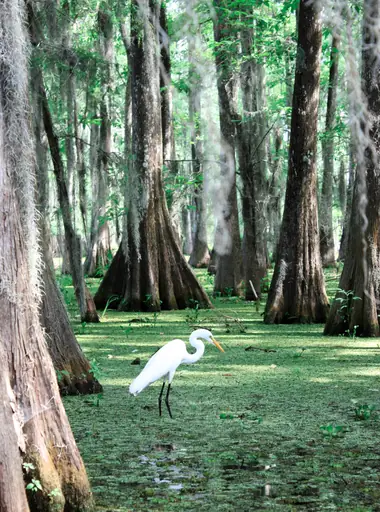
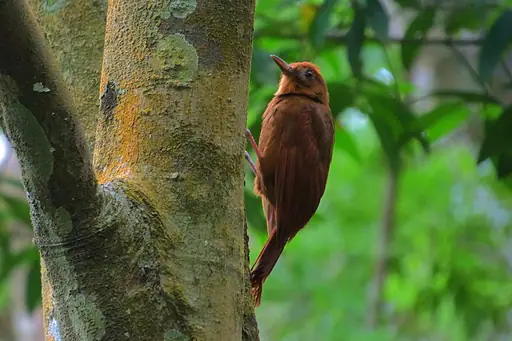
Big Cypress National Preserve covers over 700,000 acres of wetlands and pine flatwoods in southern Florida. The area is home to alligators, panthers and hundreds of bird species that rely on the unique mix of freshwater marshes and cypress swamps. Trails and boardwalks let visitors walk through sawgrass prairies and observe rare orchids along with native plants adapted to seasonal flooding. The preserve protects water resources for nearby cities while supporting wildlife research and low-impact recreation such as canoeing, hiking and birdwatching throughout the year.

Nature Reserve in United States
Climate zone: Tropical savanna

Tropical savanna: Tropical climates with distinct wet and dry seasons, warm year-round, featuring grasslands with scattered trees and shrubs.

See climate table
Price level: $$$
$Cheap
$$Medium
$$$Expensive, upscale
$$$+Very expensive, luxury
See price details
Safety: 6.5
General Safety:7
Health & medical:6
Accessibility:5
Tap water:6
Read details
Tourist English: 5/5
English is the primary language spoken throughout Big Cypress National Preserve. All park staff, rangers, and service providers in the area are fluent English speakers, making communication completely seamless for English-speaking visitors.
Last update: 12 Oct 2026
* We earn a commission from some links on this page.
Big Cypress National Preserve Summary

These place ratings give you a quick overview of how well a destination matches different types of trips.

‘Best for’ scores:
The specific interest scores show where this place really shines – whether it's ideal for hiking, food & drink experiences, museums or other activities. These highlights help you understand what makes the destination special at a glance.

‘Your personal’ scores:
This reflects how well a place matches your personal preferences. You can adjust the importances of travel topics or other personal requirements categories in your account settings.

‘Suited for’ badges:
These give you a quick overview of how well a destination suits specific types of travellers, to help you find the places that match your lifestyle, preferences or travel situation.

Read how our scores work
Great for wetlands wildlife and outdoor exploration. Go swamp hiking, spot alligators and birds, paddle quiet waterways and enjoy scenic drives through wild landscapes.
Place score
7.5
Best at:
Natural sites
10
Wildlife
9
Spotless
8
Secluded
7
Kayak & SUP
7
Personal score
?
Log in to see how this place matches your personal travel interests.
Suited for
👶 7
Families
🧓 6
Seniors
♻️ 9
Sustainability
❤️ 7
Couples
United States – Quick facts
Power Grid: 120 V, 60 Hz
Plug: Type A , Type B
Type A:
Diagram of a Type A power plug
Type B:
Diagram of a Type B power plug

Read about power adapters
Currency: US Dollar (USD)
£1 ≈ US$1.33
Cashless info: Rating 5/5
The U.S. is highly cashless, with credit and debit cards accepted almost everywhere. Mobile payment options like Apple Pay and Google Pay are widely used.

Save with a travel credit card
eSIM providers: Best value: Saily
Flexibility: Airalo
Read our in-depth comparison
Tipping: Tipping is customary and expected in the U.S. In restaurants, 15-20% is standard. Taxi drivers, hotel staff, and tour guides also expect tips, usually around 10-20% depending on the service.
Public drinking: Public drinking laws vary by state, but it is generally prohibited in public spaces without a permit.
Public smoking: Smoking is restricted in most indoor public spaces and some outdoor areas. Local laws vary.
Etiquette: Greet with a firm handshake, maintain eye contact, respect personal space, and avoid discussing politics or income unless invited to share opinions. Politeness and friendliness are appreciated.
Thanksgiving
(November)
A major holiday with closures and domestic travel surges.
Independence Day
(July)
Expect parades, fireworks, and celebrations nationwide.
Christmas
(December)
Markets, festive events, and crowded tourist spots.
Emergency contact: Emergency Number: 911 (Police, Fire, Ambulance)
Taxi apps: Uber, Lyft, Bolt
Helpful links: Wikipedia
Visa regulations
Customs & border control
Travel with medicine
Other: The U.S. is known for its diverse landscapes, cultural experiences, and regional cuisines. Public transport is efficient in cities but less so in rural areas. Renting a car is recommended for exploring national parks.
Best times to travel

The best times to travel section shows how the months compare for a visit, so you can find the time of year that fits what you want to do.

Background colours of the months:
The colour shows the typical temperature: yellow (hot), green (mild) and blue (cold). How strong the colour is shows the travel season: full colour means high season, soft colour means shoulder season and soft-striped means off season.

Weather symbols:
Each month has one symbol showing what the weather is typically like, such as hot and sunny, freezing or a rainy or snowy season. Use them to quickly spot months that match the weather you want, or to avoid the ones that don't.

Crowdedness:
The people icon shows how busy the place usually is. The more people, the more crowded it gets.

Additional notes:
The grey info boxes point out special things worth knowing, like recurring weather issues or seasonal events.

for Big Cypress National Preserve, United States
☀️
Jan
☀️
Feb
☀️
Mar
🔥
Apr
🌦️
May
🌦️
Jun
🌦️
Jul
🌦️
Aug
🌦️
Sep
🔥
Oct
☀️
Nov
☀️
Dec
High season: Jan. - April, Dec.
Shoulder season: Nov.
Crowdedness: 4 (Moderate tourist numbers)
Tap on a month for more info Hover over a month for more info
Dry season November to April is best for hiking and wildlife; wet season June to October brings flooded trails and heavy mosquitoes
Hurricane season June to November, with highest risk August to October

Why travel to Big Cypress National Preserve?

Big Cypress rewards visitors with an authentic wilderness experience that feels worlds away from Florida's crowded beaches and theme parks. The preserve's diverse habitats – from cypress swamps and wet prairies to pine forests – create a mosaic of ecosystems that support an astonishing array of wildlife. Paddling along Turner River or hiking the Florida Trail offers opportunities to spot alligators, river otters and wading birds in their natural habitat, while night skies reveal spectacular star-gazing due to minimal light pollution. The preserve's elevated boardwalks and accessible trails make it possible for almost anyone to experience this unique environment. What makes Big Cypress truly special is how it balances ecological preservation with traditional uses. Unlike many national parks, the preserve allows activities like hunting, off-road vehicle use in designated areas and even supports indigenous cultural practices of the Miccosukee and Seminole tribes who maintain deep connections to this land. However, visitors should be prepared for the challenges of a subtropical environment – mosquitoes can be relentless during summer months (May-September), afternoon thunderstorms are common and high humidity can make hiking uncomfortable. Additionally, while the preserve's remoteness is part of its charm, it also means limited services, so bringing adequate supplies is essential.

🏯Places worth seeing
  • 1 H. P. Williams Roadside Park
  • 2 Big Cypress Swamp Welcome Center
  • 3 Turner River Road
  • 4 Old Tamiami Trail
🎡Places for activities
  • 1 Bear Island
  • 2 Loop Road
  • 3 Florida Trail
  • 4 Gator Hook Trail
  • 5 Kirby Storter Boardwalk
  • 6 Big Cypress Oasis Visitor Center
  • 7 Burns lake campground
  • 8 Midway Campground
🏞️Natural landmarks
  • 1 Turner River
  • 2 Fakahatchee Strand
🛍️Shopping
  • 1 Smallwood Store
  • 2 Big Cypress Gallery
🎈Events
  • Big Cypress Birding Festival
  • Swamp Heritage Festival
  • Full Moon Guided Walks
  • Ranger-led Swamp Walks (seasonal)
  • Night Sky Programs
  • Miccosukee Indian Arts Festival (nearby)
  • Everglades City Seafood Festival (nearby)
  • Python Challenge
  • National Public Lands Day Events
  • Earth Day Celebrations

Knowledge before you go

  • Visit during dry season December to April for fewer bugs and better wildlife viewing.
  • Start at Nathaniel P. Reed or Oasis Visitor Centers for maps, ranger advice and current trail conditions before exploring.
  • Drive slowly on Loop Road or Turner River loops to spot alligators, birds and cypress swamps from your car safely.
  • Bring bug spray, water and check road conditions as heavy rains can flood gravel scenic drives and hiking trails quickly.

How to travel to Big Cypress National Preserve

Big Cypress National Preserve is located in southwest Florida, approximately 45 miles west of Miami. The most convenient airports are Miami International Airport (MIA) and Fort Lauderdale-Hollywood International Airport (FLL), both about 1.5 hours away by car. Southwest Florida International Airport (RSW) near Fort Myers is another option, about 1.5 hours to the northwest. Renting a car is essential as there is no public transportation to the preserve. The main access route is along US-41 (Tamiami Trail), which runs through the preserve connecting Miami and Naples. The preserve has two main visitor centers: Big Cypress Swamp Welcome Center near the eastern boundary and Oasis Visitor Center in the central area.

Access summary

  • From Miami International Airport (MIA): Rent a car, drive west, about 1.5–2 hours.
  • From Naples, Florida: Drive via I‑75 or US‑41, roughly 1–1.5 hours.
  • From Fort Lauderdale Airport (FLL): Rental car along I‑75 “Alligator Alley”, about 1.5–2 hours.

Where to stay in Big Cypress National Preserve

Accommodation within Big Cypress National Preserve is primarily camping-focused, with several developed campgrounds (Midway, Monument Lake and Burns Lake) offering basic facilities like restrooms and drinking water. Backcountry camping is available with permits. For those seeking more comfort, the nearest conventional lodging options are in Everglades City, Naples or Miami, all requiring some driving to access the preserve. A few small motels can be found along US-41, but these are limited. The preserve's campgrounds fill quickly during the dry season (November-April), so advance reservations are recommended, while during the wet season (May-October), availability is rarely an issue but mosquitoes can be intense.

How to get around Big Cypress National Preserve

Exploring Big Cypress National Preserve requires some planning as public transportation is non-existent within the preserve. The primary way to see the area is by private vehicle along the main roads - Tamiami Trail (US-41) running east-west and Loop Road providing a more scenic alternative. For a deeper wilderness experience, kayaking or canoeing along Turner River or hiking the Florida Trail offers access to areas unreachable by road. Off-road vehicles are permitted in designated areas with proper permits. The preserve is large and wild, so carrying detailed maps is essential, especially when venturing off main roads.
Budget snapshot
Costs compared to home

We calculate the average costs when travelling to destinations and compare those with the living costs at your home. With this you can get an estimate of how expensive or cheap the destination is for you.

To customise this, you can set up which location and price level are used for the calculations in your account settings.

+8 %
Daily expenses in the region are around 8% higher than the average across United States. That means you'll spend more on meals and getting around.
Exchange rate trend

The exchange rate price factor shows how expensive or cheap a currency currently is compared to its historical average. It's a quick way to see if a country is currently more or less affordable due to exchange rate changes.

-4 %
Your exchange rate (GBP to USD) is 4% better than in recent years. That means travelling now costs around the same compared to the past.

Travel costs (Data for Kendall West, United States - 69 km away)

To help you plan your trip, we provide estimated daily costs per person (when travelling as a pair) for different travel styles. These numbers give you an idea of what you might spend each day at this destination, including accommodation, food, transport and activities.

Additionally, we also provide average hotel costs for different travel styles to give you an estimate for the accommodation only.

Please note that these are only estimates. The real costs depend on booking times, season and other factors.

Daily cost summary

Travel style categories explained:

Backpacker:
Staying in hostels or budget hotels, cooking your own meals or eating cheap and choosing low-cost activities.

Mid-range:
Staying in mid-range hotels, eating at a mix of restaurants and casual spots and enjoying a variety of activities.

Luxury:
Staying in luxury hotels, dining out at high-end restaurants and enjoying premium experiences without worrying about the price.

Backpacker Mid-range Luxury
💵 Total costs per day, including accommodation
£65
£164
£443
🏨 Accommodation per night, per person
£23
£75
£188
🍝 Food per day
£35
£82
£228
🚕 Transportation per day
£7
£7
£27
Notable additional fees: Free. Off-road vehicle and backcountry permits are charged separately.
Food & Drink
🍽️ Restaurant Dinner, per person
£32
🍛 Lunch Set, per person
£19
🍟 Fast food combo
£9
🍝 Preparing your own food, per day
£12.50
☕ Cappuccino
£4.10
🍺 Beer in a restaurant, 0.5 l
£5
Transportation
🚌 Public transport ticket
£1.90
🚕 Taxi Ride, 10 km / 6 mi
£16
⛽ Petrol, 1 l
£0.65
Other
🎞️ Cinema ticket
£10
👩‍⚕️ Doctor's consult
£95
🤧 Cold medication
£9.50
💇 Basic haircut
£23

Safety information overview

General safety
7
Big Cypress is generally safe regarding crime, but natural hazards require caution. Alligators are common - maintain at least 15 feet distance. Be aware of poisonous snakes, particularly in tall grass. During summer, lightning from afternoon thunderstorms poses a significant risk.
Health & Medical
6
Medical facilities within the preserve are non-existent, with the nearest hospitals in Naples or Miami (1-2 hours away). Cell service is spotty, complicating emergency communication. Heat exhaustion and dehydration are common risks, especially during summer months. Insect-borne diseases are possible but rare.
Accessi­bility
5
Accessibility is limited in this wilderness area. The Kirby Storter Boardwalk and portions of the H.P. Williams Roadside Park are wheelchair accessible. Visitor centers are accessible, but most trails, waterways and backcountry areas require full mobility. Paved roads provide accessible wildlife viewing opportunities.
Tap water
6
Potable water is available at visitor centers and developed campgrounds, but not along trails or backcountry areas. The quality meets safety standards but may have a slight mineral taste. During hot months, carry more water than you think you'll need.

Looking for inspiration?

Discover
Stunning national parks and wilderness areas
National parks exist because someone decided that certain landscapes were too important to lose. The best of them protect ecosystems, wildlife and natural processes that would…
Read more
Discover
Best birdwatching destinations in North America
North America has one of the most developed birdwatching cultures in the world, and the continent's birdlife justifies it. With over 900 species recorded in the United States and…
Read more
Discover
Best couple vacation destinations in North America
North America might not trade on romance the way some continents do, but couples who look past the clichés will find an almost unfair amount of variety waiting for them here.…
Read more
Discover
Best wildlife destinations in North America
North America's wildlife offer is defined by scale and variety. From Arctic marine mammals and great bear populations to desert reptile ecosystems and the largest remaining bison…
Read more
Discover
Best eco-tourism destinations in North America
One Central American country remains one of the world's most cited ecotourism success stories, having reversed significant deforestation through tourism revenue tied directly to…
Read more
Discover
Top birdwatching destinations and avian hotspots
Birdwatching has a way of changing how you travel. Once you start paying attention to what's flying, perching and calling overhead, a destination opens up in ways that a standard…
Read more
Discover
Best couple holiday destinations
Travelling as a couple sounds simple enough, yet the best couple holiday destinations mean something different to almost every pair. What feels romantic to one couple can feel like…
Read more
Discover
Stunning national parks and wilderness areas in North America
Read more
Discover
Best natural wonder destinations in North America
North America's natural wonders operate at a scale that can be genuinely difficult to comprehend until you are standing in front of them. The continent's geological history has…
Read more
Discover
Top stargazing destinations and dark sky reserves
The best dark sky destinations are found far from urban light pollution, typically in high-altitude deserts, remote island locations and vast uninhabited interior regions.…
Read more
Discover
Top rural retreat destinations and countryside getaways
Rural retreat travel is defined by the deliberate removal from urban pace and density, with landscape immersion, slower rhythms and direct engagement with food, nature and local…
Read more
Discover
Extraordinary natural wonders and scenic landscapes
Natural wonders occupy a different category from other travel destinations. They are places where the scale, the geology, the light or the sheer improbability of what exists there…
Read more
Discover
Best rural retreat destinations in North America
North America's rural retreat offer ranges from the vineyard valleys and coastal farmland of the Pacific coast to the forests and lake districts of the northeast, the ranching…
Read more
Discover
Amazing wildlife encounters and natural habitats
Wildlife encounters of real quality are becoming rarer and finding them requires more intention than it once did. The destinations that still offer genuine, undisturbed wildlife in…
Read more
Discover
Top ecotourism destinations and sustainable travel hubs
Travel and conservation do not always go hand in hand, but eco tourism is built on the idea that a trip can truly support the places it visits rather than just pass through them.…
Read more
Was this page helpful?
Feedback

