















North America › Canada › Newfoundland

Newfoundland

Scroll
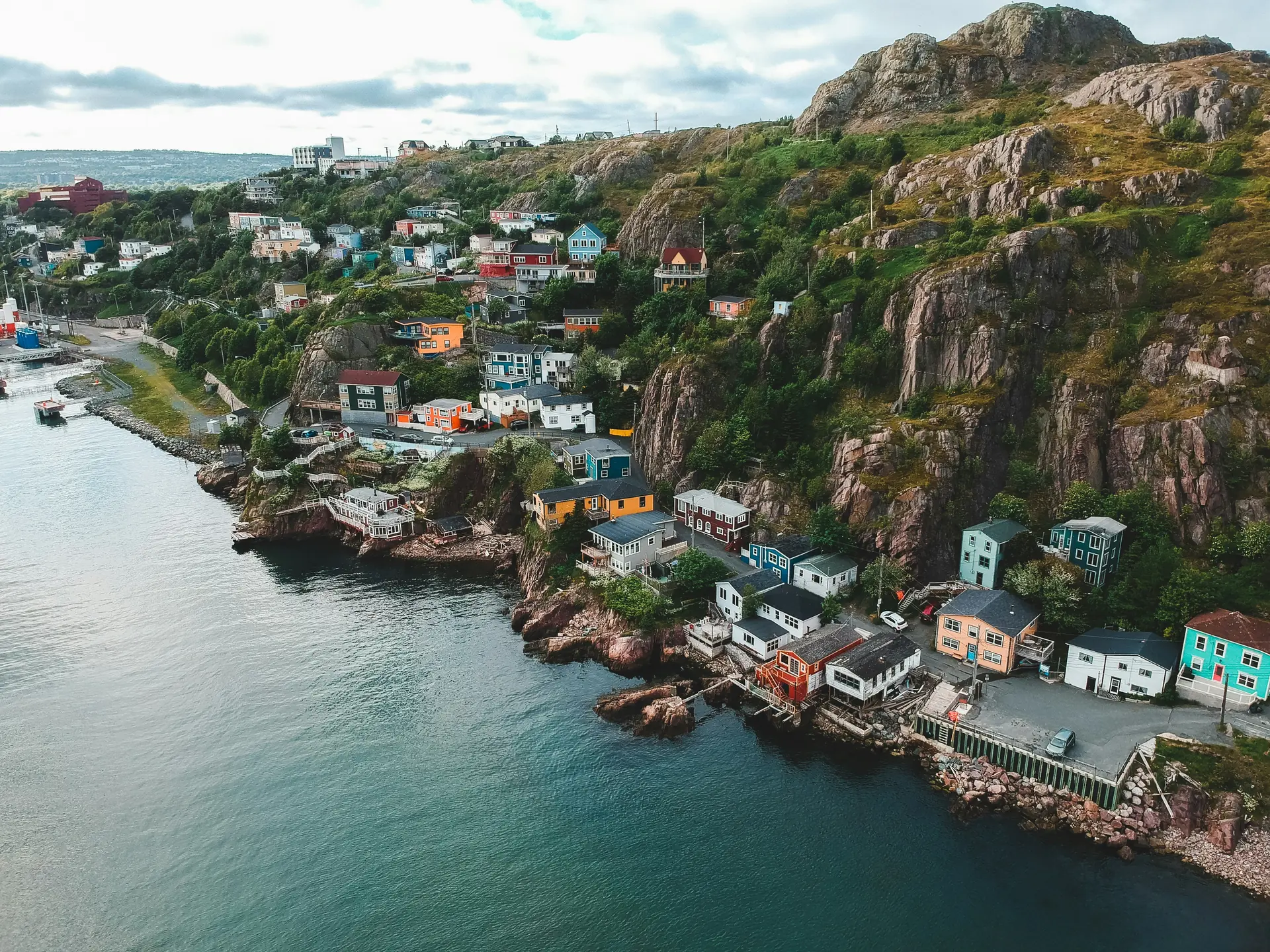
Coastal charm meets rugged wilderness on island

Newfoundland is a large island off Canada’s eastern coast with rugged coastlines and rolling hills. The capital city, St. John’s, features colorful buildings and historic sites dating back centuries. The land includes rocky shores, dense forests and open spaces where wildflowers grow in summer. Local communities rely on fishing and small-scale farming for their livelihoods. Weather changes quickly here due to ocean influences, so layers are useful year-round. Visitors can explore lighthouses along the cliffs or taste seafood straight from the sea at family-run restaurants.

Island in Canada
Climate zone: Warm continental

Warm continental: Humid continental climates with warm summers, cold winters and evenly distributed precipitation, typical of northern interior mid-latitudes.

See climate table
Price level: $$$
$Cheap
$$Medium
$$$Expensive, upscale
$$$+Very expensive, luxury
See price details
Safety: 8.2
General Safety:9
Health & medical:7
Accessibility:5
Tap water:9
Read details
Tourist English: 3/5
In Newfoundland, English is widely spoken and understood by locals, especially in towns and tourist spots. Visitors will find clear signage, friendly conversations and easy navigation throughout the province.
Last update: 12 Oct 2026
* We earn a commission from some links on this page.
Newfoundland Summary

These place ratings give you a quick overview of how well a destination matches different types of trips.

‘Best for’ scores:
The specific interest scores show where this place really shines – whether it's ideal for hiking, food & drink experiences, museums or other activities. These highlights help you understand what makes the destination special at a glance.

‘Your personal’ scores:
This reflects how well a place matches your personal preferences. You can adjust the importances of travel topics or other personal requirements categories in your account settings.

‘Suited for’ badges:
These give you a quick overview of how well a destination suits specific types of travellers, to help you find the places that match your lifestyle, preferences or travel situation.

Read how our scores work
Outstanding for rugged coastlines and wildlife. Hike dramatic sea cliffs, watch whales and seabirds, explore colorful fishing towns and drive scenic coastal routes.
Place score
9.3
Best at:
Sea
9
Natural sites
9
Islands
8
Spotless
8
Hiking
8
Personal score
?
Log in to see how this place matches your personal travel interests.
Suited for
👶 6
Families
🧓 6
Seniors
👩 8
Solo
🌈 8
LGBTQ+
Canada – Quick facts
Power Grid: 120 V, 60 Hz
Plug: Type A , Type B
Type A:
Diagram of a Type A power plug
Type B:
Diagram of a Type B power plug

Read about power adapters
Currency: Canadian Dollar (CAD)
£1 ≈ CA$1.87
Cashless info: Rating 5/5
Cashless payments are widely accepted, especially in urban areas. Most businesses accept credit and debit cards, and mobile payment options like Apple Pay are popular.

Save with a travel credit card
eSIM providers: Best value: Saily
Flexibility: Airalo
Read our in-depth comparison
Tipping: Tipping is customary in Canada, with a typical tip of 10-20% in restaurants. Tipping is also expected in taxis and for hotel staff, usually 1-2 CAD for bellhops and housekeepers.
Public drinking: Public drinking laws vary by province, but it's often allowed in designated areas such as festivals or certain parks.
Public smoking: Smoking is prohibited indoors in public spaces and in most outdoor spaces in urban areas. Some provinces have stricter laws than others.
Canada Day
(July)
The country celebrates with fireworks and festivals. Expect crowded tourist spots and high demand for accommodations.
Thanksgiving
(October)
A major family holiday with many businesses closed, especially in rural areas.
Christmas
(December)
Festive markets and winter activities are popular, but expect higher accommodation prices and busy cities.
Emergency contact: Emergency Number: 911 (Police, Fire, Ambulance)
Taxi apps: Uber, Lyft, Bolt
Other: Canada is vast, so be prepared for long distances between cities and varying weather conditions depending on the region.
Best times to travel

The best times to travel section shows how the months compare for a visit, so you can find the time of year that fits what you want to do.

Background colours of the months:
The colour shows the typical temperature: yellow (hot), green (mild) and blue (cold). How strong the colour is shows the travel season: full colour means high season, soft colour means shoulder season and soft-striped means off season.

Weather symbols:
Each month has one symbol showing what the weather is typically like, such as hot and sunny, freezing or a rainy or snowy season. Use them to quickly spot months that match the weather you want, or to avoid the ones that don't.

Crowdedness:
The people icon shows how busy the place usually is. The more people, the more crowded it gets.

Additional notes:
The grey info boxes point out special things worth knowing, like recurring weather issues or seasonal events.

for Newfoundland, Canada
🌨️
Jan
🌨️
Feb
🌨️
Mar
🌨️
Apr
☁️
May
☁️
Jun
🌥️
Jul
☁️
Aug
☁️
Sep
☁️
Oct
❄️
Nov
🌨️
Dec
High season: June - Aug.
Shoulder season: May, Sep.
Crowdedness: 3 (Few tourists)
Tap on a month for more info Hover over a month for more info
Many tours, B&Bs and attractions are closed from mid October to late May, main season June to September
Iceberg season late May to early July, best on the northeast coast and Iceberg Alley
Whale and puffin season June to August, capelin spawning brings humpbacks close to shore late June to July

Why travel to Newfoundland?

Newfoundland offers a distinctive blend of natural beauty, cultural heritage and quiet charm that appeals to travelers seeking an authentic North‑American experience. The island’s rugged coastline is framed by dramatic cliffs, sea stacks and expansive sandy beaches such as those at Cape St. George and the Bay of Islands. These settings provide excellent opportunities for kayaking, whale watching and birdwatching, especially during the spring migration when puffins and other seabirds are abundant. The capital, St. John’s, is a historic town with colorful row houses, cobblestone streets and a lively waterfront. Visitors can explore the Maritime Museum of the Atlantic to learn about the region’s fishing history and the Titanic’s connection to the island. Local cuisine – particularly fresh cod, lobster and the iconic “Jigg's dinner” – offers a taste of Newfoundland’s culinary traditions. Outdoor enthusiasts will appreciate the numerous hiking trails in Gros Morne National Park, a UNESCO World Heritage Site that features fjords, granite peaks and unique geological formations. The park also hosts guided tours that explain the island’s complex geology and glacial history. For those interested in music and storytelling, the annual Newfoundland Folk Festival showcases traditional folk songs and contemporary performances. The island’s welcoming communities, combined with its unspoiled landscapes and rich maritime culture, make Newfoundland a rewarding destination for travelers who value authenticity over spectacle.

🏯Places worth seeing
  • 1 L’Anse aux Meadows National Historic Site
  • 2 Gros Morne National Park
  • 3 Western Brook Pond
  • 4 Cape Spear
  • 5 Fogo Island
🏞️Natural landmarks
  • 1 Lance Cove
  • 2 Western Brook Pond
  • 3 Gros Morne Mountain Trail
  • 4 Cape St. Mary's Ecological Reserve
🛍️Shopping
  • 1 The Rooms

Knowledge before you go

  • Pack waterproof gear; Newfoundland weather is unpredictable even in summer.
  • Reserve accommodations early, especially during the peak July‑August tourist season, to secure better rates and availability.
  • Learn basic French phrases; many locals appreciate bilingual greetings, particularly in coastal towns with historic French influence.
  • Explore the island’s lighthouses by bike or kayak for unique scenic routes that reveal hidden coves and local wildlife habitats.

How to travel to Newfoundland

Travel to Newfoundland, an island province of Canada, primarily involves air or sea access. The main entry point is through St. John’s International Airport (YYT), located in the capital city of St. John’s. Direct flights operate seasonally from major Canadian cities such as Toronto, Montreal and Halifax. For international visitors, connecting flights via these hubs are common. Alternatively, ferry services connect Newfoundland to mainland Canada; the Marine Atlantic terminal at North Sydney, Nova Scotia, offers vehicle and passenger transport to Placentia Bay on the island’s east coast. Once on the island, local transportation includes rental cars, buses and taxis for regional travel. Weather conditions may affect access during winter months due to snow or storms.

Access summary

  • From St. John's International (YYT): Direct flights from Toronto (4h) and New York (3h).
  • From Halifax (YHZ): 1‑hour flight to St. John’s; ferry from Harbour Grace (2h).
  • Ferry from Argentia to St. John's: 30 minutes; popular for scenic coastal tours.

Where to stay in Newfoundland

Newfoundland offers a spectrum of lodging from cozy bed‑and‑breakfasts tucked into historic homes to modern boutique inns overlooking the Atlantic. In St. John’s, you’ll find a mix of heritage cottages and contemporary apartments that cater to both budget travelers and those seeking upscale comfort. The island’s rural towns feature charming farm stays and eco‑lodges built with reclaimed timber, reflecting local craftsmanship. Along the coast, many accommodations boast sea‑view suites and private balconies, capitalizing on dramatic cliffs and iceberg sightings. Seasonal cabins in Gros Morne National Park provide rustic appeal for hikers, while luxury lodges near L’Anse aux Meadows offer gourmet dining and spa services. Overall, Newfoundland balances affordability with authentic, high‑quality experiences that celebrate its maritime culture.

How to get around Newfoundland

To explore Newfoundland, the most efficient way to travel is by car, as it offers flexibility across rugged coastlines and remote communities. Renting a vehicle allows access to scenic routes like the Trans-Canada Highway and the iconic Cabot Trail. For those preferring public transport, regional buses operated by companies such as ACI connect major towns like St. John’s, Placentia and Corner Brook, though schedules may be limited in rural areas. Ferries are essential for reaching the island’s outlying regions, including the Bonavista Peninsula and Gros Morne National Park. Cycling is also popular along coastal paths, while domestic flights link Newfoundland to mainland Canada. Always check seasonal road conditions, especially in winter, as snow and ice can impact travel plans.
Budget snapshot
Costs compared to home

We calculate the average costs when travelling to destinations and compare those with the living costs at your home. With this you can get an estimate of how expensive or cheap the destination is for you.

To customise this, you can set up which location and price level are used for the calculations in your account settings.

-31 %
Daily expenses in the region are around 31% lower than the average across United States. That means you'll spend considerably less on meals and getting around.
Exchange rate trend

The exchange rate price factor shows how expensive or cheap a currency currently is compared to its historical average. It's a quick way to see if a country is currently more or less affordable due to exchange rate changes.

-10 %
Your exchange rate (GBP to CAD) is 10% better than in recent years. That means travelling now is cheaper compared to the past.

Travel costs

To help you plan your trip, we provide estimated daily costs per person (when travelling as a pair) for different travel styles. These numbers give you an idea of what you might spend each day at this destination, including accommodation, food, transport and activities.

Additionally, we also provide average hotel costs for different travel styles to give you an estimate for the accommodation only.

Please note that these are only estimates. The real costs depend on booking times, season and other factors.

Daily cost summary

Travel style categories explained:

Backpacker:
Staying in hostels or budget hotels, cooking your own meals or eating cheap and choosing low-cost activities.

Mid-range:
Staying in mid-range hotels, eating at a mix of restaurants and casual spots and enjoying a variety of activities.

Luxury:
Staying in luxury hotels, dining out at high-end restaurants and enjoying premium experiences without worrying about the price.

Backpacker Mid-range Luxury
💵 Total costs per day, including accommodation
£65
£122
£304
🏨 Accommodation per night, per person
£32
£66
£146
🍝 Food per day
£26
£47
£127
🚕 Transportation per day
£7
£8
£30
Food & Drink
🍽️ Restaurant Dinner, per person
£17
🍛 Lunch Set, per person
£11
🍟 Fast food combo
£8
🍝 Preparing your own food, per day
£10
☕ Cappuccino
£1.90
🍺 Beer in a restaurant, 0.5 l
£2.70
Transportation
🚌 Public transport ticket
£1.80
🚕 Taxi Ride, 10 km / 6 mi
£18
⛽ Petrol, 1 l
£0.95
Other
🎞️ Cinema ticket
£8
👩‍⚕️ Doctor's consult
£90
🤧 Cold medication
£8
💇 Basic haircut
£14

Safety information overview

General safety
9
Newfoundland remains one of Canada’s safest destinations, with low crime rates and friendly locals. Travelers rarely encounter petty theft or violent incidents. Still, exercise standard precautions: secure valuables, avoid isolated areas at night and stay informed about local weather advisories.
Health & Medical
7
Newfoundland offers high‑standard medical care, with well‑equipped hospitals and a robust public health system. Clean air and low pollution reduce respiratory risks, though the remote island’s limited specialist services may require travel for advanced procedures. Overall, healthcare is reliable and accessible.
Accessi­bility
5
Newfoundland offers mixed accessibility: many historic sites and downtown St. John’s have ramps, but older buildings and rugged coastal trails can be uneven. Public transport is limited; taxis are available. Plan ahead for mobility aids and check local guides for accessible accommodations.
Tap water
9
Newfoundland’s tap water is among North America’s best – clean, soft and treated to high safety standards. Public fountains are plentiful in towns and cities and most hotels provide filtered taps. Hydration is hassle‑free, with reliable, great‑tasting water everywhere.

Looking for inspiration?

Discover
Best birdwatching destinations in North America
North America has one of the most developed birdwatching cultures in the world, and the continent's birdlife justifies it. With over 900 species recorded in the United States and…
Read more
Discover
Top digital nomad destinations and remote work hubs in North America
North America gives remote workers a strong mix of reliable infrastructure and genuine variety, from busy coastal cities to small mountain towns. Some remote workers want a big…
Read more
Discover
Best couple vacation destinations in North America
North America might not trade on romance the way some continents do, but couples who look past the clichés will find an almost unfair amount of variety waiting for them here.…
Read more
Discover
Best destinations for first-time travelers in North America
North America offers a comfortable starting point for many first-time travelers, particularly those already familiar with English speaking countries. The United States and…
Read more
Discover
Best destinations to visit in August in North America
August keeps North America in full summer mode, even as the first signs of the season winding down start to appear by month's end. National parks remain busy through most of…
Read more
Discover
Top birdwatching destinations and avian hotspots
Birdwatching has a way of changing how you travel. Once you start paying attention to what's flying, perching and calling overhead, a destination opens up in ways that a standard…
Read more
Discover
Best travel destinations for seniors in North America
North America offers older travelers a strong mix of accessible infrastructure and destinations built specifically with comfort in mind. National parks across the continent have…
Read more
Discover
Top digital nomad destinations and remote work hubs in 2026
Working from anywhere in the world sounds simple until you actually try it and the best digital nomad destinations look different depending on what kind of remote worker you are.…
Read more
Discover
Best couple holiday destinations
Travelling as a couple sounds simple enough, yet the best couple holiday destinations mean something different to almost every pair. What feels romantic to one couple can feel like…
Read more
Discover
Best destinations to visit in July in North America
July marks peak summer across North America, with national parks, beaches and cities all drawing their largest crowds of the year. Independence Day celebrations kick off the…
Read more
Discover
Best destinations for first-time travellers
A first trip abroad works best somewhere that eases you in, rather than throwing every possible culture shock and logistical headache at you at once. Some first-time travellers…
Read more
Discover
Best travel destinations for seniors
Senior travel covers a wide range, from slow, low effort trips built around comfort to more independent trips for travellers who still want to cover plenty of ground. Some…
Read more
Discover
Most beautiful beaches and coastal escapes
For a lot of people, a beach is the whole point of a holiday, but what makes a beach day perfect really depends on personal taste. Some travellers want isolation and the feeling…
Read more
Discover
Stunning national parks and wilderness areas
National parks exist because someone decided that certain landscapes were too important to lose. The best of them protect ecosystems, wildlife and natural processes that would…
Read more
Discover
Intimate escapes and romantic getaways
The most memorable trips for couples tend to have less to do with luxury and more to do with the quality of shared experience. A place that slows you down, removes the usual…
Read more
Was this page helpful?
Feedback

