


Europe › Spain › Galicia › Santiago de Compostela

Santiago de Compostela

Scroll
A Pilgrimage Through History and Charm

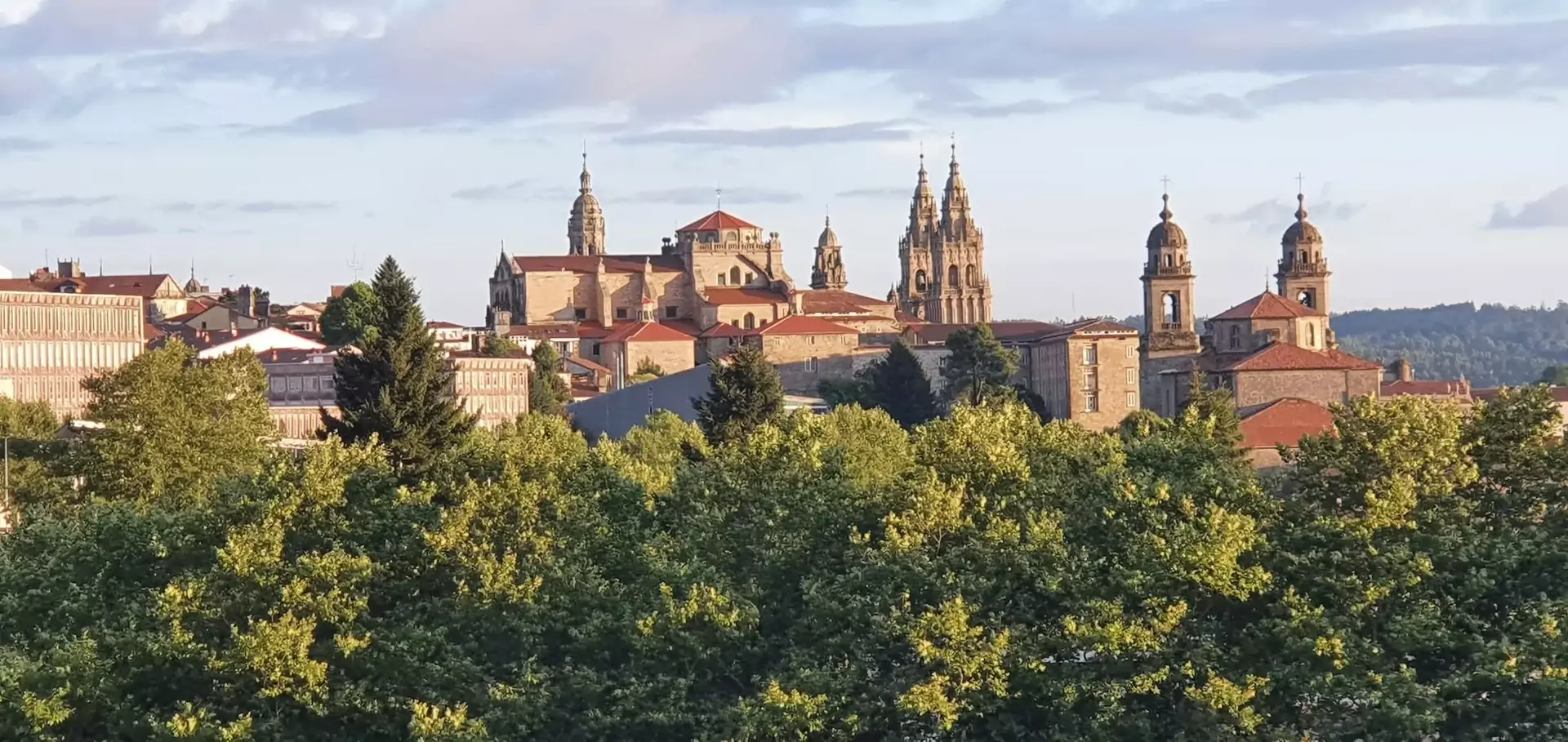
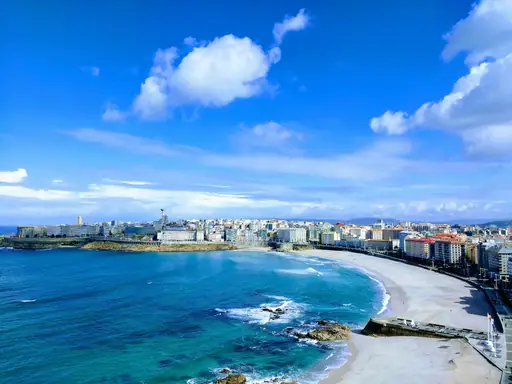
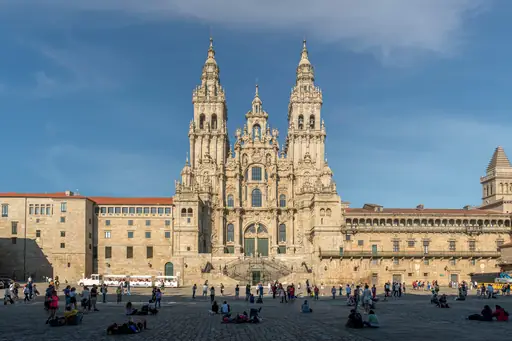
Santiago de Compostela stands in northwestern Spain as a historic city shaped by centuries of pilgrimage and tradition. Its old town, marked by stone streets and medieval architecture, draws visitors to the Cathedral of Santiago, believed to hold the remains of Saint James. The region’s green landscapes offer hiking trails along the Camino de Santiago route while coastal towns provide seafood markets and Atlantic views. Local festivals celebrate cultural heritage through music and dance, reflecting Galicia’s distinct identity within Spain.

City in Spain
Climate zone: Mediterranean

Mediterranean: Mediterranean-type climates with warm, dry summers and cool, wet winters, often at higher elevations or coastal latitudes.

See climate table
Price level: $$$
$Cheap
$$Medium
$$$Expensive, upscale
$$$+Very expensive, luxury
See price details
Safety: 7.9
General Safety:8
Health & medical:8
Accessibility:6
Tap water:9
Read details
Tourist English: 4/5
Many locals, especially in the tourism sector, speak English well. English is also common in museums, hotels, and on guided tours, but some basic Spanish can be helpful.
Last update: 12 Oct 2026
* We earn a commission from some links on this page.
Santiago de Compostela Summary

These place ratings give you a quick overview of how well a destination matches different types of trips.

‘Best for’ scores:
The specific interest scores show where this place really shines – whether it's ideal for hiking, food & drink experiences, museums or other activities. These highlights help you understand what makes the destination special at a glance.

‘Your personal’ scores:
This reflects how well a place matches your personal preferences. You can adjust the importances of travel topics or other personal requirements categories in your account settings.

‘Suited for’ badges:
These give you a quick overview of how well a destination suits specific types of travellers, to help you find the places that match your lifestyle, preferences or travel situation.

Read how our scores work
Famous for pilgrimage history and cathedral visits. Walk historic squares, explore medieval streets and experience the final stop of the Camino.
Place score
8.8
Best at:
Historic sites
10
Religious sites
10
Pilgrimage
10
Walkable
9
Local cuisine
9
Personal score
?
Log in to see how this place matches your personal travel interests.
Suited for
👶 8
Families
🧓 7
Seniors
🛡️ 9
Travel Beginners
💻 9
Digital Nomads
Spain – Quick facts
Power Grid: 230 V, 50 Hz
Plug: Type C , Type F
Type C:
Diagram of a Type C power plug
Type F:
Diagram of a Type F power plug

Read about power adapters
Currency: Euro (EUR)
£1 ≈ €1.19
Cashless info: Rating 5/5
Cashless payment is widely accepted in Spain, particularly in urban areas and tourist destinations. Credit and debit cards are commonly used, and mobile payment options are available in many establishments.

Save with a travel credit card
eSIM providers: Best value: Saily
Flexibility: Airalo
Read our in-depth comparison
Tipping: Tipping is not mandatory in Spain but appreciated for good service. In restaurants, rounding up the bill or leaving 5-10% is customary. Taxi drivers and hotel staff may also be tipped, though it is less common.
Public drinking: Public drinking is restricted in some regions, particularly in tourist-heavy cities. Local laws may vary.
Public smoking: Smoking is banned indoors in public places but allowed in designated outdoor areas.
La Tomatina
(August)
A famous tomato-throwing festival, expect large crowds in Buñol.
Semana Santa
(March/April)
Religious parades and events make this a busy time in major cities.
Christmas
(December)
Markets and festive celebrations, with tourist areas becoming busier.
Emergency contact: Emergency Number: 112 (Police, Fire, Ambulance)
Taxi apps: Cabify, Bolt, Uber
Other: Spain is known for its diverse culture, stunning architecture, and vibrant festivals. Public transport is reliable and efficient, making it easy to explore.
Best times to travel

The best times to travel section shows how the months compare for a visit, so you can find the time of year that fits what you want to do.

Background colours of the months:
The colour shows the typical temperature: yellow (hot), green (mild) and blue (cold). How strong the colour is shows the travel season: full colour means high season, soft colour means shoulder season and soft-striped means off season.

Weather symbols:
Each month has one symbol showing what the weather is typically like, such as hot and sunny, freezing or a rainy or snowy season. Use them to quickly spot months that match the weather you want, or to avoid the ones that don't.

Crowdedness:
The people icon shows how busy the place usually is. The more people, the more crowded it gets.

Additional notes:
The grey info boxes point out special things worth knowing, like recurring weather issues or seasonal events.

for Santiago de Compostela, Spain
🌧️
Jan
🌥️
Feb
🌥️
Mar
☁️
Apr
🌥️
May
🌤️
Jun
🌤️
Jul
🌤️
Aug
🌤️
Sep
🌤️
Oct
🌧️
Nov
☁️
Dec
High season: May - Sep.
Shoulder season: April, Oct.
Crowdedness: 8 (Very crowded)
Tap on a month for more info Hover over a month for more info
Camino pilgrim season April to October, many albergues on the route close November to March
Feast of Saint James on 25 July, the city's main festival with a week of events
Holy Year 2027: significantly more pilgrims than usual throughout the year

Why travel to Santiago de Compostela?

Santiago de Compostela is famous as the endpoint of the Camino de Santiago pilgrimage, attracting travelers with its spiritual and historical significance. The city's old town is a UNESCO World Heritage Site, brimming with charming squares, historic buildings and lively traditions. The local Galician cuisine, especially seafood, is fantastic. Be ready for frequent rain, though – it adds to the city's mystical feel but can catch you off guard.

🏯Places worth seeing
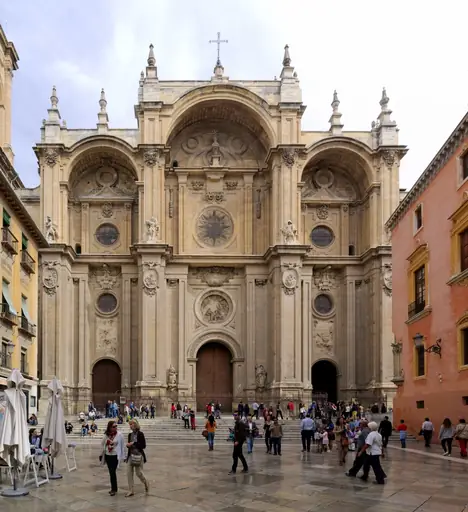
  • 1 Santiago de Compostela Cathedral
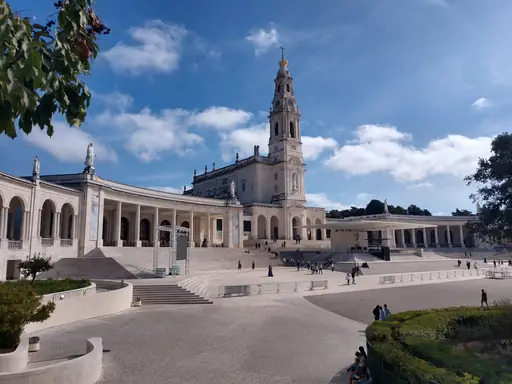
    The Santiago de Compostela Cathedral stands as a majestic pilgrimage destination in Galicia, Spain. Its Romanesque architecture and golden dome mark the end of the Camino de Santiago route, drawing thousands of visitors annually to this historic spiritual center.
  • 2 Praza do Obradoiro
  • 3 Museo do Pobo Galego
  • 4 Praza da Quintana de Mortos
  • 5 Rúa do Franco
  • 6 Parador Hostal dos Reis Católicos
  • 7 Centro Galego de Arte Contemporánea
🎡Places for activities
  • 1 Cidade da Cultura de Galicia
  • 2 Pilgrim House
  • 3 Casa do Cabido
  • 4 Mercado de Abastos de Santiago
  • 5 Teatro Principal
  • 6 Fundación Eugenio Granell
🏞️Natural landmarks
  • 1 Parque de Belvís
  • 2 Monte do Gozo
  • 3 Parque de San Domingos de Bonaval
  • 4 Fervenza do Toxa
  • 5 Río Tambre
🛍️Shopping
  • 1 Mercado de Abastos
  • 2 Carpintaría Métalica Artesanía Desigual
  • 3 Praza de Abastos
  • 4 El Corte Inglés
  • 5 Galerías Pontepedriña
🎈Events
  • Feast of St. James (July 25)
  • Semana Santa (Holy Week)
  • Festival Internacional de Curtametraxes
  • Camino de Santiago Film Festival
  • Fiesta de San Juan (June)
  • Magostos (Chestnut Festival)
  • Apóstol Santiago Celebrations
  • Carnival in February
  • Festival de la Luz
  • Feria del Libro (Book Fair)

Knowledge before you go

  • Book Cathedral rooftop tours months ahead online.
  • Wear comfortable shoes for the city's hilly cobblestone streets and pilgrim paths.
  • Try pulpo a la gallega and local Albariño wine at traditional Galician taverns.
  • Time your visit for the Botafumeiro swinging incense ceremony during pilgrim masses.

How to travel to Santiago de Compostela

Santiago-Rosalía de Castro Airport (SCQ) offers domestic and some international flights. Buses and trains connect to major cities like Madrid and Barcelona. Pilgrims often arrive on foot via the Camino de Santiago routes.

Access summary

  • From Santiago-Rosalía de Castro Airport (SCQ): Line 6A bus or taxi, 20–35 minutes.
  • From Madrid: High-speed/ALVIA trains typically about 3–3.5 hours.
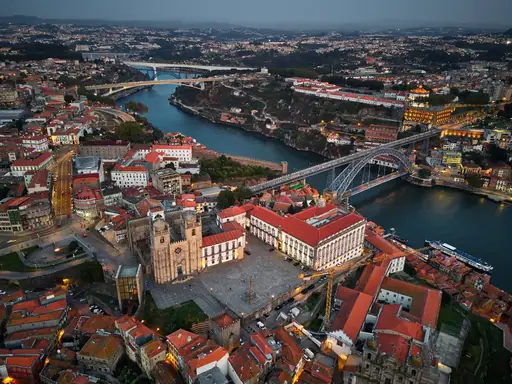
  • From Porto: Buses or trains usually 3.5–5.5 hours.

Where to stay in Santiago de Compostela

Accommodations range from historic paradores and charming guesthouses to budget-friendly hostels. Many pilgrims stay in albergues, which are basic but have a special communal spirit.

How to get around Santiago de Compostela

The historic center is best explored on foot. Public buses are affordable and cover wider areas. Taxis and bike rentals are also available. The train station connects to other Spanish cities easily.
Budget snapshot
Costs compared to home

We calculate the average costs when travelling to destinations and compare those with the living costs at your home. With this you can get an estimate of how expensive or cheap the destination is for you.

To customise this, you can set up which location and price level are used for the calculations in your account settings.

-31 %
Daily expenses in Santiago de Compostela are around 31% lower than the average across United States. That means you'll spend considerably less on meals and getting around.
Exchange rate trend

The exchange rate price factor shows how expensive or cheap a currency currently is compared to its historical average. It's a quick way to see if a country is currently more or less affordable due to exchange rate changes.

-3 %
Your exchange rate (GBP to EUR) is 3% better than in recent years. That means travelling now costs around the same compared to the past.

Travel costs

To help you plan your trip, we provide estimated daily costs per person (when travelling as a pair) for different travel styles. These numbers give you an idea of what you might spend each day at this destination, including accommodation, food, transport and activities.

Additionally, we also provide average hotel costs for different travel styles to give you an estimate for the accommodation only.

Please note that these are only estimates. The real costs depend on booking times, season and other factors.

Daily cost summary

Travel style categories explained:

Backpacker:
Staying in hostels or budget hotels, cooking your own meals or eating cheap and choosing low-cost activities.

Mid-range:
Staying in mid-range hotels, eating at a mix of restaurants and casual spots and enjoying a variety of activities.

Luxury:
Staying in luxury hotels, dining out at high-end restaurants and enjoying premium experiences without worrying about the price.

Backpacker Mid-range Luxury
💵 Total costs per day, including accommodation
£53
£118
£314
🏨 Accommodation per night, per person
£26
£60
£150
🍝 Food per day
£22
£51
£139
🚕 Transportation per day
£5
£7
£24
Food & Drink
🍽️ Restaurant Dinner, per person
£23
🍛 Lunch Set, per person
£11
🍟 Fast food combo
£7.50
🍝 Preparing your own food, per day
£7.50
☕ Cappuccino
£1.60
🍺 Beer in a restaurant, 0.5 l
£2.40
Transportation
🚌 Public transport ticket
£0.95
🚕 Taxi Ride, 10 km / 6 mi
£15
⛽ Petrol, 1 l
£1.30
Other
🎞️ Cinema ticket
£8
👩‍⚕️ Doctor's consult
£46
🤧 Cold medication
£5
💇 Basic haircut
£8.50

Safety information overview

General safety
8
Santiago de Compostela is generally very safe. Pickpocketing is rare but always keep an eye on belongings, especially in crowded tourist areas and during festivals.
Health & Medical
8
The city has good healthcare facilities. Pharmacies are easily found and hospitals provide quality services. No specific health risks are associated with the area.
Accessi­bility
6
The old town has cobblestone streets, which can be challenging for wheelchairs and strollers. Many modern buildings and transport options are accessible, but some historical sites may have limited access.
Tap water
9
Tap water is safe to drink and widely available. Bring a reusable bottle to fill up while exploring the city, especially during the warmer months.

Looking for inspiration?

Discover
Best travel destinations for food allergies in Europe
Europe is one of the more manageable continents for allergy conscious travelers, thanks to strict food labeling rules that apply across the entire European Union. Restaurants…
Read more
Discover
Best travel destinations for food allergies
Travelling with a food allergy adds a layer of planning most people never have to think about and the right destination can make that planning a lot easier. Some travellers…
Read more
Discover
Top spiritual travel destinations and wellness retreats
Spiritual travel works best at destinations with a genuine, long-standing tradition behind the practice on offer: places where meditation, ritual or retreat has been part of local…
Read more
Discover
Pilgrimage destinations and sacred sites
Pilgrimage travel is among the oldest forms of purposeful journey, with sacred routes, shrine destinations and holy cities drawing millions of travellers annually across every…
Read more
Discover
Top architecture destinations and iconic landmarks
Architecture travel spans everything from ancient ceremonial complexes and medieval urban cores to the grands projets of the twentieth century and contemporary buildings that draw…
Read more
Discover
Best plant-based food destinations in Europe
Europe has quickly become one of the easiest continents for plant based travel, with vegan options now showing up on menus far beyond the cities known for having a food scene.…
Read more
Discover
Top digital nomad destinations and remote work hubs in Europe
Europe offers remote workers a level of infrastructure that is hard to beat, along with enough cultural variety to keep even a long stay interesting. City based nomads can hop…
Read more
Discover
Most famous religious destinations in Europe
Europe's cities are full of churches, and for a lot of travelers, even ones who rarely go to church at home, a famous cathedral is one of the first things they visit after…
Read more
Discover
Top traditional destinations and cultural heritage sites
Traditional destinations are those where cultural practices, craftsmanship, ceremony and ways of life that predate industrialisation and mass tourism remain visible and active…
Read more
Discover
Best architecture destinations in Europe
Europe's architectural range spans Gothic cathedrals, Renaissance palaces and twentieth-century modernist landmarks within a single train journey, making it the continent most…
Read more
Discover
Best destinations for first-time travelers in South America
South America can feel like a bigger step for a first international trip, but well worn routes make it more approachable than it first appears. Peru, Chile and Argentina all sit…
Read more
Discover
Top digital nomad destinations and remote work hubs in 2026
Working from anywhere in the world sounds simple until you actually try it and the best digital nomad destinations look different depending on what kind of remote worker you are.…
Read more
Discover
Best couple holiday destinations
Travelling as a couple sounds simple enough, yet the best couple holiday destinations mean something different to almost every pair. What feels romantic to one couple can feel like…
Read more
Discover
Best couple vacation destinations in Europe
Europe has been the backdrop for love stories for centuries, and for couples it remains one of the easiest continents to feel romantic in without even trying. The choice of…
Read more
Discover
Top historical destinations and historic sites
The most compelling history destinations are places where the past is still physically present and legible in the landscape, the architecture and the daily life of the people who…
Read more
Was this page helpful?
Feedback

