

Europe › France › Paris › Museum of Orsay

Museum of Orsay

Scroll
Impressionist Masterpieces in Historic Station

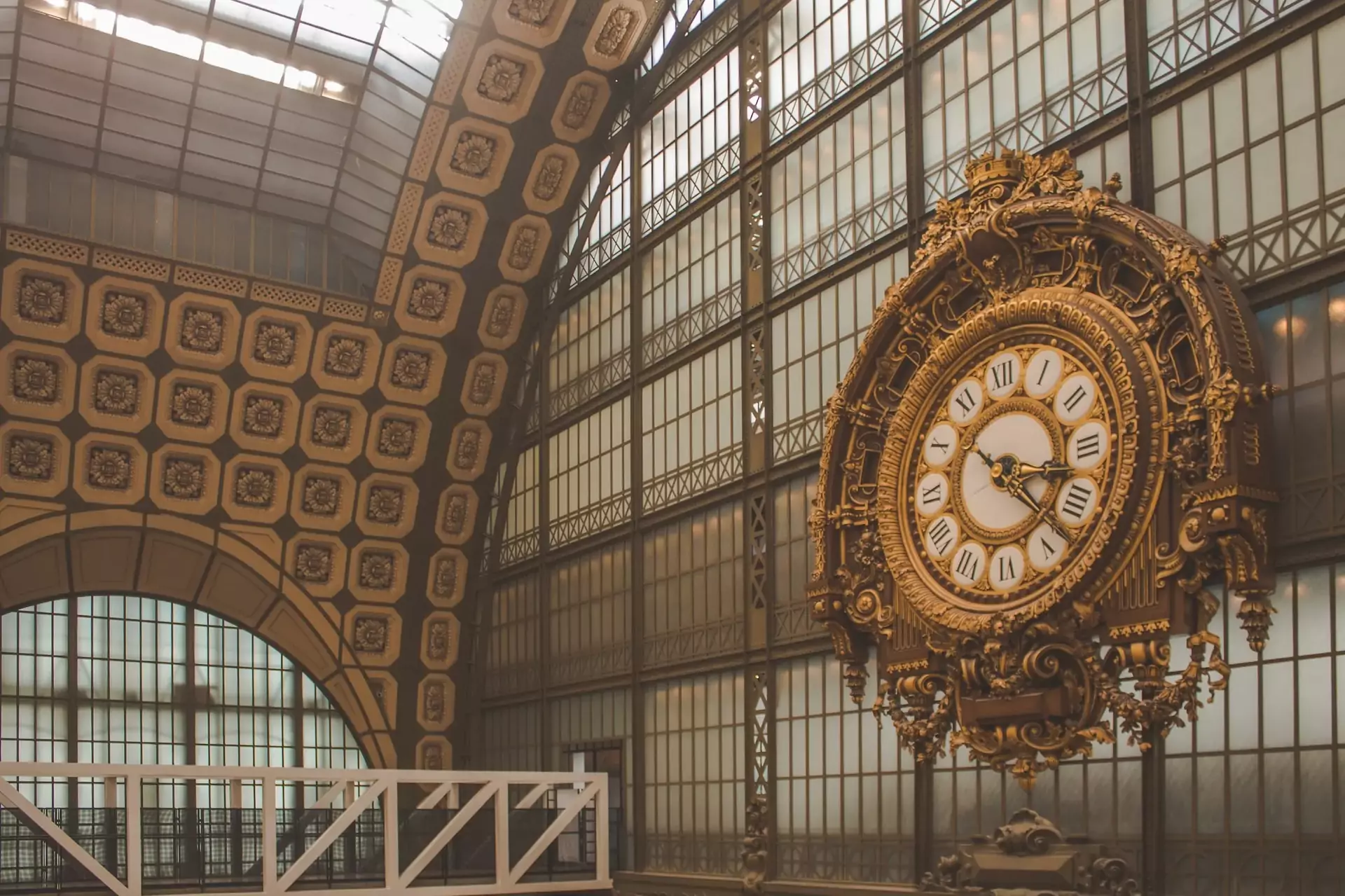
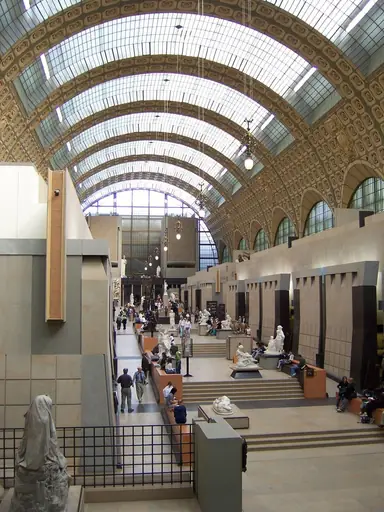
The Musée d’Orsay in Paris stands along the Seine River, housed inside a former railway station built for the 1900 World’s Fair. Its grand glass roof and wide halls display thousands of paintings from the mid-nineteenth to early twentieth centuries. Artists like Monet, Van Gogh and Renoir are featured alongside sculptures and decorative arts. The museum attracts visitors who want to see how art changed during a period of rapid social and technological change in France. Its central location makes it easy to reach by metro or foot from other city sights.

Museum in Paris
Climate zone: Mild oceanic

Mild oceanic: Marine-influenced climates with cool summers, mild winters and frequent precipitation year-round, typical of western coasts at mid-latitudes.

See climate table
Ticket price: $$$
$Cheap
$$Medium
$$$Expensive, upscale
$$$+Very expensive, luxury
Safety: 8.0
General Safety:8
Accessibility:8
Read details
Tourist English: 5/5
English is commonly spoken by museum staff and in nearby tourist areas, aiding international visitors in navigating and enjoying the museum.
Last update: 12 Oct 2026
* We earn a commission from some links on this page.
Museum of Orsay Summary
Excellent for impressionist art and historic galleries. View works by Monet, Van Gogh and other masters inside a former railway station.
Opening hours:
Mon:Closed
Tue-Wed:09:30 - 18:00
Thu:09:30 - 21:45
Fri-Sun:09:30 - 18:00
Public website: www.musee-orsay.fr
France – Quick facts
Power Grid: 230 V, 50 Hz
Plug: Type C , Type E
Type C:
Diagram of a Type C power plug
Type E:
Diagram of a Type E power plug

Read about power adapters
Currency: Euro (EUR)
£1 ≈ €1.19
Cashless info: Rating 5/5
Cashless payments are widely accepted, especially in cities and tourist areas.

Save with a travel credit card
eSIM providers: Best value: Saily
Flexibility: Airalo
Read our in-depth comparison
Tipping: Tipping is optional but appreciated in restaurants (5-10%) and for exceptional service.
Public drinking: Public drinking is allowed in designated areas, but restrictions apply in some cities.
Public smoking: Smoking is banned in indoor public spaces but common in outdoor cafes.
Bastille Day
(July)
Parades and fireworks occur nationwide.
Easter
(March/April)
Cultural celebrations and closures.
Christmas
(December)
Markets and festive events.
Emergency contact: Emergency Numbers: 112 (EU emergency), 15 (Ambulance), 17 (Police), 18 (Fire)
Taxi apps: Uber, Bolt, Heetch
Other: France offers diverse experiences, from art and culture to nature and cuisine. Be cautious in crowded areas.
Best times to travel

The best times to travel section shows how the months compare for a visit, so you can find the time of year that fits what you want to do.

Background colours of the months:
The colour shows the typical temperature: yellow (hot), green (mild) and blue (cold). How strong the colour is shows the travel season: full colour means high season, soft colour means shoulder season and soft-striped means off season.

Weather symbols:
Each month has one symbol showing what the weather is typically like, such as hot and sunny, freezing or a rainy or snowy season. Use them to quickly spot months that match the weather you want, or to avoid the ones that don't.

Crowdedness:
The people icon shows how busy the place usually is. The more people, the more crowded it gets.

Additional notes:
The grey info boxes point out special things worth knowing, like recurring weather issues or seasonal events.

for Museum of Orsay, France
☁️
Jan
🌥️
Feb
🌤️
Mar
🌤️
Apr
🌤️
May
🌤️
Jun
🌤️
Jul
🌤️
Aug
🌤️
Sep
🌤️
Oct
🌥️
Nov
☁️
Dec
High season: May - Sep.
Shoulder season: March - April, Oct., Dec.
Tap on a month for more info Hover over a month for more info
Closed Mondays; open Tuesday to Sunday, late opening on Thursday evenings
Timed tickets recommended, queues are longest at weekends and rainy days

Museum of Orsay was opened in 1986 within the Beaux-Arts Gare d’Orsay railway station, a beautifully preserved architectural gem originally built between 1898 and 1900. The museum’s vast collection focuses on French art dating from 1848 to 1914, highlighting Impressionism and Post-Impressionism with works by masters like Monet, Manet, Degas, Renoir, Cézanne, Gauguin and Van Gogh.

The building’s unique design with its giant clocks, vaulted ceilings and vast exhibition spaces creates a striking ambiance that perfectly complements the artworks. Visitors can also enjoy sculpture galleries, decorative arts, photography and temporary exhibitions that broaden the museum's cultural offering.

While the museum is celebrated for its rich collection and distinctive setting, some visitors find it crowded during peak hours, affecting the quiet contemplation experience. Ticket lines can be long, so advance booking is recommended. Photography is generally allowed without flash, but some pieces have restrictions that are actively enforced. Some visitors find the museum overwhelming due to the sheer number of artworks, suggesting planning or guided tours to focus their visit.

Overall, the Museum of Orsay offers a deeply rewarding cultural experience weaving together art, architecture and history, making it an essential stop for art lovers visiting Paris.

Knowledge before you go

  • Book timed tickets online to skip long lines.
  • Visit early morning at 9:30 AM or late Thursday evenings for fewer crowds.
  • Head straight to 5th floor Impressionists like Monet, Van Gogh, avoiding ground floor chaos.
  • Peer through the golden clock window for stunning Seine and Sacré-Cœur rooftop views.

How to travel to Museum of Orsay

Visitors arrive via Charles de Gaulle Airport or Orly Airport and can take public transport or taxis to central Paris. The museum is located on the Left Bank of the Seine near the Louvre and is accessible by metro stations Solférino (Line 12) and Musée d’Orsay (RER C). It’s also within walking distance from central Paris landmarks.

Access summary

  • From Charles de Gaulle (CDG): RER B then RER C/Metro, about 45–70 minutes.
  • From central Paris hotels: RER C to Musée d’Orsay or Metro 12, 10–25 minutes.
  • From London/Brussels: Eurostar to Gare du Nord, then RER/Metro to museum, 30–45 minutes.

Where to stay near Museum of Orsay

Paris boasts a wide range of accommodations from luxury hotels near the museum and Seine to boutique guesthouses and affordable options in nearby districts, offering convenient access to the Museum of Orsay and other central attractions.

Packing recommendations for Museum of Orsay

Log in to add this place to a travel list and get a summary of all recommended items for your whole trip.

Budget snapshot
Costs compared to home

We calculate the average costs when travelling to destinations and compare those with the living costs at your home. With this you can get an estimate of how expensive or cheap the destination is for you.

To customise this, you can set up which location and price level are used for the calculations in your account settings.

+10 %
Daily expenses in the region are around 10% higher than the average across United States. That means you'll spend more on meals and getting around.
Exchange rate trend

The exchange rate price factor shows how expensive or cheap a currency currently is compared to its historical average. It's a quick way to see if a country is currently more or less affordable due to exchange rate changes.

-3 %
Your exchange rate (GBP to EUR) is 3% better than in recent years. That means travelling now costs around the same compared to the past.

Safety information overview

General safety
8
The Musée d’Orsay in Paris enjoys a high safety rating: well‑staffed security, frequent patrols and clear emergency procedures keep visitors protected. Crime is rare; pickpocketing remains the main concern, so keep valuables secure and stay alert in crowded areas.
Accessi­bility
8
The Musée d’Orsay offers accessible entrances, elevators and wheelchair-friendly pathways, with audio guides in multiple languages. However, some older galleries have narrow aisles and the main staircase remains a challenge for mobility aids. Advance booking of guided tours is recommended.

Looking for inspiration?

Discover
Top museum destinations and cultural institutions
Museum travel has developed a dedicated following built around the world's great permanent collections, blockbuster exhibition programmes and the architecturally significant…
Read more
Discover
Top historical destinations and historic sites
The most compelling history destinations are places where the past is still physically present and legible in the landscape, the architecture and the daily life of the people who…
Read more
Discover
Best museum destinations in Europe
Europe holds the world's greatest concentration of significant museum collections, accumulated over centuries of patronage, scientific inquiry and in many cases imperial…
Read more
Discover
Best historical destinations in Europe
Europe is one of the most historically dense regions on earth, where the evidence of successive civilisations, empires, conflicts and cultural movements is layered into the…
Read more
Discover
Most beautiful beaches and coastal escapes
For a lot of people, a beach is the whole point of a holiday, but what makes a beach day perfect really depends on personal taste. Some travellers want isolation and the feeling…
Read more
Discover
Stunning national parks and wilderness areas
National parks exist because someone decided that certain landscapes were too important to lose. The best of them protect ecosystems, wildlife and natural processes that would…
Read more
Discover
Intimate escapes and romantic getaways
The most memorable trips for couples tend to have less to do with luxury and more to do with the quality of shared experience. A place that slows you down, removes the usual…
Read more
Was this page helpful?
Feedback