










Was this page helpful?

| Opening hours: |
|
||||||||||||
|---|---|---|---|---|---|---|---|---|---|---|---|---|---|
| Public website: | www.louvre.fr |
| Power Grid: |
230 V, 50 Hz Plug: Type C , Type E
Type C:
  Read about power adapters |
|---|---|
| Currency: |
Euro (EUR) £1 ≈ €1.19 |
| Cashless info: |
Rating 5/5
Cashless payments are widely accepted, especially in cities and tourist areas.
Save with a travel credit card |
| eSIM providers: |
Best value: Saily Flexibility: Airalo Read our in-depth comparison |
| Tipping: | Tipping is optional but appreciated in restaurants (5-10%) and for exceptional service. |
|---|---|
| Public drinking: | Public drinking is allowed in designated areas, but restrictions apply in some cities. |
| Public smoking: | Smoking is banned in indoor public spaces but common in outdoor cafes. |
| Bastille Day (July) |
Parades and fireworks occur nationwide. |
|---|---|
| Easter (March/April) |
Cultural celebrations and closures. |
| Christmas (December) |
Markets and festive events. |
| Emergency contact: | Emergency Numbers: 112 (EU emergency), 15 (Ambulance), 17 (Police), 18 (Fire) |
|---|---|
| Taxi apps: | Uber, Bolt, Heetch |
| Other: | France offers diverse experiences, from art and culture to nature and cuisine. Be cautious in crowded areas. |
The best times to travel section shows how the months compare for a visit, so you can find the time of year that fits what you want to do.
Background colours of the months:
The colour shows the typical temperature: yellow (hot), green (mild) and blue (cold). How strong the colour is shows the travel season: full colour means high season, soft colour means shoulder season and soft-striped means off season.
Weather symbols:
Each month has one symbol showing what the weather is typically like, such as hot and sunny, freezing or a rainy or snowy season. Use them to quickly spot months that match the weather you want, or to avoid the ones that don't.
Crowdedness:
The people icon shows how busy the place usually is. The more people, the more crowded it gets.
Additional notes:
The grey info boxes point out special things worth knowing, like recurring weather issues or seasonal events.
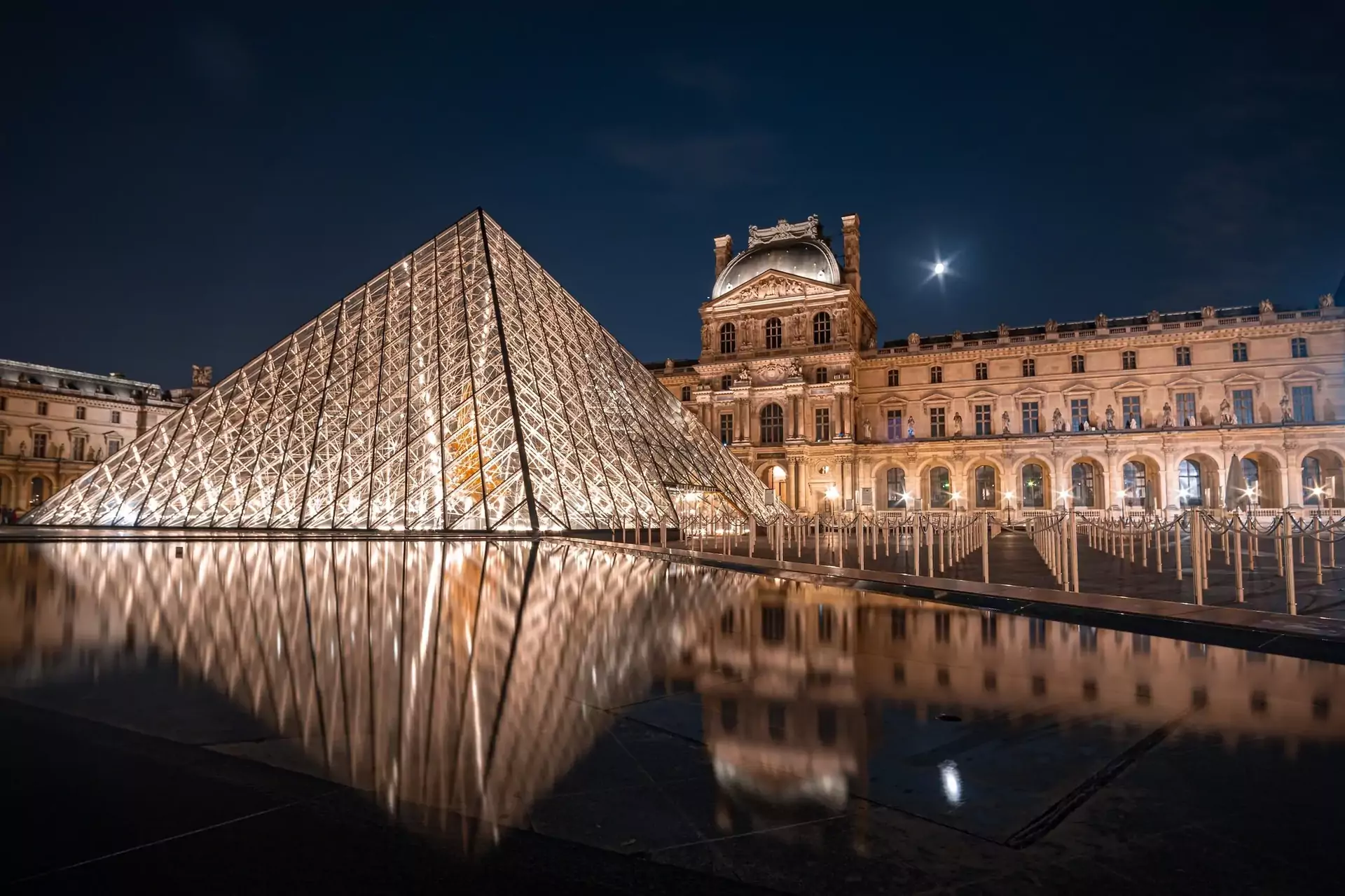
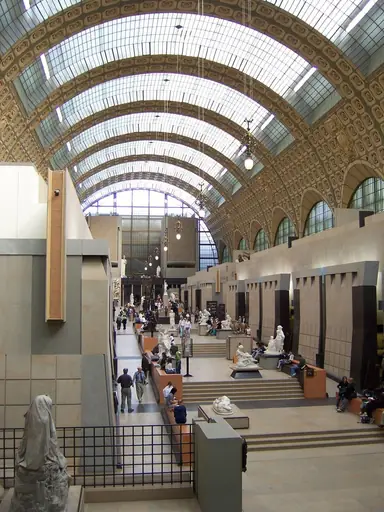
The Louvre Museum, located in the heart of Paris, began as a royal palace dating back to the 12th century. Today it is a sprawling cultural landmark that houses nearly 35,000 works of art across 72,735 square meters of exhibition space, making it the largest art museum on the planet.
The museum's collection covers everything from ancient Egyptian relics and Greek sculptures to Renaissance masterpieces and contemporary art. Among the globally renowned pieces are Leonardo da Vinci’s Mona Lisa, the Venus de Milo and the Winged Victory of Samothrace. The museum’s architecture itself is a mix of medieval, classical and modern styles centered around the iconic glass pyramid entrance.
Visiting the Louvre requires planning due to its massive size and popularity. Crowds can be overwhelming, particularly at key exhibits and lines for security and tickets can be long without prior reservation. The layout can be confusing, so many visitors benefit from guided tours or a clear itinerary. Audio guides have mixed reviews; some find them invaluable while others find them inadequate or problematic.
Despite these challenges, the Louvre offers an unrivaled cultural experience and a chance to immerse oneself in humanity’s artistic and historical heritage in one spectacular venue.
Visitors typically fly into Charles de Gaulle Airport or Orly Airport and then use public transit or taxis to reach central Paris. The Louvre is easily accessible by metro lines 1 and 7, stopping at Palais Royal - Musée du Louvre station. Walking from nearby central neighborhoods is also popular.
Paris offers a wide range of accommodations from luxury hotels near the Louvre to boutique guesthouses and more affordable options scattered throughout the city, providing convenient access to the museum and other attractions.
Log in to add this place to a travel list and get a summary of all recommended items for your whole trip.
We calculate the average costs when travelling to destinations and compare those with the living costs at your home. With this you can get an estimate of how expensive or cheap the destination is for you.
To customise this, you can set up which location and price level are used for the calculations in your account settings.
The exchange rate price factor shows how expensive or cheap a currency currently is compared to its historical average. It's a quick way to see if a country is currently more or less affordable due to exchange rate changes.
