










Was this page helpful?

| Opening hours: |
|
|
|---|---|---|
| Public website: | prague.eu |
| Power Grid: |
230 V, 50 Hz Plug: Type C , Type E
Type C:
  Read about power adapters |
|---|---|
| Currency: |
Czech Koruna (CZK) £1 ≈ CZK 29.06 |
| Cashless info: |
Rating 5/5
Cashless payment is widely accepted, with cards and mobile payment options common even in smaller towns.
Save with a travel credit card |
| eSIM providers: |
Best value: Saily Flexibility: Airalo Read our in-depth comparison |
| Tipping: | Tipping is appreciated but not mandatory in the Czech Republic. Rounding up or leaving 10% in restaurants is standard. Tips for taxi drivers and hotel staff are also common. |
|---|---|
| Public drinking: | Public drinking is permitted in most areas, though it is restricted in certain zones like public transport stations. |
| Public smoking: | Smoking is banned in indoor public spaces and restaurants, with designated outdoor smoking areas available. |
| Independence Day (October) |
Public events and closures occur, especially in Prague. |
|---|---|
| Christmas (December) |
Markets and holiday closures are common. |
| Easter (March/April) |
Easter markets and traditions attract many tourists. |
| Emergency contact: | Emergency Number: 112 (Police, Fire, Ambulance) |
|---|---|
| Taxi apps: | Bolt, Liftago, Uber |
| Other: | The Czech Republic is famous for its historical cities, castles, and beer culture. Public transport is efficient and affordable. |
The best times to travel section shows how the months compare for a visit, so you can find the time of year that fits what you want to do.
Background colours of the months:
The colour shows the typical temperature: yellow (hot), green (mild) and blue (cold). How strong the colour is shows the travel season: full colour means high season, soft colour means shoulder season and soft-striped means off season.
Weather symbols:
Each month has one symbol showing what the weather is typically like, such as hot and sunny, freezing or a rainy or snowy season. Use them to quickly spot months that match the weather you want, or to avoid the ones that don't.
Crowdedness:
The people icon shows how busy the place usually is. The more people, the more crowded it gets.
Additional notes:
The grey info boxes point out special things worth knowing, like recurring weather issues or seasonal events.
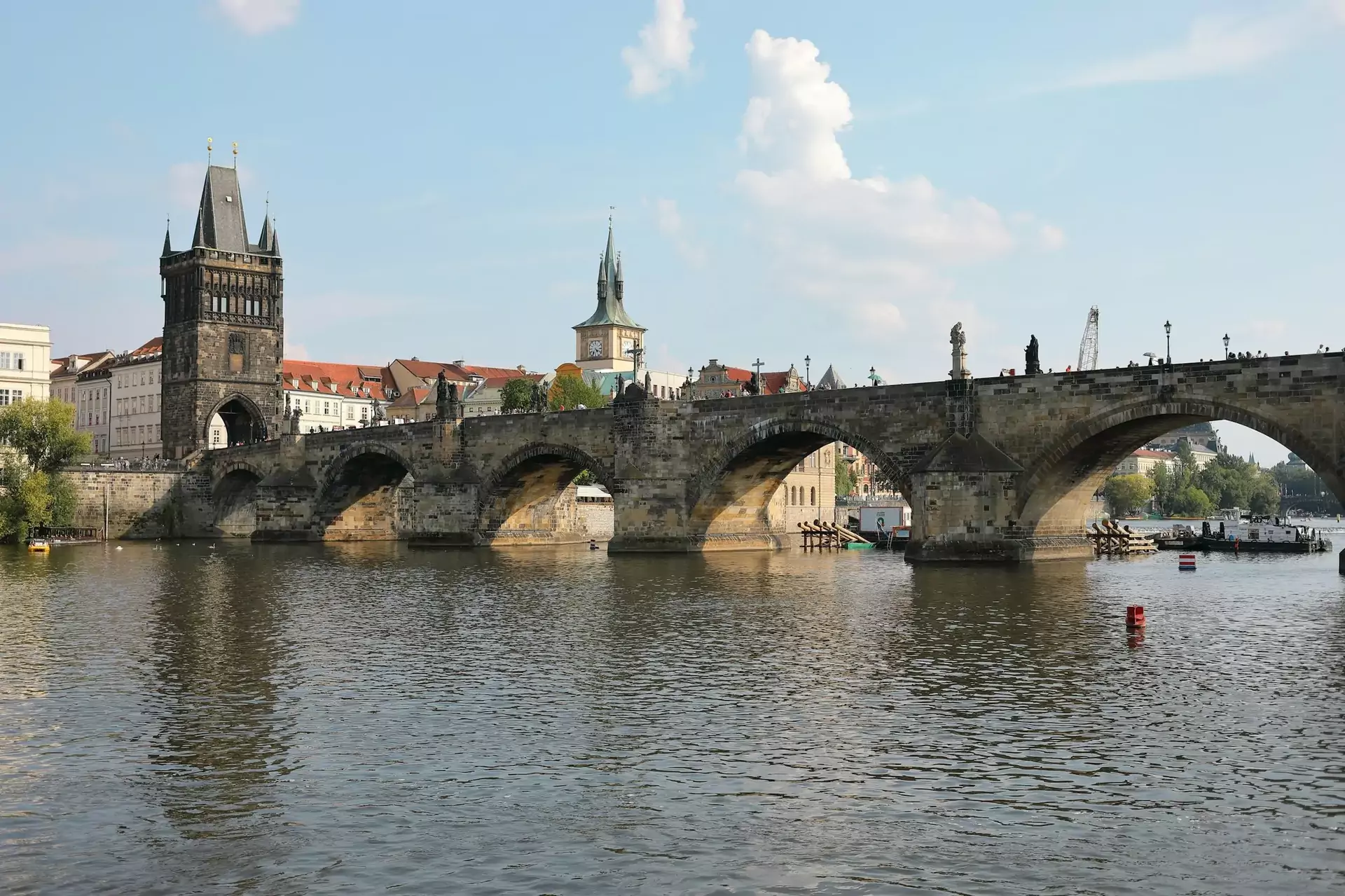
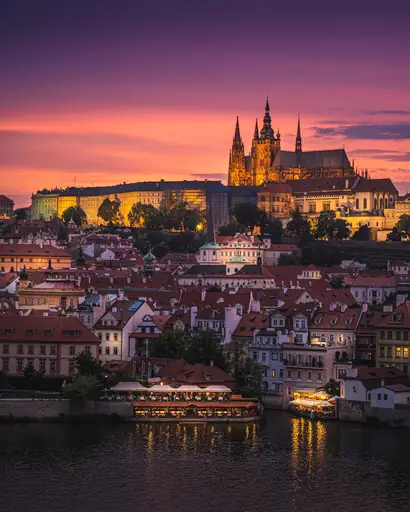
Commissioned by King Charles IV in 1357, Charles Bridge replaced the older Judith Bridge destroyed by floods, standing as a vital medieval connector between Prague Castle and the city's Old Town. Spanning 516 meters with 16 arches, it is guarded by impressive Gothic towers at each end, which offer panoramic views of Prague's spires and skyline. The bridge’s sides are adorned with 30 statues, mostly baroque, dating from the 17th and 18th centuries, each telling a story steeped in religious and historical significance.
Today, the bridge is a vibrant thoroughfare filled with buskers, artists and vendors, offering a lively atmosphere but also contributing to crowds, especially in peak tourist months. Early mornings or late evenings are recommended for a quieter, more contemplative experience. The well-worn sandstone cobblestones add to its charm but can be slippery when wet, so caution is advised.
Charles Bridge has survived numerous floods and wars, with ongoing restoration to preserve its structure and statues. Visitors should be prepared for busy conditions and watch belongings closely in crowded times, as petty theft can occasionally occur. Photography is fantastic at dawn when the light bathes the bridge and the views of Prague Castle.
Whether wandering over the bridge’s mystical ambiance or pausing to admire the craftsmanship of its statues, Charles Bridge stands as a timeless symbol of Prague’s heritage and spirit.
Charles Bridge is centrally located in Prague's Old Town, easily reachable by Prague’s efficient public transport system including trams and metro. Visitors arriving by air can fly into Václav Havel Airport Prague, about 20 kilometers away, then take a taxi or public transport to the city center. The bridge is pedestrian-only, so expect to explore on foot.
Prague offers a wide range of accommodations near Charles Bridge, from historic boutique hotels and luxury five-star options to charming guesthouses and budget hostels, catering to diverse travelers. Staying near the Old Town ensures easy pedestrian access to the bridge and other major sights.
Log in to add this place to a travel list and get a summary of all recommended items for your whole trip.
We calculate the average costs when travelling to destinations and compare those with the living costs at your home. With this you can get an estimate of how expensive or cheap the destination is for you.
To customise this, you can set up which location and price level are used for the calculations in your account settings.
The exchange rate price factor shows how expensive or cheap a currency currently is compared to its historical average. It's a quick way to see if a country is currently more or less affordable due to exchange rate changes.
