





Was this page helpful?

| Opening hours: |
|
||||||
|---|---|---|---|---|---|---|---|
| Public website: | www.derdachstein.at |
| Power Grid: |
230 V, 50 Hz Plug: Type C , Type F
Type C:
  Read about power adapters |
|---|---|
| Currency: |
Euro (EUR) £1 ≈ €1.19 |
| Cashless info: |
Rating 5/5
Austria is a highly cashless society, particularly in urban areas. Credit and debit cards are widely accepted, and mobile payment services such as Apple Pay and Google Pay are increasingly popular.
Save with a travel credit card |
| eSIM providers: |
Best value: Saily Flexibility: Airalo Read our in-depth comparison |
| Tipping: | Tipping is customary in Austria. In restaurants, it is common to leave a 5-10% tip, though rounding up to the nearest euro is also acceptable. Taxi drivers typically expect a small tip, around 10% of the fare. Hotel staff and tour guides appreciate small gratuities. |
|---|---|
| Public drinking: | Public drinking is generally permitted in Austria, though some areas may have restrictions. Drinking in public spaces such as parks and squares is socially accepted but may be subject to local laws in specific municipalities. |
| Public smoking: | Smoking is prohibited in most indoor public spaces, including restaurants, bars, and public transport. Designated smoking areas are available in many locations. |
| National Day (October) |
A national holiday with many closures, celebrations, and increased domestic tourism. |
|---|---|
| Christmas (December) |
Festive celebrations across the country, with crowded tourist spots and higher prices for accommodation. |
| Austrian Wine Harvest Festival (September) |
Celebration of local wines, especially in wine-producing regions, with festivals and events. |
| Emergency contact: | Emergency Number: 112 (Police, Fire, Ambulance) |
|---|---|
| Taxi apps: | Bolt, Uber |
| Other: | Austria is known for its rich cultural heritage, with historical sites, museums, and nature reserves. Its well-developed infrastructure, particularly in transport, makes it a comfortable destination for travellers. |
The best times to travel section shows how the months compare for a visit, so you can find the time of year that fits what you want to do.
Background colours of the months:
The colour shows the typical temperature: yellow (hot), green (mild) and blue (cold). How strong the colour is shows the travel season: full colour means high season, soft colour means shoulder season and soft-striped means off season.
Weather symbols:
Each month has one symbol showing what the weather is typically like, such as hot and sunny, freezing or a rainy or snowy season. Use them to quickly spot months that match the weather you want, or to avoid the ones that don't.
Crowdedness:
The people icon shows how busy the place usually is. The more people, the more crowded it gets.
Additional notes:
The grey info boxes point out special things worth knowing, like recurring weather issues or seasonal events.
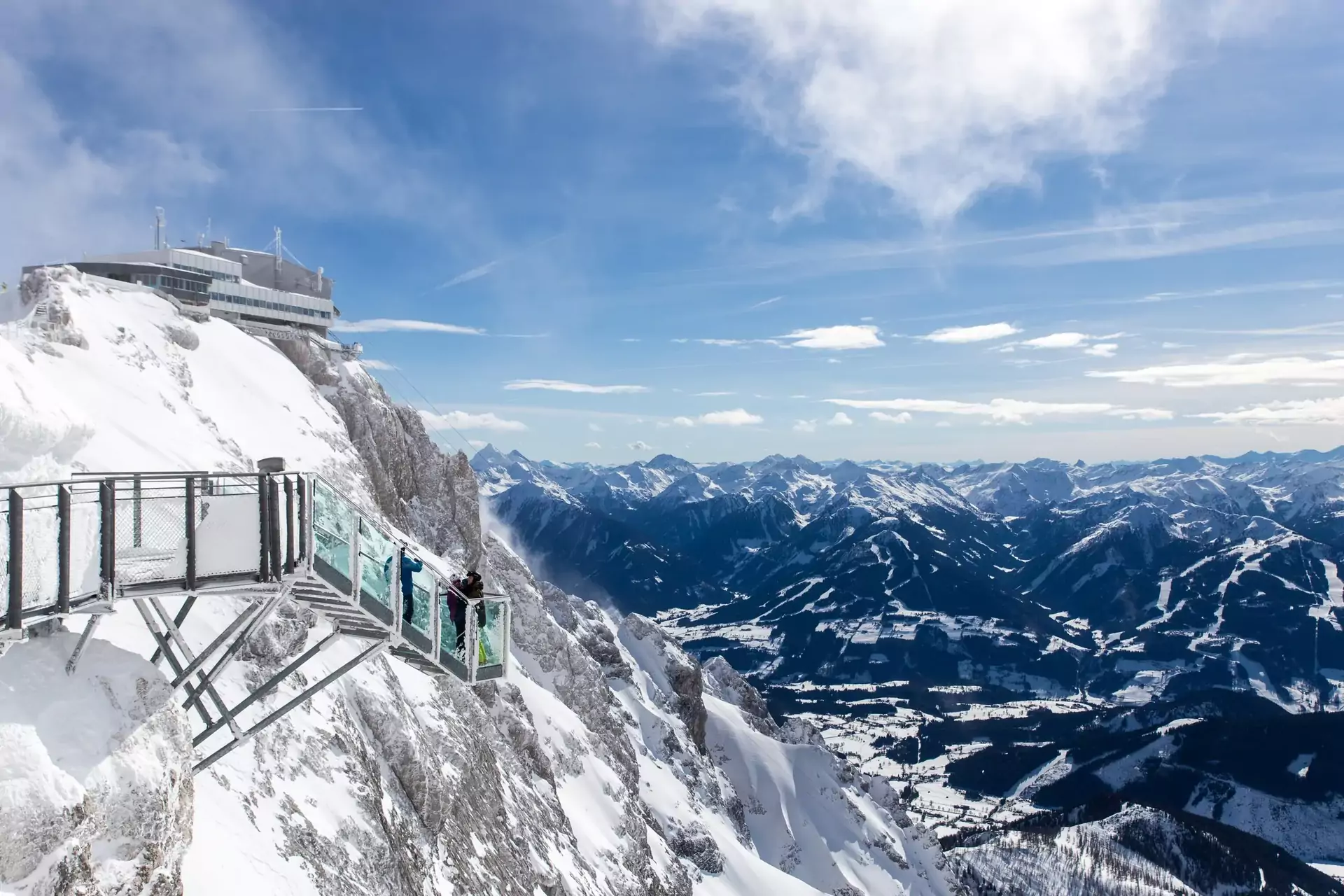
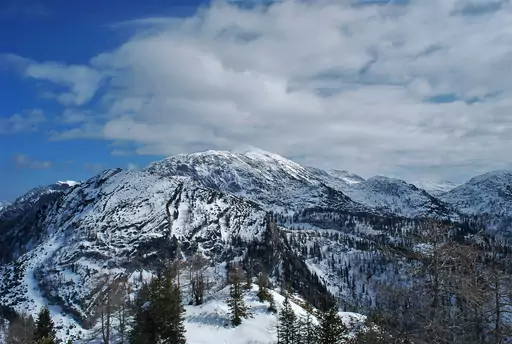
Dachstein Skywalk is one of the most spectacular mountain viewing platforms in the Alps, extending over a dramatic 250-meter cliff of the Hunerkogel. Constructed in 2005, this modern steel and glass structure offers panoramic views stretching as far as the High Tauern peaks, the Giant Mountains in the Czech Republic and the Slovenian Alps on clear days.
The platform is designed for safety and durability, able to withstand wind speeds up to 210 km/h and snow loads of up to 8 meters. Visitors are greeted by a breathtaking experience of floating above rocky cliffs and vast alpine scenery. Nearby, the 'Stairway to Nothing' with glass steps leads into the abyss for a thrilling photographic moment.
Besides the Skywalk itself, the site hosts a circular trail that provides additional viewpoints of the rugged Dachstein massif and the glacier below. The adjacent Eispalast Ice Cave offers an underground exploration of glistening ice formations, visited year-round.
Visitors should be prepared for high altitude weather conditions and potential chilly winds. Good footwear and warm clothing are advised. The area can be busy during summer tourist season and winter holidays, so early arrival is recommended. Accessibility is good, but some paths may be challenging for those with limited mobility.
The Dachstein Skywalk is accessible via the Dachstein Glacier Cable Car, with the base station located in Ramsau am Dachstein. Travelers typically fly into Salzburg Airport or Linz Airport and then take a train or car to Ramsau. From there, the cable car climbs up to the Skywalk, which is near the mountain station at Hunerkogel.
Nearby Ramsau am Dachstein offers a range of alpine accommodations, including mountain lodges, cozy guesthouses and hotels suited for families and adventure seekers alike. Staying here provides good access to the cable car and the Skywalk site.
Log in to add this place to a travel list and get a summary of all recommended items for your whole trip.
We calculate the average costs when travelling to destinations and compare those with the living costs at your home. With this you can get an estimate of how expensive or cheap the destination is for you.
To customise this, you can set up which location and price level are used for the calculations in your account settings.
The exchange rate price factor shows how expensive or cheap a currency currently is compared to its historical average. It's a quick way to see if a country is currently more or less affordable due to exchange rate changes.
