







Asia › Sundarbans National Park

Sundarbans National Park

Scroll
Whispers of mangrove giants and elusive tigers

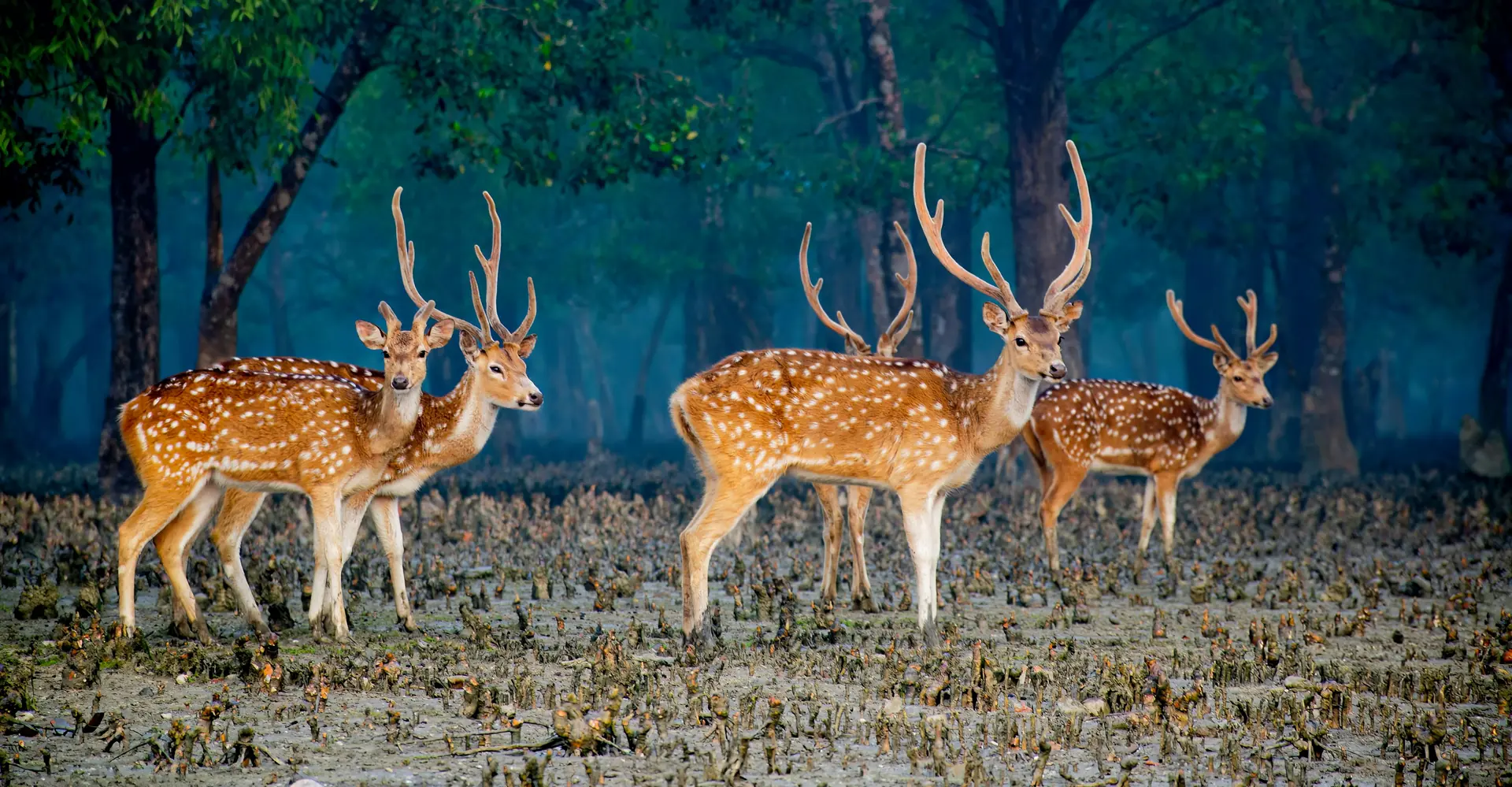
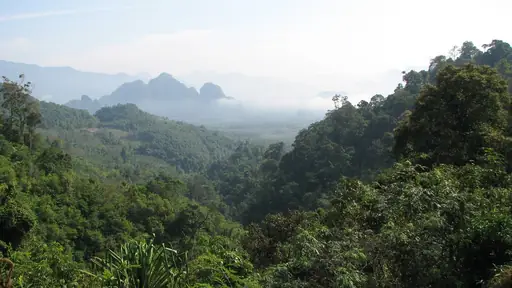
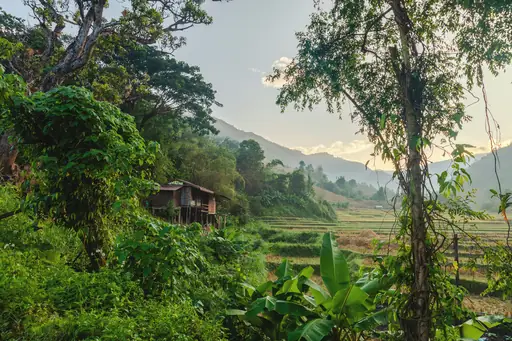
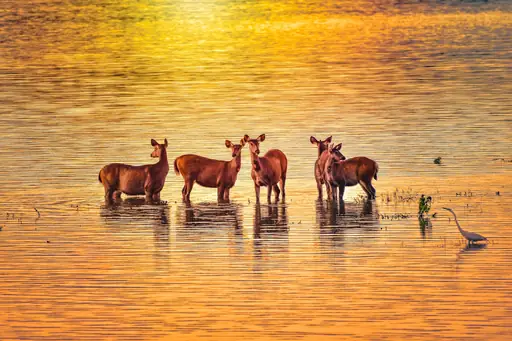
The Sundarbans National Park spans across the border of India and Bangladesh, covering a vast area of mangrove forests and waterways. This UNESCO World Heritage Site supports unique wildlife including the Bengal tiger, spotted deer and numerous bird species. The landscape shifts with tides and rivers making boat trips essential for exploring. Local fishing communities live alongside nature, relying on sustainable practices to coexist with the environment. Visitors experience a quiet wilderness where water channels replace roads and rare flora thrive in salty soil conditions.

National Park in India
Climate zone: Tropical monsoon

Tropical monsoon: Tropical climates with pronounced wet and short dry seasons, dominated by monsoon winds and extremely heavy summer rains.

See climate table
Price level: $$$
$Cheap
$$Medium
$$$Expensive, upscale
$$$+Very expensive, luxury
See price details
Safety: 3.5
General Safety:4
Health & medical:3
Accessibility:3
Tap water:2
Read details
Tourist English: 2/5
English is widely understood by park rangers, tour guides and local staff, especially in visitor centers and popular sites. Most visitors find basic communication easy, though some remote areas may have limited English.
Last update: 12 Oct 2026
* We earn a commission from some links on this page.
Sundarbans National Park Summary

These place ratings give you a quick overview of how well a destination matches different types of trips.

‘Best for’ scores:
The specific interest scores show where this place really shines – whether it's ideal for hiking, food & drink experiences, museums or other activities. These highlights help you understand what makes the destination special at a glance.

‘Your personal’ scores:
This reflects how well a place matches your personal preferences. You can adjust the importances of travel topics or other personal requirements categories in your account settings.

‘Suited for’ badges:
These give you a quick overview of how well a destination suits specific types of travellers, to help you find the places that match your lifestyle, preferences or travel situation.

Read how our scores work
World-famous for mangrove wildlife and tiger habitat. Take boat safaris through winding waterways, watch birds and crocodiles and explore dense mangrove forests.
Place score
6.9
Best at:
Forests
10
Rivers
10
Sea
9
Less touristy
9
Secluded
9
Personal score
?
Log in to see how this place matches your personal travel interests.
Suited for
👶 4
Families
🧓 4
Seniors
♻️ 8
Sustainability
❤️ 5
Couples
India – Quick facts
Power Grid: 230 V, 50 Hz
Plug: Type C , Type D , Type M
Type C:
Diagram of a Type C power plug
Type D:
Diagram of a Type D power plug
Type M:
Diagram of a Type M power plug

Read about power adapters
Currency: Indian Rupee (INR)
£1 ≈ ₹126.52
Cashless info: Rating 4/5
Cashless payments are becoming more common in India, especially in urban areas. Credit cards and mobile payment apps like Google Pay, Paytm, and PhonePe are widely accepted in cities.

Save with a travel credit card
eSIM providers: Best value: Saily
Flexibility: Airalo
Read our in-depth comparison
Tipping: Tipping is appreciated in India but not mandatory. A 10% tip in restaurants is common. Tipping taxi drivers and hotel staff is also customary, typically 10-15% for good service.
Public drinking: Public drinking is not commonly seen in India. Alcohol is typically consumed in licensed bars, restaurants, and hotels.
Public smoking: Smoking is prohibited in many indoor public spaces, including restaurants, bars, and public transport stations.
Independence Day
(15 August)
A national holiday celebrated with flag hoisting and parades
Diwali
(October-November)
The Festival of Lights, celebrated with fireworks and festivities
Emergency contact: Emergency Number: 112
Taxi apps: Ola, Uber
Other: India is a vast and diverse country with a rich cultural heritage, offering a wide range of experiences from ancient temples to modern cities. Prepare for varying infrastructure and safety conditions depending on the region.
Best times to travel

The best times to travel section shows how the months compare for a visit, so you can find the time of year that fits what you want to do.

Background colours of the months:
The colour shows the typical temperature: yellow (hot), green (mild) and blue (cold). How strong the colour is shows the travel season: full colour means high season, soft colour means shoulder season and soft-striped means off season.

Weather symbols:
Each month has one symbol showing what the weather is typically like, such as hot and sunny, freezing or a rainy or snowy season. Use them to quickly spot months that match the weather you want, or to avoid the ones that don't.

Crowdedness:
The people icon shows how busy the place usually is. The more people, the more crowded it gets.

Additional notes:
The grey info boxes point out special things worth knowing, like recurring weather issues or seasonal events.

for Sundarbans National Park, India
☀️
Jan
🔥
Feb
🔥
Mar
🔥
Apr
🔥
May
🌦️
Jun
⛈️
Jul
⛈️
Aug
🌦️
Sep
🔥
Oct
🔥
Nov
☀️
Dec
High season: Jan. - Feb., Nov. - Dec.
Shoulder season: March, Oct.
Crowdedness: 1 (Very few tourists)
Tap on a month for more info Hover over a month for more info
Cyclone season April to May and October to November can cancel boat trips at short notice
The park is reached only by boat and requires a permit, tours are typically booked in advance

Why travel to Sundarbans National Park?

Sundarbans National Park, located in the delta of the Ganges, Brahmaputra and Meghna rivers, offers a unique blend of biodiversity, culture and conservation that makes it an appealing destination for travelers interested in nature and sustainable tourism. The park’s mangrove ecosystem is one of the largest in the world, providing habitat for species such as the Bengal tiger, spotted deer, saltwater crocodile and numerous bird species including kingfishers and herons. Guided boat tours allow visitors to observe these animals from a safe distance while learning about the ecological importance of tidal wetlands. Beyond wildlife, the park’s human communities – primarily fishing villages – offer insight into traditional livelihoods that have adapted to living in harmony with the mangroves. Local guides share stories of riverine life and explain how residents manage resources sustainably, which can be an educational experience for those interested in community-based conservation. The best time to visit is during the dry season (November to March) when water levels are lower, making wildlife spotting easier and boat rides more comfortable. Visitors should plan their trip through licensed operators who adhere to park regulations, ensuring that tourism supports both conservation efforts and local economies. By choosing responsible travel options, visitors can enjoy the natural beauty of Sundarbans while contributing positively to its preservation.

🏯Places worth seeing
  • 1 Haringhata Mangrove Forest
  • 2 [Doesn't look like] Hiron Point Lighthouse
🏞️Natural landmarks
  • 1 Sundarbans
    A vast mangrove ecosystem in Bangladesh and India, Sundarbans National Park is home to Bengal tigers, spotted deer and diverse bird species. The park’s tidal channels offer unique wildlife viewing opportunities.
  • 2 Haringhata Mangrove Forest

Knowledge before you go

  • Arrive early to avoid afternoon heat and mosquito activity.
  • Carry a waterproof jacket; sudden rain showers are common in the mangrove ecosystem.
  • Use a local guide for safe navigation through tidal channels and wildlife observation.
  • Learn about the park’s role in protecting endangered Bengal tigers before visiting.

How to travel to Sundarbans National Park

Access to Sundarbans National Park is primarily via road and waterway from Kolkata, West Bengal’s capital. The nearest major city is Canning, approximately 50 km away, reachable by bus or private vehicle along the National Highway 12. From Canning, visitors can take a boat or rickshaw to the park’s entry points near villages like Gosaba. The Sundarbans’ remote location requires permits for entry into certain zones, obtainable from forest department offices in Kolkata or local authorities upon arrival. Travelers may also reach the area via the Haldia Dock Complex, though this route is less common due to limited infrastructure. Boat services operate seasonally, with monsoon months restricting access due to flooding.

Access summary

  • From Netaji Subhas Chandra Bose Airport (Kolkata): 4–5 hrs by road via NH16.
  • From Khulna: 3–4 hrs by bus/auto; from Satkhira: 2.5–3 hrs by local transport.
  • Ferry from Mongla to Bakkhali takes about 1 hr, then 30 min drive to park.

Where to stay in Sundarbans National Park

In the Sundarbans region, accommodation ranges from modest homestays to upscale eco-lodges, catering to both budget travelers and those seeking comfort. Many homestays are run by local families, offering simple rooms with basic amenities and a chance to experience rural Bengal life. Eco-lodges, often situated on raised platforms, provide higher quality stays with private bathrooms, Wi‑Fi and guided wildlife tours. The area is renowned for its riverine cottages, built on stilts to protect against flooding, which combine rustic charm with practical safety features. Seasonal campsites near the mangrove edges allow visitors to immerse themselves in the forest while enjoying shared communal facilities such as kitchens and observation decks.

How to get around Sundarbans National Park

Getting around Sundarbans National Park requires careful planning due to its vast mangrove forests and waterways. The primary mode of transportation is by boat, as most areas are inaccessible by road. Visitors typically use country boats or motorized vessels operated by local guides for safe navigation through the intricate network of rivers and channels. For those staying overnight, eco-friendly ferries connect key entry points to designated safari zones. Walking trails exist within limited zones, but insect repellent and guided tours are essential due to wildlife presence. Cycling is impractical in this waterlogged terrain. Always coordinate with authorized operators for permits and safety compliance when exploring the park’s remote regions.
Budget snapshot
Costs compared to home

We calculate the average costs when travelling to destinations and compare those with the living costs at your home. With this you can get an estimate of how expensive or cheap the destination is for you.

To customise this, you can set up which location and price level are used for the calculations in your account settings.

-80 %
Daily expenses in the region are around 80% lower than the average across United States. That means you'll spend a lot less on meals and getting around.
Exchange rate trend

The exchange rate price factor shows how expensive or cheap a currency currently is compared to its historical average. It's a quick way to see if a country is currently more or less affordable due to exchange rate changes.

-20 %
Your exchange rate (GBP to INR) is 20% better than in recent years. That means travelling now is considerably cheaper compared to the past.

Travel costs (Data for Barasat, India - 56 km away)

To help you plan your trip, we provide estimated daily costs per person (when travelling as a pair) for different travel styles. These numbers give you an idea of what you might spend each day at this destination, including accommodation, food, transport and activities.

Additionally, we also provide average hotel costs for different travel styles to give you an estimate for the accommodation only.

Please note that these are only estimates. The real costs depend on booking times, season and other factors.

Daily cost summary

Travel style categories explained:

Backpacker:
Staying in hostels or budget hotels, cooking your own meals or eating cheap and choosing low-cost activities.

Mid-range:
Staying in mid-range hotels, eating at a mix of restaurants and casual spots and enjoying a variety of activities.

Luxury:
Staying in luxury hotels, dining out at high-end restaurants and enjoying premium experiences without worrying about the price.

Backpacker Mid-range Luxury
💵 Total costs per day, including accommodation
£16
£32
£99
🏨 Accommodation per night, per person
£7
£17
£53
🍝 Food per day
£8
£14
£42
🚕 Transportation per day
£1
£2
£5
Food & Drink
🍽️ Restaurant Dinner, per person
£3.70
🍛 Lunch Set, per person
£1.70
🍟 Fast food combo
£3.10
🍝 Preparing your own food, per day
£2.70
☕ Cappuccino
£1.15
🍺 Beer in a restaurant, 0.5 l
£1.25
Transportation
🚌 Public transport ticket
£0.15
🚕 Taxi Ride, 10 km / 6 mi
£2.90
⛽ Petrol, 1 l
£0.85
Other
🎞️ Cinema ticket
£2.50
👩‍⚕️ Doctor's consult
£8
🤧 Cold medication
£1.50
💇 Basic haircut
£2.10

Safety information overview

General safety
4
Sundarbans National Park is generally safe for visitors, with well‑trained rangers and clear guidelines. Tourists should avoid wandering alone at night, stay on marked trails, carry a local guide and heed warnings about wildlife and flooding to ensure a secure experience.
Health & Medical
3
Sundarbans National Park offers limited medical services; the nearest hospital is over an hour away. Visitors face high malaria and dengue risk, plus potential snake bites or tiger encounters. Air quality can be poor from seasonal fires, so carry mosquito nets, antimalarials and first‑aid kits.
Accessi­bility
3
Sundarbans National Park offers limited accessibility: paved boardwalks and guided boat tours provide some wheelchair-friendly options, but uneven mudflats and dense mangroves pose challenges. Visitors should plan ahead, use adaptive gear and seek local guides for safe navigation.
Tap water
2
Tap water at Sundarbans National Park is generally safe for local use, supplied through community taps near visitor centers. However, visitors are advised to carry bottled water when exploring remote mangrove trails, as public fountains may be scarce and occasional contamination can occur.

Looking for inspiration?

Discover
Best forest destinations in Asia
Asia's forest environments range from the ancient temperate rainforests of the far north and the cedar and beech forests of the eastern mountain zones to the cloud forests of the…
Read more
Discover
Top forest destinations and woodland landscapes
Forest travel encompasses some of the world's most biodiverse and ecologically significant environments, with the great tropical rainforests, temperate old growth systems and…
Read more
Discover
Best eco-tourism destinations in Asia
One Himalayan kingdom's deliberately restrictive, high-value tourism policy funds conservation and limits environmental impact by design, a model considerably different from…
Read more
Discover
Best wildlife destinations in Asia
Asia holds some of the most extraordinary wildlife on earth, from the great apes of equatorial rainforest to marine ecosystems of exceptional richness, endemic island species found…
Read more
Discover
Amazing wildlife encounters and natural habitats
Wildlife encounters of real quality are becoming rarer and finding them requires more intention than it once did. The destinations that still offer genuine, undisturbed wildlife in…
Read more
Discover
Top rainforest destinations and tropical ecosystems
Rainforest travel offers some of the most biodiverse and sensory intense environments on earth, with primary tropical forest destinations supporting species densities and…
Read more
Discover
Best rainforest destinations in Asia
Asia's rainforests are concentrated in the island archipelagos and peninsular regions of Southeast Asia, where some of the world's oldest and most biodiverse tropical forest…
Read more
Discover
Top ecotourism destinations and sustainable travel hubs
Travel and conservation do not always go hand in hand, but eco tourism is built on the idea that a trip can truly support the places it visits rather than just pass through them.…
Read more
Discover
Most beautiful beaches and coastal escapes
For a lot of people, a beach is the whole point of a holiday, but what makes a beach day perfect really depends on personal taste. Some travellers want isolation and the feeling…
Read more
Discover
Stunning national parks and wilderness areas
National parks exist because someone decided that certain landscapes were too important to lose. The best of them protect ecosystems, wildlife and natural processes that would…
Read more
Discover
Intimate escapes and romantic getaways
The most memorable trips for couples tend to have less to do with luxury and more to do with the quality of shared experience. A place that slows you down, removes the usual…
Read more
Was this page helpful?
Feedback