








Was this page helpful?

| Public website: | english.visitkorea.or.kr |
|---|
| Power Grid: |
220 V, 60 Hz Plug: Type C , Type F
Type C:
  Read about power adapters |
|---|---|
| Currency: |
South Korean Won (KRW) £1 ≈ ₩1,766 |
| Cashless info: |
Rating 5/5
Cashless payments are widely accepted in South Korea. Credit cards are commonly used in most establishments, including smaller businesses.
Save with a travel credit card |
| eSIM providers: |
Best value: Saily Flexibility: Airalo Read our in-depth comparison |
| Tipping: | Tipping is not customary in South Korea. However, small tips are appreciated in hotels and for exceptional service. |
|---|---|
| Public drinking: | Public drinking is allowed in South Korea, though drinking in public spaces like parks and streets may attract attention. Alcohol is also served in many convenience stores. |
| Public smoking: | Smoking is prohibited in indoor public spaces, but designated smoking areas are available in some outdoor locations. |
| Seollal (January/February) |
Celebrated in January or February with family gatherings |
|---|---|
| Chuseok (September/October) |
Celebrated in September or October |
| Emergency contact: | Emergency Numbers: 112 (Police), 119 (Fire, Ambulance) |
|---|---|
| Taxi apps: | Kakao T, T Map Taxi |
| Other: | South Korea offers a blend of traditional culture and modern technology, with historical sites, vibrant cities, and stunning landscapes. |
The best times to travel section shows how the months compare for a visit, so you can find the time of year that fits what you want to do.
Background colours of the months:
The colour shows the typical temperature: yellow (hot), green (mild) and blue (cold). How strong the colour is shows the travel season: full colour means high season, soft colour means shoulder season and soft-striped means off season.
Weather symbols:
Each month has one symbol showing what the weather is typically like, such as hot and sunny, freezing or a rainy or snowy season. Use them to quickly spot months that match the weather you want, or to avoid the ones that don't.
Crowdedness:
The people icon shows how busy the place usually is. The more people, the more crowded it gets.
Additional notes:
The grey info boxes point out special things worth knowing, like recurring weather issues or seasonal events.
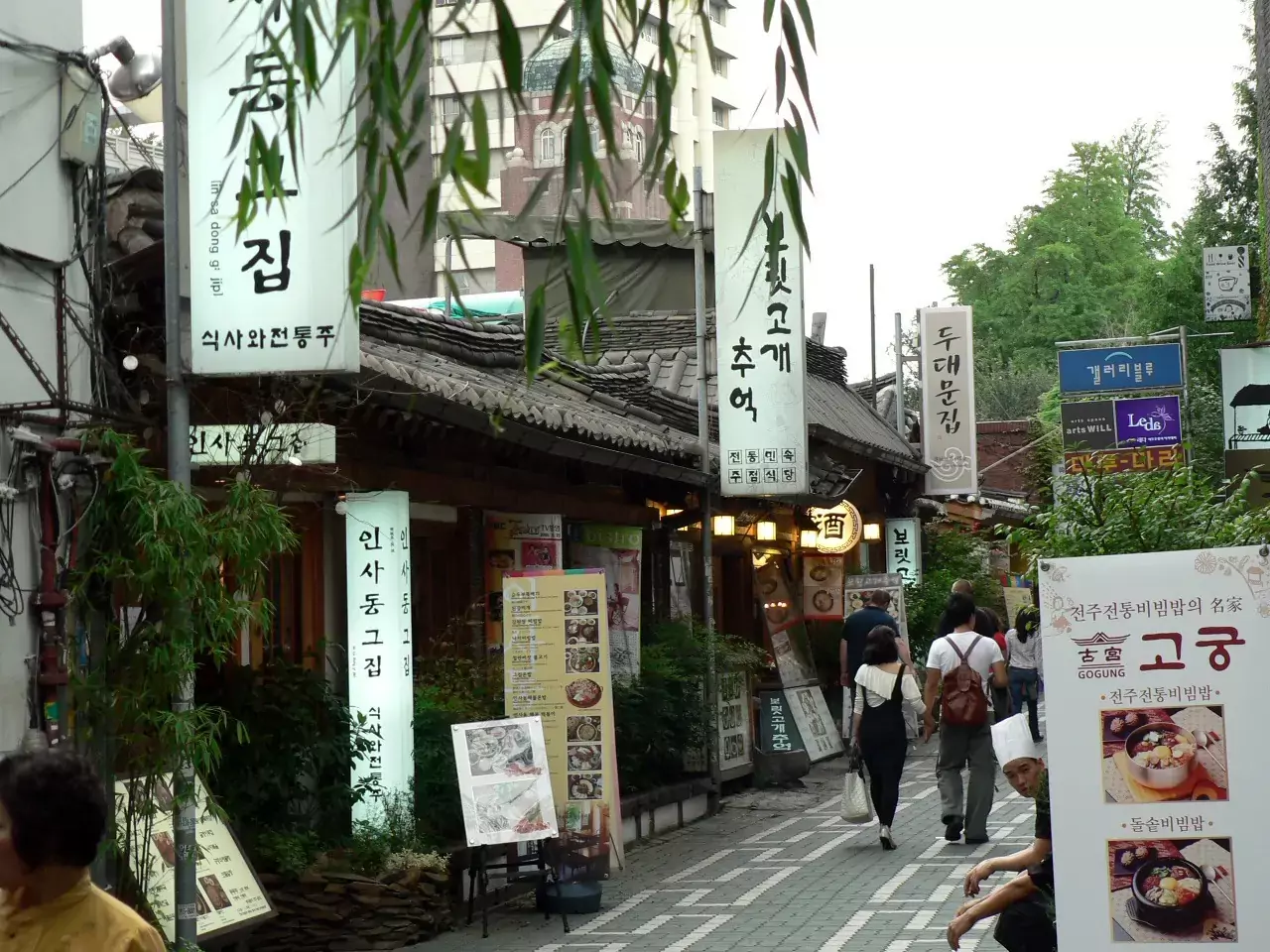
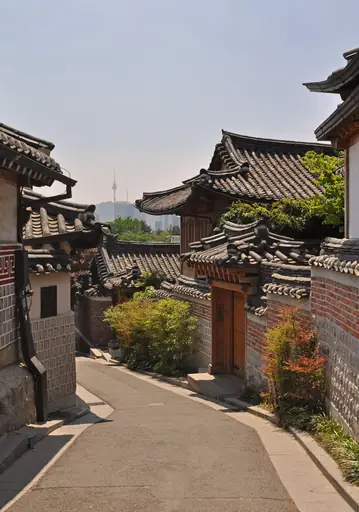
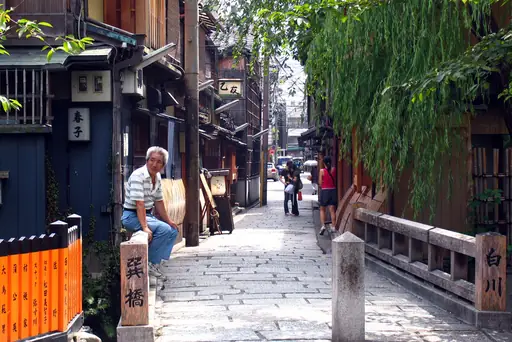
Insadong Cultural Street is a captivating blend of history and modernity tucked in the heart of Seoul. This neighborhood has evolved over five centuries from a residential area for government officials to Korea’s largest market for antiques and traditional crafts. Walking through Insadong, you’ll notice how the old charm is preserved amidst modern shops and cafes, creating a unique atmosphere reflective of Korean culture.
The area is famous for its antique shops, art galleries and traditional tea houses where the sweet aroma of medicinal teas fills the air. A must-visit is Ssamziegil, a distinctive multi-story complex featuring boutique shops and artisan products that reinterpret traditional Korean crafts. On weekends, the streets come alive with buskers and cultural performances, making for a lively and immersive experience.
Despite its charm, visitors should be aware that Insadong can get very crowded, particularly on weekends and holidays, which might detract from a peaceful visit. Also, while the prices are generally affordable, some shops catering to tourists may mark up prices, so a cautious approach to shopping is recommended. The narrow alleys can sometimes feel overwhelming, but exploring them reveals hidden cafes and quiet galleries off the main road.
Ultimately, Insadong invites visitors to slow down and savor the artistic and cultural heritage of Seoul. Whether you're sipping traditional tea, trying your hand at calligraphy or just soaking in the vibrant street life, the neighborhood offers a rich and memorable insight into Korea’s cultural soul.
Insadong is located in the Jongno district of Seoul and is easily accessible via Seoul's extensive subway system. The nearest subway stations are Anguk Station (Line 3) and Jonggak Station (Line 1), both within walking distance of the main street. Visitors arriving internationally can fly into Incheon International Airport and then take the Airport Railroad Express (AREX) or limousine buses to Seoul City, followed by subway or taxi to Insadong.
Seoul offers a wide range of accommodations from budget guesthouses to upscale hotels, many within easy subway distance of Insadong. Staying in nearby Jongno or downtown Seoul provides convenient access to the neighborhood and other key city attractions.
Log in to add this place to a travel list and get a summary of all recommended items for your whole trip.
We calculate the average costs when travelling to destinations and compare those with the living costs at your home. With this you can get an estimate of how expensive or cheap the destination is for you.
To customise this, you can set up which location and price level are used for the calculations in your account settings.
The exchange rate price factor shows how expensive or cheap a currency currently is compared to its historical average. It's a quick way to see if a country is currently more or less affordable due to exchange rate changes.
