






Was this page helpful?

| Opening hours: |
|
||
|---|---|---|---|
| Public website: | hanok.seoul.go.kr |
| Power Grid: |
220 V, 60 Hz Plug: Type C , Type F
Type C:
  Read about power adapters |
|---|---|
| Currency: |
South Korean Won (KRW) £1 ≈ ₩1,766 |
| Cashless info: |
Rating 5/5
Cashless payments are widely accepted in South Korea. Credit cards are commonly used in most establishments, including smaller businesses.
Save with a travel credit card |
| eSIM providers: |
Best value: Saily Flexibility: Airalo Read our in-depth comparison |
| Tipping: | Tipping is not customary in South Korea. However, small tips are appreciated in hotels and for exceptional service. |
|---|---|
| Public drinking: | Public drinking is allowed in South Korea, though drinking in public spaces like parks and streets may attract attention. Alcohol is also served in many convenience stores. |
| Public smoking: | Smoking is prohibited in indoor public spaces, but designated smoking areas are available in some outdoor locations. |
| Seollal (January/February) |
Celebrated in January or February with family gatherings |
|---|---|
| Chuseok (September/October) |
Celebrated in September or October |
| Emergency contact: | Emergency Numbers: 112 (Police), 119 (Fire, Ambulance) |
|---|---|
| Taxi apps: | Kakao T, T Map Taxi |
| Other: | South Korea offers a blend of traditional culture and modern technology, with historical sites, vibrant cities, and stunning landscapes. |
The best times to travel section shows how the months compare for a visit, so you can find the time of year that fits what you want to do.
Background colours of the months:
The colour shows the typical temperature: yellow (hot), green (mild) and blue (cold). How strong the colour is shows the travel season: full colour means high season, soft colour means shoulder season and soft-striped means off season.
Weather symbols:
Each month has one symbol showing what the weather is typically like, such as hot and sunny, freezing or a rainy or snowy season. Use them to quickly spot months that match the weather you want, or to avoid the ones that don't.
Crowdedness:
The people icon shows how busy the place usually is. The more people, the more crowded it gets.
Additional notes:
The grey info boxes point out special things worth knowing, like recurring weather issues or seasonal events.
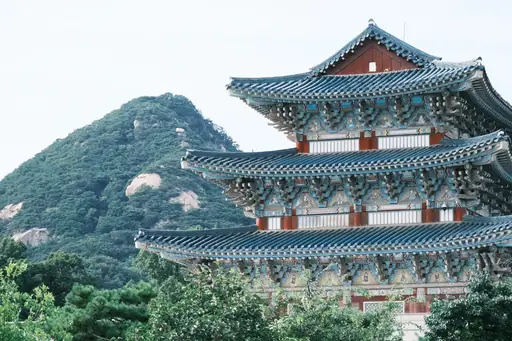
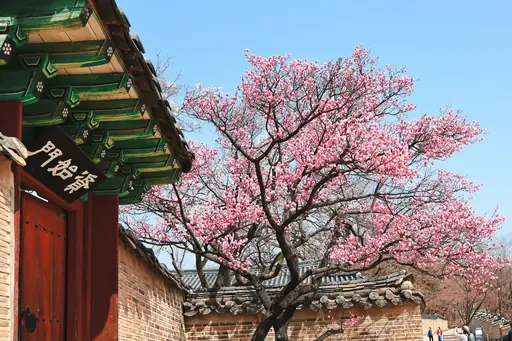
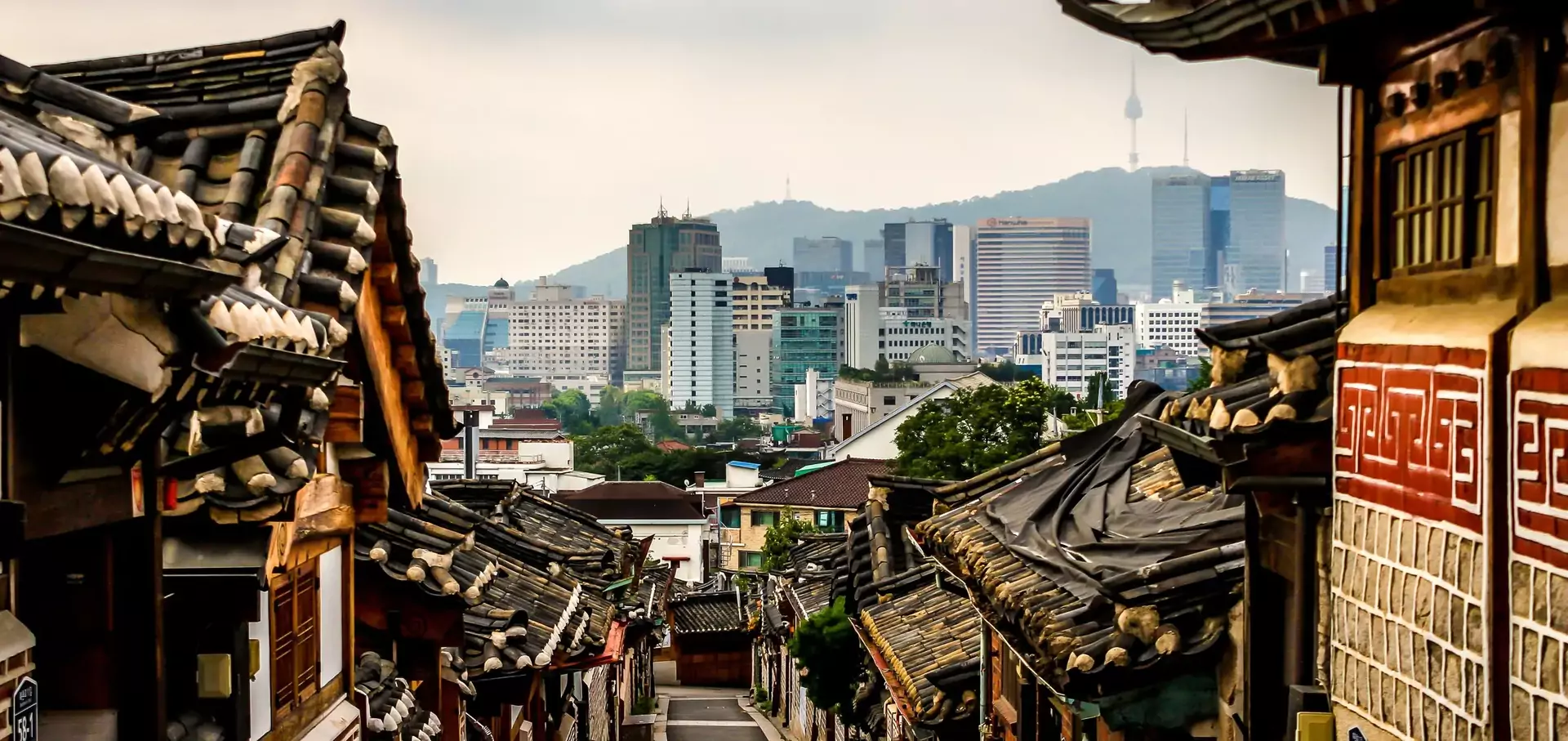
Bukchon Hanok Village is a historic neighborhood famous for its concentration of over 900 traditional hanok houses that date back to the late Joseon dynasty. The area was historically home to noble families and government officials and today it perfectly blends living history with modern urban life.
The village lies beautifully nestled between significant landmarks like Gyeongbokgung Palace and Changdeokgung Palace. Visitors can explore narrow alleys lined with hanok, many of which have been converted into tea houses, craft workshops, galleries and guesthouses. Popular spots include the Baek In-je House Museum, a well-preserved hanok showing residential life.
Despite its popularity, visitors should be mindful that Bukchon remains a residential area. In an effort to reduce overtourism impact, visitor access is controlled between 10 a.m. and 5 p.m. and tourists are asked to respect local privacy by keeping noise low and group sizes small. Particularly during peak seasons, the narrow streets can feel crowded, which can detract from the tranquil atmosphere.
Still, wandering the maze of traditional rooftops with city views in the distance offers a magical cultural immersion. The village proudly preserves architectural beauty, harmonizing old and new Seoul, making it a must-see for history lovers and photographers.
Bukchon Hanok Village is located in central Seoul’s Jongno district, easily reachable by subway via Anguk Station (Line 3) or Gyeongbokgung Station (Line 3). International visitors typically arrive via Incheon International Airport, then take the Airport Railroad Express (AREX) or limousine buses into Seoul city center, followed by local subway or taxi to the area.
Seoul offers a diverse range of accommodations near Bukchon, including boutique guesthouses inside hanok homes, modern hotels and budget hostels, catering to various traveler preferences and budgets.


Log in to add this place to a travel list and get a summary of all recommended items for your whole trip.
We calculate the average costs when travelling to destinations and compare those with the living costs at your home. With this you can get an estimate of how expensive or cheap the destination is for you.
To customise this, you can set up which location and price level are used for the calculations in your account settings.
The exchange rate price factor shows how expensive or cheap a currency currently is compared to its historical average. It's a quick way to see if a country is currently more or less affordable due to exchange rate changes.
