Floyd Manzano, CC BY 2.0
Asia › Japan › Miyajima

Miyajima

Scroll
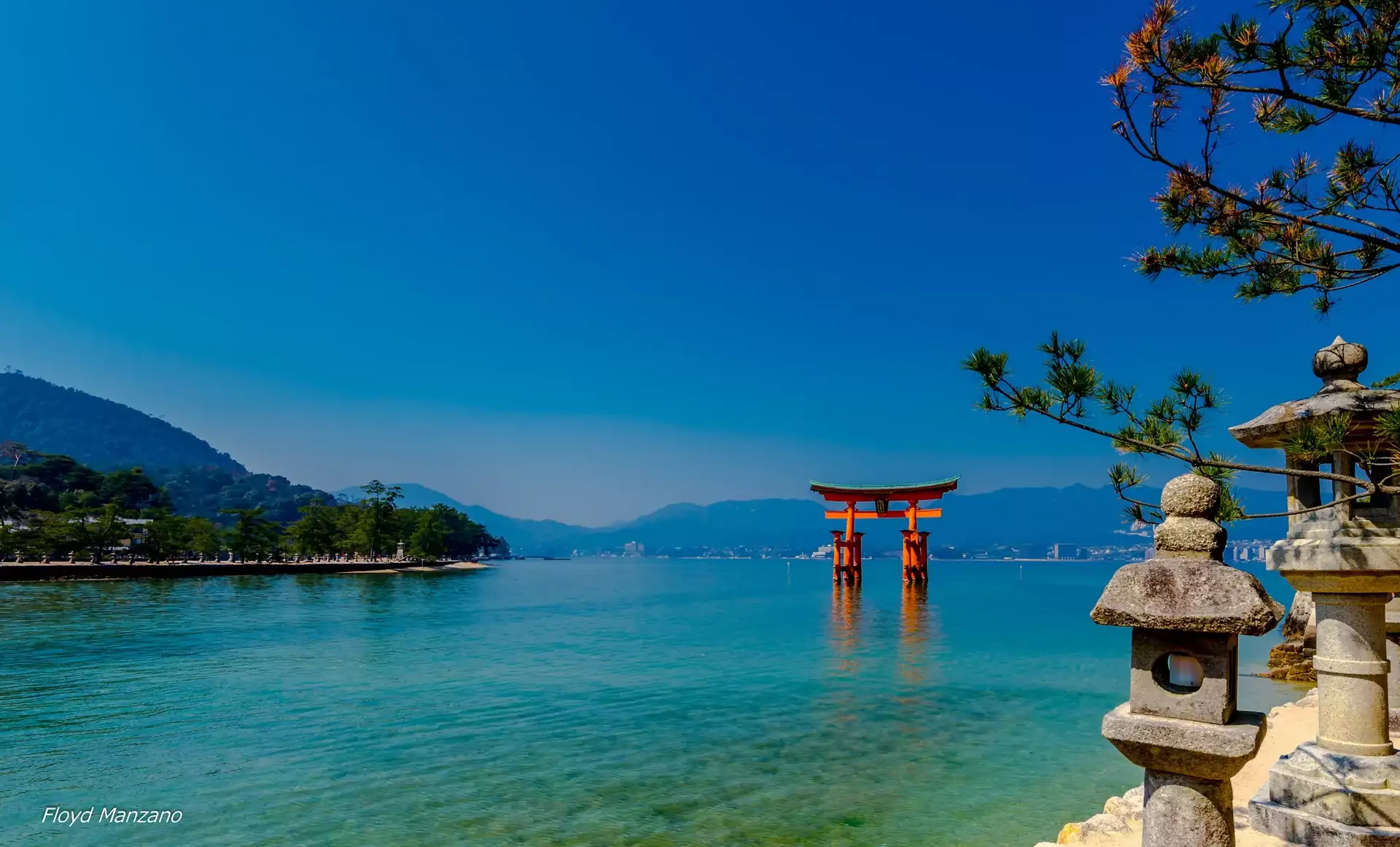
Torii in the sea, deer and Mount Misen

Miyajima, officially named Itsukushima, is a small island in Hiroshima Bay reached by a 10-minute ferry from the mainland. The shrine has been on the UNESCO World Heritage list since 1996 and its halls rest on posts above the tidal flats while the Great Torii stands out in the water. Visitors can walk to the gate at low tide, ride a ropeway toward Mount Misen or stroll the shopping streets by the seafront. Deer wander through town. Many people come for half a day but staying overnight gives you quiet evenings after the day-trippers head back.

Island in Japan
Climate zone: Humid subtropical

Humid subtropical: Warm temperate climates with hot, humid summers, mild winters and evenly distributed rainfall, common on eastern continental margins.

See climate table
Price level: $$$
$Cheap
$$Medium
$$$Expensive, upscale
$$$+Very expensive, luxury
See price details
Safety: 7.8
General Safety:9
Health & medical:6
Accessibility:4
Tap water:9
Read details
Tourist English: 3/5
English is spoken at major hotels, tourist centres and many shops. Most signage at attractions is bilingual. In small guesthouses or restaurants, English may be limited, so a translation app is helpful.
Last update: 21 Oct 2026
* We earn a commission from some links on this page.
Miyajima Summary

These place ratings give you a quick overview of how well a destination matches different types of trips.

‘Best for’ scores:
The specific interest scores show where this place really shines – whether it's ideal for hiking, food & drink experiences, museums or other activities. These highlights help you understand what makes the destination special at a glance.

‘Your personal’ scores:
This reflects how well a place matches your personal preferences. You can adjust the importances of travel topics or other personal requirements categories in your account settings.

‘Suited for’ badges:
These give you a quick overview of how well a destination suits specific types of travellers, to help you find the places that match your lifestyle, preferences or travel situation.

Read how our scores work
Famous for shrine culture and coastal scenery. Visit the iconic torii gate at low tide, explore historic temples, hike forested hills and enjoy local seafood along the waterfront.
Place score
8.6
Best at:
Religious sites
10
Islands
9
Autumn foliage
9
Cosy towns
8
Walkable
8
Personal score
?
Log in to see how this place matches your personal travel interests.
Suited for
👶 7
Families
🧓 5
Seniors
🛡️ 8
Travel Beginners
👩 8
Solo
Japan – Quick facts
Power Grid: 100 V, 50 Hz
Plug: Type A
Type A:
Diagram of a Type A power plug

Read about power adapters
Currency: Japanese Yen (JPY)
£1 ≈ JP¥210
Cashless info: Rating 4/5
Cashless payments are becoming more common, especially in cities, with some shops still preferring cash. Be prepared for occasional cash-only situations in rural areas.

Save with a travel credit card
eSIM providers: Best value: Saily
Flexibility: Airalo
Read our in-depth comparison
Tipping: Tipping is not customary in Japan and can be considered rude. Excellent service is the norm, and tipping is unnecessary in most places.
Public drinking: Public drinking is legal and commonly accepted, particularly during festivals and events.
Public smoking: Smoking is prohibited in indoor public places but allowed in designated outdoor areas. Some restaurants may have smoking sections.
New Year
(January)
One of the most important holidays, expect crowded temples and high prices. Plan ahead.
Golden Week
(April-May)
The busiest travel time, expect high demand for accommodation and transport.
Obon
(August)
A time to honour ancestors, many businesses close, and transport can be crowded.
Emergency contact: Emergency Number: 110 (Police), 119 (Fire & Ambulance)
Taxi apps: Uber, JapanTaxi, DiDi
Other: Japan is a country of respect, so understanding local customs and etiquette is important. Public transport is efficient, but can be crowded during peak hours.
Best times to travel

The best times to travel section shows how the months compare for a visit, so you can find the time of year that fits what you want to do.

Background colours of the months:
The colour shows the typical temperature: yellow (hot), green (mild) and blue (cold). How strong the colour is shows the travel season: full colour means high season, soft colour means shoulder season and soft-striped means off season.

Weather symbols:
Each month has one symbol showing what the weather is typically like, such as hot and sunny, freezing or a rainy or snowy season. Use them to quickly spot months that match the weather you want, or to avoid the ones that don't.

Crowdedness:
The people icon shows how busy the place usually is. The more people, the more crowded it gets.

Additional notes:
The grey info boxes point out special things worth knowing, like recurring weather issues or seasonal events.

for Miyajima, Japan
🌤️
Jan
🌤️
Feb
🌤️
Mar
🌤️
Apr
🌤️
May
🌦️
Jun
⛈️
Jul
🌦️
Aug
🌦️
Sep
☀️
Oct
🌤️
Nov
🌤️
Dec
High season: April - May, Oct. - Nov.
Shoulder season: March, Sep., Dec.
Crowdedness: 9 (Very crowded)
Tap on a month for more info Hover over a month for more info
Tides decide the view: the torii appears to float at high tide, and you can walk to it at low tide
Autumn leaves peak mid to late November; day trippers from Hiroshima fill the island at weekends
Oyster season November to March; fresh grilled oysters are served all over the island

Why travel to Miyajima?

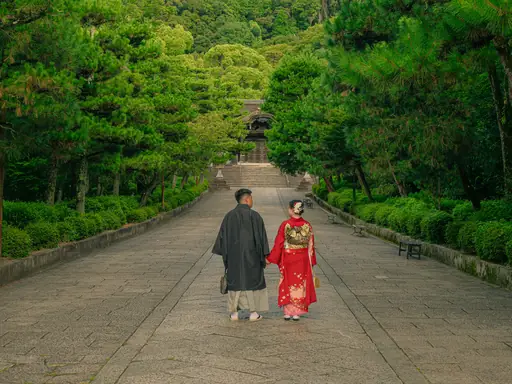
Itsukushima Shrine is a UNESCO World Heritage Site whose halls and corridors are on piers over the tidal flats. At high tide the buildings seem to float on the water. At low tide the sea drains away and you can walk across the sand to the Great Torii, a vermilion gate about 16 m tall in the bay. The present shrine goes back to the 12th century and the Taira leader Taira no Kiyomori. Nearby a five-storey pagoda is beside Senjokaku, a huge hall that Toyotomi Hideyoshi ordered in 1587 and that was never finished. Mount Misen is about 535 m high behind the town and gives the island a day of hiking if you want one. A two-stage ropeway from Momijidani Park reaches Shishiiwa Station near the top in about 14 minutes. Three hiking trails start in town and take roughly 1.5 to 2.5 hours up. The observatory has views over the Seto Inland Sea in all directions. Daisho-in, a temple on the lower slope, is about a 30-minute walk from the pier. Wild deer roam the streets and the grounds around the shrine. The shrine and the town take about half a day and adding Mount Misen or Daisho-in fills a full day. The island is much quieter in the early morning and evening. The torii is often lit after dark. Miyajima is close enough to Hiroshima to pair with its sights over two days.

🏯Places worth seeing
  • 1 Itsukushima Shrine
  • 2 Mt. Misen←→Daishoin Temple
🎡Places for activities
  • 1 Daishō Temple
  • 2 Miyajima Ropeway
🏞️Natural landmarks
  • 1 Momijidani Park
🛍️Shopping
  • 1 Omotesando shopping street
🍽️Eat & Drink
  • 1 Yakigaki no Hayashi
    Founded in 1948, Yakigaki no Hayashi is credited with introducing grilled oysters served at the shopfront. It prepares oysters from nearby Jigozen along with anago dishes on Omotesando, about eight minutes on foot from Miyajima Port.
  • 2 Kakiya
    Kakiya is an oyster specialist on Omotesando, serving grilled, smoked, fried and marinated Miyajima oysters, as well as oyster rice. It was established by a veteran oyster griller and stands on the route between the ferry pier and Itsukushima Shrine.
  • 3 Anago Meshi Ueno Miyajima Branch
    Ueno has prepared anago meshi since 1901, using grilled conger eel over rice seasoned with eel broth. Its main restaurant is in Miyajimaguchi on the mainland, outside the requested island boundary, so it is not included here.
  • 4 Anago Senmon Inachu
    Inachu specialises in anago, serving grilled conger eel over rice, tempura and eel sushi. It occupies a traditional building on Omotesando, a short walk from Itsukushima Shrine and the island ferry terminal.
  • 5 Anago to Kaki Mametanuki
    Mametanuki serves anago meshi and oyster dishes including grilled, fried and butter-sautéed preparations. The restaurant is on the west side of Itsukushima Shrine near Nishi-no-Matsubara, in a building run by the island’s long-established Kinsuikan inn.
  • 6 Miyajima Ichiwa
    Miyajima Ichiwa prepares anago meshi with domestic wild conger eel and dishes using locally grown Miyajima oysters. It occupies the second floor of a machiya building on Machiya-dori, near the Omotesando shopping street and shrine approach.
  • 7 Oshokujidokoro Yosakoi
    Yosakoi serves island-centred Japanese dishes, including oyster preparations and anago bowls made with Seto Inland Sea conger eel. It is located in central Miyajima close to the approach towards Itsukushima Shrine and the Omotesando shopping area.
  • 8 Momijido Honten
    Momijido makes momiji manju, maple-leaf-shaped cakes traditionally filled with sweet bean paste, and its fried age-momiji version. The shop stands on Omotesando, where the commercial street leads from Miyajima Port towards Itsukushima Shrine.
  • 9 Itsuki Coffee Miyajima
    Itsuki Coffee roasts speciality beans each morning and serves brewed coffee, espresso drinks and coffee soft serve. The independent coffee stand is at 420 Miyajima-cho, about nine minutes on foot from Miyajima Pier in the island’s central visitor area.
  • 10 Cafe Kakiwai
    Cafe Kakiwai serves coffee, sweets and light meals in a renovated old house on a hill above central Miyajima. Its terrace and windows face the five-storey pagoda and Seto Inland Sea, a short uphill walk from Omotesando.
🎈Events
  • Miyajima Water Fireworks Festival (August)
  • Kangen-sai Festival (June/July)
  • Miyajima Oyster Festival (February)
  • Autumn Maple Festival (November)
  • Setsubun Bean-Throwing (February)
  • Momijidani Park Cherry Blossom Viewing (April)
  • Miyajima Kangensai Boat Parade
  • Lantern Floating Ceremony (August)

Knowledge before you go

  • Check the tide table before you plan the torii visit.
  • Keep paper maps, tickets and snacks in a closed bag since the deer will grab them.
  • The ropeway stops in high wind or thunder, so allow time to walk down the trail.
  • A combined shrine and Treasure Hall ticket sold only at the shrine entrance costs less than two separate tickets.

How to travel to Miyajima

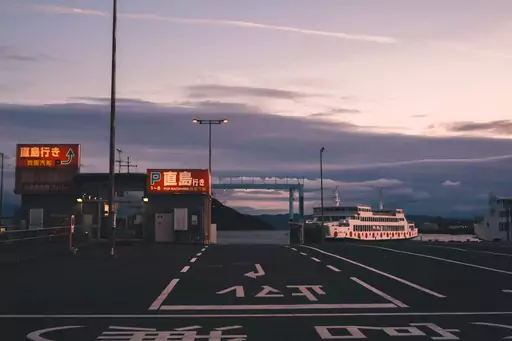
The easiest way to reach Miyajima is by train from Hiroshima to Miyajimaguchi and then a short ferry across the bay. The JR Sanyo Line takes about 30 minutes from Hiroshima Station. A Hiroden tram also runs from central Hiroshima and takes about an hour. Two ferry companies, JR West and Matsudai, cross from Miyajimaguchi in about 10 minutes at roughly 15-minute intervals. The JR ferry accepts the Japan Rail Pass and the JR West Rail Pass. A visitor tax of JP¥100 (£0.47) per visit is added to the ferry ticket. Aqua Net also runs a boat from Peace Memorial Park in Hiroshima that takes about 45 minutes and skips the train. Hiroshima is on the Sanyo Shinkansen line, about 1.5 hours from Osaka and around 4 hours from Tokyo. Hiroshima Airport (HIJ) is about 50 minutes from Hiroshima Station by shuttle bus. Drivers leave the Hiroshima-Iwakuni Road at Hatsukaichi or Ono Interchange and reach the ferry terminal on Route 2 in about 10 minutes. Parking on the island is limited so it's easier to leave the car on the mainland near the terminal.

Access summary

  • From Hiroshima Airport (HIJ): Airport bus to Hiroshima, train then 10‑minute ferry.
  • From Hiroshima city: JR Sanyo Line to Miyajimaguchi plus ferry, under 1 hour.
  • From Osaka/Kyoto: Shinkansen to Hiroshima, local train, then short ferry crossing.

Where to stay in Miyajima

Miyajima has a small number of traditional ryokan and a few hotels, mostly along the seafront and in the quiet streets close to the shrine. Many ryokan sell stays with dinner and breakfast included, which suits the island since eating options thin out in the evening. Rooms are few and usually cost more than comparable ones in Hiroshima. Staying overnight means the torii and the shrine are quiet at dusk and again in the early morning. The shrine opens early, before most day-trippers arrive. Book well ahead for the autumn foliage weeks, cherry blossom season, Golden Week and New Year, when the shrine opens at 00:00 on 1 January. If the island is full, Hiroshima has a far larger choice of hotels and the trip to the ferry takes about 30 minutes by train.

How to get around Miyajima

Miyajima is small and walking is the way people get around. The ferry pier is on the waterfront and the shrine is a walk of about 10 to 15 minutes along the seafront. Momijidani Park, where the ropeway starts, is inland behind the town and is reached on foot through the streets and a gentle valley.

Walking:
Daisho-in Temple is about 30 minutes on foot from the pier.
A car isn't needed on the island, since everything you'll want to see is within a short walk of the pier or along the mountain routes.

Mount Misen:
Hikers can choose between three trails up Mount Misen (Momijidani, Daisho-in and Omoto) that each take a couple of hours or more.
The ropeway runs from about 09:00 with the last ascents around 16:00, so you can ride up and walk down or the reverse. The walk from the summit to the ropeway station is about 1 km.

Food in Miyajima

Food on Miyajima centres on seafood from Hiroshima Bay. Most food is found along the shopping streets near the pier and the shrine, where stalls sell snacks to eat on the spot. Eateries tend to close early so plan dinner ahead if you stay the night. Choices beyond the main streets are limited. Vegetarians will find little beyond sweets and rice dishes since fish stock is common in Japanese cooking.

Seafood:
Oysters are the best-known local ingredient and cooks grill them over charcoal or fry them or serve them in rice dishes, mostly in the colder months.
Anago-meshi, grilled conger eel over rice, is a speciality of the island.

Momiji manju:
Momiji manju are maple-leaf cakes filled with red bean paste that began here.
Shops now also sell custard, chocolate and deep-fried versions.

Budget snapshot
Costs compared to home

We calculate the average costs when travelling to destinations and compare those with the living costs at your home. With this you can get an estimate of how expensive or cheap the destination is for you.

To customise this, you can set up which location and price level are used for the calculations in your account settings.

-40 %
Daily expenses in the region are around 40% lower than the average across United States. That means you'll spend considerably less on meals and getting around.
Exchange rate trend

The exchange rate price factor shows how expensive or cheap a currency currently is compared to its historical average. It's a quick way to see if a country is currently more or less affordable due to exchange rate changes.

-20 %
Your exchange rate (GBP to JPY) is 20% better than in recent years. That means travelling now is considerably cheaper compared to the past.

Travel costs

To help you plan your trip, we provide estimated daily costs per person (when travelling as a pair) for different travel styles. These numbers give you an idea of what you might spend each day at this destination, including accommodation, food, transport and activities.

Additionally, we also provide average hotel costs for different travel styles to give you an estimate for the accommodation only.

Please note that these are only estimates. The real costs depend on booking times, season and other factors.

Daily cost summary

Travel style categories explained:

Backpacker:
Staying in hostels or budget hotels, cooking your own meals or eating cheap and choosing low-cost activities.

Mid-range:
Staying in mid-range hotels, eating at a mix of restaurants and casual spots and enjoying a variety of activities.

Luxury:
Staying in luxury hotels, dining out at high-end restaurants and enjoying premium experiences without worrying about the price.

Backpacker Mid-range Luxury
💵 Total costs per day, including accommodation
£100
£195
£499
🏨 Accommodation per night, per person
£77
£150
£351
🍝 Food per day
£17
£37
£106
🚕 Transportation per day
£5
£8
£42
Food & Drink
🍽️ Restaurant Dinner, per person
£17
🍛 Lunch Set, per person
£6
🍟 Fast food combo
£4
🍝 Preparing your own food, per day
£7
☕ Cappuccino
£2.50
🍺 Beer in a restaurant, 0.5 l
£1.70
Transportation
🚌 Public transport ticket
£1.30
🚕 Taxi Ride, 10 km / 6 mi
£27
⛽ Petrol, 1 l
£0.85
Other
🎞️ Cinema ticket
£10
👩‍⚕️ Doctor's consult
£13
🤧 Cold medication
£8.50
💇 Basic haircut
£6

Safety information overview

General safety
9
Itsukushima is very safe, with little crime and the main risks are natural. Tides cover the sand around the torii within a few hours and typhoons can cancel ferries and the ropeway. Deer may bite if teased or fed.
Health & Medical
6
Medical care on the island itself is limited. Serious cases go to hospitals on the mainland, a short ferry ride away. English-speaking staff are uncommon. Heat and humidity in summer are the main concern on the Mount Misen climb.
Accessi­bility
4
Accessibility is mixed. The waterfront and shopping streets are flat but the shrine's wooden corridors have gaps between the boards that catch wheels and heels. Mount Misen's trails are steep and rocky. The ropeway helps though the summit itself still needs a walk.
Tap water
9
Tap water on Itsukushima is safe to drink, like elsewhere in Japan. Bottled drinks are sold at shops and vending machines near the pier and the shopping streets. Shops are few on Mount Misen's trails so carry water for the climb, especially in summer.

Packing recommendations for Miyajima

Log in to add this place to a travel list and get a summary of all recommended items for your whole trip.

Looking for inspiration?

Discover
Best island getaway destinations in Asia
Asia's island destinations span an extraordinary range, from the densely developed resort islands of Southeast Asia and the volcanic archipelagos of the Pacific rim to the remote…
Read more
Discover
Best couple vacation destinations in Asia
Asia is perfect for couples who want their holiday to feel like a shared adventure rather than just a change of scenery. Few continents offer so many ways to be amazed together.…
Read more
Discover
Top island destinations and tropical getaways
Island travel offers a self-contained quality that few other destination types match, with defined geography, distinct local culture and the particular atmosphere that comes from…
Read more
Discover
Top photography destinations and scenic landscapes
A genuinely photogenic destination offers more than one good shot: it has the light, the composition and enough variety of conditions to reward repeat visits at different times of…
Read more
Discover
Best destinations for first-time travelers in Asia
Asia has one of the best established beginner travel routes anywhere, largely because so many first time travelers have worn the path before you. Southeast Asia in particular…
Read more
Discover
Best photography destinations in Asia
High-altitude desert landscapes in northern South Asia sit under some of the clearest skies on the continent, while terraced rice fields elsewhere create an entirely different,…
Read more
Discover
Pilgrimage destinations and sacred sites
Pilgrimage travel is among the oldest forms of purposeful journey, with sacred routes, shrine destinations and holy cities drawing millions of travellers annually across every…
Read more
Discover
Top traditional destinations and cultural heritage sites
Traditional destinations are those where cultural practices, craftsmanship, ceremony and ways of life that predate industrialisation and mass tourism remain visible and active…
Read more
Discover
Most famous religious destinations in Asia
Most of the world's big religions started in Asia, so it is no surprise that the continent has a huge number of temples, shrines and mosques worth traveling for, whatever you…
Read more
Discover
Best solo travel destinations in Asia
Asia is where most solo travelers figure out they can actually do this. The backpacker trails through Southeast Asia have been running for decades, and the infrastructure along…
Read more
Discover
Top solo travel destinations and safe hubs
Travelling alone sounds like a bigger deal than it is. The first day feels strange – eating dinner by yourself, navigating without someone to double-check the map with, making…
Read more
Discover
Best couple holiday destinations
Travelling as a couple sounds simple enough, yet the best couple holiday destinations mean something different to almost every pair. What feels romantic to one couple can feel like…
Read more
Discover
Top historical destinations and historic sites
The most compelling history destinations are places where the past is still physically present and legible in the landscape, the architecture and the daily life of the people who…
Read more
Discover
Best traditional destinations in Asia
Asia contains the world's greatest concentration of living traditional cultures, craft traditions and ceremonial practices, with communities across the continent maintaining ways…
Read more
Discover
Top religious sites and sacred destinations
For a lot of people, visiting a famous religious site is one of the most memorable parts of a trip, whether they are believers or just curious about how other people live and pray.…
Read more
Feedback