
Asia › Japan › Okayama

Okayama

Scroll
A castle, a garden and Momotaro's legend

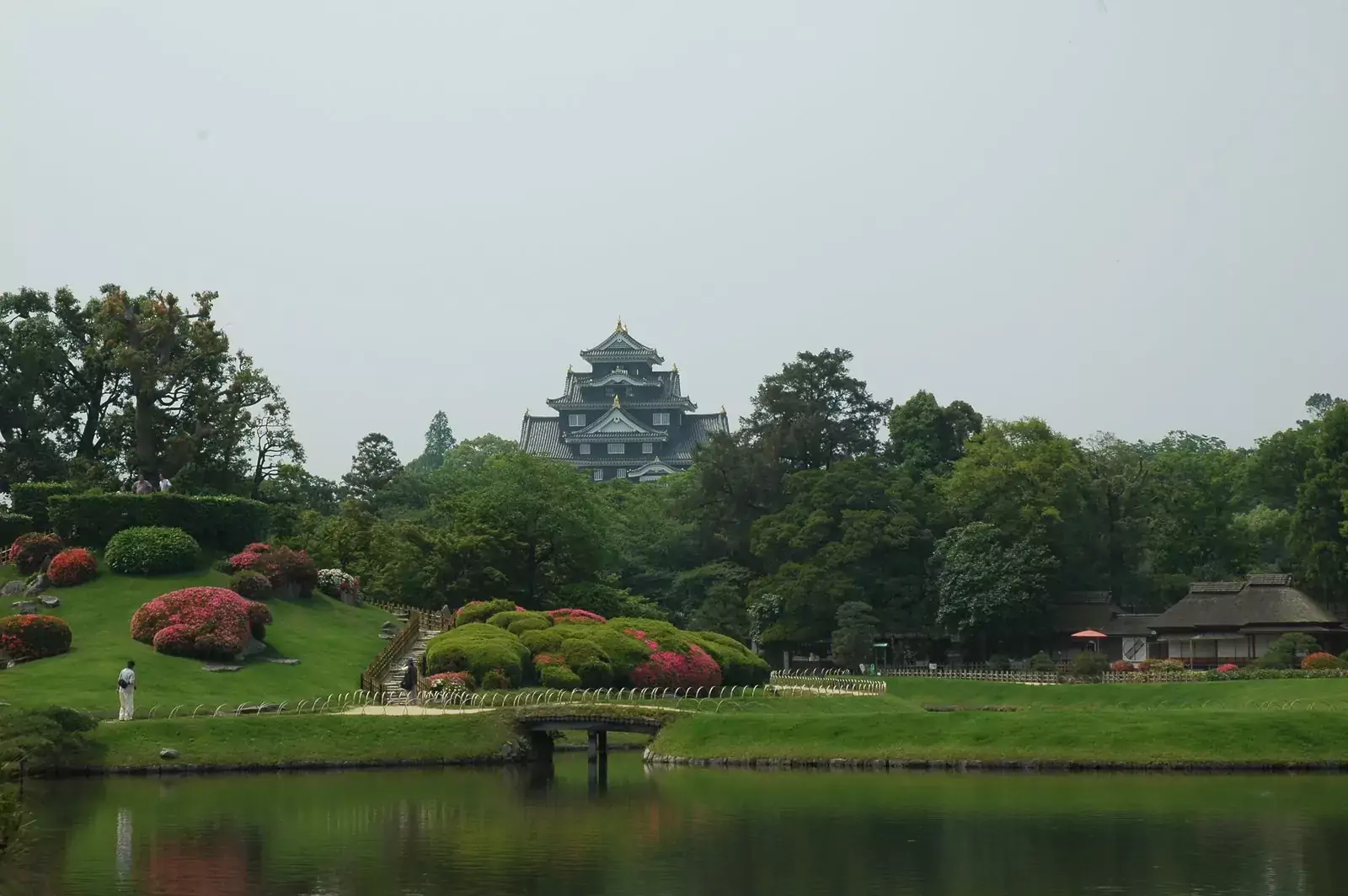
Okayama is a castle city in the Chugoku region, about 45 minutes from Shin-Osaka on the shinkansen. Its black Okayama Castle, nicknamed the Crow Castle, is across the Asahi River from Korakuen, a landscaped garden counted among Japan's three great gardens. A tram links the station with the sights. The old merchant town of Kurashiki is about 17 minutes away by train. The city is also tied to the Momotaro folk tale. Kibi-dango dumplings, a sweet linked to it, make a popular souvenir. One day covers the castle and garden, with extra time if you add Kurashiki or the art islands.

City in Japan
Climate zone: Humid subtropical

Humid subtropical: Warm temperate climates with hot, humid summers, mild winters and evenly distributed rainfall, common on eastern continental margins.

See climate table
Price level: $$$
$Cheap
$$Medium
$$$Expensive, upscale
$$$+Very expensive, luxury
See price details
Safety: 9.5
General Safety:10
Health & medical:9
Accessibility:8
Tap water:9
Read details
Tourist English: 2/5
English is spoken at major hotels and some tourist spots, but less so in local shops and restaurants. Signage is improving, but translation apps and basic Japanese phrases are helpful.
Last update: 20 Oct 2026
* We earn a commission from some links on this page.
Okayama Summary

These place ratings give you a quick overview of how well a destination matches different types of trips.

‘Best for’ scores:
The specific interest scores show where this place really shines – whether it's ideal for hiking, food & drink experiences, museums or other activities. These highlights help you understand what makes the destination special at a glance.

‘Your personal’ scores:
This reflects how well a place matches your personal preferences. You can adjust the importances of travel topics or other personal requirements categories in your account settings.

‘Suited for’ badges:
These give you a quick overview of how well a destination suits specific types of travellers, to help you find the places that match your lifestyle, preferences or travel situation.

Read how our scores work
Great for gardens and cultural sights. Walk through one of Japan’s most famous landscape gardens, visit historic castles, explore museums and enjoy riverfront strolls.
Place score
8.1
Best at:
Spotless
9
Gardens & parks
9
Walkable
7
Large cities
6
Less touristy
6
Personal score
?
Log in to see how this place matches your personal travel interests.
Suited for
👶 6
Families
🧓 8
Seniors
👩 9
Solo
🛡️ 8
Travel Beginners
Japan – Quick facts
Power Grid: 100 V, 50 Hz
Plug: Type A
Type A:
Diagram of a Type A power plug

Read about power adapters
Currency: Japanese Yen (JPY)
£1 ≈ JP¥210
Cashless info: Rating 4/5
Cashless payments are becoming more common, especially in cities, with some shops still preferring cash. Be prepared for occasional cash-only situations in rural areas.

Save with a travel credit card
eSIM providers: Best value: Saily
Flexibility: Airalo
Read our in-depth comparison
Tipping: Tipping is not customary in Japan and can be considered rude. Excellent service is the norm, and tipping is unnecessary in most places.
Public drinking: Public drinking is legal and commonly accepted, particularly during festivals and events.
Public smoking: Smoking is prohibited in indoor public places but allowed in designated outdoor areas. Some restaurants may have smoking sections.
New Year
(January)
One of the most important holidays, expect crowded temples and high prices. Plan ahead.
Golden Week
(April-May)
The busiest travel time, expect high demand for accommodation and transport.
Obon
(August)
A time to honour ancestors, many businesses close, and transport can be crowded.
Emergency contact: Emergency Number: 110 (Police), 119 (Fire & Ambulance)
Taxi apps: Uber, JapanTaxi, DiDi
Other: Japan is a country of respect, so understanding local customs and etiquette is important. Public transport is efficient, but can be crowded during peak hours.
Best times to travel

The best times to travel section shows how the months compare for a visit, so you can find the time of year that fits what you want to do.

Background colours of the months:
The colour shows the typical temperature: yellow (hot), green (mild) and blue (cold). How strong the colour is shows the travel season: full colour means high season, soft colour means shoulder season and soft-striped means off season.

Weather symbols:
Each month has one symbol showing what the weather is typically like, such as hot and sunny, freezing or a rainy or snowy season. Use them to quickly spot months that match the weather you want, or to avoid the ones that don't.

Crowdedness:
The people icon shows how busy the place usually is. The more people, the more crowded it gets.

Additional notes:
The grey info boxes point out special things worth knowing, like recurring weather issues or seasonal events.

for Okayama, Japan
🌤️
Jan
🌤️
Feb
🌤️
Mar
🌤️
Apr
🌦️
May
⛈️
Jun
⛈️
Jul
🔥
Aug
🌦️
Sep
🌤️
Oct
🌤️
Nov
🌤️
Dec
High season: April - May, Oct. - Nov.
Shoulder season: March, Sep.
Crowdedness: 4 (Moderate tourist numbers)
Tap on a month for more info Hover over a month for more info
Okayama is one of Japan's driest regions; the northern mountains are colder with winter snow
Heavy rain risk late June to mid July; typhoons possible August to September

Why travel to Okayama?

Korakuen is a landscaped garden on the bank of the Asahi River with lawns, ponds and tea houses. Opening hours are long, from early morning to 18:00 between late March and September and 08:00 – 17:00 the rest of the year, so it's easy to fit in around a train. Admission is JP¥500 (£2.37) and a combined ticket with Okayama Castle costs JP¥800 (£3.79). The black castle is a ten minute walk across the river. The city also has deeper roots in local legend, since the Momotaro folk tale is tied to this region. West of the centre the Kibi plain has temples such as Bitchu Kokubun-ji. Further afield, Bitchu Matsuyama Castle near Takahashi can be reached by train and taxi. Okayama is known for high-quality white peaches and muscat grapes. Oysters from the Seto Inland Sea are a highlight from autumn to spring. The city works as a stop between Osaka and Hiroshima or as a base for the region. Kurashiki and its canal quarter are close by. The art islands of the Seto Inland Sea, including Naoshima, are reached by ferry from nearby ports.

🏯Places worth seeing
  • 1 Okayama Castle
  • 2 Okayama Orient Museum
  • 3 Okayama Prefectural Museum of Art
🎡Places for activities
  • 1 倉敷美観地区
  • 2 Bizen Osafune Japanese Sword Museum
🏞️Natural landmarks
  • 1 Kōraku Garden
🛍️Shopping
  • 1 Tenmaya Department Store
  • 2 Aeon Mall Okayama
🍽️Eat & Drink
  • 1 Katsudon Nomura
    Demi-katsudon, a fried pork cutlet over rice with demi-glace sauce, at the shop credited with inventing the dish when it opened in 1931. It is about a 10-minute walk from Okayama Station.
  • 2 Gaho
    Demi-katsudon and other pork cutlet dishes at a long-running restaurant in Omotemachi, the castle town near Korakuen and Okayama Castle. It is known for elegant pork cutlets and a la carte dishes.
  • 3 Shokudo Yamato
    Okayama-style katsudon, always with demi-glace sauce, which regulars call dobi sauce, at a diner in Omotemachi. It has been popular for this dish since its founding. It is closed on Tuesdays.
  • 4 Azuma Sushi
    Okayama barazushi, scattered sushi with local ingredients such as mamakari, at a shop that has served since 1912. A branch at Sun Station Terrace Okayama is directly connected to the station.
  • 5 Tenjin Soba
    Okayama-style chuka soba at a ramen shop that opened in 1970. It opens on weekdays only, and a line forms before opening. It is a one-minute walk from Shiroshita tram stop.
  • 6 Asazuki Honten
    Tonkotsu soy sauce ramen at a shop that opened in 1948 and is called the oldest Chinese noodle shop in Okayama. It is near Hokancho shopping street, a 5-minute walk from the west exit of Okayama Station.
  • 7 Fujiya
    Okayama ramen at a shop that opened in 1950 and is often named as one of the roots of the style. It is near Hokancho shopping street, about a 5-minute walk from the west exit of Okayama Station.
  • 8 Chuka Soba Yamafuji Honmachi
    Light tonkotsu ramen with a soup of kombu and a house soy sauce made from simmered pork, with medium-thin noodles. The shop has run for about 30 years in the Honmachi area near Okayama Station.
  • 9 Ebimeshiya Mannari
    Ebi meshi, rice with shrimp flavoured with caramel sauce, a local B-grade comfort dish, at a well-known old shop in Mannari, Okayama City. It is a 20-minute walk from Bizen-Sanmon Station.
  • 10 Ramen Komurasaki
    Tonkotsu soy sauce ramen at a shop that opened in 1953 and is also known for its mayo ramen. Since its renovation it has a calm Japanese look and a wide menu.
🎈Events
  • Okayama Momotaro Festival (August)
  • Okayama Sakura Carnival (March/April)
  • Saidaiji Eyo (Naked Man Festival, February)
  • Korakuen Moon Viewing Ceremony (September)
  • Korakuen Grass Burning (February)
  • Okayama Korakuen Tea Picking Festival (May)
  • Okayama Korakuen Rice Planting Festival (June)
  • Kurashiki Tenryo Summer Festival (July)
  • Bizen Pottery Festival (October)
  • Okayama Korakuen Opening Commemoration Day (March)

Knowledge before you go

  • A combined ticket for Korakuen and the castle costs JP¥800 (£3.79).
  • Korakuen closes at 17:00 from October to mid-March, so arrive early in the day if you visit in winter.
  • Take the tram from Okayama Station to Shiroshita and walk about 10 minutes to Korakuen.
  • Kibi-dango are soft millet dumplings sold as souvenirs and are linked to the Momotaro folk tale.

How to travel to Okayama

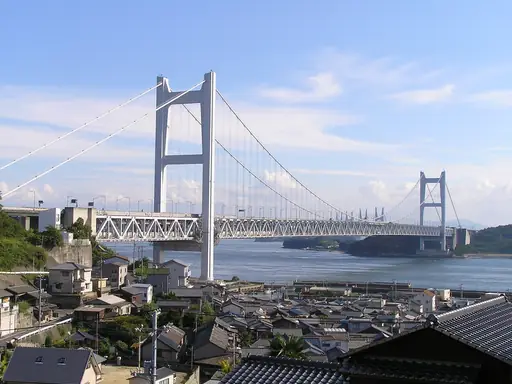
The shinkansen is the quickest way to reach Okayama. Shin-Osaka is about 45 minutes away, Hiroshima about 35 minutes and Tokyo about 3 hours 15 minutes. Nagoya and Hakata are each around 1 hour 40 minutes. Okayama Station is also the junction for trains to Shikoku, which cross the Seto Ohashi Bridge to Takamatsu. Okayama Momotaro Airport (OKJ) has flights from Tokyo Haneda taking about 1 hour 20 minutes, plus Sapporo, Naha and several Asian cities such as Seoul and Taipei. A bus connects the airport with Okayama Station in around 30 minutes. Highway buses also run to the Okayama and Kurashiki area from Kobe, Kyoto and other cities. Driving is possible on the expressways.

Access summary

  • From Okayama Airport (OKJ): Limousine bus to Okayama Station, about 30 minutes.
  • From Tokyo: Nozomi/Hikari shinkansen to Okayama, roughly 3–3.5 hours.
  • From Osaka (Shin-Osaka): Sanyo Shinkansen to Okayama, usually 45–60 minutes.

Where to stay in Okayama

Most visitors stay around Okayama Station, where business hotels cluster within walking distance of the shinkansen, the tram and the shopping streets. The area suits a short stay because both tram lines start at the station and you can reach Korakuen, the castle and the trains to Kurashiki without a car. Hotel prices and room types are typical of a regional city, with plenty of simple rooms and fewer large resorts. A second option is Kurashiki, about 17 minutes by train from Okayama. Its canal quarter has guesthouses and small inns in old buildings, which suit travellers who want atmosphere over convenience. Okayama is a smaller city than Osaka or Hiroshima, so hotel choice is narrower and rooms are worth booking ahead around holidays.

How to get around Okayama

Central Okayama is compact, with the station as the hub. The main sights, Korakuen and the castle, are a tram ride and a short walk from it.

Tram:
The Okayama Electric Tramway has two lines, the Higashiyama and the Seikibashi, both starting at Okayama Station.
Fares are flat and IC cards are accepted. The tram takes about five minutes to Shiroshita.

Walking:
Korakuen is a walk of roughly 10 minutes from Shiroshita.
From Korakuen the castle is another walk of about 10 minutes across the Asahi River.

Trains and buses:
City buses cover the areas the tram doesn't reach.
For day trips, JR trains are simplest. The local JR line from Okayama to Kurashiki takes about 17 minutes and the Momotaro Line runs west toward Soja and the Kibi plain.

Car:
A car isn't needed in the city, but it can help for the Kibi countryside where trains are infrequent.

Food in Okayama

Food in Okayama draws on the Seto Inland Sea and the region's orchards. Restaurants, izakaya and convenience stores are plentiful around Okayama Station and the main shopping streets.

Matsuri-zushi:
Matsuri-zushi, also called barazushi, is a festive scattered sushi with vinegared rice topped with omelette strips, shrimp, lotus root and simmered vegetables.
Some versions add fresh seafood such as Spanish mackerel or conger eel.

Kakioko:
Kakioko is a savoury pancake packed with local oysters, best from autumn to spring.
It originated in the coastal town of Hinase.

Kibi-dango:
Kibi-dango are soft chewy millet dumplings and the classic sweet here.
They're sold in confectionery shops and at the station.

Peaches and grapes:
Okayama is known for white peaches and muscat grapes, which are sold as gifts and in parfaits in season.

Budget snapshot
Costs compared to home

We calculate the average costs when travelling to destinations and compare those with the living costs at your home. With this you can get an estimate of how expensive or cheap the destination is for you.

To customise this, you can set up which location and price level are used for the calculations in your account settings.

-55 %
Daily expenses in Okayama are around 55% lower than the average across United States. That means you'll spend a lot less on meals and getting around.
Exchange rate trend

The exchange rate price factor shows how expensive or cheap a currency currently is compared to its historical average. It's a quick way to see if a country is currently more or less affordable due to exchange rate changes.

-20 %
Your exchange rate (GBP to JPY) is 20% better than in recent years. That means travelling now is considerably cheaper compared to the past.

Travel costs

To help you plan your trip, we provide estimated daily costs per person (when travelling as a pair) for different travel styles. These numbers give you an idea of what you might spend each day at this destination, including accommodation, food, transport and activities.

Additionally, we also provide average hotel costs for different travel styles to give you an estimate for the accommodation only.

Please note that these are only estimates. The real costs depend on booking times, season and other factors.

Daily cost summary

Travel style categories explained:

Backpacker:
Staying in hostels or budget hotels, cooking your own meals or eating cheap and choosing low-cost activities.

Mid-range:
Staying in mid-range hotels, eating at a mix of restaurants and casual spots and enjoying a variety of activities.

Luxury:
Staying in luxury hotels, dining out at high-end restaurants and enjoying premium experiences without worrying about the price.

Backpacker Mid-range Luxury
💵 Total costs per day, including accommodation
£42
£88
£222
🏨 Accommodation per night, per person
£23
£56
£113
🍝 Food per day
£16
£25
£74
🚕 Transportation per day
£4
£7
£35
Food & Drink
🍽️ Restaurant Dinner, per person
£8.50
🍛 Lunch Set, per person
£3.90
🍟 Fast food combo
£3.50
🍝 Preparing your own food, per day
£6.50
☕ Cappuccino
£1.70
🍺 Beer in a restaurant, 0.5 l
£1.80
Transportation
🚌 Public transport ticket
£1
🚕 Taxi Ride, 10 km / 6 mi
£22
⛽ Petrol, 1 l
£0.70
Other
🎞️ Cinema ticket
£8
👩‍⚕️ Doctor's consult
£20
🤧 Cold medication
£8.50
💇 Basic haircut
£4.20

Safety information overview

General safety
10
Okayama is very safe, with low crime in the station area and the centre even at night. The main risks are weather related. Heavy rain in early summer and typhoons in late summer and autumn can disrupt trains and cause local flooding.
Health & Medical
9
Medical care is very good, with large hospitals and many clinics in the city and pharmacies near the station. English-speaking care is limited, so a translation app and travel insurance help. Summer is hot and humid.
Accessi­bility
8
The centre is flat and mostly easy on foot. The streetcar covers the main sights. Korakuen has long gravel and grass paths and the castle keep involves stairs, so allow extra time. Older travellers may prefer taxis between sights in summer heat.
Tap water
9
Tap water in Okayama is safe to drink, as across Japan. Convenience stores, supermarkets and vending machines sell bottled water throughout the city. A refillable bottle is useful on hot summer days at Korakuen and the castle.

Looking for inspiration?

Discover
Best cherry blossom destinations in Asia
Cherry blossom season turns parts of Asia into a completely different place for a few short weeks each year, drawing travelers who plan their entire trip around a single bloom.…
Read more
Discover
Best couple vacation destinations in Asia
Asia is perfect for couples who want their holiday to feel like a shared adventure rather than just a change of scenery. Few continents offer so many ways to be amazed together.…
Read more
Discover
Top cherry blossom destinations and spring blooms
Cherry blossom season is brief and weather-dependent almost everywhere it happens, which is part of why it draws so much dedicated travel. The bloom typically lasts only a week or…
Read more
Discover
Best destinations for first-time travelers in Asia
Asia has one of the best established beginner travel routes anywhere, largely because so many first time travelers have worn the path before you. Southeast Asia in particular…
Read more
Discover
Best gardens and parks in Asia
Asia has some of the oldest garden traditions in the world, and the range across the continent is wide enough that the word "garden" barely covers it. Classical Chinese gardens…
Read more
Discover
Top castle destinations and historic fortresses
Castle travel spans an enormous range of surviving structures, from the intact hilltop fortresses and walled palace complexes that have been continuously inhabited or maintained to…
Read more
Discover
Best solo travel destinations in Asia
Asia is where most solo travelers figure out they can actually do this. The backpacker trails through Southeast Asia have been running for decades, and the infrastructure along…
Read more
Discover
Top solo travel destinations and safe hubs
Travelling alone sounds like a bigger deal than it is. The first day feels strange – eating dinner by yourself, navigating without someone to double-check the map with, making…
Read more
Discover
Best couple holiday destinations
Travelling as a couple sounds simple enough, yet the best couple holiday destinations mean something different to almost every pair. What feels romantic to one couple can feel like…
Read more
Discover
Best travel destinations for seniors in Asia
Asia offers some of the most senior friendly infrastructure anywhere, alongside destinations that still call for a bit more independence and stamina. Japan in particular stands…
Read more
Discover
Top historical destinations and historic sites
The most compelling history destinations are places where the past is still physically present and legible in the landscape, the architecture and the daily life of the people who…
Read more
Discover
Most beautiful gardens and parks worldwide
Some places are worth visiting just to stand still for a while. Gardens and parks don't always make it onto the classic travel itineraries, but they're often where a city's…
Read more
Discover
Best destinations for first-time travellers
A first trip abroad works best somewhere that eases you in, rather than throwing every possible culture shock and logistical headache at you at once. Some first-time travellers…
Read more
Discover
Best historical destinations in Asia
Asia's historical depth is staggering, encompassing some of the oldest continuous civilisations on earth and a range of empires, belief systems and cultural traditions that have…
Read more
Discover
Best castle destinations in Asia
Asia's castle and fortress traditions produced structures of extraordinary ambition across multiple distinct architectural languages, with the hilltop citadels and walled palace…
Read more
Feedback
