



Asia › Indonesia › Flores (Indonesia) › Wae Rebo

Wae Rebo

Scroll
Ancient village in the clouds

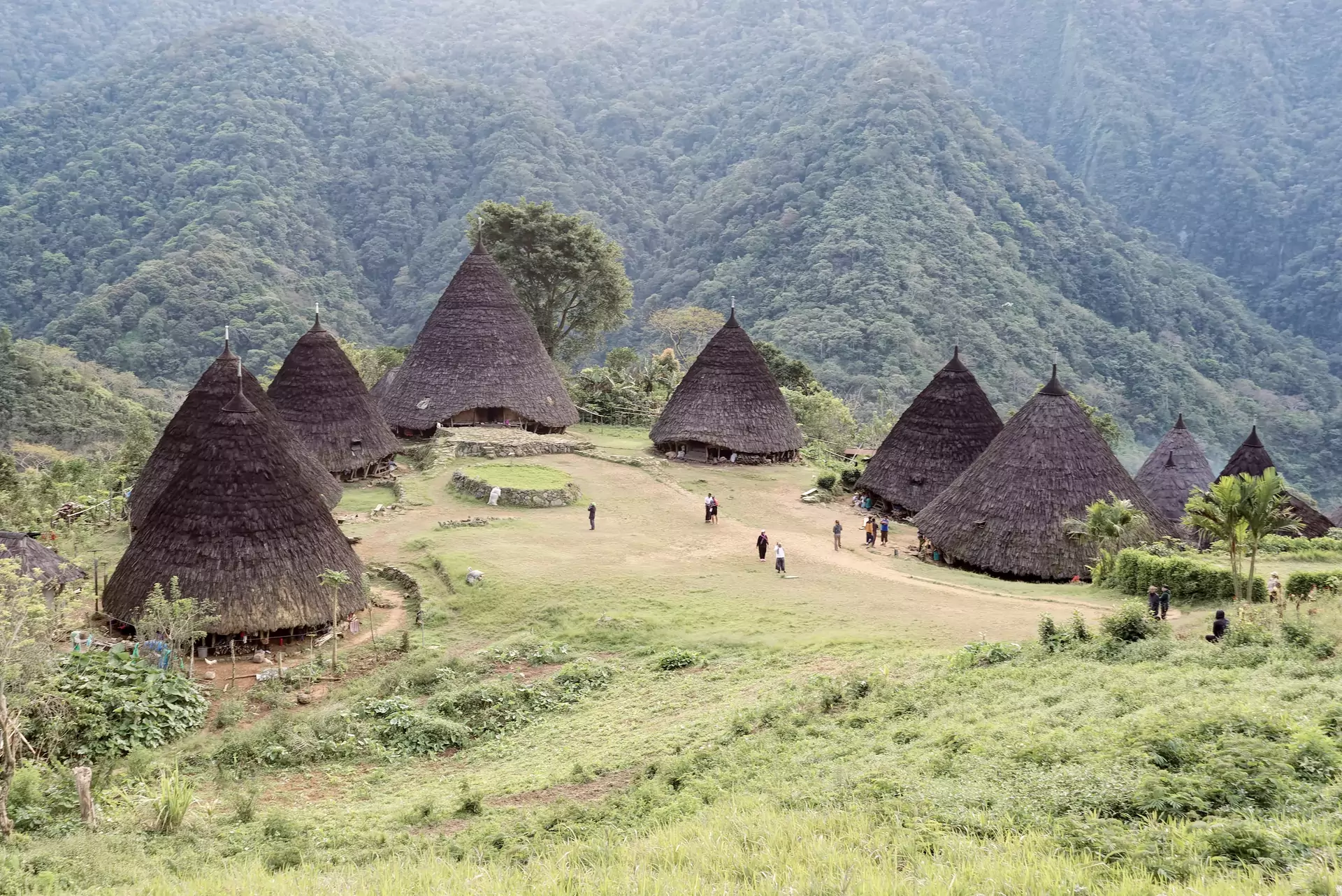
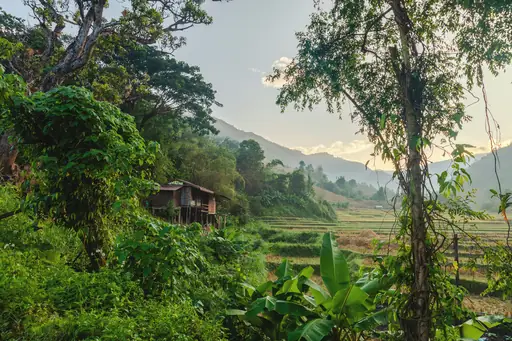
Wae Rebo is a remote village on Flores Island, Indonesia. It sits high in the Manggarai Highlands at over 1,200 meters above sea level. The area features terraced fields and traditional stone houses with cone-shaped roofs made from local materials. Residents grow coffee and vegetables for daily use while maintaining cultural practices tied to agriculture and community rituals. Access requires a multi-hour drive on winding roads through mountainous terrain. Visitors experience cooler temperatures compared to coastal regions, making it suitable for quiet stays away from crowded tourist spots.

Village in Indonesia
Climate zone: Tropical monsoon

Tropical monsoon: Tropical climates with pronounced wet and short dry seasons, dominated by monsoon winds and extremely heavy summer rains.

See climate table
Price level: $$$
$Cheap
$$Medium
$$$Expensive, upscale
$$$+Very expensive, luxury
See price details
Safety: 5.8
General Safety:8
Health & medical:3
Accessibility:2
Tap water:2
Read details
Tourist English: 1/5
English proficiency is very limited in Wae Rebo. Some younger residents and guides may speak basic English, but most communication requires gestures or translation. Tour guides from Labuan Bajo typically speak sufficient English to facilitate interactions
Last update: 12 Oct 2026
* We earn a commission from some links on this page.
Wae Rebo Summary

These place ratings give you a quick overview of how well a destination matches different types of trips.

‘Best for’ scores:
The specific interest scores show where this place really shines – whether it's ideal for hiking, food & drink experiences, museums or other activities. These highlights help you understand what makes the destination special at a glance.

‘Your personal’ scores:
This reflects how well a place matches your personal preferences. You can adjust the importances of travel topics or other personal requirements categories in your account settings.

‘Suited for’ badges:
These give you a quick overview of how well a destination suits specific types of travellers, to help you find the places that match your lifestyle, preferences or travel situation.

Read how our scores work
Unique for mountain villages and cultural trekking. Hike through rainforest trails, stay in traditional houses and experience remote village life.
Place score
6.9
Best at:
Secluded
9
Traditional culture
8
Cosy towns
7
Mountains
7
Less touristy
7
Personal score
?
Log in to see how this place matches your personal travel interests.
Suited for
👶 5
Families
🧓 4
Seniors
♻️ 9
Sustainability
❤️ 8
Couples
Indonesia – Quick facts
Power Grid: 230 V, 50 Hz
Plug: Type C , Type F
Type C:
Diagram of a Type C power plug
Type F:
Diagram of a Type F power plug

Read about power adapters
Currency: Indonesian Rupiah (IDR)
£1 ≈ IDR 24,141.20
Cashless info: Rating 4/5
Cashless payments are becoming more common in urban areas of Indonesia, particularly in larger cities. Credit cards and mobile payment apps like GoPay and OVO are widely accepted in many establishments.

Save with a travel credit card
eSIM providers: Best value: Saily
Flexibility: Airalo
Read our in-depth comparison
Tipping: Tipping is appreciated but not mandatory in Indonesia. A 5-10% tip is common in restaurants, and taxi drivers may expect small tips for good service.
Public drinking: Public drinking is not commonly seen in Indonesia. Alcohol is consumed mainly in licensed establishments such as bars, restaurants, and hotels.
Public smoking: Smoking is prohibited in many indoor public spaces, including restaurants, shopping centres, and public transport.
Independence Day
(17 August)
A national holiday with celebrations and ceremonies
Nyepi
(March/April)
The Balinese Day of Silence, celebrated with unique rituals and festivities
Emergency contact: Emergency Number: 112
Taxi apps: GoJek, Grab
Other: Indonesia is known for its stunning natural landscapes, including beaches, volcanoes, and jungles. It is a great destination for nature lovers and adventure seekers.
Best times to travel

The best times to travel section shows how the months compare for a visit, so you can find the time of year that fits what you want to do.

Background colours of the months:
The colour shows the typical temperature: yellow (hot), green (mild) and blue (cold). How strong the colour is shows the travel season: full colour means high season, soft colour means shoulder season and soft-striped means off season.

Weather symbols:
Each month has one symbol showing what the weather is typically like, such as hot and sunny, freezing or a rainy or snowy season. Use them to quickly spot months that match the weather you want, or to avoid the ones that don't.

Crowdedness:
The people icon shows how busy the place usually is. The more people, the more crowded it gets.

Additional notes:
The grey info boxes point out special things worth knowing, like recurring weather issues or seasonal events.

for Wae Rebo, Indonesia
⛈️
Jan
🌦️
Feb
⛈️
Mar
🌦️
Apr
🔥
May
☀️
Jun
☀️
Jul
☀️
Aug
🔥
Sep
🔥
Oct
🌦️
Nov
🌦️
Dec
High season: June - Sep.
Shoulder season: April - May, Oct.
Crowdedness: 3 (Few tourists)
Tap on a month for more info Hover over a month for more info
Village reached only by a 3 to 4 hour trek from Denge, start early to arrive before afternoon rain
Rainy season November to March: trail slippery, mist hides the views, some homestay stays are cancelled
Visitors are welcomed with a short ceremony on arrival, most stay overnight in the traditional houses

Why travel to Wae Rebo?

Wae Rebo offers something increasingly rare in our connected world - a genuine opportunity to disconnect and experience a traditional way of life that has nearly vanished elsewhere. The journey itself becomes part of the adventure, with the challenging trek through dense rainforest rewarding you with breathtaking mountain views before revealing the iconic conical houses emerging from the mist. Once there, you'll participate in welcome ceremonies with village elders and experience life without modern distractions - no cell signal, limited electricity and the profound silence of the mountains. What makes Wae Rebo truly special is the architectural marvel of the Mbaru Niang houses - five-story conical structures covered in lontar thatch, each level serving a specific purpose from family living quarters to sacred ancestral offerings. The village's isolation has preserved not just these structures but also traditional practices like coffee cultivation and processing that you can observe firsthand. Staying overnight in a communal house, sharing meals with locals and waking to misty mountain vistas creates the kind of authentic cultural immersion that has become nearly impossible to find in more accessible destinations.

Knowledge before you go

  • Book a guided tour. Trekking requires local guide for safety.
  • Wear sturdy hiking boots; 3-4 hour uphill trail through rainforest can be muddy and steep.
  • Stay overnight in cone-shaped drum houses to experience authentic Manggarai culture and community meals.
  • Bring notebooks or school supplies as thoughtful gifts for villagers; respect traditions by asking before photos.

How to travel to Wae Rebo

Reaching Wae Rebo requires a multi-stage journey that's part of its charm and challenge. First, fly to Komodo Airport in Labuan Bajo, Flores. From there, take a car or bus to Denge Village, which takes 4-5 hours on partially unpaved roads. At Denge, hire a motorcycle taxi (ojek) to the trailhead, costing around IDR 100,000 (£4.16). The final leg is a challenging 2-3 hour uphill trek through dense jungle. Many visitors opt for organized tours from Labuan Bajo that handle all transportation logistics, typically as part of a 2-day package.

Access summary

  • From Labuan Bajo Airport (LBJ): Drive to Denge 4–5 hours, then 2–3 hour trek.
  • From Labuan Bajo town: Private car or shared transport to Denge, then hike.
  • From Ruteng: Long, winding drive to Denge about 3 hours, then trek.

Where to stay in Wae Rebo

Accommodation in Wae Rebo is a unique cultural experience rather than a luxury stay. Visitors sleep in a communal tourist hut or sometimes in one of the traditional Mbaru Niang houses on mattresses arranged around the edge of the room with thick blankets provided. Bathroom facilities are basic, with bucket showers and simple toilets. There are no hotels or private rooms - everyone shares the same space, which is part of the authentic experience. Meals are provided and eaten together with other visitors and sometimes locals.

Hotel recommendations

*by rating and popularity. Commissions have no influence on the rankings.
We couldn't find any nearby hotels for now.

How to get around Wae Rebo

Wae Rebo is a small, isolated village that's easily explored on foot. There are no vehicles, roads or public transportation within the village itself. The entire settlement can be walked around in less than an hour. For exploring the surrounding areas, local guides can lead you on various walking trails through the forest and to viewpoints. The village's compact nature means everything is accessible by short walks, though the terrain can be steep and uneven in places.
Budget snapshot
Costs compared to home

We calculate the average costs when travelling to destinations and compare those with the living costs at your home. With this you can get an estimate of how expensive or cheap the destination is for you.

To customise this, you can set up which location and price level are used for the calculations in your account settings.

-73 %
Daily expenses in the region are around 73% lower than the average across United States. That means you'll spend a lot less on meals and getting around.
Exchange rate trend

The exchange rate price factor shows how expensive or cheap a currency currently is compared to its historical average. It's a quick way to see if a country is currently more or less affordable due to exchange rate changes.

-20 %
Your exchange rate (GBP to IDR) is 20% better than in recent years. That means travelling now is considerably cheaper compared to the past.

Travel costs (Data for Bima, Indonesia - 188 km away)

To help you plan your trip, we provide estimated daily costs per person (when travelling as a pair) for different travel styles. These numbers give you an idea of what you might spend each day at this destination, including accommodation, food, transport and activities.

Additionally, we also provide average hotel costs for different travel styles to give you an estimate for the accommodation only.

Please note that these are only estimates. The real costs depend on booking times, season and other factors.

Daily cost summary

Travel style categories explained:

Backpacker:
Staying in hostels or budget hotels, cooking your own meals or eating cheap and choosing low-cost activities.

Mid-range:
Staying in mid-range hotels, eating at a mix of restaurants and casual spots and enjoying a variety of activities.

Luxury:
Staying in luxury hotels, dining out at high-end restaurants and enjoying premium experiences without worrying about the price.

Backpacker Mid-range Luxury
💵 Total costs per day, including accommodation
£34
£72
£177
🏨 Accommodation per night, per person
£23
£53
£113
🍝 Food per day
£10
£18
£59
🚕 Transportation per day
£2
£2
£5
Food & Drink
🍽️ Restaurant Dinner, per person
£5.50
🍛 Lunch Set, per person
£1.50
🍟 Fast food combo
£2.30
🍝 Preparing your own food, per day
£3.70
☕ Cappuccino
£1.40
🍺 Beer in a restaurant, 0.5 l
£2
Transportation
🚌 Public transport ticket
£0.30
🚕 Taxi Ride, 10 km / 6 mi
£3.20
⛽ Petrol, 1 l
£0.55
Other
🎞️ Cinema ticket
£2.60
👩‍⚕️ Doctor's consult
£11
🤧 Cold medication
£1.30
💇 Basic haircut
£1.90

Safety information overview

General safety
8
Wae Rebo is generally safe regarding crime, but the trek presents physical hazards, especially in wet conditions. The remote location means emergency assistance is far away. Always trek with a guide and inform others of your plans. The trail can become slippery and dangerous after rain.
Health & Medical
3
Medical facilities are non-existent in Wae Rebo and extremely limited in nearby villages. The nearest hospital is several hours away in Labuan Bajo. Bring all necessary medications and a comprehensive first aid kit. The physical demands of the trek require good health and fitness.
Accessi­bility
2
Wae Rebo presents significant challenges for those with mobility issues. The 2-3 hour uphill trek through jungle terrain is strenuous, with no alternative access routes. The village itself has uneven ground and facilities are basic with no accommodations for those with disabilities.
Tap water
2
Tap water is not safe for drinking in Wae Rebo. Bottled water is provided with meals, but bringing water purification tablets or a filter is recommended for the trek. There are natural water sources along the trail but these should be treated before consumption.

Looking for inspiration?

Discover
Best cozy town destinations in Asia
A lantern-lit old town in Vietnam has preserved its heritage remarkably well, with tailors, lanterns and riverside cafés creating an atmosphere that's hard to find elsewhere in the…
Read more
Discover
Top cosy towns and quaint villages
Some towns have an atmosphere that's hard to manufacture deliberately: scale, architecture and a pace of life that makes a short visit feel unusually restorative. The best of them…
Read more
Discover
Best couple vacation destinations in Asia
Asia is perfect for couples who want their holiday to feel like a shared adventure rather than just a change of scenery. Few continents offer so many ways to be amazed together.…
Read more
Discover
Top traditional destinations and cultural heritage sites
Traditional destinations are those where cultural practices, craftsmanship, ceremony and ways of life that predate industrialisation and mass tourism remain visible and active…
Read more
Discover
Best rural retreat destinations in Asia
Rural retreat travel is defined by the deliberate removal from urban pace and density, with landscape immersion, slower rhythms and direct engagement with food, nature and local…
Read more
Discover
Best couple holiday destinations
Travelling as a couple sounds simple enough, yet the best couple holiday destinations mean something different to almost every pair. What feels romantic to one couple can feel like…
Read more
Discover
Best eco-tourism destinations in Asia
One Himalayan kingdom's deliberately restrictive, high-value tourism policy funds conservation and limits environmental impact by design, a model considerably different from…
Read more
Discover
Best traditional destinations in Asia
Asia contains the world's greatest concentration of living traditional cultures, craft traditions and ceremonial practices, with communities across the continent maintaining ways…
Read more
Discover
Top rural retreat destinations and countryside getaways
Rural retreat travel is defined by the deliberate removal from urban pace and density, with landscape immersion, slower rhythms and direct engagement with food, nature and local…
Read more
Discover
Top ecotourism destinations and sustainable travel hubs
Travel and conservation do not always go hand in hand, but eco tourism is built on the idea that a trip can truly support the places it visits rather than just pass through them.…
Read more
Discover
Most beautiful beaches and coastal escapes
For a lot of people, a beach is the whole point of a holiday, but what makes a beach day perfect really depends on personal taste. Some travellers want isolation and the feeling…
Read more
Discover
Stunning national parks and wilderness areas
National parks exist because someone decided that certain landscapes were too important to lose. The best of them protect ecosystems, wildlife and natural processes that would…
Read more
Discover
Intimate escapes and romantic getaways
The most memorable trips for couples tend to have less to do with luxury and more to do with the quality of shared experience. A place that slows you down, removes the usual…
Read more
Was this page helpful?
Feedback

