






Was this page helpful?

| Opening hours: |
|
||
|---|---|---|---|
| Public website: | www.tiantanpark.com |
| Power Grid: |
220 V, 50 Hz Plug: Type A , Type I
Type A:
  Read about power adapters |
|---|---|
| Currency: |
Chinese Yuan Renminbi (CNY) £1 ≈ CN¥8.88 |
| Cashless info: |
Rating 5/5
Cashless payments are widely accepted in China, particularly in urban areas. Mobile payment services like Alipay and WeChat Pay are commonly used.
Save with a travel credit card |
| eSIM providers: |
Best value: Saily Flexibility: Airalo Read our in-depth comparison |
| Tipping: | Tipping is not customary in China and is not expected, although it may be appreciated in high-end restaurants or by hotel staff for exceptional service. |
|---|---|
| Public drinking: | Public drinking is generally not allowed in many places in China, but it is common in restaurants and bars. |
| Public smoking: | Smoking is prohibited in many indoor public spaces, such as restaurants and public transport, but enforcement can vary. |
| Chinese New Year (January/February) |
Major holiday with family gatherings and public celebrations |
|---|---|
| National Day (1 October) |
National holiday with parades and festivities |
| Emergency contact: | Emergency Numbers: 110 (Police), 120 (Ambulance), 119 (Fire) |
|---|---|
| Taxi apps: | DiDi, Uber |
| Other: | China is known for its vast cultural heritage, including historical landmarks like the Great Wall, the Forbidden City, and the Terracotta Army. It offers diverse landscapes ranging from mountains to beaches. |
The best times to travel section shows how the months compare for a visit, so you can find the time of year that fits what you want to do.
Background colours of the months:
The colour shows the typical temperature: yellow (hot), green (mild) and blue (cold). How strong the colour is shows the travel season: full colour means high season, soft colour means shoulder season and soft-striped means off season.
Weather symbols:
Each month has one symbol showing what the weather is typically like, such as hot and sunny, freezing or a rainy or snowy season. Use them to quickly spot months that match the weather you want, or to avoid the ones that don't.
Crowdedness:
The people icon shows how busy the place usually is. The more people, the more crowded it gets.
Additional notes:
The grey info boxes point out special things worth knowing, like recurring weather issues or seasonal events.
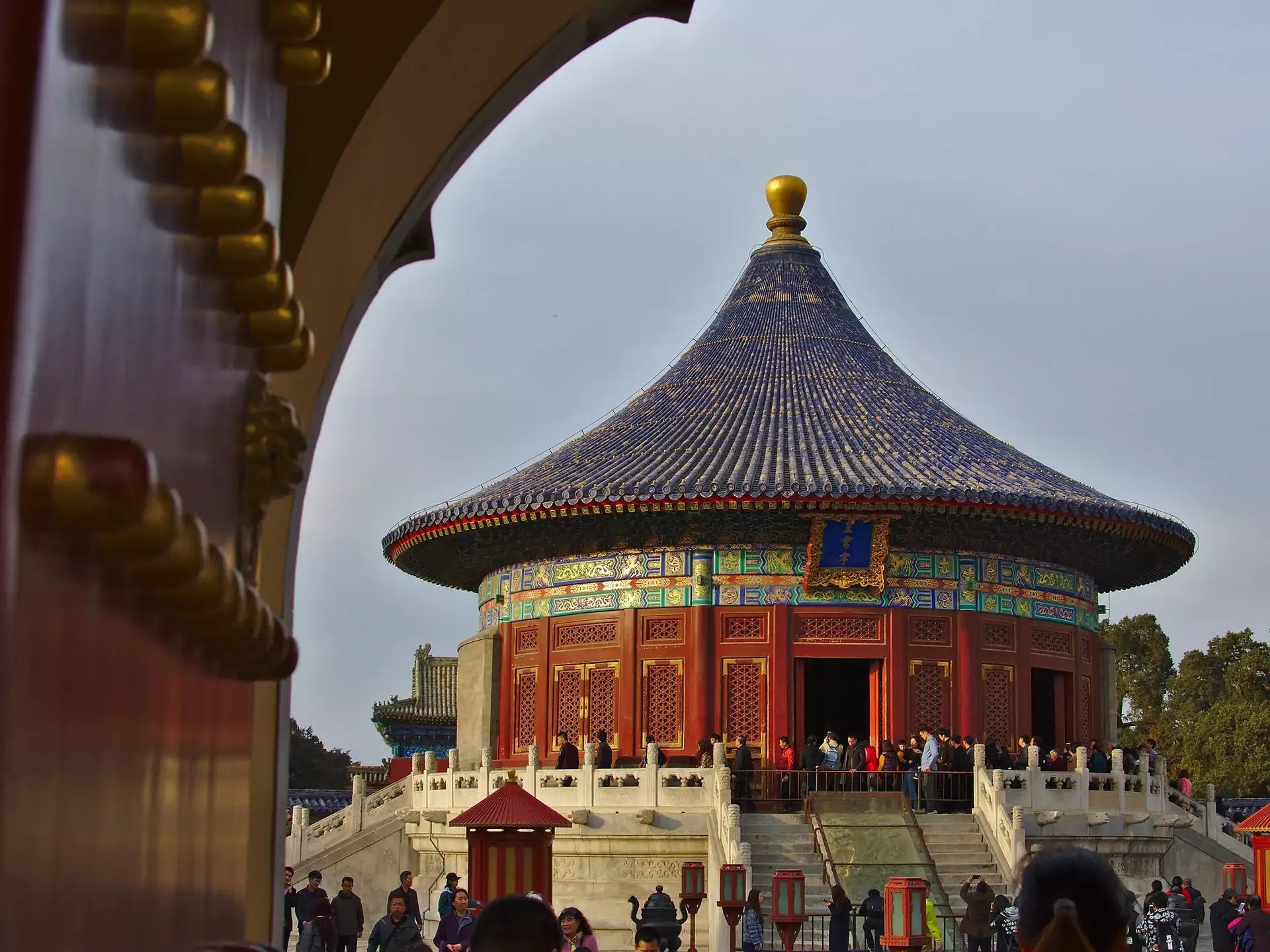
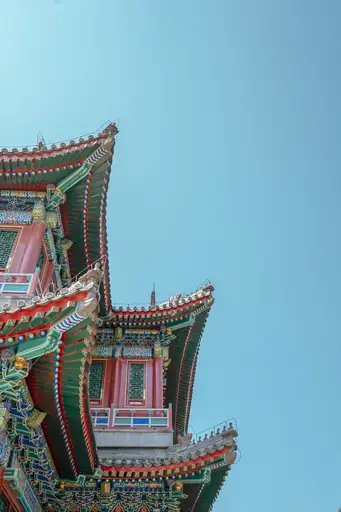
Constructed between 1406 and 1420 during the Ming Dynasty, the Temple of Heaven is a masterpiece of Chinese architecture that embodies ancient cosmological concepts. The complex's design symbolizes the connection between heaven and earth, with its circular and square structures representing the sky and the earth respectively.
The iconic Hall of Prayer for Good Harvests stands majestically with its triple-gabled roof adorned with blue tiles, set on a complex of three marble terraces. Visitors can explore the Circular Mound Altar, where emperors once offered sacrifices and experience the acoustic marvel of the Echo Wall, famed for its unique sound reflections.
The surrounding Temple of Heaven Park offers peaceful walking paths, ample green spaces and a glimpse into local life, as residents partake in traditional activities like tai chi and dancing in the mornings. The site is best visited in spring or autumn, avoiding the intense summer heat and winter chill.
While generally well-maintained and accessible, visitors should be cautious during peak tourist seasons due to high crowds. Some areas may have limited signage in English, so guided tours or audio guides are, therefore, recommended for a richer experience.
Located in southeastern Beijing, the Temple of Heaven is easily accessible via the city’s extensive metro network, with Tiantan East Station and Tiantan West Station serving the area. Visitors can arrive through Beijing Capital International Airport and use public transportation or taxis to reach the site.
Beijing offers a wide range of lodging options near the city center, including luxury hotels and boutique stays, providing easy access to the Temple of Heaven and other key attractions.



Log in to add this place to a travel list and get a summary of all recommended items for your whole trip.
We calculate the average costs when travelling to destinations and compare those with the living costs at your home. With this you can get an estimate of how expensive or cheap the destination is for you.
To customise this, you can set up which location and price level are used for the calculations in your account settings.
The exchange rate price factor shows how expensive or cheap a currency currently is compared to its historical average. It's a quick way to see if a country is currently more or less affordable due to exchange rate changes.
