

Asia › China › Beijing › Forbidden City

Forbidden City

Scroll
Ancient Imperial Majesty Center

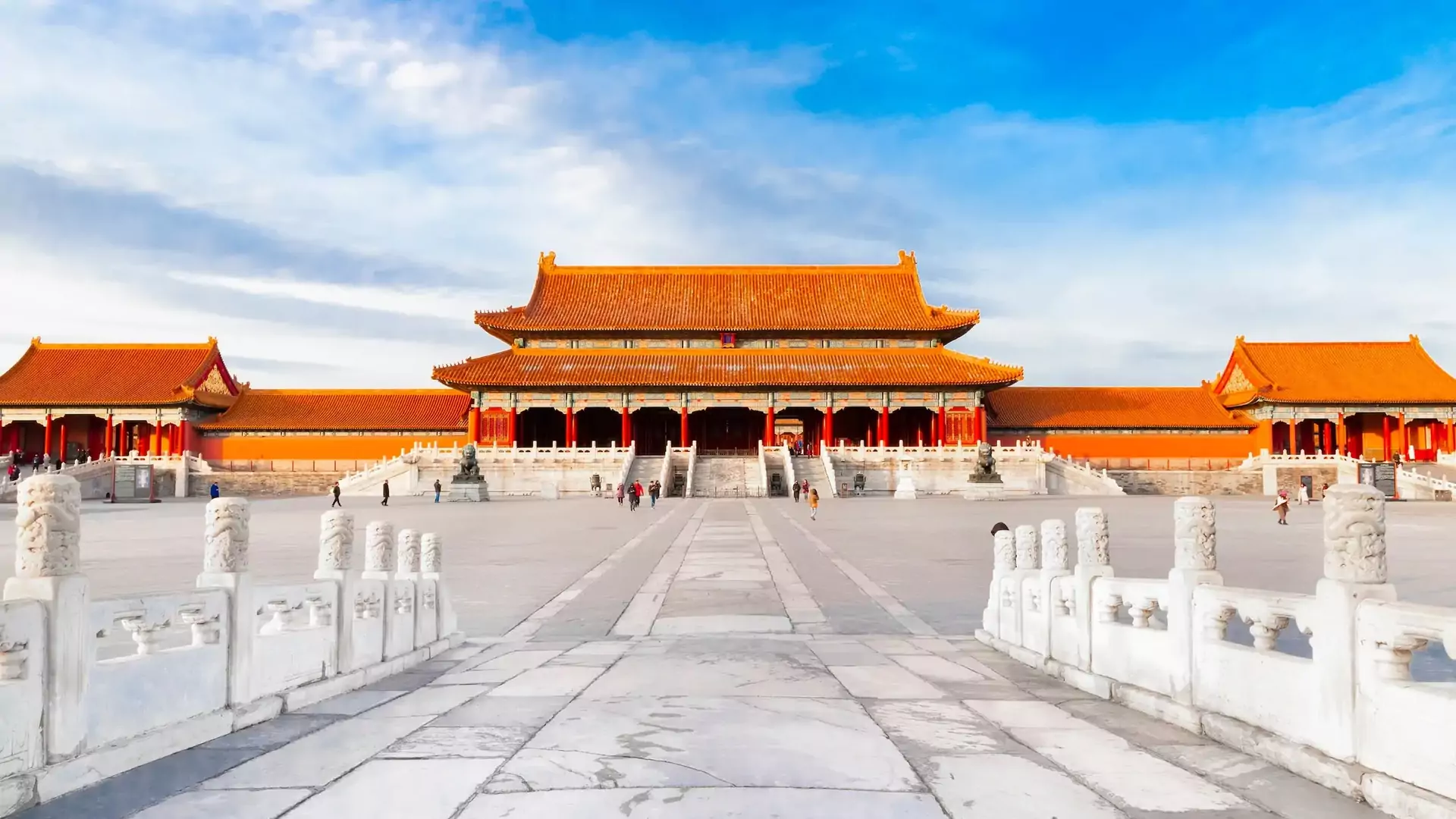
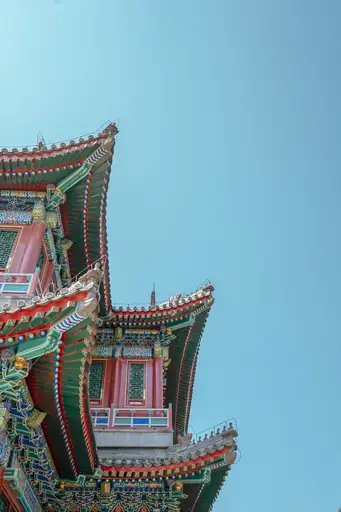
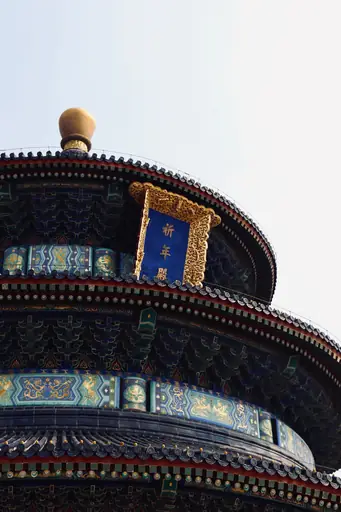
The Forbidden City in Beijing stands as a massive complex of palaces and courtyards built during China’s Ming Dynasty. Its red walls and golden roofs create a striking visual presence against the city skyline. Once home to emperors and their courts, it now serves as a museum showcasing imperial artifacts and architecture. Visitors walk through ornate gates and expansive halls that reflect centuries of political power and cultural tradition. The site remains central to understanding China’s historical development and architectural achievements.

Palace in Beijing
Climate zone: Hot continental

Hot continental: Monsoon-influenced continental climates with hot summers, cold winters and strong summer rainfall contrast to drier winter season.

See climate table
Ticket price: $$$
$Cheap
$$Medium
$$$Expensive, upscale
$$$+Very expensive, luxury
Safety: 7.6
General Safety:8
Accessibility:6
Read details
Tourist English: 3/5
English is moderately spoken in tourist areas and by guides, but language barriers can occur; using official tours or audio guides enhances the visitor experience.
Last update: 12 Oct 2026
* We earn a commission from some links on this page.
Forbidden City Summary
Iconic for imperial history and palace architecture. Explore vast courtyards, visit museum halls and learn about centuries of Chinese emperors.
Opening hours:
Mon:Closed
Tue-Sun:08:30 - 16:00
Public website: www.dpm.org.cn
China – Quick facts
Power Grid: 220 V, 50 Hz
Plug: Type A , Type I
Type A:
Diagram of a Type A power plug
Type I:
Diagram of a Type I power plug

Read about power adapters
Currency: Chinese Yuan Renminbi (CNY)
£1 ≈ CN¥8.88
Cashless info: Rating 5/5
Cashless payments are widely accepted in China, particularly in urban areas. Mobile payment services like Alipay and WeChat Pay are commonly used.

Save with a travel credit card
eSIM providers: Best value: Saily
Flexibility: Airalo
Read our in-depth comparison
Tipping: Tipping is not customary in China and is not expected, although it may be appreciated in high-end restaurants or by hotel staff for exceptional service.
Public drinking: Public drinking is generally not allowed in many places in China, but it is common in restaurants and bars.
Public smoking: Smoking is prohibited in many indoor public spaces, such as restaurants and public transport, but enforcement can vary.
Chinese New Year
(January/February)
Major holiday with family gatherings and public celebrations
National Day
(1 October)
National holiday with parades and festivities
Emergency contact: Emergency Numbers: 110 (Police), 120 (Ambulance), 119 (Fire)
Taxi apps: DiDi, Uber
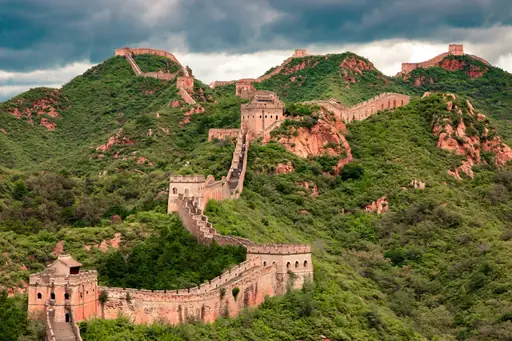
Other: China is known for its vast cultural heritage, including historical landmarks like the Great Wall, the Forbidden City, and the Terracotta Army. It offers diverse landscapes ranging from mountains to beaches.
Best times to travel

The best times to travel section shows how the months compare for a visit, so you can find the time of year that fits what you want to do.

Background colours of the months:
The colour shows the typical temperature: yellow (hot), green (mild) and blue (cold). How strong the colour is shows the travel season: full colour means high season, soft colour means shoulder season and soft-striped means off season.

Weather symbols:
Each month has one symbol showing what the weather is typically like, such as hot and sunny, freezing or a rainy or snowy season. Use them to quickly spot months that match the weather you want, or to avoid the ones that don't.

Crowdedness:
The people icon shows how busy the place usually is. The more people, the more crowded it gets.

Additional notes:
The grey info boxes point out special things worth knowing, like recurring weather issues or seasonal events.

for Forbidden City, China
❄️
Jan
❄️
Feb
☀️
Mar
☀️
Apr
☀️
May
🔥
Jun
🌦️
Jul
🌦️
Aug
☀️
Sep
☀️
Oct
☀️
Nov
❄️
Dec
High season: April - Oct.
Shoulder season: March, Nov.
Tap on a month for more info Hover over a month for more info
Closed on Mondays except public holidays; tickets only by advance online reservation, often sold out days ahead
Golden Week, October 1 to 7: extremely crowded with domestic visitors, tickets sell out

Constructed from 1406 to 1420 during the Ming Dynasty, the Forbidden City is the world's largest palace complex and one of the best-preserved examples of traditional Chinese palatial architecture. It consists of 980 buildings covering around 72 hectares (180 acres). The complex is surrounded by a 10-meter high wall and a 52-meter wide moat for protection.

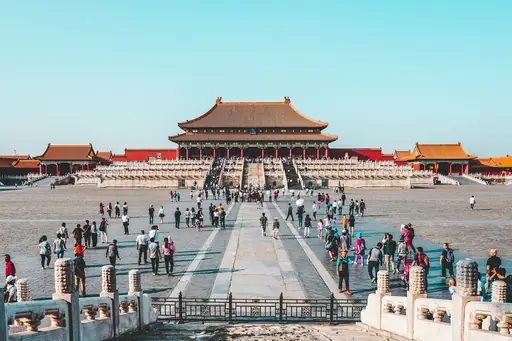
The Forbidden City was home to 24 emperors from the Ming and Qing dynasties, spanning 500 years of imperial rule. Its grand halls and temples showcase exquisite craftsmanship, intricate wooden carvings, vibrant murals and symbolic decorations celebrating Chinese culture and philosophy. Key buildings include the Hall of Supreme Harmony, which hosted imperial ceremonies and the private living quarters of the emperor and his family.

The extensive grounds also feature the peaceful Imperial Garden, with ancient trees, rockeries and pavilions. Recent restoration efforts have helped maintain the site's grandeur, allowing visitors to experience the magnificence of imperial China.

Visitors should plan ample time to explore due to the vast size and numerous halls. The Forbidden City can become very crowded during peak tourism seasons and public holidays, so early or late visits are best. Audio guides or licensed tours are recommended to gain deeper understanding. Note that photography is restricted in some areas.

Why travel to Forbidden City?

🏯Places worth seeing
  • 1 Hall of Supreme Harmony
  • 2 Meridian Gate
  • 3 Palace of Heavenly Purity
🏞️Natural landmarks
  • 1 Imperial Garden
🛍️Shopping
  • 1 Palace Museum Shop

Knowledge before you go

  • Book tickets online; passport required at entry.
  • Enter Meridian Gate early morning to avoid massive central axis crowds and tour groups.
  • Follow one-way route north along central axis through three main ceremonial halls to Imperial Garden.
  • Extra fees for Treasure Gallery clocks and paintings; allocate 10 RMB each for imperial artifacts.

How to travel to Forbidden City

The Forbidden City is located centrally in Beijing, north of Tiananmen Square. Visitors arriving internationally typically fly into Beijing Capital International Airport. Public transportation options include the Beijing metro lines 1 (Tiananmen East or West station) and 2 (Qianmen station). Taxis and buses are also available, but the city center is best explored on foot or by metro.

Access summary

  • From Beijing Capital Airport (PEK): Airport train + metro or taxi, about 60–90 min.
  • From central Beijing (Wangfujing/Tiananmen): Walk or short metro/taxi ride, 5–20 min.
  • From Beijing Daxing Airport (PKX): Airport express + metro or taxi, typically 70–100 min.

Where to stay near Forbidden City

Beijing offers a broad range of accommodations near Tiananmen Square and the Forbidden City, from luxury international hotels to boutique lodgings and budget hostels, all accessible to the city’s transport network.

Packing recommendations for Forbidden City

Log in to add this place to a travel list and get a summary of all recommended items for your whole trip.

Budget snapshot
Costs compared to home

We calculate the average costs when travelling to destinations and compare those with the living costs at your home. With this you can get an estimate of how expensive or cheap the destination is for you.

To customise this, you can set up which location and price level are used for the calculations in your account settings.

-69 %
Daily expenses in the region are around 69% lower than the average across United States. That means you'll spend a lot less on meals and getting around.
Exchange rate trend

The exchange rate price factor shows how expensive or cheap a currency currently is compared to its historical average. It's a quick way to see if a country is currently more or less affordable due to exchange rate changes.

-1 %
Your exchange rate (GBP to CNY) is 1% better than in recent years. That means travelling now costs around the same compared to the past.

Safety information overview

General safety
8
The Forbidden City in Beijing remains a safe destination for travelers, with robust security and well‑trained staff ensuring minimal crime. Visitors should stay on designated paths, avoid carrying valuables openly and respect local customs to maintain personal safety.
Accessi­bility
6
The Forbidden City in Beijing offers limited accessibility: some entrances have ramps, but many halls remain steep and narrow. Wheelchair users can access a few galleries via guided tours, yet stairs dominate the layout, making full exploration challenging for mobility‑impairment visitors.

Looking for inspiration?

Discover
Top photography destinations and scenic landscapes
A genuinely photogenic destination offers more than one good shot: it has the light, the composition and enough variety of conditions to reward repeat visits at different times of…
Read more
Discover
Best photography destinations in Asia
High-altitude desert landscapes in northern South Asia sit under some of the clearest skies on the continent, while terraced rice fields elsewhere create an entirely different,…
Read more
Discover
Top architecture destinations and iconic landmarks
Architecture travel spans everything from ancient ceremonial complexes and medieval urban cores to the grands projets of the twentieth century and contemporary buildings that draw…
Read more
Discover
Top museum destinations and cultural institutions
Museum travel has developed a dedicated following built around the world's great permanent collections, blockbuster exhibition programmes and the architecturally significant…
Read more
Discover
Top historical destinations and historic sites
The most compelling history destinations are places where the past is still physically present and legible in the landscape, the architecture and the daily life of the people who…
Read more
Discover
Best museum destinations in Asia
Asia's museum offer encompasses one of the world's most diverse ranges of cultural traditions, artistic languages and historical periods, with institutions across the continent…
Read more
Discover
Best historical destinations in Asia
Asia's historical depth is staggering, encompassing some of the oldest continuous civilisations on earth and a range of empires, belief systems and cultural traditions that have…
Read more
Discover
Best architecture destinations in Asia
Asia contains some of the world's most significant architectural traditions, with temple complexes, imperial palace compounds and historic urban quarters representing distinct…
Read more
Discover
Most beautiful beaches and coastal escapes
For a lot of people, a beach is the whole point of a holiday, but what makes a beach day perfect really depends on personal taste. Some travellers want isolation and the feeling…
Read more
Discover
Stunning national parks and wilderness areas
National parks exist because someone decided that certain landscapes were too important to lose. The best of them protect ecosystems, wildlife and natural processes that would…
Read more
Discover
Intimate escapes and romantic getaways
The most memorable trips for couples tend to have less to do with luxury and more to do with the quality of shared experience. A place that slows you down, removes the usual…
Read more
Was this page helpful?
Feedback