










Was this page helpful?

| Opening hours: |
|
||||
|---|---|---|---|---|---|
| Public website: | www.chnmuseum.cn |
| Power Grid: |
220 V, 50 Hz Plug: Type A , Type I
Type A:
  Read about power adapters |
|---|---|
| Currency: |
Chinese Yuan Renminbi (CNY) £1 ≈ CN¥8.88 |
| Cashless info: |
Rating 5/5
Cashless payments are widely accepted in China, particularly in urban areas. Mobile payment services like Alipay and WeChat Pay are commonly used.
Save with a travel credit card |
| eSIM providers: |
Best value: Saily Flexibility: Airalo Read our in-depth comparison |
| Tipping: | Tipping is not customary in China and is not expected, although it may be appreciated in high-end restaurants or by hotel staff for exceptional service. |
|---|---|
| Public drinking: | Public drinking is generally not allowed in many places in China, but it is common in restaurants and bars. |
| Public smoking: | Smoking is prohibited in many indoor public spaces, such as restaurants and public transport, but enforcement can vary. |
| Chinese New Year (January/February) |
Major holiday with family gatherings and public celebrations |
|---|---|
| National Day (1 October) |
National holiday with parades and festivities |
| Emergency contact: | Emergency Numbers: 110 (Police), 120 (Ambulance), 119 (Fire) |
|---|---|
| Taxi apps: | DiDi, Uber |
| Other: | China is known for its vast cultural heritage, including historical landmarks like the Great Wall, the Forbidden City, and the Terracotta Army. It offers diverse landscapes ranging from mountains to beaches. |
The best times to travel section shows how the months compare for a visit, so you can find the time of year that fits what you want to do.
Background colours of the months:
The colour shows the typical temperature: yellow (hot), green (mild) and blue (cold). How strong the colour is shows the travel season: full colour means high season, soft colour means shoulder season and soft-striped means off season.
Weather symbols:
Each month has one symbol showing what the weather is typically like, such as hot and sunny, freezing or a rainy or snowy season. Use them to quickly spot months that match the weather you want, or to avoid the ones that don't.
Crowdedness:
The people icon shows how busy the place usually is. The more people, the more crowded it gets.
Additional notes:
The grey info boxes point out special things worth knowing, like recurring weather issues or seasonal events.
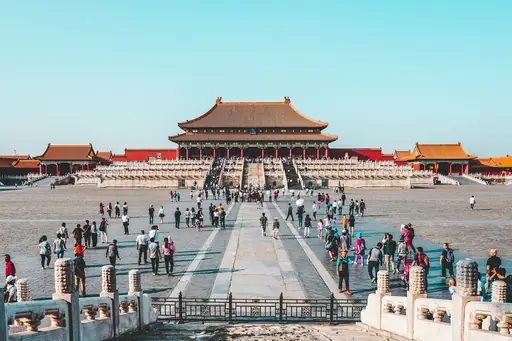
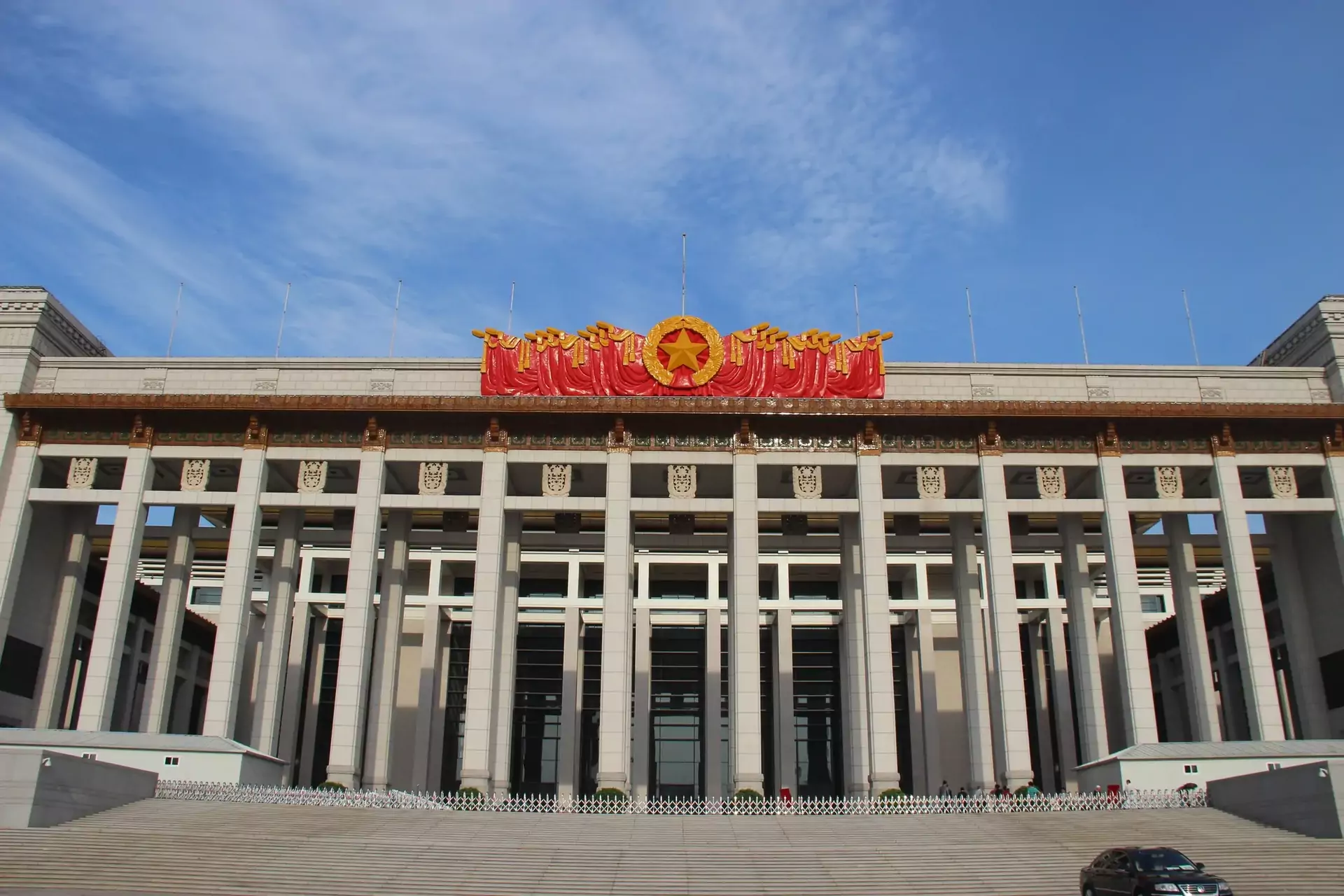
The National Museum of China is among the largest museums globally, occupying nearly 192,000 square meters. It was formed by merging the former Museum of Chinese History and Museum of the Chinese Revolution in 2003, creating a comprehensive showcase of China's past and present.
The permanent exhibitions are structured to provide a chronological and thematic experience. On the underground floor (B1), the Ancient China Exhibition offers a rare journey through prehistoric to Qing dynasty artifacts, including the Houmuwu Ding, the world’s heaviest bronze vessel and intricate jade pieces. The first and second floors host the Road to Rejuvenation Exhibition, illustrating China's path from imperial struggles to modern development.
Other highlights include exquisite displays of ancient ceramics, clothing, coins and Buddhist sculptures. Visitors also find cultural and artistic exhibitions spanning calligraphy, paintings and folk crafts. The museum frequently hosts temporary international exhibitions, expanding its global appeal.
Visitors should be prepared for large crowds, especially on weekends and national holidays. Booking in advance is advised. Facilities include cafes, a souvenir shop, wheelchair access and audio guides. While most signage is in Chinese, English guides and information are increasingly available to assist international travelers.
The National Museum of China is located on the east side of Tiananmen Square in central Beijing. Visitors can arrive via Beijing Capital International Airport with efficient transport options including airport express trains and buses to the city center. From Tiananmen East Metro Station (Line 1), the museum is just a short walk away. Buses also serve the area with routes like 1, 2 and 52 stopping nearby.
Beijing has a wide range of accommodation options near Tiananmen Square, from luxury hotels to mid-range and budget-friendly stays, ideal for visitors keen to explore this central cultural hub with ease.
Log in to add this place to a travel list and get a summary of all recommended items for your whole trip.
We calculate the average costs when travelling to destinations and compare those with the living costs at your home. With this you can get an estimate of how expensive or cheap the destination is for you.
To customise this, you can set up which location and price level are used for the calculations in your account settings.
The exchange rate price factor shows how expensive or cheap a currency currently is compared to its historical average. It's a quick way to see if a country is currently more or less affordable due to exchange rate changes.
