


Africa › Zimbabwe › Hwange National Park

Hwange National Park

Scroll
Elephant Herds and Wild Horizons

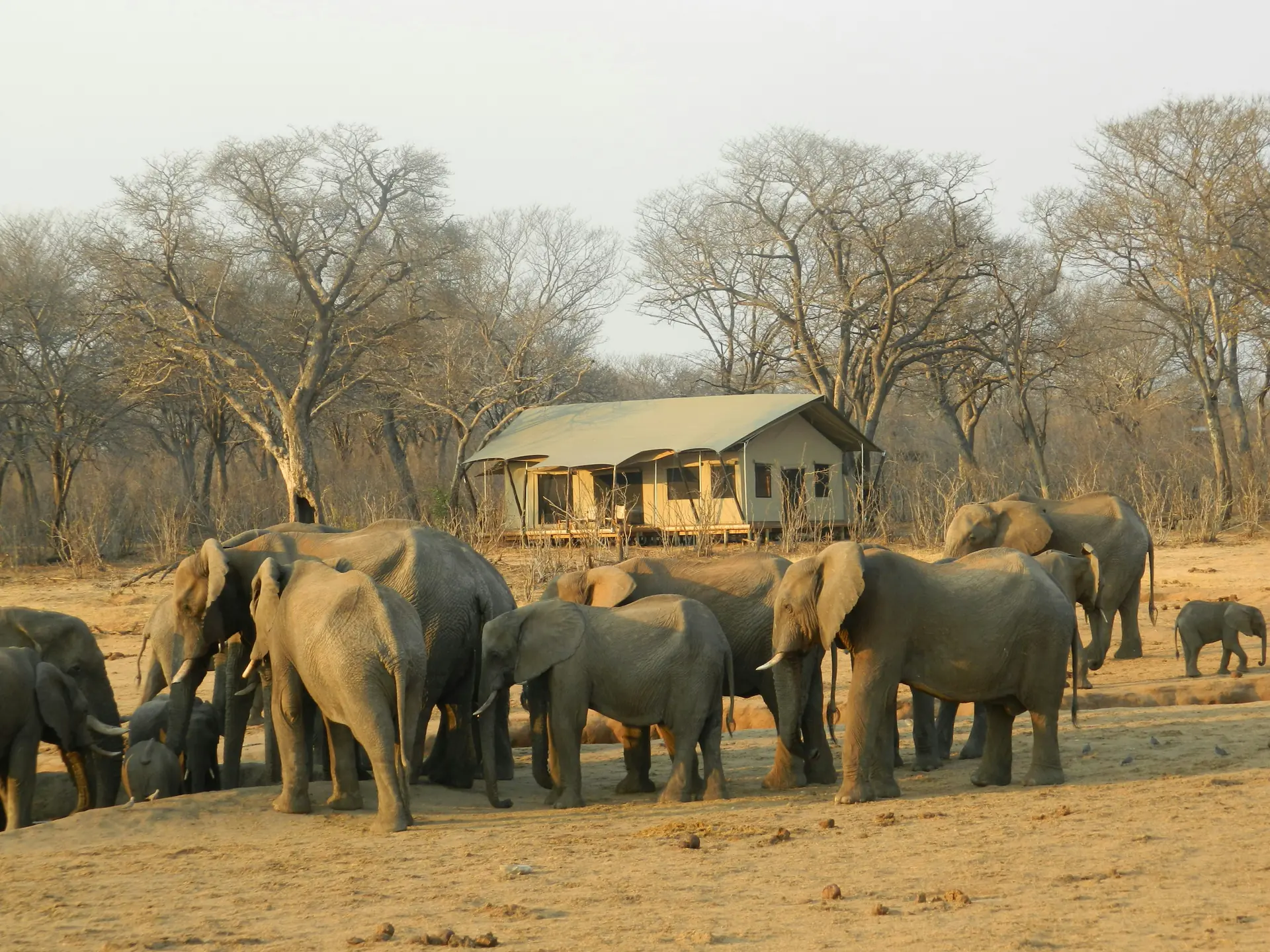
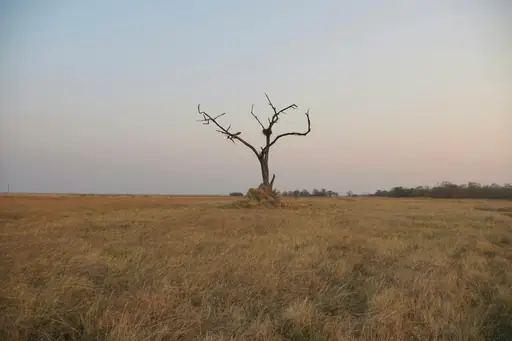
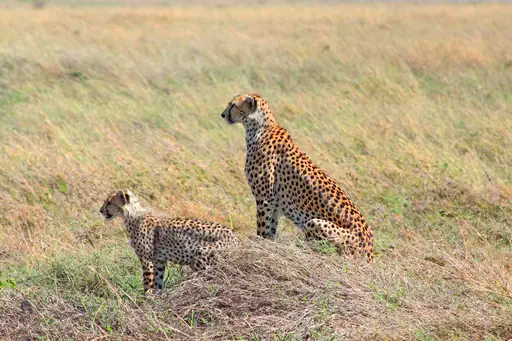
Hwange National Park in Zimbabwe covers over 14,600 square kilometers of savanna and woodland. The landscape features seasonal rivers, ancient baobab trees and diverse wildlife including elephants, lions and rare wild dogs. Visitors can explore the park by road or on guided walking safaris that highlight birdlife and plant species adapted to dry conditions. Community-run conservancies border the reserve, supporting local people while protecting migration routes for large mammals across southern Africa’s ecosystems.

National Park in Zimbabwe
Climate zone: Hot steppe

Hot steppe: Semi-arid climates bordering hot deserts, with hot summers, limited rainfall and short grasses or shrubs dominating vegetation.

See climate table
Price level: $$$
$Cheap
$$Medium
$$$Expensive, upscale
$$$+Very expensive, luxury
See price details
Safety: 6.1
General Safety:7
Health & medical:5
Accessibility:4
Tap water:5
Read details
Tourist English: 4/5
English is widely spoken by guides, lodge staff, and park rangers. Most signage and information are in English, making it easy for international visitors to communicate and get assistance.
Last update: 12 Oct 2026
* We earn a commission from some links on this page.
Hwange National Park Summary

These place ratings give you a quick overview of how well a destination matches different types of trips.

‘Best for’ scores:
The specific interest scores show where this place really shines – whether it's ideal for hiking, food & drink experiences, museums or other activities. These highlights help you understand what makes the destination special at a glance.

‘Your personal’ scores:
This reflects how well a place matches your personal preferences. You can adjust the importances of travel topics or other personal requirements categories in your account settings.

‘Suited for’ badges:
These give you a quick overview of how well a destination suits specific types of travellers, to help you find the places that match your lifestyle, preferences or travel situation.

Read how our scores work
World-class for wildlife safaris. Take game drives to spot elephants and lions, watch wildlife at waterholes and enjoy guided bush walks.
Place score
7.6
Best at:
Natural sites
10
Wildlife
10
Guided tours
9
Birdwatching
9
Secluded
8
Personal score
?
Log in to see how this place matches your personal travel interests.
Suited for
👶 6
Families
🧓 5
Seniors
♻️ 9
Sustainability
❤️ 8
Couples
Zimbabwe – Quick facts
Power Grid: 230 V, 50 Hz
Plug: Type D , Type G
Type D:
Diagram of a Type D power plug
Type G:
Diagram of a Type G power plug

Read about power adapters
Currency: Zimbabwe Gold (ZiG) (ZWG)
£1 ≈ ZWG 35.66
Cashless info: Rating 3/5
Cashless payments are becoming more common in Zimbabwe, especially in larger cities. However, cash is still widely used, and credit card acceptance may be limited outside urban areas.

Save with a travel credit card
eSIM providers: Best value: Saily
Flexibility: Airalo
Read our in-depth comparison
Tipping: Tipping is appreciated in Zimbabwe but not mandatory. In restaurants, a 10% tip is standard. Small tips are also welcomed in taxis and for hotel services.
Public drinking: Public drinking is allowed in Zimbabwe, but alcohol is typically consumed in licensed venues or private spaces.
Public smoking: Smoking is prohibited in indoor public spaces but is allowed in designated outdoor smoking areas.
Independence Day
(18 April)
Celebrates Zimbabwe’s independence from Britain
Christmas
(25 December)
Celebrated with family gatherings and festive meals
Emergency contact: Emergency Numbers: 999 (General), 995 (Police), 994 (Ambulance), 993 (Fire)
Taxi apps: Uber
Other: Zimbabwe is known for its natural beauty, wildlife, and landmarks such as Victoria Falls. It offers a variety of outdoor and adventure experiences.
Best times to travel

The best times to travel section shows how the months compare for a visit, so you can find the time of year that fits what you want to do.

Background colours of the months:
The colour shows the typical temperature: yellow (hot), green (mild) and blue (cold). How strong the colour is shows the travel season: full colour means high season, soft colour means shoulder season and soft-striped means off season.

Weather symbols:
Each month has one symbol showing what the weather is typically like, such as hot and sunny, freezing or a rainy or snowy season. Use them to quickly spot months that match the weather you want, or to avoid the ones that don't.

Crowdedness:
The people icon shows how busy the place usually is. The more people, the more crowded it gets.

Additional notes:
The grey info boxes point out special things worth knowing, like recurring weather issues or seasonal events.

for Hwange National Park, Zimbabwe
🌦️
Jan
🔥
Feb
🔥
Mar
☀️
Apr
☀️
May
☀️
Jun
☀️
Jul
🔥
Aug
🔥
Sep
🔥
Oct
🔥
Nov
🌦️
Dec
High season: July - Oct.
Shoulder season: May - June, Nov.
Crowdedness: 5 (Moderate tourist numbers)
Tap on a month for more info Hover over a month for more info
Best game viewing July to October, when animals depend on the park's pumped waterholes
Rainy season November to March: some camps close and dirt roads can become impassable
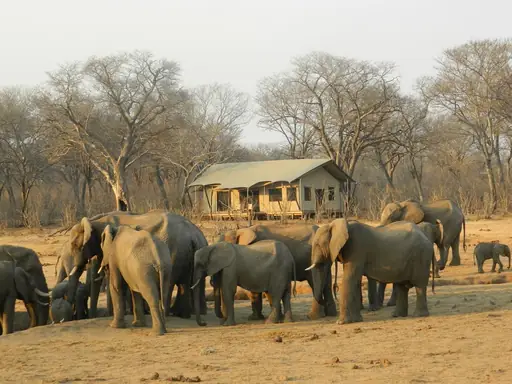
Large elephant herds gather at waterholes August to October, among Africa's biggest concentrations

Why travel to Hwange National Park?

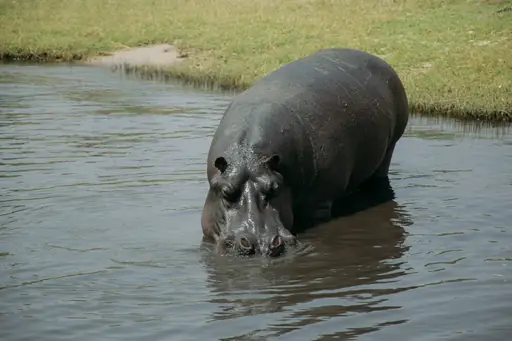
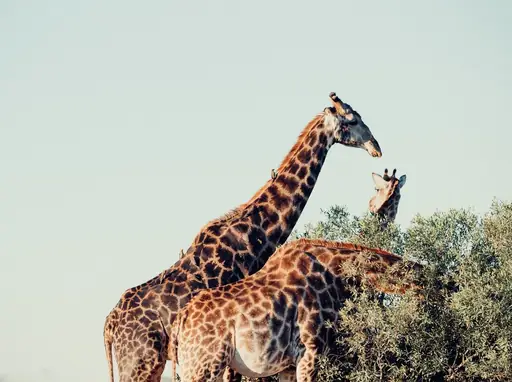
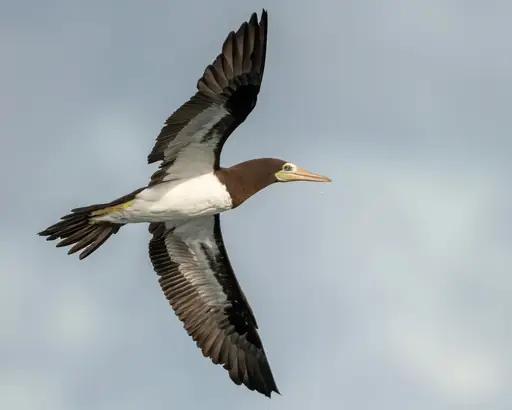
Hwange is a safari lover’s dream, home to over 100 mammal species and nearly 400 types of birds. It’s famous for its enormous elephant populations, but you’ll also spot lions, giraffes, buffalo, zebras and even the rare brown hyena. The park’s network of waterholes – many manmade and pumped year-round-draws wildlife in dramatic numbers, especially during the dry season (June–October). Walking safaris offer a thrilling, up-close perspective, while classic game drives let you cover more ground. The landscapes are striking, from granite koppies in the north to desert scrub in the south and the sense of space is unforgettable. But Hwange isn’t without its challenges. The roads can be rough-4x4s are recommended – and self-driving is best for experienced safari-goers. There’s little to no phone signal in many areas and WiFi is limited to some lodges. Summer brings intense heat and rains, which can flood roads and make wildlife harder to spot. Always bring extra water, fuel and supplies and follow park rules: stay on marked roads and never leave your vehicle outside designated areas. Still, if you want a truly wild, uncrowded safari with top-notch guiding and a real sense of adventure, Hwange is hard to beat.

🏯Places worth seeing
  • 1 Waterhole Ngwenya Pan #1
  • 2 Shumba Pan - Main Camp Road
  • 3 Ngweshla Camp (day visitors)
  • 4 Deteema Dam
  • 5 Masuma Dam Campsite (exclusive camp)
  • 6 Robins Camp
🎡Places for activities
  • 1 Nehimba Safari Lodge
  • 2 The Hide Pan
  • 3 Somalisa Camp
  • 4 Little Makalolo Camp
  • 5 Service road to Khulu Bush Camp
🏞️Natural landmarks
  • 1 Masuma Dam Campsite (exclusive camp)
🎈Events
  • Bird migration season (Dec–Mar)
  • Dry season wildlife gatherings (Jun–Oct)
  • Guided photographic workshops
  • Conservation awareness days

Knowledge before you go

  • Visit June-October. Dry season concentrates elephants at waterholes.
  • Book guided game drives. Self-drive risky due to wild animals and terrain.
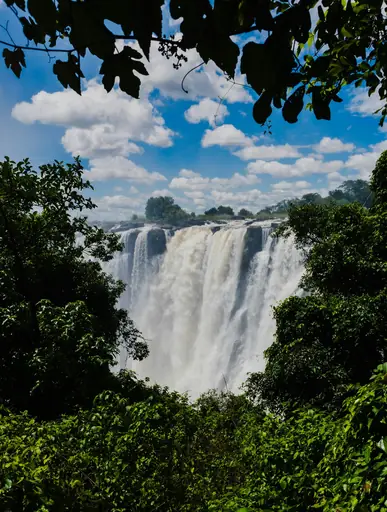
  • Combine with Victoria Falls. Park is only 1.5-hour scenic drive away.
  • Watch Little Makalolo waterhole at night; nocturnal predators hunt thirsty elephants.

How to travel to Hwange National Park

Hwange is easily reached by road from Victoria Falls (2–3 hours) or Bulawayo (5–6 hours). Most visitors arrive via private transfer, guided safari or self-drive (4x4 recommended). Public transport is possible but slow and complicated. Many lodges offer transfers from Victoria Falls or nearby airstrips and Hwange is often combined with a visit to Victoria Falls.

Access summary

  • From Hwange National Park Airport (HWN): 15–45 min by lodge 4x4 transfer.
  • From Victoria Falls: 2.5–3.5 hours by road transfer or shuttle.
  • From Bulawayo: About 4–5 hours by tarred road; some safari stopovers.

Where to stay in Hwange National Park

Accommodation ranges from luxury safari lodges and tented camps to self-catering chalets and basic campsites. Most lodges offer all-inclusive packages with meals, activities and transfers. Book ahead, especially in peak season. Camping is allowed at designated sites-bring all supplies and be prepared for wild visitors!

How to get around Hwange National Park

Most visitors explore by guided game drive or walking safari from their lodge or camp. Self-driving is allowed but only recommended for experienced travelers with a 4x4, as roads can be rough and signage limited. Always stay on marked roads and plan to return to camp before dark. There’s little to no phone signal – bring a satellite phone if venturing far.
Budget snapshot
Costs compared to home

We calculate the average costs when travelling to destinations and compare those with the living costs at your home. With this you can get an estimate of how expensive or cheap the destination is for you.

To customise this, you can set up which location and price level are used for the calculations in your account settings.

-58 %
Daily expenses in the region are around 58% lower than the average across United States. That means you'll spend a lot less on meals and getting around.
Exchange rate trend

The exchange rate price factor shows how expensive or cheap a currency currently is compared to its historical average. It's a quick way to see if a country is currently more or less affordable due to exchange rate changes.

-42 %
Your exchange rate (GBP to ZWG) is 42% better than in recent years. That means travelling now is a lot cheaper compared to the past.

Travel costs (Data for Livingstone, Zambia - 151 km away)

To help you plan your trip, we provide estimated daily costs per person (when travelling as a pair) for different travel styles. These numbers give you an idea of what you might spend each day at this destination, including accommodation, food, transport and activities.

Additionally, we also provide average hotel costs for different travel styles to give you an estimate for the accommodation only.

Please note that these are only estimates. The real costs depend on booking times, season and other factors.

Daily cost summary

Travel style categories explained:

Backpacker:
Staying in hostels or budget hotels, cooking your own meals or eating cheap and choosing low-cost activities.

Mid-range:
Staying in mid-range hotels, eating at a mix of restaurants and casual spots and enjoying a variety of activities.

Luxury:
Staying in luxury hotels, dining out at high-end restaurants and enjoying premium experiences without worrying about the price.

Backpacker Mid-range Luxury
💵 Total costs per day, including accommodation
£49
£107
£292
🏨 Accommodation per night, per person
£29
£72
£198
🍝 Food per day
£17
£30
£77
🚕 Transportation per day
£3
£5
£18
Notable additional fees: Roughly US$20 – 24 (£15.02 – 18.03) per international visitor per day, plus a vehicle fee. ZimParks revised its tariffs in 2026, so confirm before you travel.
Food & Drink
🍽️ Restaurant Dinner, per person
£11
🍛 Lunch Set, per person
£5.50
🍟 Fast food combo
£6.50
🍝 Preparing your own food, per day
£5.50
☕ Cappuccino
£3.70
🍺 Beer in a restaurant, 0.5 l
£0.80
Transportation
🚌 Public transport ticket
£0.70
🚕 Taxi Ride, 10 km / 6 mi
£11
⛽ Petrol, 1 l
£0.95
Other
🎞️ Cinema ticket
£3.20
👩‍⚕️ Doctor's consult
£14
🤧 Cold medication
£5.50
💇 Basic haircut
£4.70

Safety information overview

General safety
7
Hwange is generally very safe for visitors, but always follow park rules and guides’ instructions. Never leave vehicles outside designated areas and be aware of wildlife at all times. Medical help can be far away, so take precautions.
Health & Medical
5
Medical care is limited — bring any needed medications and a basic first aid kit. Malaria is present, so use repellent and consider prophylaxis. Drink only filtered or bottled water and avoid walking alone at night.
Accessi­bility
4
Most lodges and camps are accessible by vehicle, but the terrain is rough and some activities (like walking safaris) require moderate fitness. Wheelchair access is limited in many areas — check with your lodge before booking.
Tap water
5
Tap water is not always safe to drink — stick to bottled or filtered water, which is widely available at lodges. Always carry water with you, especially on drives and walks.

Looking for inspiration?

Discover
Stunning national parks and wilderness areas
National parks exist because someone decided that certain landscapes were too important to lose. The best of them protect ecosystems, wildlife and natural processes that would…
Read more
Discover
Best wildlife destinations in Africa
Africa remains the benchmark for wildlife encounters worldwide. The scale of large mammal populations in the continent's best protected areas, the quality of the savanna ecosystems…
Read more
Discover
Best destinations to visit in October in Africa
October brings some of the hottest, driest conditions of the year to parts of East and Southern Africa, right before the rains return. Southern safari regions reach peak dry…
Read more
Discover
Best rural retreat destinations in Africa
Africa's rural retreat offer ranges from the vineyard farmsteads and coastal agricultural hinterlands of the far south to the highland tea and coffee growing regions of east Africa…
Read more
Discover
Best eco-tourism destinations in Africa
High-fee, deliberately low-volume conservation programmes in East Africa fund protection directly through visitor fees, a model credited with helping endangered species populations…
Read more
Discover
Stunning national parks and wilderness areas in Africa
Read more
Discover
Best couple vacation destinations in Africa
For couples, Africa offers something that is getting rare in modern travel, the sense of experiencing something genuinely extraordinary together rather than ticking off sights you…
Read more
Discover
Top birdwatching destinations and avian hotspots
Birdwatching has a way of changing how you travel. Once you start paying attention to what's flying, perching and calling overhead, a destination opens up in ways that a standard…
Read more
Discover
Best couple holiday destinations
Travelling as a couple sounds simple enough, yet the best couple holiday destinations mean something different to almost every pair. What feels romantic to one couple can feel like…
Read more
Discover
Top stargazing destinations and dark sky reserves
The best dark sky destinations are found far from urban light pollution, typically in high-altitude deserts, remote island locations and vast uninhabited interior regions.…
Read more
Discover
Top rural retreat destinations and countryside getaways
Rural retreat travel is defined by the deliberate removal from urban pace and density, with landscape immersion, slower rhythms and direct engagement with food, nature and local…
Read more
Discover
Extraordinary natural wonders and scenic landscapes
Natural wonders occupy a different category from other travel destinations. They are places where the scale, the geology, the light or the sheer improbability of what exists there…
Read more
Discover
Amazing wildlife encounters and natural habitats
Wildlife encounters of real quality are becoming rarer and finding them requires more intention than it once did. The destinations that still offer genuine, undisturbed wildlife in…
Read more
Discover
Best natural wonder destinations in Africa
Africa's natural wonders are as varied as the continent itself, shaped by ancient geology, vast tectonic forces and climatic extremes that have produced landscapes of extraordinary…
Read more
Discover
Best stargazing destinations in Africa
Africa's dark sky destinations benefit from vast uninhabited regions, minimal industrial development and some of the lowest light pollution densities of any inhabited continent.…
Read more
Was this page helpful?
Feedback