
Africa › Namibia › Namib

Namib

Scroll
Endless dunes whisper ancient desert secrets

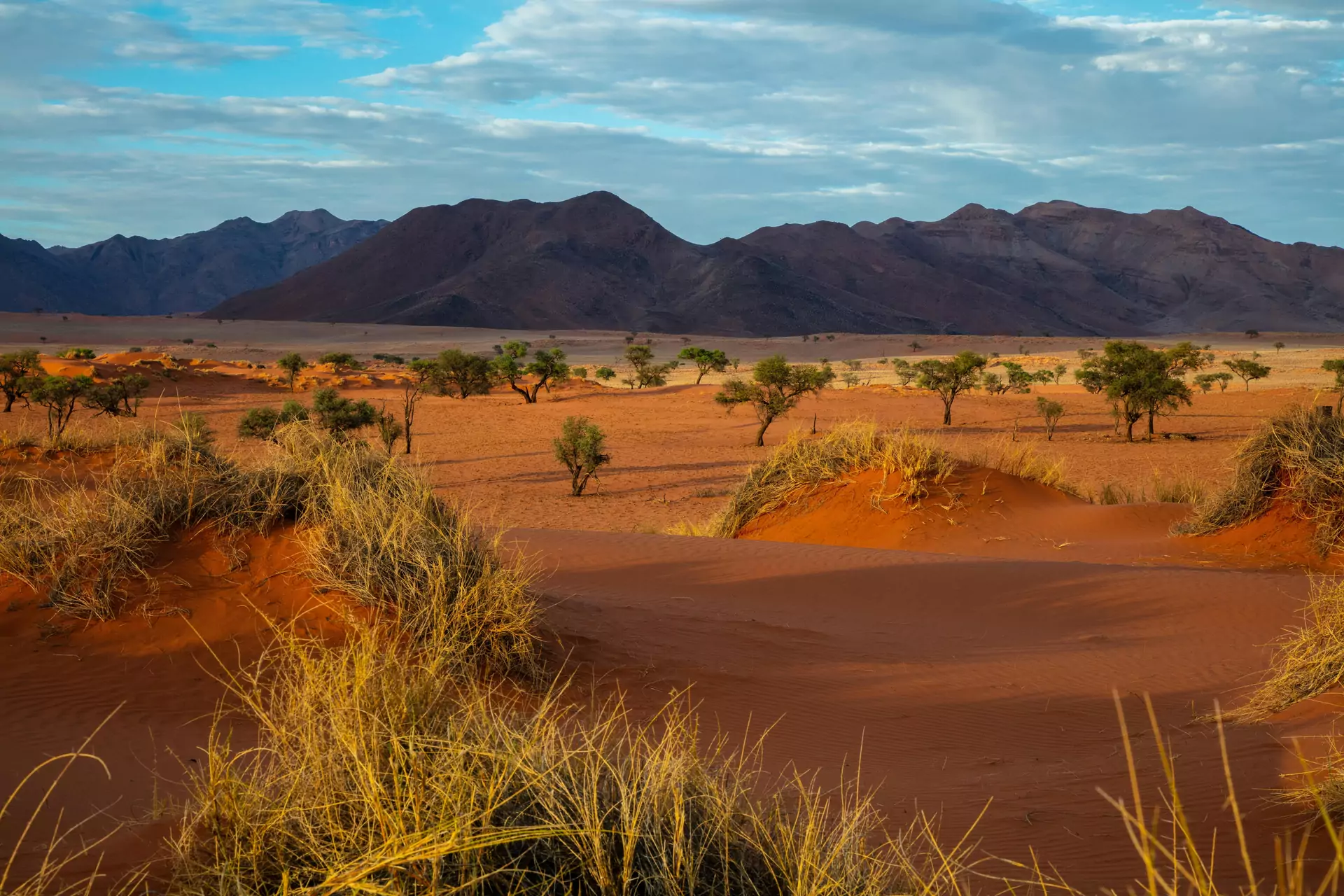
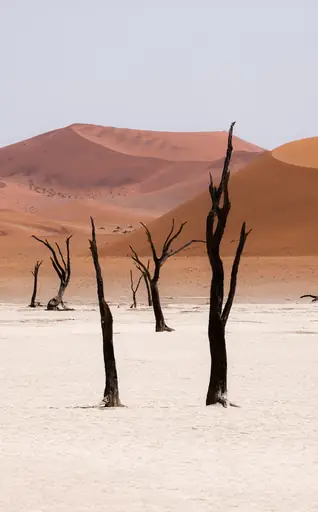
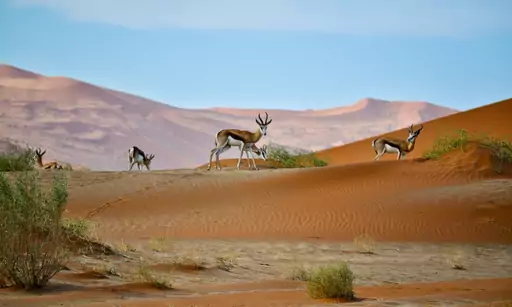
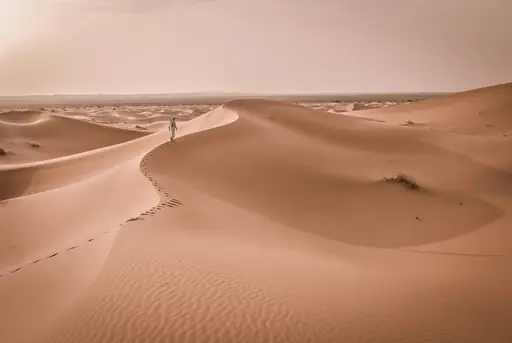
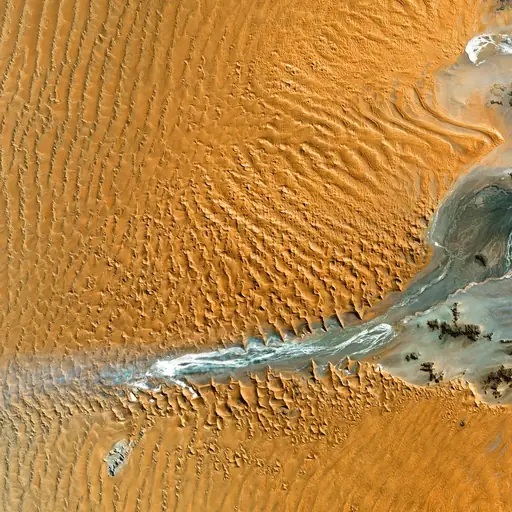
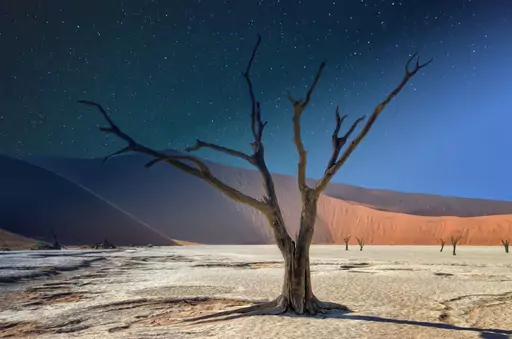
Namibia’s desert stretches across a vast expanse of arid land where sand dunes rise like waves frozen mid-crash. The landscape includes the famous Namib, one of the world’s oldest deserts, with towering red hills and dry plains that stretch to distant horizons. Sparse vegetation clings to life along riverbeds while unique animals adapt to survive in extreme heat and scarce water. This environment supports resilient communities who have lived here for generations, relying on careful resource use and traditional knowledge to thrive alongside the challenging conditions of the desert.

Desert in Namibia
Climate zone: Hot desert

Hot desert: Extremely arid climates with very high temperatures, minimal rainfall, strong evaporation and sparse vegetation, typical of subtropical deserts.

See climate table
Price level: $$$
$Cheap
$$Medium
$$$Expensive, upscale
$$$+Very expensive, luxury
See price details
Safety: 6.4
General Safety:8
Health & medical:4
Accessibility:3
Tap water:6
Read details
Tourist English: 3/5
In Namibia, English is widely spoken, especially in tourist areas and cities like Windhoek. Most locals working in hospitality, tourism and transport understand English well, making communication easy for visitors.
Last update: 12 Oct 2026
* We earn a commission from some links on this page.
Namib Summary

These place ratings give you a quick overview of how well a destination matches different types of trips.

‘Best for’ scores:
The specific interest scores show where this place really shines – whether it's ideal for hiking, food & drink experiences, museums or other activities. These highlights help you understand what makes the destination special at a glance.

‘Your personal’ scores:
This reflects how well a place matches your personal preferences. You can adjust the importances of travel topics or other personal requirements categories in your account settings.

‘Suited for’ badges:
These give you a quick overview of how well a destination suits specific types of travellers, to help you find the places that match your lifestyle, preferences or travel situation.

Read how our scores work
World-famous for desert landscapes and giant dunes. Climb towering sand dunes, photograph desert sunrises, explore dry river valleys and enjoy scenic desert drives.
Place score
8.9
Best at:
Deserts
10
Natural sites
10
Stargazing
10
Camping
9
Luxury
8
Personal score
?
Log in to see how this place matches your personal travel interests.
Suited for
👶 7
Families
🧓 5
Seniors
❤️ 9
Couples
♻️ 7
Sustainability
Namibia – Quick facts
Power Grid: 230 V, 50 Hz
Plug: Type D , Type M
Type D:
Diagram of a Type D power plug
Type M:
Diagram of a Type M power plug

Read about power adapters
Currency: Namibian Dollar (NAD)
£1 ≈ NAD 22.10
Cashless info: Rating 3/5
Cashless payments are becoming more widespread in Namibia, especially in urban centres. However, many rural areas and smaller businesses may still rely on cash.

Save with a travel credit card
eSIM providers: Best value: Saily
Flexibility: Airalo
Read our in-depth comparison
Tipping: Tipping is common in Namibia, with 10% being standard in restaurants. Taxi drivers may expect a tip of around 10% or rounding up the fare. Hotel staff and guides appreciate small tips of N$20-50.
Public drinking: Public drinking is generally accepted in Namibia, especially in designated areas or during festivals. Some municipalities may have restrictions on alcohol consumption in public spaces.
Public smoking: Smoking is prohibited indoors in public places, including restaurants and shops. Designated smoking areas are available in most places.
Independence Day
(March)
Celebrations in major cities, expect some closures and increased local activities.
Christmas
(December)
Christmas celebrations are popular, expect crowded areas and higher prices.
Oshana Harvest Festival
(September)
Traditional cultural event with festivities and celebrations.
Emergency contact: Emergency Number: 112 (Police, Fire, Ambulance)
Taxi apps: Bolt, Yego
Other: Namibia is known for its stunning landscapes and wildlife. Be prepared for long distances between towns and ensure you're adequately prepared for travel in remote areas.
Best times to travel

The best times to travel section shows how the months compare for a visit, so you can find the time of year that fits what you want to do.

Background colours of the months:
The colour shows the typical temperature: yellow (hot), green (mild) and blue (cold). How strong the colour is shows the travel season: full colour means high season, soft colour means shoulder season and soft-striped means off season.

Weather symbols:
Each month has one symbol showing what the weather is typically like, such as hot and sunny, freezing or a rainy or snowy season. Use them to quickly spot months that match the weather you want, or to avoid the ones that don't.

Crowdedness:
The people icon shows how busy the place usually is. The more people, the more crowded it gets.

Additional notes:
The grey info boxes point out special things worth knowing, like recurring weather issues or seasonal events.

for Namib, Namibia
🔥
Jan
🌦️
Feb
☀️
Mar
☀️
Apr
☀️
May
☀️
Jun
☀️
Jul
☀️
Aug
☀️
Sep
🔥
Oct
🔥
Nov
🔥
Dec
High season: June - Oct.
Shoulder season: April - May, Nov.
Crowdedness: 6 (Many tourists)
Tap on a month for more info Hover over a month for more info
Climate varies by area: inland dunes (Sossusvlei, Sesriem) hot by day and cold at night, the coast (Swakopmund, Walvis Bay) is cool and foggy year-round
Rare summer storms from about January to March can flood roads and riverbeds in the desert
Sesriem camps and lodges near Sossusvlei book out months ahead from June to October

Why travel to Namib?

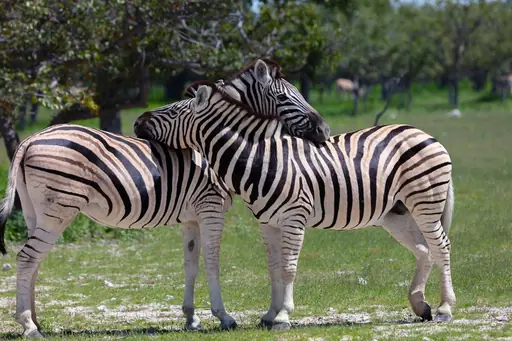
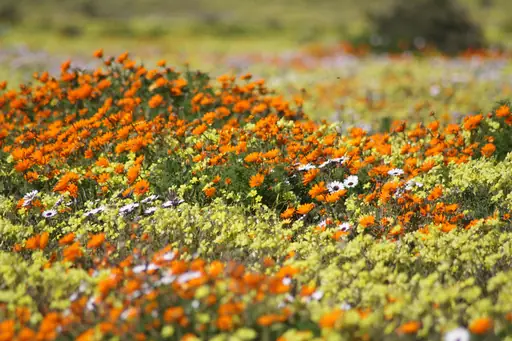
Namibia’s Namib Desert offers a quiet, contemplative travel experience that rewards visitors with striking landscapes and unique wildlife without the crowds of more famous destinations. The region’s dunes, such as those at Sossusvlei, are among the world’s oldest and highest, yet they can be explored on foot or by guided camel trek, allowing travelers to appreciate the subtle shifts in light and color over a day. The desert’s sparse vegetation – spiny succulents and hardy grasses – provides a living laboratory for botanists and nature lovers interested in adaptation and resilience. Wildlife here is adapted to extreme conditions; the desert hosts species like the fennec fox, springbok and various reptiles that thrive on minimal water. Birdwatchers can spot flamingos at Lake Otjihuru or the rare desert-dwelling bustard. For those seeking cultural insight, local Himba communities offer a glimpse into traditional lifestyles that have coexisted with the harsh environment for centuries. The Namib’s clear night skies are ideal for stargazing; the low light pollution and high altitude create crisp views of constellations and the Milky Way. Travelers can stay in eco-lodges or campsites that emphasize sustainability, ensuring minimal impact on this fragile ecosystem. Overall, Namibia’s desert invites a thoughtful exploration of nature’s extremes and human ingenuity.

🏯Places worth seeing
  • 1 Namib-Naukluft National Park
  • 2 Sossusvlei
  • 3 Dead Vlei
  • 4 Pebble Beach
  • 5 Lagoon Park
  • 6 Spitzkoppe Street

Knowledge before you go

  • Pack lightweight, breathable clothing and a wide-brimmed hat for sun protection.
  • Carry sufficient water, electrolytes and high-energy snacks; dehydration risks increase in arid desert environments.
  • Use sunscreen with SPF 50+, reapply every two hours and wear UV‑blocking sunglasses to prevent eye strain.
  • Schedule early morning or late afternoon visits to the dunes to avoid extreme heat and capture optimal lighting for photography.

How to travel to Namib

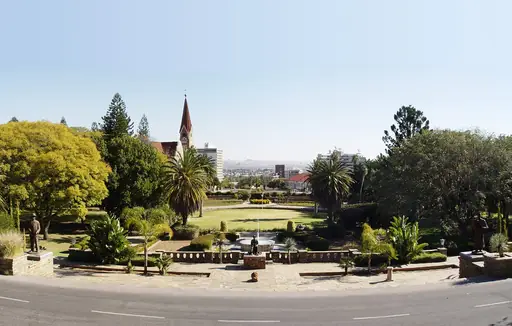
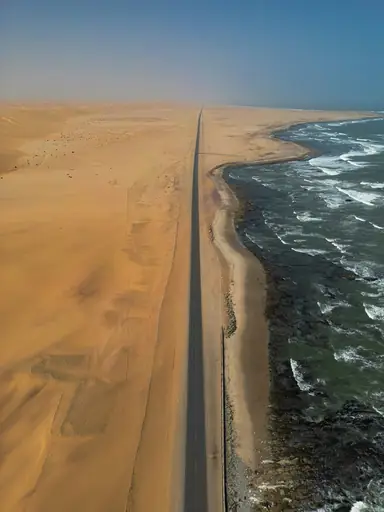
Access to Namibia’s Namib Desert is primarily through road networks connecting major towns such as Windhoek, Swakopmund and Walvis Bay. The Trans-Namibian Highway runs east-west across the country, linking key desert regions with coastal areas. For remote desert areas like Sossusvlei or Deadvlei, 4x4 vehicles are recommended due to rugged terrain. Public minibus taxis operate between towns but may not reach isolated sites directly. Charter flights from Windhoek offer faster access to airstrips near popular attractions. The desert’s vastness requires advance planning for fuel and supplies when traveling by road. Limited public transport options exist, so self-drive or guided tours are common choices for navigating the arid landscape efficiently.

Access summary

  • From Windhoek (WDH): Drive to Swakopmund 4h; bus 5h.
  • From Walvis Bay: Drive to Swakopmund 3h; bus 4h.
  • Fly to Lüderitz, then drive 2h to Namib Desert.

Where to stay in Namib

In the Namib Desert, accommodations range from modest campsites to luxury lodges perched on dunes. Budget travelers can find basic tent sites and caravan parks near Sesriem Canyon, offering shared facilities and a chance to mingle with fellow explorers. Mid‑range options include eco‑lodges that blend sustainable design with panoramic views of the Sossusvlei dunes, often featuring solar power and composting toilets. High‑end resorts cater to those seeking comfort, providing private suites, infinity pools overlooking the desert floor and gourmet dining inspired by local cuisine. The region is renowned for its stargazing camps, where guests sleep under a sky free of light pollution and for tented safari experiences that combine rustic charm with modern amenities.

How to get around Namib

Navigating Namibia’s vast desert landscapes is best done using a combination of road and air transport. The country’s expansive arid regions, such as the Namib Desert, are most efficiently explored by renting a 4x4 vehicle for flexibility across remote terrain. Major routes like the C38 and D111 roads connect key towns including Windhoek to Swakopmund and Walvis Bay, though some stretches require caution due to rough conditions. For faster travel between distant areas, domestic flights operated by Air Namibia offer scheduled services from Windhoek to regional hubs like Luderitz or Okahandja. Public minibuses (shuttles) are another option for budget travelers, linking major settlements along the coast and inland. Always ensure vehicles are equipped for desert conditions, with ample water and navigation tools.
Budget snapshot
Costs compared to home

We calculate the average costs when travelling to destinations and compare those with the living costs at your home. With this you can get an estimate of how expensive or cheap the destination is for you.

To customise this, you can set up which location and price level are used for the calculations in your account settings.

---
We can't detect your current location. Please log in and set your current location in the account settings to see a cost comparison.
Exchange rate trend

The exchange rate price factor shows how expensive or cheap a currency currently is compared to its historical average. It's a quick way to see if a country is currently more or less affordable due to exchange rate changes.

-2 %
Your exchange rate (GBP to NAD) is 2% better than in recent years. That means travelling now costs around the same compared to the past.

Safety information overview

General safety
8
Namibia’s Namib Desert remains one of Africa’s safest destinations, with low crime rates and minimal political unrest. Travelers should stay hydrated, avoid isolated areas after dark and respect local customs. Road conditions can be rough; use reputable guides for remote excursions.
Health & Medical
4
Namibia’s desert offers excellent medical care in major towns, with well‑equipped hospitals and trained staff. Travelers should stay hydrated, use sunscreen, avoid mosquito bites to prevent malaria and be aware of limited emergency services in remote areas.
Accessi­bility
3
Namibia’s Namib Desert offers limited accessibility: most attractions are on gravel or sand, requiring sturdy vehicles and good navigation skills. Well‑maintained tourist sites provide ramps and clear signage, but remote areas lack wheelchair access and reliable transport options.
Tap water
6
Tap water in Namibia’s Namib Desert is generally safe to drink, supplied by municipal systems and treated at local plants. However, many remote areas lack piped connections; travelers should carry bottled or filtered water for campsites and rural villages.

Looking for inspiration?

Discover
Best wildlife destinations in Africa
Africa remains the benchmark for wildlife encounters worldwide. The scale of large mammal populations in the continent's best protected areas, the quality of the savanna ecosystems…
Read more
Discover
Best rural retreat destinations in Africa
Africa's rural retreat offer ranges from the vineyard farmsteads and coastal agricultural hinterlands of the far south to the highland tea and coffee growing regions of east Africa…
Read more
Discover
Best climbing destinations in Africa
Africa is one of the most underrated continents for climbing, offering everything from striking granite peaks to sun-baked sandstone that is well worth seeking out. The range…
Read more
Discover
Top desert destinations and arid landscapes
Desert travel offers some of the most visually arresting and physically demanding environments on earth, with the world's great sand seas, stone plateaus and salt flat systems…
Read more
Discover
Best couple vacation destinations in Africa
For couples, Africa offers something that is getting rare in modern travel, the sense of experiencing something genuinely extraordinary together rather than ticking off sights you…
Read more
Discover
Best couple holiday destinations
Travelling as a couple sounds simple enough, yet the best couple holiday destinations mean something different to almost every pair. What feels romantic to one couple can feel like…
Read more
Discover
Best desert destinations in Africa
Africa's desert environments encompass some of the world's most significant and diverse arid landscapes, from the vast sand seas and ancient eroded plateaus of the Sahara and the…
Read more
Discover
Best travel destinations for seniors in Africa
Africa has become steadily more accessible for older travelers, with more lodges and tour operators now set up to make a safari more comfortable than it used to be. Many safari…
Read more
Discover
Top stargazing destinations and dark sky reserves
The best dark sky destinations are found far from urban light pollution, typically in high-altitude deserts, remote island locations and vast uninhabited interior regions.…
Read more
Discover
Top rural retreat destinations and countryside getaways
Rural retreat travel is defined by the deliberate removal from urban pace and density, with landscape immersion, slower rhythms and direct engagement with food, nature and local…
Read more
Discover
Extraordinary natural wonders and scenic landscapes
Natural wonders occupy a different category from other travel destinations. They are places where the scale, the geology, the light or the sheer improbability of what exists there…
Read more
Discover
Amazing wildlife encounters and natural habitats
Wildlife encounters of real quality are becoming rarer and finding them requires more intention than it once did. The destinations that still offer genuine, undisturbed wildlife in…
Read more
Discover
Best natural wonder destinations in Africa
Africa's natural wonders are as varied as the continent itself, shaped by ancient geology, vast tectonic forces and climatic extremes that have produced landscapes of extraordinary…
Read more
Discover
Best stargazing destinations in Africa
Africa's dark sky destinations benefit from vast uninhabited regions, minimal industrial development and some of the lowest light pollution densities of any inhabited continent.…
Read more
Discover
Best travel destinations for seniors
Senior travel covers a wide range, from slow, low effort trips built around comfort to more independent trips for travellers who still want to cover plenty of ground. Some…
Read more
Was this page helpful?
Feedback