







Was this page helpful?

| Public website: | www.zonacaral.gob.pe |
|---|
| Power Grid: |
220 V, 60 Hz Plug: Type A , Type B
Type A:
  Read about power adapters |
|---|---|
| Currency: |
Peruvian Sol (PEN) £1 ≈ PEN 4.59 |
| Cashless info: |
Rating 4/5
Cashless payments are widely accepted in Peru, especially in larger cities and tourist areas.
Save with a travel credit card |
| eSIM providers: |
Best value: Saily Flexibility: Airalo Read our in-depth comparison |
| Tipping: | Tipping is customary in Peru, with 10-15% being the usual amount in restaurants. Small tips are appreciated by taxi drivers and hotel staff. |
|---|---|
| Public drinking: | Public drinking is prohibited in Peru, and alcohol consumption is restricted to licensed venues. |
| Public smoking: | Smoking is allowed in designated areas, but smoking indoors in public spaces is generally prohibited. |
| Emergency contact: | Emergency Numbers: 105 (Police), 106 (Ambulance), 116 (Fire) |
|---|---|
| Taxi apps: | Uber |
| Other: | Peru is known for its ancient culture, including Inca ruins and the Amazon rainforest, making it a popular destination for nature lovers and history enthusiasts. |
The best times to travel section shows how the months compare for a visit, so you can find the time of year that fits what you want to do.
Background colours of the months:
The colour shows the typical temperature: yellow (hot), green (mild) and blue (cold). How strong the colour is shows the travel season: full colour means high season, soft colour means shoulder season and soft-striped means off season.
Weather symbols:
Each month has one symbol showing what the weather is typically like, such as hot and sunny, freezing or a rainy or snowy season. Use them to quickly spot months that match the weather you want, or to avoid the ones that don't.
Crowdedness:
The people icon shows how busy the place usually is. The more people, the more crowded it gets.
Additional notes:
The grey info boxes point out special things worth knowing, like recurring weather issues or seasonal events.
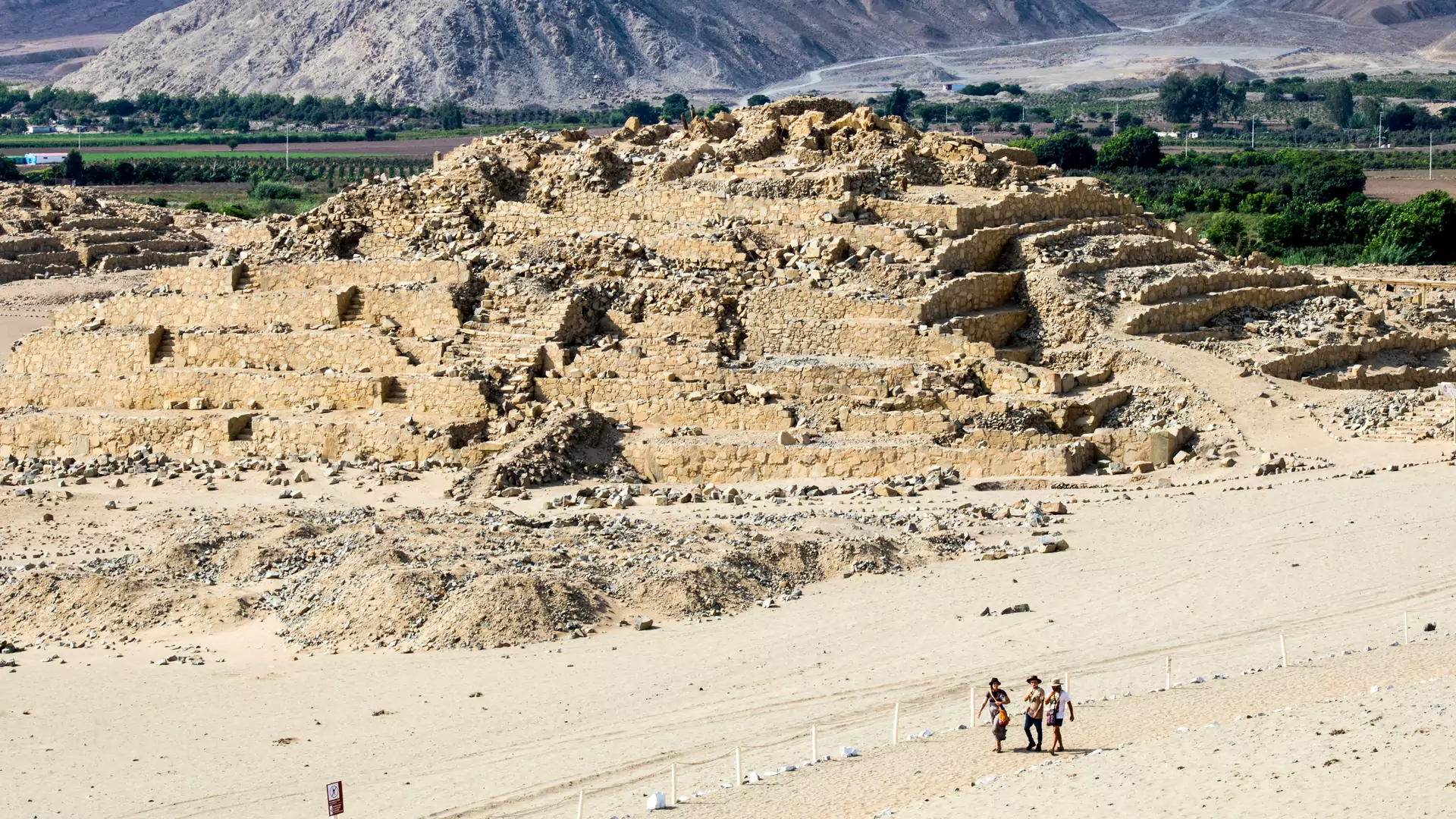
Caral-Supe stands as one of the oldest known cities in the Americas. Located near the coast of modern-day Peru it reveals a story of early urban life that stretches back over five thousand years. The site includes large platform mounds plazas and intricate irrigation channels that show how ancient societies organized space and resources.
The people who built Caral-Supe developed complex social structures without using metal tools or pottery in daily life. They relied on agriculture fishing and trade to sustain their communities. Evidence suggests they cultivated beans squash and cotton while also harvesting fish from nearby waters. Their ability to manage water through canals demonstrates a deep understanding of the environment.
Archaeologists have uncovered musical instruments such as flutes made from bird bones and shells that hint at cultural practices. The layout of the city shows careful planning with ceremonial areas residential zones and storage facilities arranged in relation to each other. This organization points to coordinated effort among groups working toward shared goals.
Today Caral-Supe remains a place where visitors can see ancient stones under open skies. Walking through the ruins offers insight into how early Peruvians shaped their world with available materials and knowledge. The site invites reflection on human creativity resilience and the long history that connects past societies to present-day cultures.
Visiting Caral-Supe offers a rare opportunity to walk among the remarkably preserved remains of a civilization that predates the Incas by nearly 4,000 years. The site features seven major pyramids, intricate urban planning and fascinating evidence of a sophisticated society that thrived for almost a millennium. What makes Caral truly special is not just its extreme age, but the chance to experience it without the crowds that flock to other Peruvian archaeological sites – you might find yourself alone among these ancient structures, creating a more intimate connection with history. However, traveling to Caral comes with challenges. Its remote location requires a significant journey from Lima – about 3-4 hours by bus to Barranca or Supe, followed by another 40-minute ride on rough dirt roads and then a 20-minute walk to the site. The desert setting means intense sun exposure with little shade and facilities are minimal. Recent reports mention threats from local land traffickers, though these primarily affect researchers rather than tourists. Despite these challenges, the site's historical significance and the adventure of reaching this 'cradle of Andean civilization' make it worthwhile for history enthusiasts.
Caral-Supe is located about 184 km north of Lima. The most common way to reach it is by taking a bus from Lima to Barranca or Supe (3-4 hours), then catching a colectivo (shared taxi) or private taxi to the site. Bus companies like MovilBus and Turismo Barranco operate daily services, leaving Lima as early as 5:30am. From Supe, it's about a 40-minute ride on rough dirt roads to reach the site entrance, followed by a 20-minute walk to the reception center. During dry season (May-November), there's a shortcut across the river that leads directly to the reception center.
Most visitors make Caral a day trip from Lima, but if you want to stay nearby, the town of Barranca offers the most accommodation options. There are budget-friendly places like Hospedaje Lucia and Hostal Wills, as well as mid-range options like Hotel Chavin. Facilities are basic but comfortable. Staying overnight allows for an early morning visit to the site when temperatures are cooler and lighting is better for photography.
Log in to add this place to a travel list and get a summary of all recommended items for your whole trip.
We calculate the average costs when travelling to destinations and compare those with the living costs at your home. With this you can get an estimate of how expensive or cheap the destination is for you.
To customise this, you can set up which location and price level are used for the calculations in your account settings.
The exchange rate price factor shows how expensive or cheap a currency currently is compared to its historical average. It's a quick way to see if a country is currently more or less affordable due to exchange rate changes.
