




Oceania › New Zealand › North Island › Wellington › Zealandia

Zealandia

Scroll
Urban Wildlife Sanctuary in Wellington

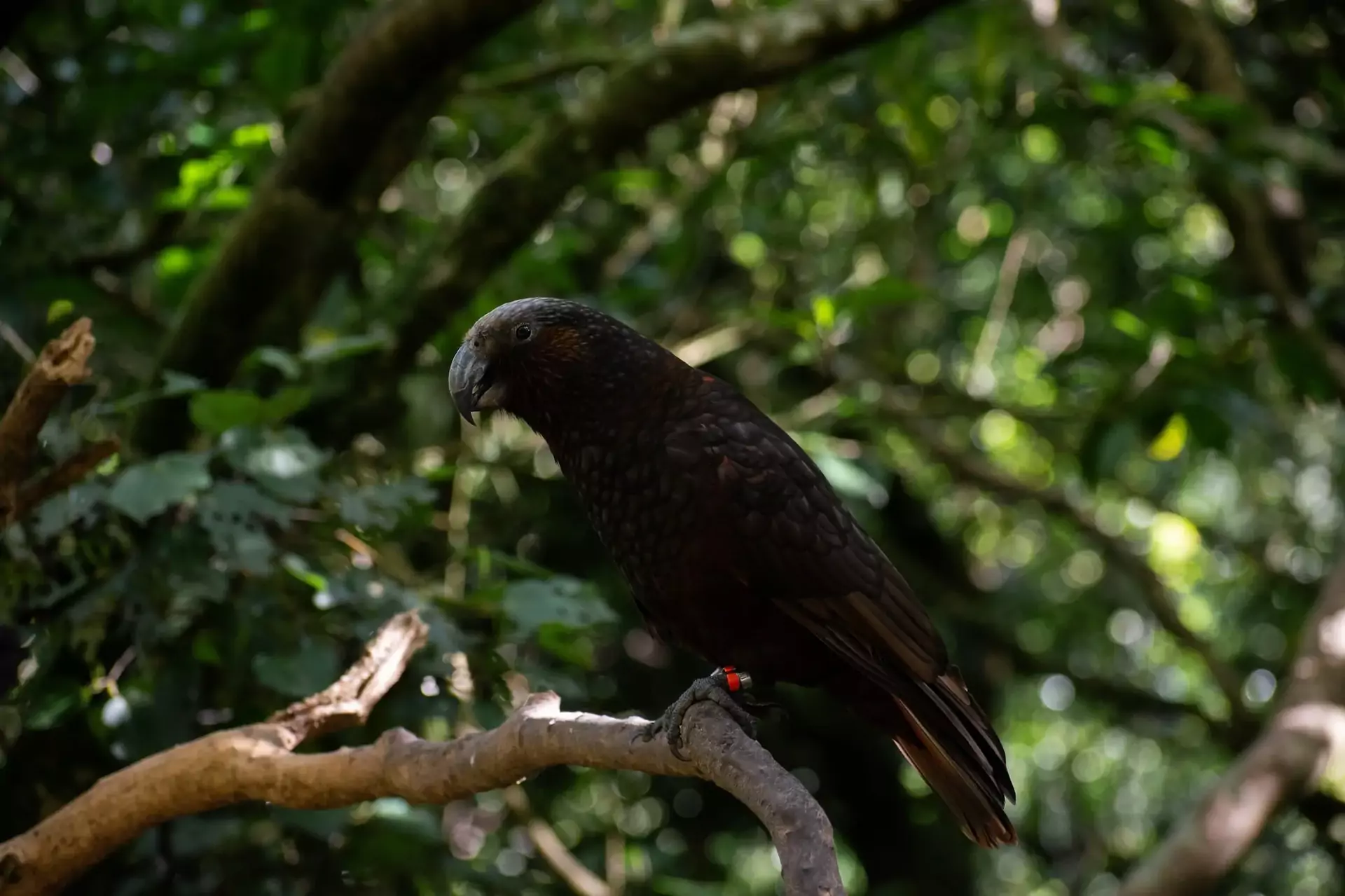
Wellington’s Zealandia is a protected area focused on bringing back native plants and animals. The site was once home to birds like the kiwi, kākā and tūī that now live freely in enclosed spaces designed for their safety. Visitors can walk among restored forests where reptiles such as geckos and skinks are visible along quiet paths. The reserve also includes wetlands supporting native ducks and frogs. Conservation work here helps protect species from predators while giving people a chance to see New Zealand’s unique wildlife up close without disturbing natural habitats.

Wildlife Sanctuary in Wellington
Climate zone: Mild oceanic

Mild oceanic: Marine-influenced climates with cool summers, mild winters and frequent precipitation year-round, typical of western coasts at mid-latitudes.

See climate table
Ticket price: $$$
$Cheap
$$Medium
$$$Expensive, upscale
$$$+Very expensive, luxury
Safety: 8.6
General Safety:9
Accessibility:7
Read details
Tourist English: 5/5
English is very widely spoken in Wellington, especially in tourist environments, ensuring excellent communication for visitors.
Last update: 12 Oct 2026
* We earn a commission from some links on this page.
Zealandia Summary
World-class for wildlife and conservation experiences. Walk forest trails, watch native birds, learn about ecological restoration and explore natural habitats.
Opening hours:
Mon-Sun:09:00 - 17:00
Public website: www.visitzealandia.com
New Zealand – Quick facts
Power Grid: 230 V, 50 Hz
Plug: Type I
Type I:
Diagram of a Type I power plug

Read about power adapters
Currency: New Zealand Dollar (NZD)
£1 ≈ NZ$2.34
Cashless info: Rating 5/5
Cashless payments are widely accepted across New Zealand, and credit cards are commonly used, especially in urban areas and tourist spots.

Save with a travel credit card
eSIM providers: Best value: Saily
Flexibility: Airalo
Read our in-depth comparison
Tipping: Tipping is not expected in New Zealand, though it is appreciated for exceptional service. 5-10% in restaurants and small tips for taxi and hotel staff are common.
Public drinking: Public drinking is generally allowed in some designated areas but may be restricted in others. Consumption of alcohol in public places may require a permit.
Public smoking: Smoking is restricted in many public areas, especially indoor spaces and public transport.
Waitangi Day
(6 February)
A national holiday celebrating the signing of the Treaty of Waitangi
Emergency contact: Emergency Number: 111 (Police, Fire, Ambulance)
Taxi apps: Uber, Ola
Other: New Zealand is known for its stunning landscapes, from beaches and mountains to national parks and cultural experiences.
Best times to travel

The best times to travel section shows how the months compare for a visit, so you can find the time of year that fits what you want to do.

Background colours of the months:
The colour shows the typical temperature: yellow (hot), green (mild) and blue (cold). How strong the colour is shows the travel season: full colour means high season, soft colour means shoulder season and soft-striped means off season.

Weather symbols:
Each month has one symbol showing what the weather is typically like, such as hot and sunny, freezing or a rainy or snowy season. Use them to quickly spot months that match the weather you want, or to avoid the ones that don't.

Crowdedness:
The people icon shows how busy the place usually is. The more people, the more crowded it gets.

Additional notes:
The grey info boxes point out special things worth knowing, like recurring weather issues or seasonal events.

for Zealandia, New Zealand
🌬️
Jan
🌬️
Feb
🌬️
Mar
🌬️
Apr
🌬️
May
🌬️
Jun
🌬️
Jul
🌬️
Aug
🌬️
Sep
🌬️
Oct
🌬️
Nov
🌬️
Dec
High season: Jan. - March, Oct. - Dec.
Shoulder season: April - May, Sep.
Tap on a month for more info Hover over a month for more info
Open daily except Christmas Day, with night tours for kiwi spotting year-round, booking ahead is advised

Zealandia is the world's first fully fenced urban ecosanctuary, spanning 225 hectares and protected by an 8.6-kilometer pest-exclusion fence. This innovative conservation project aims to restore the local ecosystem to its state before human arrival, allowing native birds, reptiles and plants to flourish free from introduced predators.

The sanctuary is home to some of New Zealand’s most extraordinary wildlife species including the elusive kiwi, flightless takahe and ancient tuatara reptiles. Visitors can explore over 32 kilometers of walking trails through regenerating native forest and wetlands, witnessing firsthand nature’s regeneration.

Zealandia offers multiple guided tours, including nighttime outings to spot nocturnal species and learn about conservation efforts. The visitor center and shop provide educational resources and souvenirs to enhance the experience.

Visitors should wear sturdy footwear and be prepared for uneven terrain and variable weather. All guests must adhere to strict biosecurity protocols to protect the sanctuary’s fragile ecosystem, including clothing and bag checks on entry. While the sanctuary offers an incredible natural escape, it’s best to plan ample time to fully enjoy the diverse wildlife and lush surroundings.

Knowledge before you go

  • Book a night tour; nocturnal wildlife sightings are better.
  • Stay on marked trails and carry a light rain jacket; Wellington weather changes fast.
  • Bring binoculars for native birds; you may spot kākā, tūī and kererū.
  • Learn the predator-proof fence story first; it explains why rare species thrive so close to downtown.

How to travel to Zealandia

Zealandia is located in the suburb of Karori, Wellington. Visitors typically arrive via Wellington International Airport with connections from major international hubs. From central Wellington, public shuttle buses run regularly to Zealandia from the i-SITE Visitor Centre and the top of the Cable Car. Alternatively, taxis and private cars provide convenient access along Waiapu Road.

Access summary

  • From Wellington Airport: Taxi or shuttle via city centre, around 25–35 minutes.
  • From central Wellington: Free Zealandia shuttle or bus 2, about 10–15 minutes.
  • From Auckland: Flight to Wellington (~1 hour), then shuttle/taxi or bus to sanctuary.

Where to stay near Zealandia

Wellington provides a variety of accommodations from comfortable hotels to boutique stays, mostly concentrated in the city center. Staying in central Wellington offers easy access to Zealandia via shuttle or taxi.

Packing recommendations for Zealandia

Log in to add this place to a travel list and get a summary of all recommended items for your whole trip.

Budget snapshot
Costs compared to home

We calculate the average costs when travelling to destinations and compare those with the living costs at your home. With this you can get an estimate of how expensive or cheap the destination is for you.

To customise this, you can set up which location and price level are used for the calculations in your account settings.

-9 %
Daily expenses in the region are around 9% lower than the average across United States. That means you'll spend less on meals and getting around.
Exchange rate trend

The exchange rate price factor shows how expensive or cheap a currency currently is compared to its historical average. It's a quick way to see if a country is currently more or less affordable due to exchange rate changes.

-15 %
Your exchange rate (GBP to NZD) is 15% better than in recent years. That means travelling now is considerably cheaper compared to the past.

Safety information overview

General safety
9
Wellington’s Zealandia wildlife sanctuary is exceptionally safe for visitors. The area is well‑patrolled, with minimal crime and no known violent incidents. Standard precautions – stay on marked paths, keep valuables secure and follow staff instructions – ensure a worry‑free experience.
Accessi­bility
7
Wellington’s Zealandia wildlife sanctuary offers excellent accessibility: wide, paved paths, wheelchair‑friendly viewing platforms and clear signage. However, some remote trails are steep and uneven, so visitors with mobility aids should plan ahead or use guided tours for full enjoyment.

Looking for inspiration?

Discover
Best birdwatching destinations in Oceania
Oceania is one of the most compelling regions on earth for birdwatching, largely because of the extraordinary levels of endemism produced by millions of years of island isolation.…
Read more
Discover
Top birdwatching destinations and avian hotspots
Birdwatching has a way of changing how you travel. Once you start paying attention to what's flying, perching and calling overhead, a destination opens up in ways that a standard…
Read more
Discover
Amazing wildlife encounters and natural habitats
Wildlife encounters of real quality are becoming rarer and finding them requires more intention than it once did. The destinations that still offer genuine, undisturbed wildlife in…
Read more
Discover
Best wildlife destinations in Oceania
Oceania's wildlife is defined by the extraordinary endemism that results from millions of years of island isolation. Species found nowhere else on earth, ancient reptile lineages,…
Read more
Discover
Most beautiful beaches and coastal escapes
For a lot of people, a beach is the whole point of a holiday, but what makes a beach day perfect really depends on personal taste. Some travellers want isolation and the feeling…
Read more
Discover
Stunning national parks and wilderness areas
National parks exist because someone decided that certain landscapes were too important to lose. The best of them protect ecosystems, wildlife and natural processes that would…
Read more
Discover
Intimate escapes and romantic getaways
The most memorable trips for couples tend to have less to do with luxury and more to do with the quality of shared experience. A place that slows you down, removes the usual…
Read more
Was this page helpful?
Feedback