












Was this page helpful?

| Public website: | www.toronto.ca |
|---|
| Power Grid: |
120 V, 60 Hz Plug: Type A , Type B
Type A:
  Read about power adapters |
|---|---|
| Currency: |
Canadian Dollar (CAD) £1 ≈ CA$1.87 |
| Cashless info: |
Rating 5/5
Cashless payments are widely accepted, especially in urban areas. Most businesses accept credit and debit cards, and mobile payment options like Apple Pay are popular.
Save with a travel credit card |
| eSIM providers: |
Best value: Saily Flexibility: Airalo Read our in-depth comparison |
| Tipping: | Tipping is customary in Canada, with a typical tip of 10-20% in restaurants. Tipping is also expected in taxis and for hotel staff, usually 1-2 CAD for bellhops and housekeepers. |
|---|---|
| Public drinking: | Public drinking laws vary by province, but it's often allowed in designated areas such as festivals or certain parks. |
| Public smoking: | Smoking is prohibited indoors in public spaces and in most outdoor spaces in urban areas. Some provinces have stricter laws than others. |
| Canada Day (July) |
The country celebrates with fireworks and festivals. Expect crowded tourist spots and high demand for accommodations. |
|---|---|
| Thanksgiving (October) |
A major family holiday with many businesses closed, especially in rural areas. |
| Christmas (December) |
Festive markets and winter activities are popular, but expect higher accommodation prices and busy cities. |
| Emergency contact: | Emergency Number: 911 (Police, Fire, Ambulance) |
|---|---|
| Taxi apps: | Uber, Lyft, Bolt |
| Other: | Canada is vast, so be prepared for long distances between cities and varying weather conditions depending on the region. |
The best times to travel section shows how the months compare for a visit, so you can find the time of year that fits what you want to do.
Background colours of the months:
The colour shows the typical temperature: yellow (hot), green (mild) and blue (cold). How strong the colour is shows the travel season: full colour means high season, soft colour means shoulder season and soft-striped means off season.
Weather symbols:
Each month has one symbol showing what the weather is typically like, such as hot and sunny, freezing or a rainy or snowy season. Use them to quickly spot months that match the weather you want, or to avoid the ones that don't.
Crowdedness:
The people icon shows how busy the place usually is. The more people, the more crowded it gets.
Additional notes:
The grey info boxes point out special things worth knowing, like recurring weather issues or seasonal events.
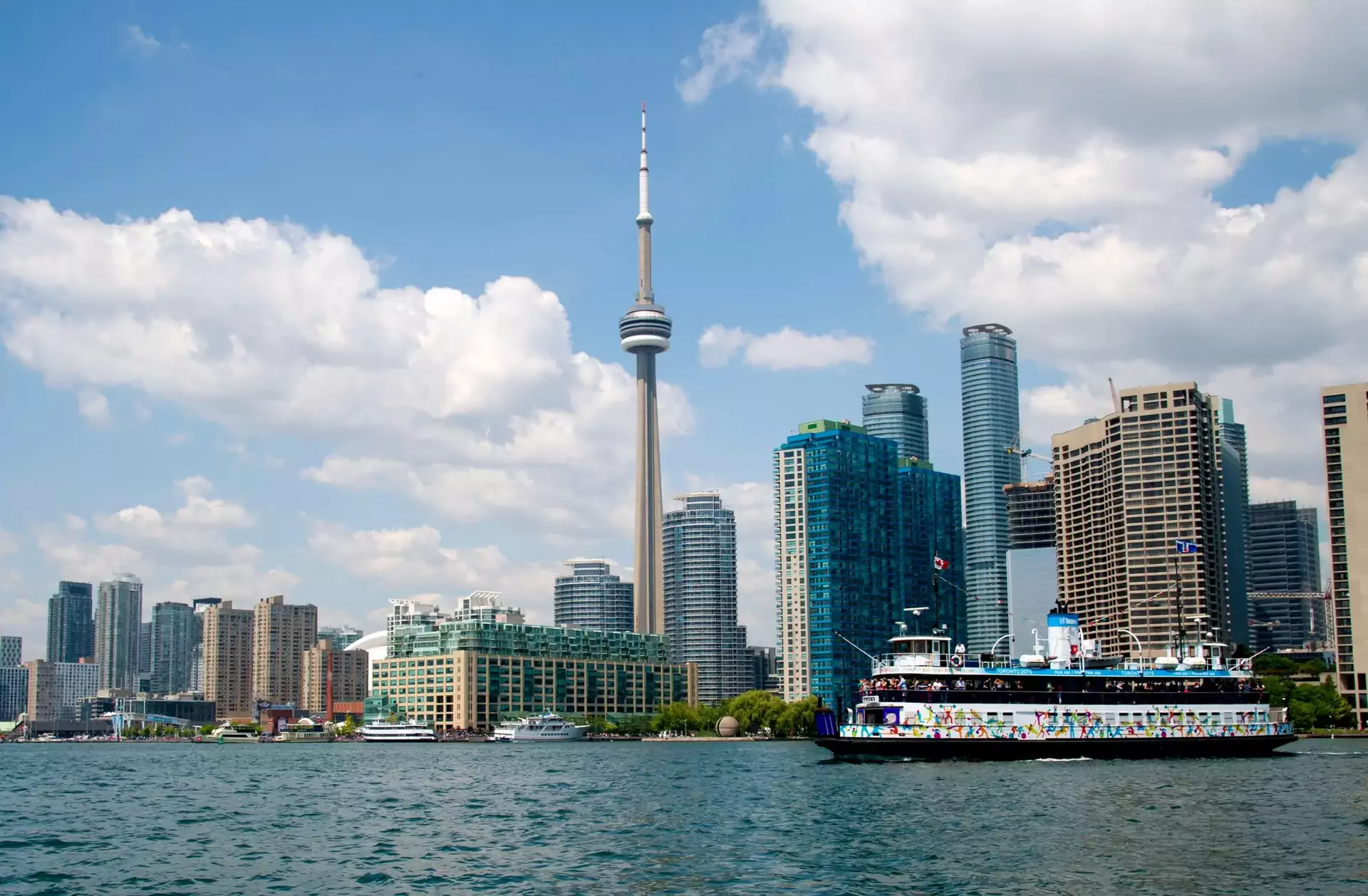
Toronto Islands compose a serene getaway just off the shore of downtown Toronto. Originally a peninsula, the islands became separated due to a storm in the mid-19th century and now provide a perfect mix of urban wilderness and recreational activities. The islands span approximately 3.3 square kilometers and include vibrant community spaces, beaches and an amusement park.
Visitors enjoy miles of bike-friendly trails, picnicking areas and swimming spots, making the islands especially popular in the warmer months. Family-friendly attractions such as Centreville Amusement Park and multiple playgrounds offer entertainment for all ages. The islands also serve as a habitat for diverse bird species and other wildlife, ideal for nature lovers.
However, the ferry service, especially during summer weekends, can experience long wait times and crowding, which may frustrate some visitors. Facilities and food options on the islands, particularly beyond Centre Island, can be limited, so bringing your own supplies is advised. Additionally, since cars are prohibited, mobility can be challenging for visitors with limited walking ability.
Despite these minor inconveniences, Toronto Islands remain a cherished urban oasis providing a refreshing contrast to city life with outdoor fun, natural beauty and spectacular skyline views.
The Toronto Islands are accessible by ferry from the Jack Layton Ferry Terminal near downtown Toronto. The ferry ride offers stunning skyline views and takes about 15 minutes. Water taxis are also available but are pricier. Cars are not allowed on the islands, so plan to walk or rent bikes for getting around.
Toronto offers diverse accommodation in and around downtown, from luxury high-rises to cozy boutique hotels, giving easy access to ferry terminals for visiting the islands.


Log in to add this place to a travel list and get a summary of all recommended items for your whole trip.
We calculate the average costs when travelling to destinations and compare those with the living costs at your home. With this you can get an estimate of how expensive or cheap the destination is for you.
To customise this, you can set up which location and price level are used for the calculations in your account settings.
The exchange rate price factor shows how expensive or cheap a currency currently is compared to its historical average. It's a quick way to see if a country is currently more or less affordable due to exchange rate changes.
