










Was this page helpful?

| Opening hours: |
|
|
|---|---|---|
| Public website: | odysseus.culture.gr |
| Power Grid: |
230 V, 50 Hz Plug: Type C , Type F
Type C:
  Read about power adapters |
|---|---|
| Currency: |
Euro (EUR) £1 ≈ €1.19 |
| Cashless info: |
Rating 3/5
Cashless payments are becoming more common, especially in urban areas. However, many small shops and rural locations still prefer cash payments.
Save with a travel credit card |
| eSIM providers: |
Best value: Saily Flexibility: Airalo Read our in-depth comparison |
| Tipping: | Tipping is customary in Greece. In restaurants, 5-10% is typical, though rounding up is also common. Tipping taxi drivers is customary, and small tips for hotel staff are appreciated. |
|---|---|
| Public drinking: | Public drinking is generally allowed in Greece, especially in designated areas or during festivals. However, it’s prohibited in some areas like public transport or near schools. |
| Public smoking: | Smoking is prohibited in indoor public places. There are designated outdoor smoking areas in most restaurants and public buildings. |
| Easter (March/April) |
Easter is a significant religious holiday, and many businesses close. Popular for family gatherings and church services. |
|---|---|
| Assumption of Mary (August) |
A national holiday with parades and festivities. Expect crowded tourist areas and higher accommodation prices. |
| Christmas (December) |
Christmas celebrations take place in many towns and cities, with lively events, though many businesses close for the holiday. |
| Emergency contact: | Emergency Number: 112 (Police, Fire, Ambulance) |
|---|---|
| Taxi apps: | Beat, TaxiBeat, Uber |
| Other: | Greece is a popular tourist destination, particularly in summer, so be prepared for high demand for accommodation and services during peak months. |
The best times to travel section shows how the months compare for a visit, so you can find the time of year that fits what you want to do.
Background colours of the months:
The colour shows the typical temperature: yellow (hot), green (mild) and blue (cold). How strong the colour is shows the travel season: full colour means high season, soft colour means shoulder season and soft-striped means off season.
Weather symbols:
Each month has one symbol showing what the weather is typically like, such as hot and sunny, freezing or a rainy or snowy season. Use them to quickly spot months that match the weather you want, or to avoid the ones that don't.
Crowdedness:
The people icon shows how busy the place usually is. The more people, the more crowded it gets.
Additional notes:
The grey info boxes point out special things worth knowing, like recurring weather issues or seasonal events.
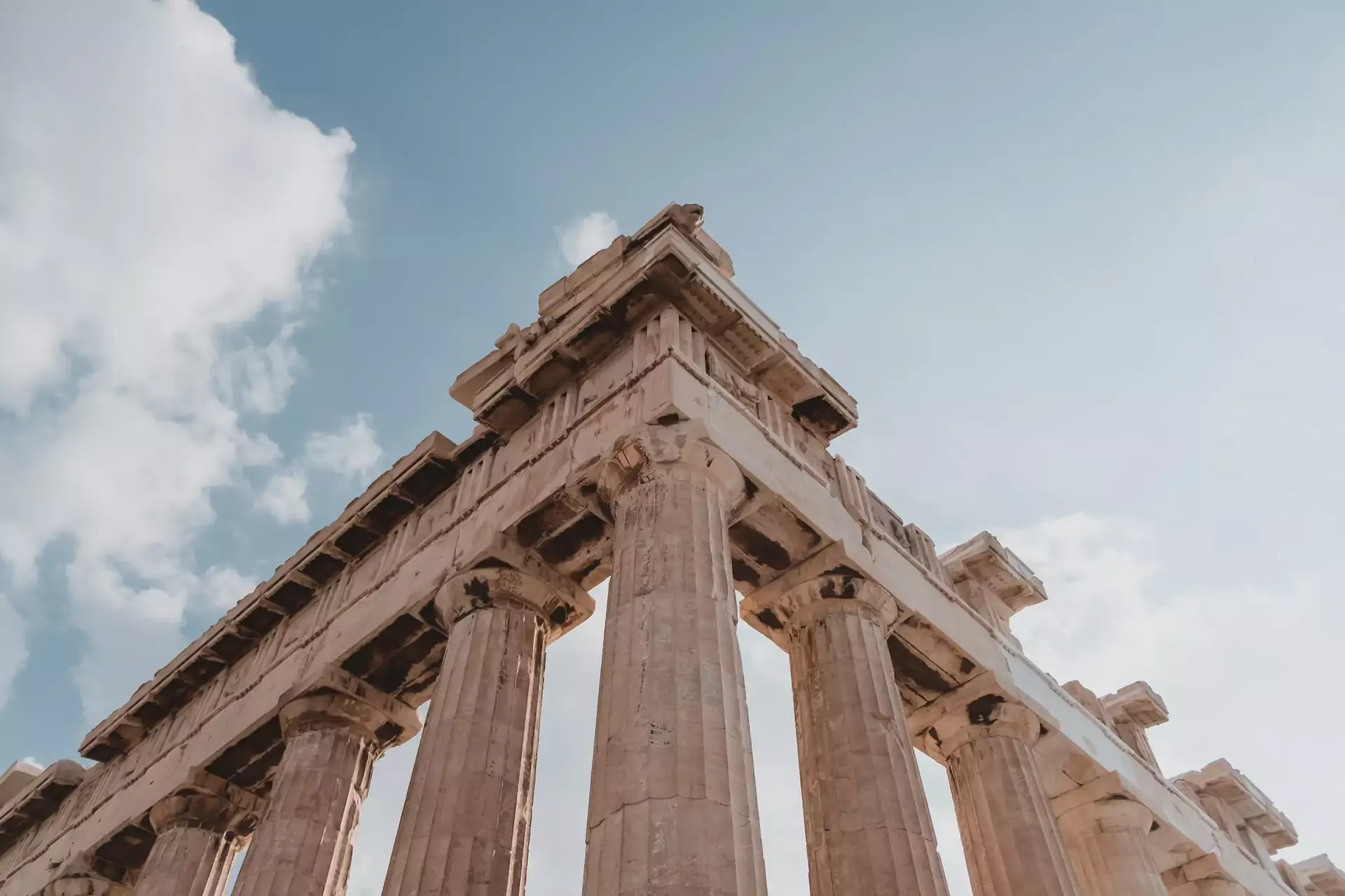
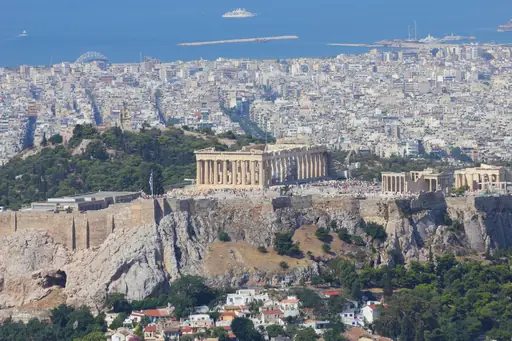
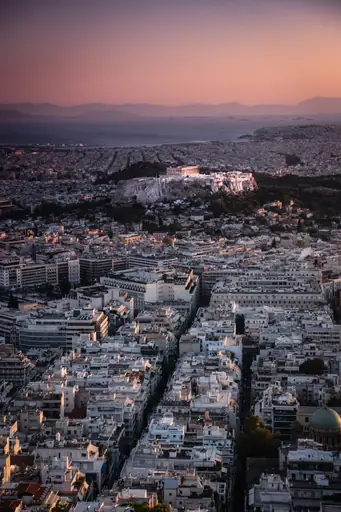
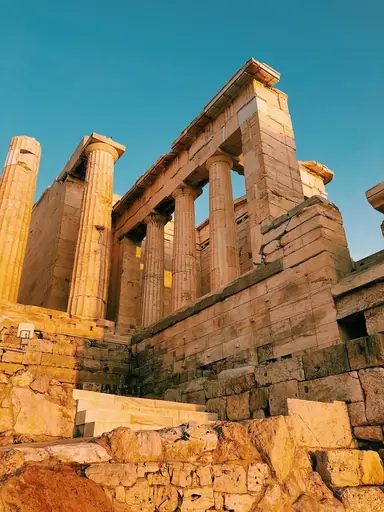
The Acropolis is a UNESCO World Heritage site and the most famous ancient archaeological site in Greece, symbolizing the heights of classical Greek art and architecture. It stands on a rocky hill overlooking Athens, crowned by magnificent structures like the Parthenon, dedicated to the goddess Athena, the Erechtheion with its famous Caryatid statues and the Temple of Athena Nike.
The site's history spans thousands of years, having been a center of religious and artistic development from prehistoric times through the classical period. While exploring, visitors can witness the grand scale and exquisite detail of ancient Greek architecture and sculpture, which continue to inspire awe globally.
However, visiting the Acropolis requires some preparation: the steep, uneven marble pathways can be slippery and physically demanding, especially under the midday sun. The site is often crowded, especially during peak season and cruise ship arrivals, leading to congestion and long waits. Booking tickets online with timed entry is essential to avoid the busiest periods and ensure smoother access.
The local authorities have implemented visitor caps and staggered entry times to preserve the site and enhance the visitor experience. Despite some staff being perceived as strict, these efforts are crucial to maintaining this delicate historical treasure for future generations.
The Acropolis is easily accessible from Athens city center. Visitors typically fly into Athens International Airport and then take a taxi, public bus or metro to reach the Acropolis area. The closest metro stations are Acropoli (Line 2, Red) and Monastiraki (Lines 1 and 3), both within walking distance of the site. From there, it's a steep but rewarding climb up the hill to the ancient site.
Athens offers a wide spectrum of accommodation, from budget hostels to luxury hotels, many within walking distance of the Acropolis. Staying in neighborhoods like Plaka or Monastiraki puts visitors close to the Acropolis and other major sights, blending convenience with charming local atmosphere.
Log in to add this place to a travel list and get a summary of all recommended items for your whole trip.
We calculate the average costs when travelling to destinations and compare those with the living costs at your home. With this you can get an estimate of how expensive or cheap the destination is for you.
To customise this, you can set up which location and price level are used for the calculations in your account settings.
The exchange rate price factor shows how expensive or cheap a currency currently is compared to its historical average. It's a quick way to see if a country is currently more or less affordable due to exchange rate changes.
